
Catalysing a price drop for green hydrogen

Catalysing a price drop for green hydrogen


Electrolysis of water to produce green hydrogen is a process that involves the use of expensive ‘noble’ materials, such as platinum and palladium, as catalysts (substances that speed up a chemical reaction without being consumed in the process), making the hydrogen more expensive. The search is on for cheaper catalysts.

Researchers are onto materials called ‘molecular catalysts’, where molecules exist discretely, individually. These molecular structures typically have a central metal atom surrounded by ligands, or other molecules such as chlorine and ammonia that attach themselves to the metal.

A team from IIT-Bombay’s Department of Chemistry, led by Prof Arnab Dutta, explored the use of a molecular catalyst called cobaloxime for use in electrolysers, in place of expensive noble metals. It is water-soluble and stable in air, making it easier to handle than noble metals.

Strategic application of this cobalt-based catalyst can make hydrogen production efficient and cost-effective, say the researchers, in a paper published in Energy and Climate Change.

While the use of cobaloxime as a catalyst in electrolysers is not new, modifications to the molecular structure of cobaloxime have improved its stability and reaction rate. The IIT-Bombay team introduced natural amino acids, vitamins, and other functional groups to increase hydrogen production while maintaining energy efficiency. They have also modified cobaloximes to work in different water conditions, including seawater.

Industrial use

A report based on the paper, available on the IIT-B website, notes that while cobaloximes are a lot cheaper than noble metals and can be synthesised easily, there is also a flip side. “Cobaloximes work well in labs, but it is complex to use them for industrial hydrogen production,” notes Dutta.

The objective, therefore, is to modify their structure to make them compatible with the electrodes of the electrolyser and attach them to solid supports to enhance stability, efficiency, and durability. The ongoing research is to help make cobaloximes work better in an industrial setting.

Dutta’s team has found that cobaloxime catalysts perform well in both alkaline electrolysers, which use solutions like potassium hydroxide, as well as proton exchange membrane electrolysers, which use a solid polymer membrane in acidic conditions.

“We are currently developing the updated version of the cobaloxime template that can be used in heterogeneous conditions, applicable in an industrial setup,” Dutta told Quantum.

The paper notes that it is critical to bring down the cost of green hydrogen — hydrogen produced by electrolysers powered by renewable energy — especially to produce the in-demand green steel, namely steel produced using green hydrogen instead of coal (coke).




Source link

Smart window changes colour, stores energy 

Smart window changes colour, stores energy 


Researchers have developed advanced self-charging smart windows that change colour and store energy, offering a major upgrade over conventional smart windows, which only control light transmission. A team from CeNS, Bengaluru, integrated zinc-ion battery technology with tungsten oxide to create these windows, eliminating the need for external power. Their innovative spray-coating method improved film quality, enhancing both colour-changing ability and energy efficiency. The prototype demonstrated rapid self-charging in 10 minutes, durability over 3,000 cycles, and reversible optical modulation, offering a promising solution for energy-efficient buildings and smart electronics.

Sturdy ceramic teeth

Ceramic is a good material for use in medical implants, especially teeth, as it is near natural in colour and function. However, since ceramic is inherently brittle, a new manufacturing technique helps remove the brittleness. 

A team of researchers at the Department of Materials Engineering, Indian Institute of Science, Bengaluru, led by Prosenjit Das, has developed a method for making orthodontic brackets. Called micro-ceramic injection moulding, the technique uses fine alumina granules and a binder to shape brackets, which are then heated and baked at 1,600 degrees C for strength and density. The resulting polycrystalline alumina brackets are stronger, more durable, biocompatible, and stain-resistant compared to commercial versions, making them ideal for long-term orthodontic use.

Solar dryers cut farm losses

To reduce post-harvest loss and increase farm income, IIT-Kanpur’s Ranjit Singh Rozi Shiksha Kendra has introduced farmers to solar dehydration. It offers an eco-friendly, sustainable solution to market price fluctuations, allowing farmers to sell their produce at profitable rates when demand is higher, says a press release from IIT-Kanpur.

Recently, the institute offered hands-on training in the solar dehydration technique to members of two local farmer producer organisations, including a live demonstration of pre-treatment and solar drying of tomatoes. 

“With support from NABARD, we aim to extend this technology to more villages,” says Rita Singh, Project Executive Officer.

Cheaper, precise microlens

To go beyond merely correcting vision, and slowing or preventing the progression of nearsightedness, microlenses are already in use in special eyeglasses for children. A superimposed focal point on the periphery slows down the elongation of the eyeball that triggers the progression of myopia. 

Researchers at Fraunhofer have devised a new method of producing microlenses individually and at lower cost by beaming infrared laser on plastics used for eyeglasses. “The laser, which functions as a local heat source, excites water molecules present inside the polymer. This causes the molecules to start to move, creating internal pressure that can only discharge upward. The process forms a little bump on the surface that remains after the laser treatment: a microlens,” says a Fraunhofer press release. 

This can produce significantly smaller microlenses than is possible with older methods.


Source link

Kumbh Mela: AI reveals pattern in stampedes

Kumbh Mela: AI reveals pattern in stampedes


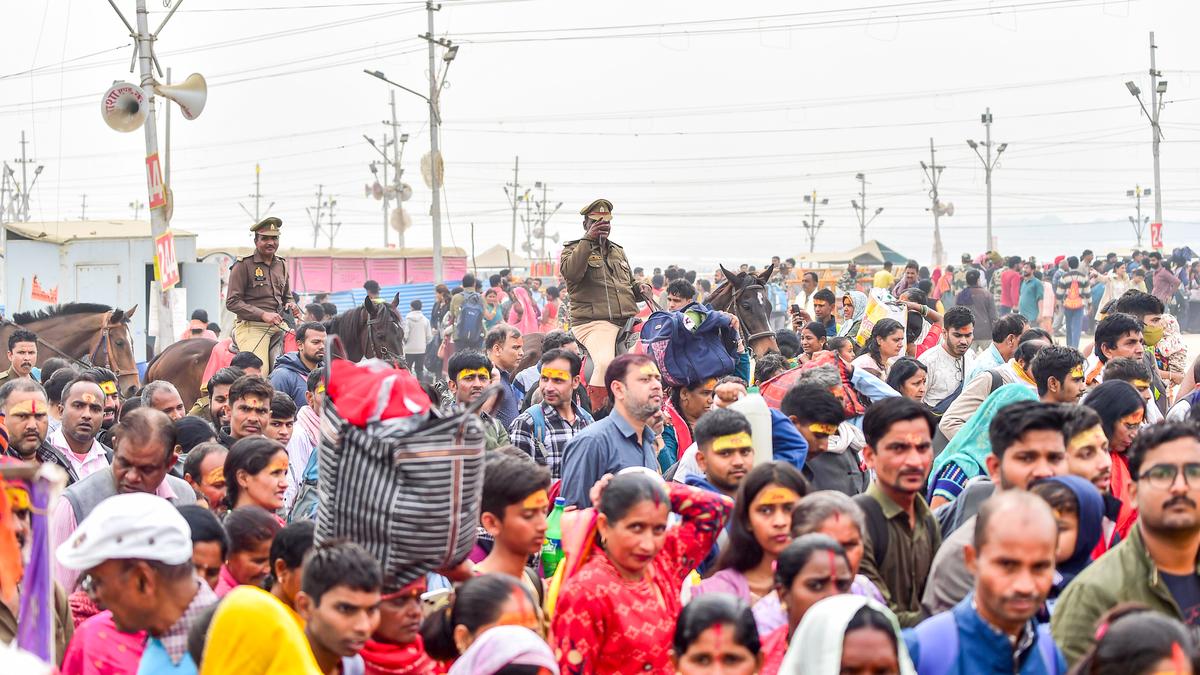
On January 29, the world’s largest religious gathering, Maha Kumbh in Prayagraj, was struck by a horrifyingly familiar tragedy — a stampede that claimed 48 lives.

This despite decades of experience in organising similar congregrations, improved technology, and advanced crowd-monitoring systems. A stampede during the Kumbh in 1954 claimed no less than 700 lives.

A study titled ‘At the Mahakumbh, Faith Met Tragedy: Computational analysis of stampede patterns using machine learning and NLP’, by Abhinav Pratap of Amity University, examines the recurring failures in crowd management at India’s grandest pilgrimage. Applying machine learning, historical data analysis, and natural language processing (NLP) to seven decades of administrative records, the research uncovers a disturbing reality: stampedes at the Kumbh Mela are not accidents but predictable failures, resulting from infrastructural limitations, governance inertia, and a tendency to normalise disaster. 

Integrating computational modelling and sociological theories, the researchers designed a three-phase analysis to derive insights from past tragedies, including patterns of administrative failure and recurring risk factors. They then placed the findings within the framework of the Emergent Norm Theory (which explains how collective behaviour in large crowds overrides individual rationality) and Institutional Amnesia Theory (which describes how organisations, institutions, or even societies gradually lose their collective memory of past events due to staff turnover and lack of proper documentation). 

A recurrent crisis

The analysis of stampede incidents between 1954 and 2025 throws up a striking pattern — critical crowd density thresholds (equal to or more than seven persons per sq m) consistently lead to deadly outcomes. Once this limit is breached, individual control is lost, and panic spreads through the crowd like a chain reaction. 

VIP movement

One of the most alarming findings is that 92 per cent of past stampedes occurred near infrastructural choke points — narrow pathways, riverbank access routes, or restricted entry points that become dangerously overcrowded. 

The study also highlights the role of restrictions due to VIP movement, which redirect police forces and create dangerous bottlenecks. Even in 2025, drone footage revealed barricaded exits left unmanned during a ministerial visit, exacerbating the deadly crush. 

The NLP-driven analysis of official stampede inquiry reports from 1954 to 2025 repeatedly show administrative narratives that deflect blame from authorities:

• 1954: “Unforeseen surge” 

• 1986: “Crowd became unruly” 

• 2003: “Poor coordination” 

• 2013: “Railway station mismanagement” 

• 2025: “Barricade collapse”

Instead of acknowledging systemic failures, these reports frame stampedes as random and unavoidable incidents.

Improved governance reduces fatalities, but its impact remains limited due to systemic failures. 

In this case, there were three failures: Delayed emergency response, as reflected by the inquiry reports from 1954, 1986, 2003, and 2025; VIP route prioritisation disrupts normal crowd flow, creating bottlenecks that intensify stampedes; and AI-based risk predictions were ignored, leading to reactionary, rather than preventive measures. 

The 2025 stampede occurred at a barricade breach where drone footage showed unmanned exits — a repeat of the failure from 1954.


Source link

Tackling stillbirth crisis with pooled datasets

Tackling stillbirth crisis with pooled datasets


The Indian Council of Medical Research (ICMR) has launched a groundbreaking initiative to address the country’s persistent stillbirth crisis. The study collates medical records of 2.29 lakh pregnancies across nine states. According to the World Health Organisation (WHO), a stillbirth is when a baby is born without signs of life after 28 weeks of pregnancy. Currently, India records 14 stillbirths per 1,000 births and aims to reduce this to fewer than 10 by 2030.

The ICMR-Stillbirth Pooled India Cohort (ICMR-SPIC) represents an unprecedented collaboration in Indian medical research. Drawing from 10 research groups across 17 locations, the study captures the diversity of India’s population. This broad scope allows researchers to identify patterns and risk factors that smaller studies may miss. “If a single dataset cannot cover the diversity needed in the data… it is better to have pooled datasets,” explains Assistant Professor Palash Ghosh from IITGuwahati’s Department of Mathematics. 

Pooled methodology is particularly valuable in studying complex health issues like stillbirth, where multiple factors — including location, genetics, and economic status — influence outcomes. “With diverse populations, the conclusions made from the data become truly representative,” says Ghosh. 

The project, despite its scale, faces several challenges. These include variations in data collection methods, incomplete information about stillbirth timing, and inconsistent records of medical care during delivery. 

To ensure reliability, the ICMR-SPIC consortium reports that rigorous data standardisation procedures were implemented. Researchers reviewed and harmonised information across studies to maintain consistency. 

The ICMR-SPIC initiative looks to translate research into practical tools for medical professionals. The study will help develop predictive models for identifying high-risk pregnancies, creating guidelines for targeted interventions, and establishing frameworks for clinical decision-making.

(Yasaswini Sampathkumar is a writer based in Guwahati)


Source link

Amino acids that can beat hypertension

Amino acids that can beat hypertension


High blood pressure, or hypertension, affects about 320 million Indians. Untreated, the condition could lead to cardiovascular complications, trigger kidney issues and cause eye trouble. 

Recent research by Prof Nitish Mahapatra and his team at IIT-Madras has shown how a peptide and its variant have vastly different effects in the natural control of hypertension. 

A peptide is a short chain of amino acids that serves as a building block for proteins. Catestatin is a peptide made up of 21 amino acids. The study focused on how the normal form of catestatin (called wild type, or CST-WT) and a common variant (Gly364Ser, CST-Serine) affect cardiovascular function. 

But what made the researchers focus on these peptides in particular?

Says Prof Mahapatra, “We narrowed down on them because we had published a paper in 2016, in a journal called Hypertension, where we showed that people harbouring the variant peptide were more prone to developing hypertension.” 

The study had analysed about 4,000 people across India and found that 15 per cent carried the serine variant. Their risk of developing hypertension was about twofold greater that those with the wild-type. 

Their latest paper is the culmination of the 2016 study. “In the animal model, we saw that what we had hypothesised was indeed correct,” he says. “We found the wild-type form of the peptide to be antihypertensive in our laboratory.” 

Heart function test

Hypertension, or high blood pressure, is a condition where the force of blood against the walls of blood vessels remains high over time. 

In the IIT-Madras study, rats were fed a high-salt diet for a few months. The animals, which had become hypertensive, were injected with the normal or wild-type peptide. It was observed that their blood pressure dropped to normal within two hours, and the effect usually lasts 24 hours or so. On the other hand, when the serine variant was injected the blood pressure remained high.

The study also measured heart rate and observed the electrical activity of the heart using an electrocardiogram. High heart rates are known to be associated with heart diseases. 

The wild-type form of the peptide was able to reduce the heart rate in hypertensive rats, whereas the serine variant showed a smaller effect. In addition, improvement in heart muscle contractions, which reflect how strongly the heart pumps blood, was greater with the wild-type peptide than with the serine variant. 

Measurements of pressure in the heart both during contraction and relaxation showed that the CST-WT peptide helped restore normal heart function better than the variant. 

The heart tissue from hypertensive rats also showed evidence of inflammation and cell damage. Rats treated with the wild-type peptide had less tissue damage and fewer signs of inflammation than those treated with the serine variant.

One step ahead

So, are the researchers working with pharmaceutical firms to formulate a drug that addresses high blood pressure? 

“Right now, we are doing something different,” Mahapatra says.

After its latest research was published, the team is modifying amino acids of the wild-type peptide to make it even more potent and stable. The study focused on naturally occuring peptides — both wild-type and serine, Mahapatra explains. 

The effort now is to modify them to help keep blood pressure under control for a longer period of time.

Eventually, that part of the team’s work would go for human clinical trials in collaboration with pharmaceutical companies.


Source link

AI implementation in healthcare requires tailored approaches: ISB Study

AI implementation in healthcare requires tailored approaches: ISB Study


AI implementation in healthcare requires tailored approaches considering factors such as regional infrastructure differences and training programmes. 

As per the findings of a study by researchers at the Max Institute of Healthcare Management at the Indian School of Business on ‘Understanding Providers’ Attitude Toward AI in India’s Informal Health Care Sector,’ 93.7 per cent of providers believed AI could improve TB diagnosis accuracy, while only 69.4 per cent were willing to adopt the technology. 

Sumeet Kumar, Assistant Professor, Information Systems, ISB and lead author of the study said: “The gap between belief in AI’s potential and willingness to adopt it suggests that technological superiority alone may not guarantee successful implementation.”

Regional differences and existing healthcare infrastructure play crucial roles in technology adoption, he added. 

The key findings of the research include higher adoption readiness in Gujarat (73.4 per cent) compared to Jharkhand (58.4 per cent), reflecting the impact of regional healthcare infrastructure development. Providers who were more confident in diagnosing TB showed greater willingness to adopt AI. Also, providers’ trust in local radiologists influences AI adoption differently across regions.

The research suggests that successful AI implementation in healthcare requires tailored approaches considering regional infrastructure differences, additional support and training programmes for healthcare providers, focus on providers with limited access to diagnostic infrastructure and consideration of cost implications.

The study surveyed 406 Ayurveda, Yoga and Naturopathy, Unani, Siddha and Homeopathy and informal healthcare providers (collectively called AIPs) across Gujarat and Jharkhand. 

TB remains a global health crisis, claiming 1.5 million lives in 2020 alone, with India bearing a substantial burden. Early and accurate diagnosis is key to TB treatment, but accurate diagnostic tools like molecular diagnostic tests are expensive, difficult to access and challenging to maintain, ISB release said. 


Source link

YouTube
Instagram
WhatsApp



