Bacteria that crave toxins

Bacteria that crave toxins


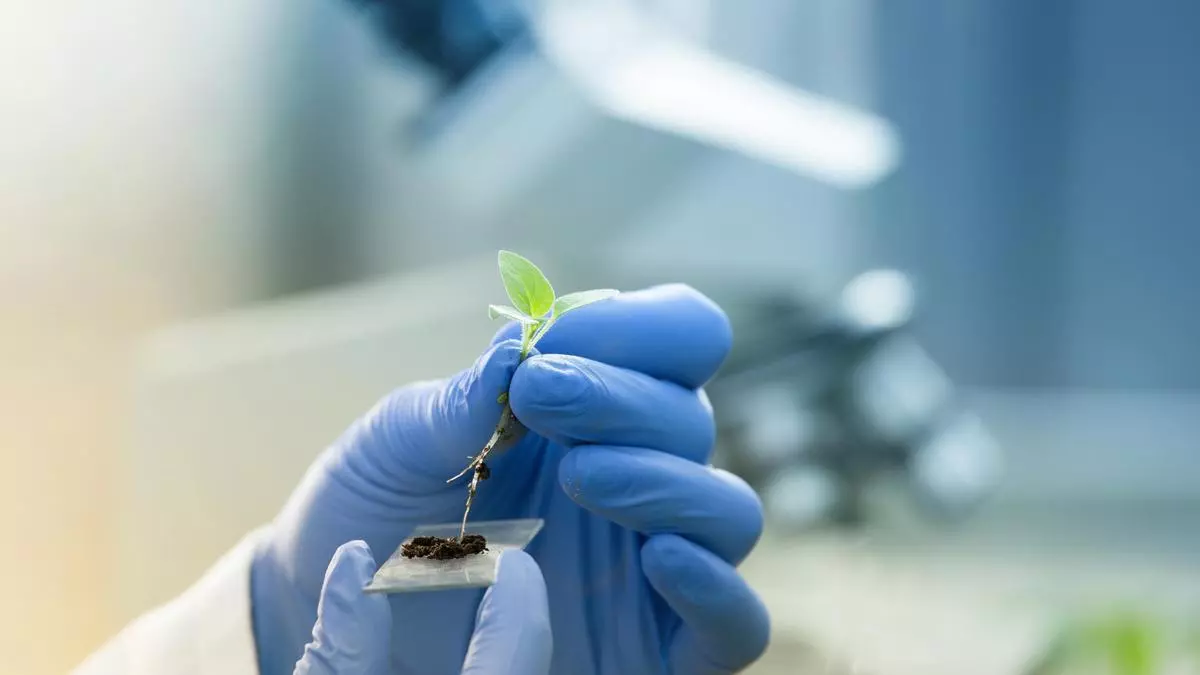
Researchers at IIT-Bombay have identified two genera of bacteria, Pseudomonas and Acinetobacter, that have great potential in agriculture. 

These groups of bacteria can break harmful aromatic (or ring-shaped) compounds that enter the soil through insecticides, herbicides and industrial effluents into useful nutrients for plants. 

Aromatic compounds like naphthalene, benzoate and phthalates are used to make cosmetics, textiles, food preservatives and pesticides. 

They are useful, for sure, but turn into a problem when they enter the soil. 

They hinder seed germination, inhibit plant growth and, through the plants, poison us. Removing them from the soil is neither easy nor cheap — they are stable compounds that do not react easily with added substances; they are also typically not soluble in water and cannot be drained off. 

But they also happen to be bacteria food.

Dual action

Prof Prashant Phale, from the Department of Biosciences and Bioengineering at IIT-Bombay, and Sandeesh Papade, research scholar, decided to approach the problem from a different angle — recruiting bacteria and letting them loose in the soil. 

The bacteria broke down the undesirable compounds into simpler compounds — much like cutting long chains into small bits. In the process, they released nutrients useful to plants, such as phosphorus and potassium. While the aromatic compounds are insoluble in water, the released nutrients are soluble and can be absorbed by plants. “They also produce substances called siderophores, which help plants absorb iron in nutrient-limited environments,” notes an article on the IIT-Bombay website. Further, the bacteria also contribute to plant growth and health by producing the growth hormone indoleacetic acid. 

“While these bacteria are cleaning the soil, they are also helping plants grow healthier and more robust by fertilizing the soil and improving soil health,” Prof Phale says in the article. 

Interestingly, when these two groups of bacteria were used together, they produced even more beneficial results. “The consortium displayed strong plant growth promoting as well as phytoprotection ability against toxicity of aromatics,” the researchers say in a paper published in Environmental Technology & Innovation

The ability of the two genera to co-exist is notable because you can then make biofertilizer-cum-biocontrol formulations. 

Phale notes that these bacteria can eat up harmful fungi too. In the future, researchers want to test how these bacteria can benefit plants during droughts and other environmental stress conditions. 

“The assistive eco-physiological traits (biofilm, resistance to fusaric acid and salinity tolerance) displayed by strains indicated their better adaptability, survival and niche colonisation behaviour under environmental extremities,” the paper says.



Source link

Why India should explore the idea of floating nuclear power plants

Why India should explore the idea of floating nuclear power plants


Nuclear-powered submarines, icebreakers and traditional nuclear power plants are now passé for Russia’s integrated nuclear power company Rosatom State Atomic Energy Corporation.

With a floating nuclear power plant (FNPP), Akademik Lomonosov, functioning in the Arctic port town Pevek since 2019, Russia is now eyeing a global market, including India, for such units. 

An FNPP is located on a ship and can be connected or disconnected to the power lines of a coastal town; it can be towed to any location, as needed. 

Akademik Lomonosov — named after 18th century Russian scientist Mikhail Lomonosov — is docked on the icy shores of the East Siberian Sea. The vessel houses two small lightwater reactors with 14-15 per cent enriched uranium fuel, each with a generation capacity of 35 MW — like those powering Russia’s icebreaker vessels.

Given that India is blessed with a 7,500-km coastline and several islands, the question is whether such a ship-mounted small nuclear power plant can be used to power its islands or coastal towns. The life of such plants is about 40 years and can be extended.

Accrued expertise

Russia is building four more FNPPs of 50 MW capacity for its use. As of December 19, 2024, Akademik Lomonosov has supplied about 978 million kWh of electricity to the Chaun-Bilibino energy hub in Chukotka, meeting the region’s energy needs for more than a year. 

Rosatom is working on a new floating nuclear power plant with four reactors at Cape Nagleyynyn in Chukotka and a land-based small modular reactor with the latest RITM-200 reactor in Ust-Kuyga, Yakutia. 

Options before India

Can India look at the option of a floating nuclear power plant? 

Rosatom’s Director General Alexey Likhachev has said that the company is interested in expanding cooperation with India, including implementing floating and land-based nuclear power units, apart from serial construction of high-powered plants. 

The floating plants need no land, are inherently earthquake resistant, have an abundance of water for active or passive cooling, and have no need for spent fuel storage facilities on land. Rosatom officials say the FNPP will not leave any nuclear traces, and the vessel can be decommissioned at a specified place. 

As in the case of the 1,000 MW power plants at Kudankulam in Tamil Nadu, both countries can work in cooperation for the FNPPs. 

At an event in Moscow in 2023, Likhachev had said the two countries could cooperate in constructing small floating nuclear reactors. Russia can provide the nuclear heart (reactor) and other systems while India can take care of the tow boat and the electrical systems needed for an FNPP.

Cost factor

A retired senior official of the Indian nuclear sector said the government must identify one or two shipyards and look at series production of vessels for housing small nuclear power plants. 

“The cost of such plants will be a major factor for India. Russia has nuclear icebreakers. They can build new plants or remove the nuclear power plants from icebreakers and mount it on a barge as a floating nuclear power plant,” the Indian official, who declined to be identified, said. 

As for fuel, it can be imported if the plants are under the International Atomic Energy Agency (IAEA) safeguards.

(The writer is an independent journalist based in Chennai)


Source link

Nuclear scientist, R Chidambaram passes away at 88 

Nuclear scientist, R Chidambaram passes away at 88 


Dr Rajagopala Chidambaram, who was the Chairman of the Atomic Energy Commission and the Principal Scientific Adviser to the Government of India, when India did the crucial Pokhran-II nuclear tests, passed away today. He was 88. 

Born in Chennai in 1936 to C Rajagopal Aiyar, a Controller of Defence Accounts and Ananthalakshmi, Chidambaram became a first ranker in Madras University, passing B.Sc (Honours). He later joined the Indian Institute of Science, Bengaluru, in 1956, picked up his masters in one year and PhD in 1961. After that, Chidambaram recalls in his memoirs, “Many of my friends went to the US for post doctoral studies. I was however not interested in going abroad. Instead, I joined Bhabha Atomic Research Centre in 1962.” That is how India got one of its brightest nuclear scientists. 

Though Chidambaram’s name is usually associated with Pokhran-II (India’s second nuclear tests, in May 1998), he did play a big role in the 1974 Pokhran-I – for which he was recognized with Padma Shri award in 1975. 

After Pokhran-II, as the Principal Scientific Adviser to Government of India – a post he held for 17 years – Chidambaram was involved in managing the fallout of the tests, which had created global consternation. 

“It can be concluded that the May 1988 tests were fully successful in terms of achieving their scientific objects,” Chidambaram wrote in his memoirs, giving a point-by-point response to doubts raised by Dr P K Iyengar, a former Chairman of Atomic Energy Commission and a few others. 

“Shook the world” 

After Pokhran-II, in the same year 1998, Chidambaram chanced to meet Bill Richardson, the Energy Secretary of the US. At the introduction, Richardson, a tall man, held Chidambaram by his shoulders and gave it a friendly shake, saying, “Oh, you are Dr Chidambaram, who shook the whole world?” Chidambaram replied, “Now you are the one who is shaking me who shook the whole world.” Both had a laugh and the ice was broken. 

Chidambaram was also instrumental in the installation of the bust of Dr Homi Bhabha outside the boardroom in IAEA headquarter in Vienna, says Dr K Raghuraman, a former BARC scientist. 

Chidambaram’s scientist-nephew, Dr S Kailas, who has written an essay in Chidambaram’s memoirs, says in it that Chidambaram “is a spiritual person and a follower Kanchi and Shakatapuram Acharyas” and a “strong supporter of bharatnatyam and carnatic music. 


Source link

SwetchaSAT takes flight, piggybacks on ISRO’s POEM-4

SwetchaSAT takes flight, piggybacks on ISRO’s POEM-4


Divya Kothamasu and Raghuram Kothamasu, Co-Founders of the Hyderabad-based space tech startup N Space Tech, waited with bated breath as ISRO’s PSLV-C60 lifted off from the SHAR centre at Sriharikota on Monday night to launch the Space Gocking Experiment (SpaDeX). 

For them, the mission’s success marks a new ambitious journey as it is among the 24 payloads that the rocket is carrying would mean beginning a new journey in providing a faster and reliable communication for various applications on the ground.

The four-year-old startup has sent its maiden payload, SwetchaSAT-V0, to test an indigenously developed ultra-high frequency (UHF) communication, paving the way for faster, more reliable communication for various applications, including mobile and internet connectivity in remote areas.

The payload would use the advanced PSLV Orbital Experimental Module (POEM-4) platform to test the communication capabilities. Developed completely in-house, the payload’s communication, power, and payload subsystems reflect a strong focus on indigenous innovation and engineering. 

“This is the first in a series of such missions in the future. The upcoming series will include more advanced communication modules and ground station technologies. These payloads aim to enhance communication capabilities across broader frequency ranges,” she said.

“This mission is a step toward creating solutions that strengthen industries and foster connectivity worldwide,” she said.


Source link

India takes first step towards own space station, sample return from Moon 

India takes first step towards own space station, sample return from Moon 


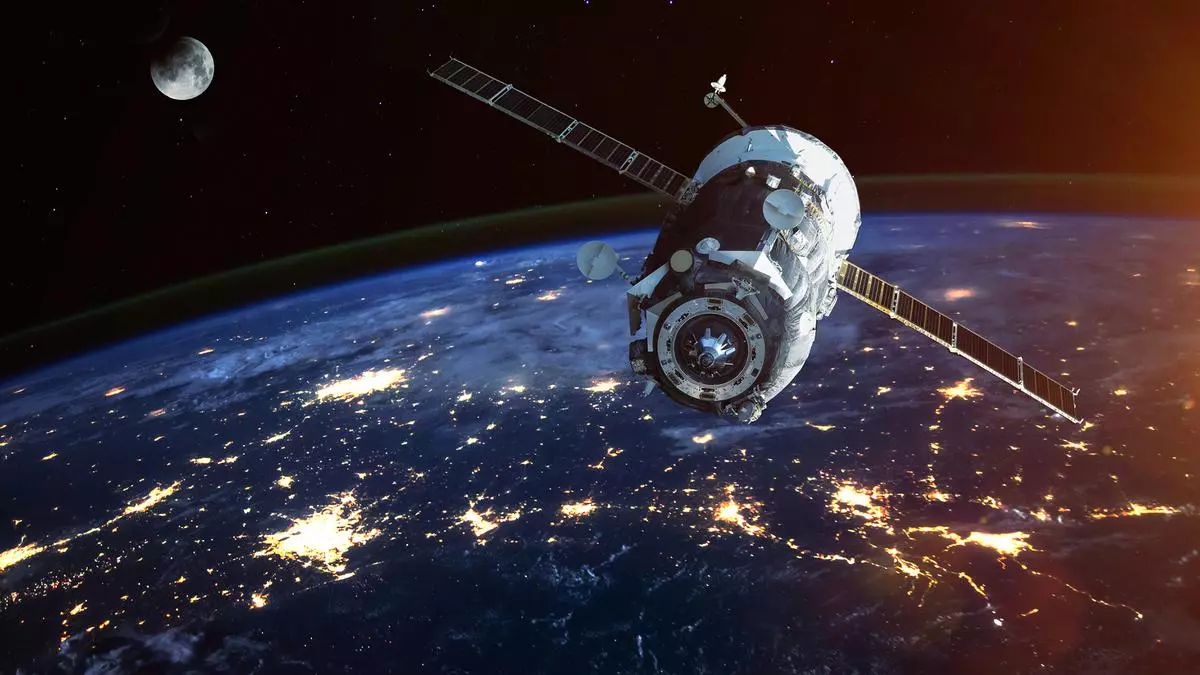
India will today take its first step towards two of its major space ambitions—having its own space station by 2035—the Bharatiya Antariksh Station—and picking up samples from the Moon and returning to Earth. 

For both, one needs to master ‘space docking’–which is what the SpaDeX Mission of the Indian space agency, ISRO, is about to launch today.  

Two bodies traveling in space at unimaginably high speeds (about 7.5 km a second) meeting and locking with each other is not an easy feat.  

As in many aspects of space faring, India is a late comer in docking, but still, it will be only the fifth in the world to do so. 

For sure other countries have done it decades ago. The first was achieved back in March 1966, by none other than the first man on the moon, Neil Armstrong, who, along with David Scott successfully docked the Gemini 8 spacecraft with an uncrewed ‘target vehicle’ called Agena. Without docking, moon landing would not have been possible, because the astronauts would need to join back the mother spacecraft in orbit. 

That, therefore, was manned docking, which was technically easier but riskier to human life. Subsequently, the US, Russia, China and Europe have achieved the more challenging unmanned docking. China docked an uncrewed spacecraft Shenzhou-8 with its space station, Tiangong-1, in November 2011; it did it with a manned spacecraft in June of the following year. 

Docking is an extremely demanding exercise, calling for precision alignment and control. These are done by a bunch of sensors (laser range finder, reflectors and ‘rendezvous sensors’) and navigation devices. Both the laser range finder and the rendezvous sensor independently tell the relative positions, but the former also determines the velocity, according to information provided by ISRO. Also, the target and the chaser are “androgynous”, which means either can act as the target or the chaser. 

After docking, they will also undock and the spacecrafts will go their own ways and provide useful services—surveillance, imaging and radiation measurement. 

The SpaDeX spacecraft were designed and realized by the UR Rao Satellite Centre (URSC) with the support of other ISRO centers (VSSC, LPSC, SAC, IISU, and LEOS), says ISRO. The full integration and testing of the satellite were carried out at M/s Ananth Technologies, Bangalore, under the supervision of URSC. It might be remembered that Ananth Technologies was recently named as the beneficiary of an ‘announcement of opportunity’ by the space regulator, INSPACe, which would make the company the first private Indian satellite operator to provide geostationary orbit communication satellite services to the country. 


Source link

Magnesium: Casting coup

Magnesium: Casting coup


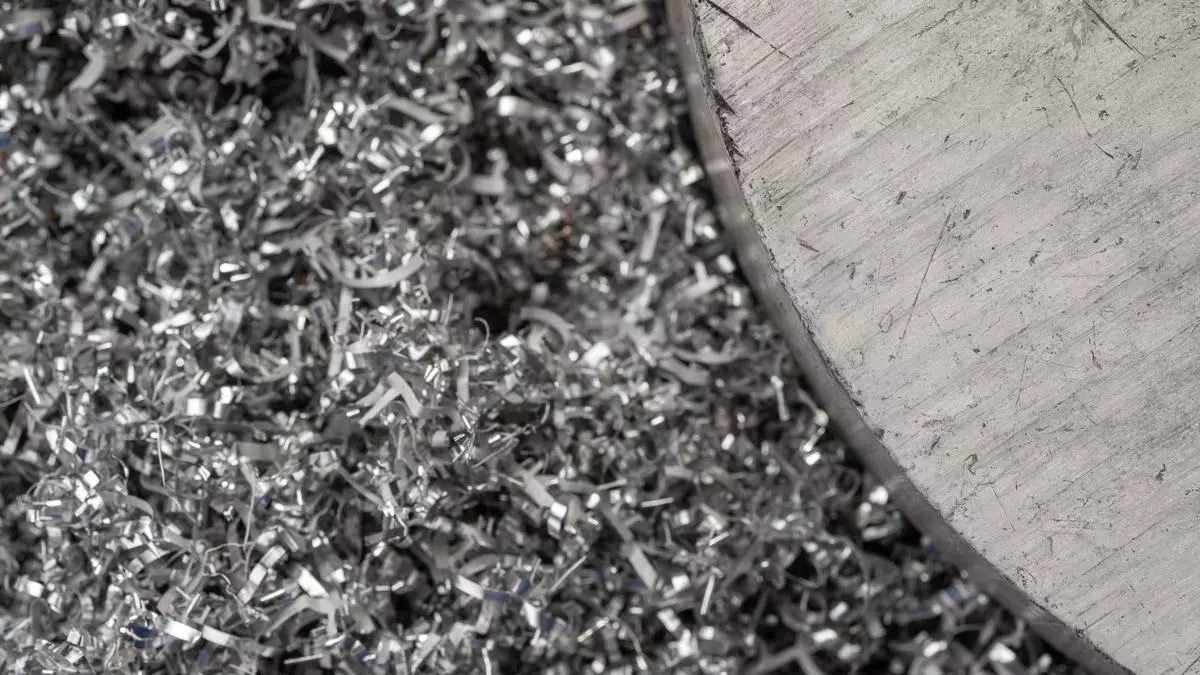
Magnesium, a strong, lightweight metal, could be ideal for making cars and aircraft — except that it is difficult to make anything with the metal. 

This has to do with the arrangement of atoms in it. As such, it has long engaged the attention of researchers in the area of metal forming (casting, forging and sheet-making).

Due to technical reasons, such as formation of dendrites, the traditional method of magnesium casting results in cast materials of doubtful strength.

Now, a group of researchers at IIT-Madras, led by Prof Sushanta Kumar Panigrahi, head of the manufacturing engineering section at the Department of Mechanical Engineering, have developed an innovative casting process for magnesium. 

Their ‘strain integrated gas infusion’ (SIGI) process improves the quality of magnesium alloy casting by refining its internal structure. 

The process involves using horizontal and vertical agitators in the metal pool; the agitators have holes through which argon gas is infused. 

While the agitation prevents the formation of undesirable dendrites, the gas helps in heat removal.

The alloys are “stronger and resistant to wear and corrosion. The billets cast by SIGI process can be used as a high-quality precursor for downstream processes to create industrial components”, says a scientific paper on this subject. 

The process results in a more ‘homogenous’ metal that is more durable. Also, it reduces both production time and manufacturing cost, Panigrahi says.

Tool to detect H pylori

Researchers have developed a cost-effective diagnostic tool using the CRISPR-based FELUDA system to detect Helicobacter pylori infections and associated antibiotic resistance mutations in dyspeptic patients in rural India, where access to diagnostic laboratories is limited.

H pylori infects over 43 per cent of the global population, causing conditions such as peptic ulcers, gastritis, and even gastric cancer. Resistance to clarithromycin, a key antibiotic for treating H pylori, arises from specific mutations in its 23S rRNA gene, complicating eradication efforts and requiring repeated treatments.

A team led by Dr Shraddha Chakraborty at IIT-Delhi and CSIR-IGIB developed a CRISPR-based diagnostic method using an engineered protein with enhanced mutation detection capabilities. This system identifies H pylori and its clarithromycin-resistance mutations in gastric biopsy samples through a lateral flow assay for visual results.


Source link

YouTube
Instagram
WhatsApp


