The writing on the prison wall

The writing on the prison wall


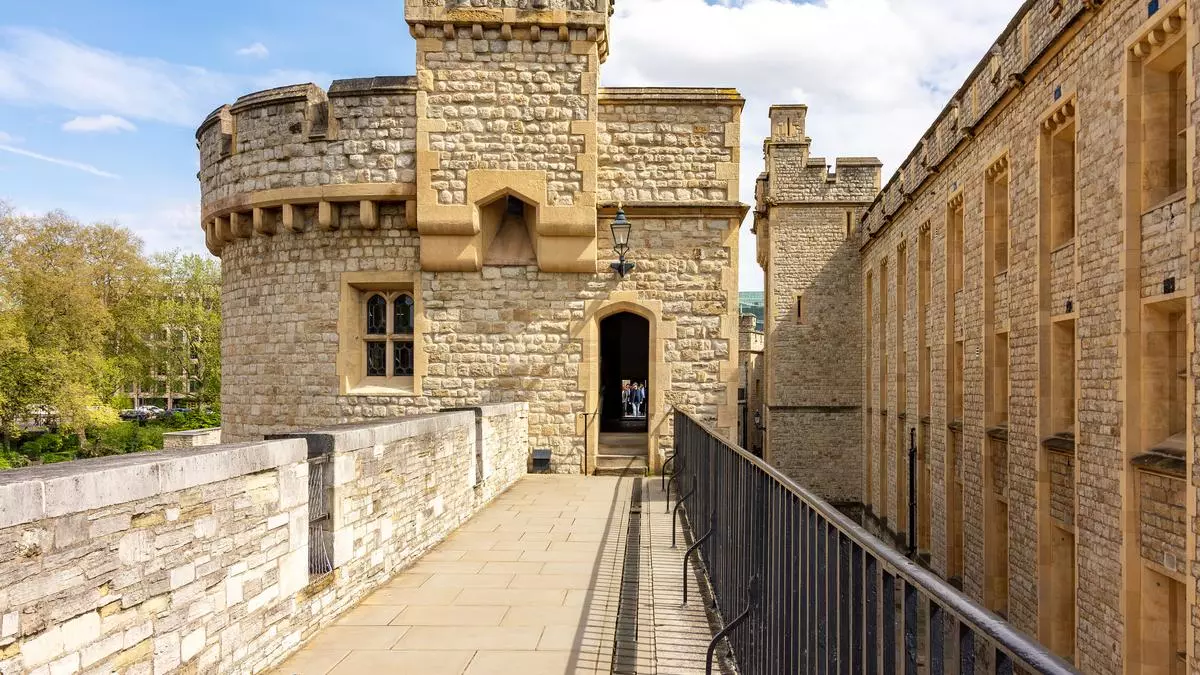
In 1561, the police caught Hew Draper for his “heinous crime” — practising sorcery. In jail, the Briston innkeeper could not contain his zest for his art. He engraved on the prison wall an astrological sphere with all the zodiac signs. 

Draper’s work, etched in stone, was comprehensible enough. But the jail has held hundreds of prisoners, many of whom have similarly recorded their thoughts and feelings on the cold walls. 

What did they want to convey? 

Raising the intrigue is the fact that the jail is part of the iconic Tower of London, an awe-inspiring superstructure that was built in 1066 by William the Conqueror. 

The scribblings on the wall have always been a mystery. Most of them were declared illegible. But researchers are carrying on regardless, using modern techniques. By using raking light (light shone at an angle), laser scanning and X-ray, researcher Jamie Ingram was able to pick up words here and there. 

When Ingram started off, he was told there would be 79 graffities; he found 354. 

The researchers are piecing together information to try and make sense of them. Some of the scribblings are religious, at least one refers to a ‘husband’. 

It would be interesting to find out if Lady Jane Grey had anything to say. Grey was Queen of England before she was executed at the age of 16, in 1554. Her rule lasted all of nine days, earning her the epithet ‘the nine-day queen’.


Source link

India warms up for a quantum jump

India warms up for a quantum jump


The world is probably still coming to terms with the latest, most mind-boggling development in the quantum world — Google’s Willow chip, a quantum processor that paves way for ‘large-scale’ quantum computers. Hartmut Neven, founder and lead, Google Quantum AI, says Willow has been shown to perform in five minutes computing that the fastest classical computer will take ‘1 followed by 25 zeros’ number of years. 

That’s a head-spinner. 

Where is India in quantum computing? Well, certainly considerably behind the leaders. 

Qubit power 

Today, India has a small-scale quantum computer at the Tata Institute of Fundamental Research (TIFR), which is a 7-qubit machine. 

Qubits are the information holders in a quantum computer, just like transistors in a classical computer. In a classical computer, the ‘off’ and ‘on’ states of the transistors represent 0 and 1; any information is encoded in terms of 0s and 1s. 

There are many types of qubits — energy levels of atoms, spin of a particle, polarisation of a photon, and superconducting circuits. Qubits can exist in more than one state (superposition) and can be ‘entangled’ so that the state of one qubit affects the state of another — a useful property. 

A 7-qubit quantum computer is a good start. A Bengaluru-based startup, QPiAI is developing a 25–qubit quantum computer, which is also small-scale. 

Under the National Quantum Mission, India aims to develop intermediate-scale quantum computers of 50-1,000 qubits — still in the category of ‘noisy’, less powerful and more error-prone. 

Thus, in terms of quantum computing, India is somewhat behind the US and China, which have intermediate-scale quantum computers, but not far behind the European Union, Japan and Australia. 

Startup momentum

Computing is only one of the many applications of quantum technology; others include communication and sensing. 

You can apply quantum technology in cryptography to transmit data safely. You can make medical devices that are more accurate. In these areas, an ecosystem is rapidly evolving in India. 

Recently, the government picked eight ‘pioneering startups’ in quantum computing for grants under the National Quantum Mission, from among 108 applications. The rest may be considered during the subsequent rounds of assessments. That there are more than 100 startups already in this field indicates the vibrancy of the emerging quantum ecosystem in India. Many of them started off without expectation of support from the mission. 

The mission, conceived four years ago, was slow to get off the ground. However, it gathered momentum on August 19, 2023, when the Cabinet approved and fertilised it with a budget of ₹6,003 crore for 2023-24 to 2030-31. In January this year, the mission governing board was set up. 

In its first meeting, it decided to issue a ‘request for proposal’ (RFP) to set up four thematic hubs, and these were finalised a few months ago. The hubs have come up at the Indian Institute of Science, Bengaluru for quantum computing; IIT-Madras for quantum communications, IIT-Bombay for quantum sensing and metrology; and IIT-Delhi for quantum materials and devices. 

There is also the Quantum Technology Foundation (QTF) at IISER-Pune, under the National Mission on Interdisciplinary Cyber-Physical Systems. These hubs support about 80 institutional ‘spokes’ across the country. Entrepreneurship development is one of the major mandates of the hubs. The mission is now working with the All-India Council for Technical Education (AICTE), the regulator for technical colleges, to launch BTech and MSc programmes in quantum technology. 

Funding support

With financial support from the mission and other help from the hubs, the startups are expected to blossom. Typically, government cash handouts range from a few tens of lakhs to low-crore rupees, but it is different under the NQM. “We have created a generous scheme where selected startups could get up to ₹25 crore,” says Dr Ajai Chowdhry, Chairman of NQM’s mission governing board. 

Bengaluru-based QNu Labs will receive ₹25 crore. Sunil Gupta, co-founder and CEO of QNu Labs, says the investment “has come at the right time and will accelerate our journey of becoming a global leader in quantum communication”. 

The startup intends “to build and deploy the world’s first end-to-end quantum network encompassing data security technologies”. 

Its three products — quantum key distribution, random number generator, and cryptography — have many overseas customers. In March 2024, it opened an office in the US to service the American market. 

Quanastra, another recipient of investments, makes superconducting nanowire single-photon detectors. IIT Delhi-incubated PrenishQ makes ultrahigh-vacuum chambers and narrow line-width lasers for quantum computers. Pristine Diamonds of Ahmedabad is making diamond materials for quantum sensors for accurate measurements of magnetic and electrical fields, temperature, pressure and time. This finds use in medical imaging, navigation, material science and environment monitoring. 

In a recent speech, Science Minister Jitendra Singh said India is “determined to lead this global revolution”. 

You may either agree with the minister or call his statement hyperbole. But there is enough evidence to conclude that India is not a laggard in quantum technology.


Source link

Shapeshifting, misfit materials that power up tech advancement

Shapeshifting, misfit materials that power up tech advancement


Two breakthroughs in material science, both related to manipulating the arrangement of atoms in a material, were reported recently. 

The first is the discovery of a new way of changing the phase of a material, from crystalline to amorphous, using an electrical pulse, which has the potential to revolutionise data storage in gadgets, mainly computer RAM. This new method consumes “a billion times less electricity” than the traditional melt-quench process, according to a paper published in Nature by researchers of IISc-Bengaluru, University of Pennsylvania School of Engineering and Applied Science, and Massachusetts Institute of Technology (MIT). 

Electronic storage devices use a type of glass called chalcogenide, which can change its phase from crystalline to amorphous (and back, when needed). In a solid, the atoms are in an ordered state. In an amorphous phase, the atoms are disordered, as in a liquid, but frozen into solid state — sort of a ‘liquid in solid form’. These two phases of a material are used to attribute the values ‘0’ and ‘1’ for storing data. The phase change from crystalline to amorphous is achieved by highly localised application of laser pulses, which consumes a lot of electricity. The crystals must be heated beyond 800 degrees C and then rapidly cooled. If there is a way to convert crystal directly to glass without the intermediate liquid phase, then the power required for memory storage can be greatly reduced. 

A group of 12 researchers have demonstrated amorphisation of indium selenide using pulsed electric current. The localised electric pulse causes the weakly bonded layers of the material to slide over each other, like tectonic plates — and, like the plates, they too generate a shock wave, explains one of the researchers, Dr Pavan Nukala of the Centre for Nanoscience and Engineering, IISc, Bengaluru. The wave propagates through the material and causes amorphisation. 

This new process has immediate application in microelectronics, but is really a breakthrough in material science as it shows a new way of thinking about amorphisation, he tells Quantum

Desired misfit

The second discovery — by a team led by Prof Kanishka Biswas, New Chemistry Unit, Jawaharlal Nehru Centre for Advanced Scientific Research (JNCASR), Bengaluru — has led to the synthesis of a new material with high potential for conversion of waste heat into electricity. The group researched into ferecrystals, a class of ‘misfit layered compounds’ (MLC) — so called because their atomic layers are misaligned, like an uneven stack of cards. 

MLCs have an interesting property — they do not allow the smooth conduction of heat and thereby block heat transfers. This ultra-low thermal conductivity creates a heat gradient across the material. According to the ‘Seebeck effect’, discovered in 1821, wherever there is a heat gradient, the material can also generate electricity. 

The ferecrystal material shows a ‘thermoelectric figure of merit’ of 2.3, a high number that means the material can convert a lot of heat into electricity. 

“The material is already generating electricity in the lab. However, it needs to be scaled up for practical use,” Biswas says.


Source link

ChatGPT outage caused widespread disruptions to AI services worldwide, leading to user frustration.

ChatGPT outage caused widespread disruptions to AI services worldwide, leading to user frustration.


OpenAI experienced a major service disruption on Thursday, December 11, 2024, impacting ChatGPT, its API, and Sora platforms, causing widespread technical challenges for millions of users worldwide.

The outage began shortly before 7 PM Eastern Time (5.30 AM Indian Standard Time), rendering ChatGPT, API services, and Sora inaccessible. Users encountered login difficulties and error messages, with many unable to use the popular AI chatbot and related services.

OpenAI quickly acknowledged the technical issues on X (formerly Twitter), stating, “We’re experiencing an outage right now. We have identified the issue and are working to roll out a fix.” The company’s engineers confirmed API calls were returning errors and platform access was compromised.

Services were gradually restored, with full functionality returning around 8 AM IST. Both free and paid users were affected, triggering significant social media reaction. Downdetector, a service disruption monitoring platform, recorded a sharp increase in user complaints during the outage.

The incident highlighted the growing technological dependence on AI tools, particularly OpenAI’s services. Businesses relying on the API experienced operational challenges, while individual users expressed frustration through memes and social media posts.

This disruption followed another major tech service outage by Meta on Wednesday, which affected WhatsApp, Instagram, and Facebook platforms, compounding user frustration with technology services.

OpenAI has not provided a detailed explanation of the root cause of the outage. The company’s primary focus remained on restoring services and minimizing user inconvenience.

The back-to-back service disruptions underscore the critical nature of digital platforms in contemporary professional and personal communication ecosystems.

At press time, OpenAI confirmed services had returned to normal, with ongoing monitoring to prevent potential future incidents.


Source link

ISRO to launch PROBA-3 mission satellites from Sriharikota today

ISRO to launch PROBA-3 mission satellites from Sriharikota today


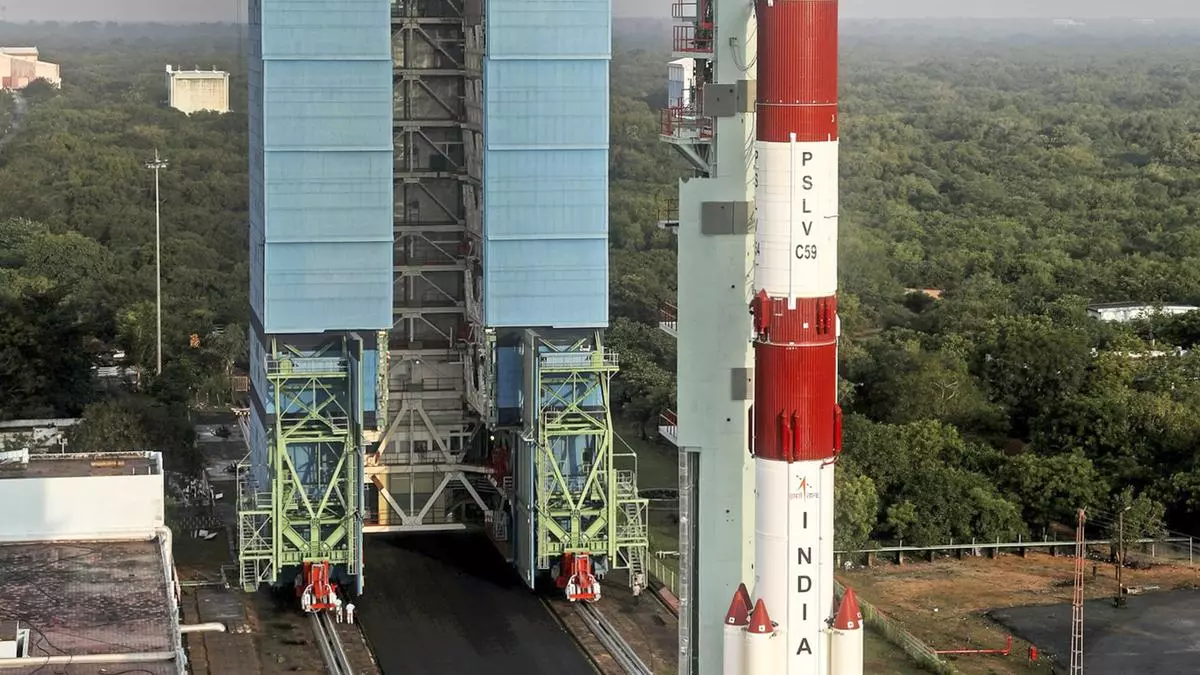
The Indian Space Research Organisation (Isro) is set to launch the Polar Satellite Launch Vehicle (PSLV)-C59 /Proba-3 mission from the Satish Dhawan Space Centre in Sriharikota, Andhra Pradesh on Wednesday.

The mission will entail the Polar Satellite Launch Vehicle (PSLV)-C59 carrying around satellites weighing approx. 550 kgs in a highly elliptical orbit.

The PROBA-3 mission is an “In-Orbit Demonstration (IOD) mission” by the European Space Agency (ESA).

Posting about the anticipated launch on X, the space organisation said, Liftoff Day is Here! PSLV-C59, showcasing the proven expertise of ISRO, is ready to deliver ESA’s PROBA-3 satellites into orbit.

This mission, powered by NSIL with ISRO’s engineering excellence, reflects the strength of international collaboration. A proud milestone in India’s space journey and a shining example of global partnerships.

Liftoff: 4th Dec 2024, 16:08 IST.

Location: SDSC-SHAR, Sriharikota.

The mission consists of 2 spacecrafts, namely Coronagraph Spacecraft (CSC) and the Occulter Spacecraft (OSC) which will be launched together in a “stacked configuration” (one on top of another).

PSLV is a launch vehicle which helps carry satellites other various other payloads to space, or according to ISRO’s requirements. This launch vehicle is India’s first vehicle to be equipped with liquid stages.

The first PSLV was launched successfully in October 1994. The PSLVC-59 will have four stages of launch, according to ISRO. The total mass which the launch vehicle will be lifting off is around 320 tonnes.

The Space organisation also highlighted how this launch mission also exemplifies the “trusted precision” of the PSLV and collaboration with other agencies.


Source link

Memories of another life: Making a case for research into reincarnation

Memories of another life: Making a case for research into reincarnation


The nebulous and fascinating concept of continuum of life beyond death has been, by and large, ignored by the scientific community. But not all scientists are reincarnation sceptics. A small group of inquiring researchers has kept the field alive, though barely — as a few recent studies illustrate.

These researchers are adherents of a school of thought that moved the concept of ‘life beyond death’ out of the sphere of religion and culture and into science, following the seminal investigative work done by Dr Ian Stevenson, a Canadian-American psychiatrist and Founder and Director of the Division of Perceptual Studies at the University of Virginia School of Medicine. 

Over three decades from the mid-1960s, Dr Stevenson investigated over 2,600 cases of previous birth memories, checking their claims against fraud or alternative explanations. Incidentally, Dr Satwant Pasricha, Head of the Department of Clinical Psychology at the National Institute of Mental Health and Neurosciences (NIMHANS), Bengaluru, collaborated with Dr Stevenson on this work. Dr Stevenson has authored a number of books, including the two-volume Reincarnation and Biology: A Contribution to the Etiology of Birthmarks and Birth Defects (priced ₹32,000). Whether Dr Stevenson proved reincarnation is a matter of opinion but there is little doubt that he established a case for further research. 

The case, however, has not been followed up with the same vigour as ‘mainstream’ science but from time to time, researchers have been coming up with their own investigations into emerging cases of previous birth recalls. Many of these studies have been published as research papers in the Explorejournal, which calls itself “an interdisciplinary journal that explores the healing arts, consciousness, spirituality, eco-environmental issues and basic science as all these fields relate to health”.

A Brazilian flashback

In one such recent paper, the Brazilian authors report the case of a child named Paulo, who showed remarkable resemblance in mannerisms with his mother’s uncle, Roberto, who had been shot dead 19 years previously. The child would mystifyingly scream in fear and cry if he happened to see a gunfire scene on TV; he once even called his mother ‘Côca’, a long-forgotten nickname given to her by Roberto. 

When Paulo was six, he told his mother that when he was at work, a robber came and fired four shots at him — exactly as happened to Roberto. 

The authors report that the child made 13 spontaneous statements that had something to do with his past life; nine were accurate. Paulo also showed eight behaviours that matched the habits and interests of Roberto. 

“This case’s characteristics fit cross-cultural patterns verified among a worldwide variety of past-life claims. The score of 19 points on the strength-of-case scale measurement is higher than the mean of 10.4 in a sample of 799 cases,” the authors say in the paper, which contains a table illustrating matches between Paulo and Roberto. 

This study, as well as another in Japan, follow the approach developed by Dr Stevenson. He details birthmarks or birth defects that correspond to wounds, usually fatal, on the person whose life was remembered. He also explains childhood or infancy phobias — such as Paulo’s fear of gunshots — that correspond to experiences in previous births. A 2022 work, ‘Japanese children with past-life memories’ by researcher Masayuki Okhado, describes 17 cases, including that of Akane, born in 2006 with an oval-shaped birthmark on her forehead, “just like a bindi”, and who at three years started talking about her past life as an Indian girl who died young in a fire caused by her mother’s lover. Akane knew some Indian gods unfamiliar to most Japanese, and said the birthmark was given by a goddess just before her death, so that she wouldn’t forget her Indian life. 

Research vs ridicule

In a similar case, Takeharu, born in 2012, started saying at age three that he wanted to see Yamato, which his parents knew nothing about but later discovered to be a battleship sunk by American air forces in April 1945. Okhado notes that Takeharu had “unusual knowledge” about the battleship, which is “unlikely to be accounted for by normal means such as fraud, fantasy, and knowledge acquired through normal means”. 

There are thousands of other well-documented cases, including names such as James Leininger, Yvonne Ehrlich and Bajrang Bahadur Saxena. 

Fifty years of documentation of thousands of previous life memories is nothing to be sneezed at. Yet, well-funded, systematic research on this subject is lacking. Scientific orthodoxy dismisses reincarnation research as pseudo-science, and the researchers are ridiculed. 

When Quantum reached out to Dr Pasricha for a comment on reincarnation research, she said she did not wish to give one. But there is a case for continued research, perhaps with AI tools that can throw up more matching features. As the work of American psychiatrist and hypnotherapist Dr Brian Weiss shows, there is a role for past life memories in psychiatry.


Source link

YouTube
Instagram
WhatsApp