
Electrochemical means of producing ‘green’ soda ash

Electrochemical means of producing ‘green’ soda ash


Sodium carbonate (aka soda ash) is a key industrial chemical, but its production emits copious amounts of carbon dioxide — 800 kg per tonne. The conventional method (Solvay process) involves burning limestone with coke to produce carbon dioxide, which reacts in the subsequent steps with brine, ammonia and lime to produce soda ash. It also produces calcium chloride and wastewater, which need to be disposed of. 

The Fraunhofer Institute for Ceramic Technologies and Systems, Germany, has developed an alternative means to produce soda ash. At the heart of the electrochemical route to produce ‘green soda’ is bipolar electrodialysis, a process that uses ultra-thin membranes. The pores in these membranes are so tiny that only individual ions can pass through them. The membranes function as an exchange medium by allowing only the negatively charged anions or positively charged cations to pass through. 

This means that a mixture of salt and water — brine — is split into sodium hydroxide and hydrochloric acid. Hydroxides are salt-like compounds that form sodium hydroxide on contact with water. Then, when carbon dioxide is added to the sodium hydroxide, the final product is soda. 

“This lets us produce sodium carbonate without spewing greenhouse gases into the atmosphere and without harmful industrial wastewater increasing the salinity of rivers or other bodies of water,” says Hans-Jürgen Friedrich, group manager for technical electrolysis.

Sustainable chemical generation of amides

Amides are essential in chemistry, serving as key components in a wide range of organic compounds, including proteins, pharmaceuticals, and synthetic materials. Traditional amide synthesis often requires high temperatures and harsh conditions, leading to significant environmental impact and inefficiency. These conventional approaches typically involve transition metal catalysts and generate substantial waste, prompting the need for more sustainable alternatives. 

Scientists at the SN Bose National Centre for Basic Sciences have found a green and efficient chemical process for preparing amides that can revolutionise industrial manufacturing of pharmaceuticals and synthetic materials. 

The scientists have developed a novel method for synthesising amides from alcohols using a covalent organic framework (COF) as a photocatalyst under red light irradiation. 

This catalytic method can be helpful in chemical processes across industries — including pharmaceutical manufacturing, materials science, and green chemistry — offering a more sustainable, efficient, and recyclable approach to creating vital chemical structures, says a press release. 

The advantages of this method include mild reaction conditions, high efficiency, excellent recyclability, and the practicality of red-light activation, which is less harmful and penetrates more effectively, making it suitable for large-scale applications. 

The implications of this research are significant. In the pharmaceutical industry, this method could streamline drug production, reduce costs, and eliminate metal contamination. In materials science, it could enable the development of new polymers and materials with amide linkages, expanding the range of materials for various applications. 

“Further research may optimise the COF structure for even better performance and stability, and scaling up the process for industrial applications will be crucial to realising its full potential,” the release says.





Source link

Denizens of the deep: Mapping the ocean bed

Denizens of the deep: Mapping the ocean bed


The sun, we have been told, is the primary source of nutrition for every living thing on earth. But that is not entirely true. 

A recent study has shown that in the depths of the oceans, over 8,000 feet below, there are creatures living under the seabed, at the hydrothermal vents. These animals — they are not just microbes, but way bigger — get their nutrients from the mixture of magma and seawater. 

This discovery illustrates a point, hidden in plain sight: while we train our sights deep into the universe, with gizmos like the James Webb telescope, little do we know about what lies beneath, in the depths of our oceans. 

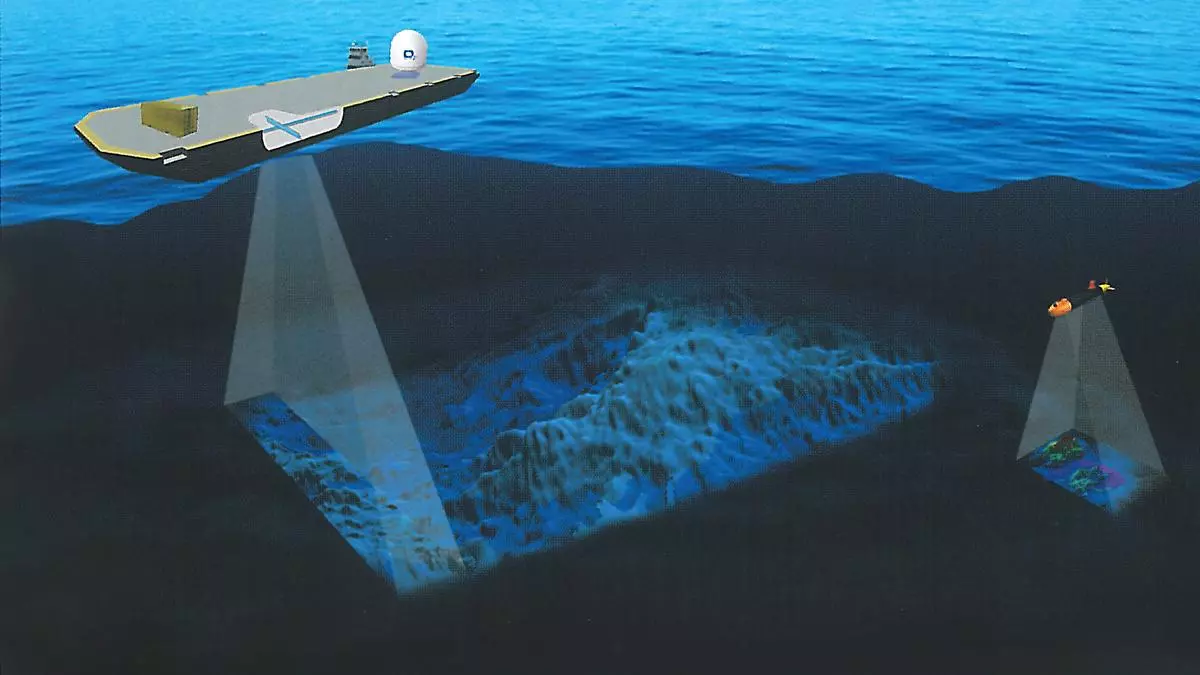
Fortunately, the scientific community has woken up to this miss. In 2018, the Nippon Foundation began a collaboration with an organisation called the General Bathymetric Chart of the Oceans (GEBCO), to do a complete mapping of the ocean bed by 2030. 

In June, the Seabed 2030 project reported that 26.1 per cent of the sea floor has been mapped. The exercise has revealed interesting underwater features, including tens of thousands of coral mounds with immense biodiversity. 

Studying the seabed between Costa Rica and Chile onboard a vessel called Falkor, owned by a company called Schmidt Ocean Institute, the crew made a groundbreaking discovery of four underwater mountains, the tallest of which is 1.5 miles high. More than a hundred new marine species were discovered. 

“Magnificent new surprises,” is how the find has been described by the Executive Director of Schmidt Ocean Institute, Jyotika Virmani. 


Source link

Catalysing Indian IP creation 

Catalysing Indian IP creation 


In a highly competitive world, it is perhaps time for India to rethink its strategy and protect its innovations instead of sharing them. 

Over the past century, the country has gradually transitioned from a largely agrarian to an industry- and service-dominated economy that is among the largest in the world. To sustain rapid development in sectors such as manufacturing, infrastructure, and defence, India largely relied on imported technologies in its early years. 

Today, its top universities and research labs have scientific and intellectual manpower that can rival any in the highly developed countries. 

The worries over ‘brain-drain’ are also a thing of the past, as more and more graduates from top institutions like the IITs choose to stay and work in the country. There is also a significant increase in the number of start-ups, many of which are in the deep-tech sector. 

Yet, despite these advances, India has a tiny share of the overall intellectual property (IP) creation globally. According to data from Questel Orbit Intelligence, China accounts for a lot more IPs in deep-tech domains than the US or Europe, and certainly 100 times more than India. Given India’s creditable share of global research publications, its achievement in IP creation lags greatly.

In fact, many academics believe that patents and publishing cannot go hand-in-hand. However, they are unaware that one can protect an idea by filing a provisional patent (granted within five working days), and then publishing the information in journals with an acknowledgement of the provisional patent. The complete specification can be filed in due course.

Nevertheless, patent filing from India is steadily increasing. The number of patents filed by, and granted to academic institutions has increased from 6,800 and 1,900, respectively, during 2018-19 to 8,500 and 3,000 during 2019-20; 10,000 and 3,400 in 2020-21; and 14,200 and 3,600 during 2021-22. These figures touched a high of 23,600 and 4,700, respectively, during 2022-23.

Speedy grants

The Indian Patent Office has introduced several measures to speed up the grant process, including reduced fee for start-ups, educational institutions, individuals, and small businesses; and permission for filing expedited publications and examinations. Particularly noteworthy is the expedited examination process, with patents being processed within 2-3 months for educational institutions and startups. 

Moreover, academic institutions and other organisations are fostering a culture of innovation by rewarding inventors (researchers) with IP filings and grants with promotions and other annual rewards. IP generation also contributes significantly to the national rankings by the National Institutional Ranking Framework (NIRF) and international rankings such as the QS World University Rankings.

India’s ranking in the Global Innovation Index (GII), published by the World Intellectual Property Organization, has risen steadily from 81 in 2015 to 40 in 2023. The Indian Patent Office has granted an impressive one lakh patents during fiscal year 2023-24. IIT-Madras received more than 400 patents during this period.

Monetisation

Indian IP in the tech sector is largely in the mechanical engineering and chemistry domains, alongside emerging domains such as computers and communications, biomedical and polymer technologies. On the other hand, there is a distinct need to improve the innovation quotient in sectors such as electronics, physics, biotech and civil engineering.

This, in turn, calls for policy support. Equally important is the need for IP commercialisation and monetisation. Ideally, IPs from academic institutions could be licensed through home-grown start-ups and small businesses, to help cut costly tech imports.

That said, Indian industry must protect its processes and products. Innovative solutions that have evolved over time in the agriculture, manufacturing and construction sectors are potentially valuable IPs, which could benefit other emerging economies too. 

By fostering the right ecosystem for IP creation and monetisation, India looks set to capture a leading position in the foreseeable future.

(The writer is a professor, department of civil engineering, and dean for industrial consultancy and sponsored research at IIT-Madras)


Source link

How radio waves can power smart cities 

How radio waves can power smart cities 


Earlier this year, a company called Betavolt made news by announcing a nuclear battery that can go on for 50 years before needing a recharge. Technology is marching further ahead. In the future, at least for small electronic devices, you wouldn’t ever need to charge the batteries — they would self-charge from (man-made) energy in the atmosphere. 

There is plenty of energy around us — only we don’t quite know how to tap it well. There is sunlight, which we are now harnessing. Then we have heat and vibrations — scientists are trying to figure out how to make use of them. However, the problem is that these energy sources are not available everywhere or always. 

Yet another ambient energy source is electromagnetic (EM) radiation. Now, EM is a broad spectrum, extending from radio waves at one end to gamma rays at the other, and with infra-red, visible light, ultraviolet and X-rays in between. While all these are energetic, scientists have trained their sights on radio waves — perhaps because they are now practically omnipresent, thanks to human activity. 

Radio frequency (RF) signals are generated by the millions of devices we now use all the time — including Wi-Fi routers, radio and television broadcasting stations, and mobile networks. You can capture these ambient RF signals and convert them into alternating current. The rest is then routine stuff — a rectifier converts the AC into direct current, which can go into a battery for use by devices such as wireless IoT sensors (especially those deployed in hard-to-reach areas), wearable electronics (including medical implants), and other appliances such as smart light switches and security systems in buildings. 

Effortless wireless

Dr Sumit Som, Director of Variable Energy Cyclotron Centre (VECC), a unit of the government’s Atomic Energy Department, in Kolkata, describes ‘radio frequency energy harvesting’ (RFEH) as a “promising technology for dynamic recharging of wireless devices”.

Dr Som explains that RFEH has “numerous distinct advantages” — it can work in any location with a strong RF signal, which is practically everywhere; it is not affected by lack of sunlight or weather conditions; and it can work just as fine in indoor spaces, without needing specialised transmitters. 

Since the batteries are dynamically recharged by RF, they can be small and, in turn, the electronic device can be smaller too. 

Above all, it is green — no carbon footprint. 

That said, it is important to know that RFEH is still a technology in the making, though there is little doubt it will be within reach in future. The fundamental challenge to be cracked is the ‘power conversion efficiency’. Researchers are stretching themselves to improve antenna and rectification efficiency. RFEH technology is getting better by the day but, by all accounts, it needs to improve more. Prof Manash Sarma of Gauhati University says in a scientific paper that researchers at his institute have developed a ‘transmission gate-based system’ that is “capable of generating output power at a low level of input with good conversion efficiency”. However, despite the “strong performance”, there is still “an opportunity for improvement”.

Connected devices

A look at various research papers shows that RFEH will prove to be a good technology for building smart cities, where there is a growing demand for connected devices and sensors. Powering IoT sensors is one area where RFEH will help big time. You can have millions of sensors without worrying about how to power them. A smart city would need sensors for monitoring air quality, ambient temperature and humidity, monitoring infrastructure (such as integrity of bridges and buildings), smart meters for utilities, regulating transport and parking, surveillance, waste management, and so on. 

In India, RF technologies spin out of the Department of Atomic Energy’s labs such as Bhabha Atomic Research Centre (BARC) and VECC. The latter uses RF in particle accelerators — namely to accelerate and control the motion of charged particles (such as protons). Thanks to its expertise with RF, VECC has developed quite a few societal applications for RF technologies. 

For example, RF can be used in drying agricultural produce. Here, RF systems generate electromagnetic waves that cause ‘dipole rotation’ in the water molecules in agricultural produce — the water molecules spin, producing heat, and vaporise. This method is said to be faster and more uniform than conventional air or sun drying. 

“RF technology is used in a variety of important fields and will always remain in high demand,” says Dr Som.


Source link

Diamonds are a UV photodetector’s best friend

Diamonds are a UV photodetector’s best friend


Bhathwari Technologies Pvt Ltd, a company in Surat that synthesises diamonds using the chemical vapour deposition (CVD) technique, recently signed a memorandum of understanding with IIT-Delhi for the development of diamond-based deep ultraviolet (UV) photodetectors for the first time in India. 

A photodetector senses light and converts it into an electrical signal. When UV light hits the photodetector’s surface, it generates a small current or voltage, which can be measured. Diamond-based photodetectors can sense deep UV light because of diamond’s high sensitivity to UV photons, and they are resistant to damage from harsh environmental conditions (such as radiation and heat). 

Deep UV photodetectors find application in areas such as UV imaging, secure communication, biological detection, military detection, and so on. The advantage in these photodetectors is their highly selective photo response in the deep UV region, and high efficiency at room and higher temperatures. 

Under the collaboration, Bhathwari Technologies will provide high-quality CVD-grown diamond samples to IIT-Delhi. The researchers involved in the design and development of the UV photodetectors are led by Prof Rajendra Singh from the physics department. 

Prof Singh’s research group has a long-standing experience in developing UV and deep UV photodetector technology based on wide bandgap semiconductor materials such as gallium nitride, aluminium gallium nitride, aluminium nitride, and gallium oxide. 

Industry-academia tie-up

Bakul Bhai Limbasiya, Chairman of Bhathwari Technologies, says, “We had synthesised the first lab-grown diamond (LGD) in India in 2001 and have since been actively engaged in developing the CVD reactors and related technology for LGDs.” 

Diamonds have an ultra-wide bandgap — namely the energy difference between the valence band, where electrons are bound to the atoms, and the conduction band, where electrons are free to move and therefore conduct electricity. 

A material with a wide bandgap, such as diamond, can withstand very high voltages and temperature. This makes it ideal for high-performance electronics. 

Diamond-based photodetectors are particularly responsive to deep UV radiation — they can, therefore, sense even low levels of UV radiation. 

Furthermore, diamond’s structural properties allow for high-signal accuracy with minimal background ‘noise’. 

As such, diamond-based deep UV photodetectors can be used to monitor ozone layers, for instance. 

They are suitable for defence and space applications, says a press release from IIT-Delhi.


Source link

Meta’s mega gift to material science 

Meta’s mega gift to material science 


Discovery of new materials with desired properties is not easy, ask any alchemist. You must take two materials that have the properties that you want and, like making a baby, you must see how to combine them to get exactly the offspring that you want. 

Meta (formerly, Facebook), often bashed for cashing-in on data, has now given a meta gift to mankind: tomes of data — for research into functional (meta) materials. 

The global giant has just released copious amounts of data about behaviour of materials at the atomic level, under its Open Materials 2024 (OMat24) initiative, for free. 

This data can help scientists combine different materials with different desired properties to create something new. Examples of functional materials that can tackle climate change include new catalysts for renewable energy storage, carbon neutral fuels, new sorbents for direct air capture, etc. 

Creating such materials is somewhat similar to discovering a drug molecule for disease by trying out different combinations of molecules or making a dish of desired taste, texture and flavour from millions of ingredients. 

Traditionally, making meta materials involved playing trial-and-error with millions of data points from thousands of materials. But now, there is Artificial Intelligence (AI), which can deliver the goods, however, AI is data hungry.  

Meta has provided this food for AI. The OMat24 dataset is a collection of data generated from simulations and calculations on different inorganic materials. This dataset contains information on 118 million atomic structures, whichhas information on three parameters — total energy (the overall energy of the material’s structure), forces (acting on each atom) and cell stress (indicating how the material could deform under certain conditions.) All this was calculated using ‘density functional theory’, a quantum mechanics-based method for predicting material properties . 

“The search space of possible materials is enormous and remains a significant challenge for both computational and experimental approaches to material science,” says a yet-to-be peer-reviewed paper by scientists at Meta’s Fundamental AI Research (FAIR) group. “Identifying promising candidates through computational screening with machine learning models offers the potential to dramatically increase the search space and the rate of experimental discovery,” says the paper, written by Luis Borroso-Luque et al. 

FAIR scientists took over 400 million core-hours of computing to get the data of 118 million structures labelled with total energy, forces and cell stress. (One CPU core used for one hour is one core-hour.) These parameters give an idea of the stability of materials under given conditions. 

Now that there is data on over 118 million atomic structures, one can train an AI model to come up with the best combination of any of them for a desired material. 


Source link

YouTube
Instagram
WhatsApp



