Fine-tuning MOF defects for better energy storage

Fine-tuning MOF defects for better energy storage


A new method of introducing controlled defects in MOF-based supercapacitors through laser irradiation, can help enhance performance of existing energy storage technologies.

In recent years, several methods have been investigated for creating defects, such as thermal annealing, chemical exposure, high-energy ball milling, e-beam and chemical vapour deposition. However, the extent of defects could not be controlled in the materials using these methods. Traditional methods lack the precision needed for fine-tuning of defects.

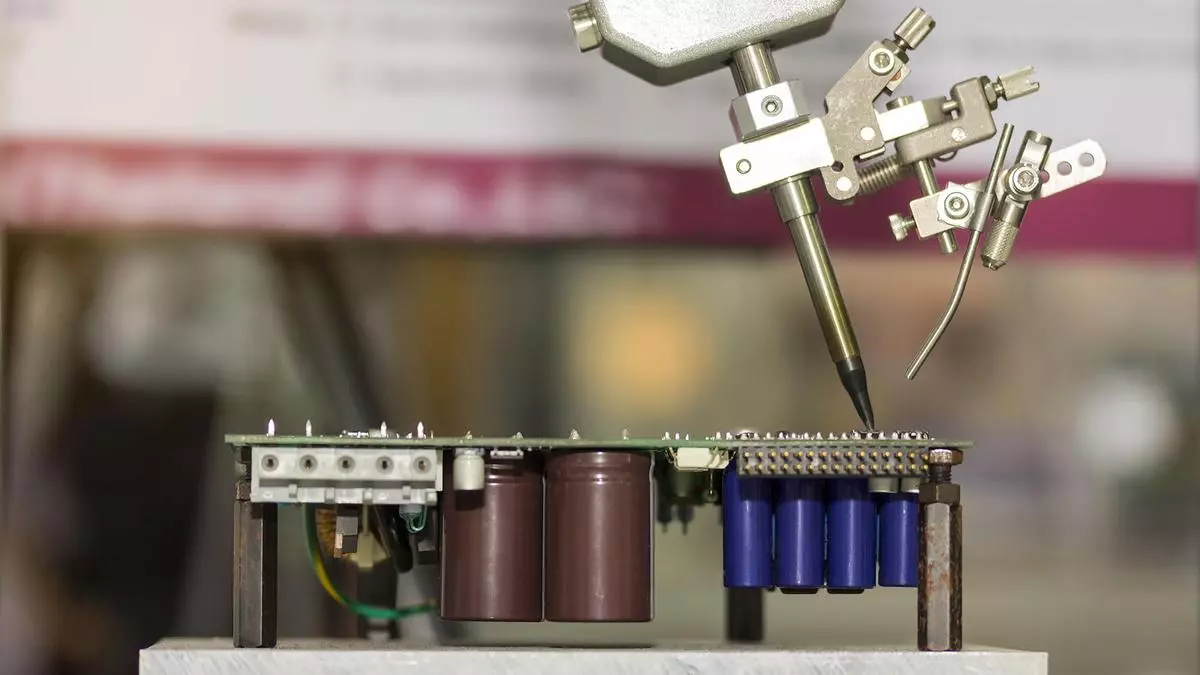
In order to enhance the activity of the pristine MOF (Metal Organic Framework) without transforming it into other materials or creating a composite out of it, scientists at the Institute of Nano Science and Technology (INST), Mohali, carefully adjusted laser power to systematically regulate defects and porosity resulting in a significant increase in the electrode’s surface area and activity, says a press release.

By precise tuning of the laser powers, Prof Vivek Bagchi and his team controlled the defects and porosity in pristine CuZn-BTC MOF without changing its crystal structure.

The novelty of this technique is that the crystallinity of the MOF material is mostly preserved; however, the laser irradiation enhances the activity of the material.


Source link

Sticky traps get smarter

Sticky traps get smarter


Scientists from Jawaharlal Nehru Centre For Advanced Scientific Research (JNCASR) and National Bureau of Agricultural Insect Resources (NBAIR), Bengaluru, have jointly developed a sustainable pheromone dispenser with a controlled release rate which could act as an innovative solution to reduce the costs of pest control and management.

Sustainable organic pheromone dispensers are not a new concept. In fact, polymer membrane or polypropylene tube dispensers that release pheromones already dominate the market. The released pheromones alter the behaviour of the target insect species and attract them to sticky traps. Their main drawback, however, is that the rate at which the pheromones are released into the air is not stable. These traps need to be checked and replaced frequently, which drives up costs and increases the amount of manual labour required.

To address this issue, the scientists have come up with a mesoporous silica matrix for their dispenser. This material has an ordered structure with many tiny pores, which allows pheromone molecules to be easily adsorbed and retained uniformly. Not only does mesoporous silica enable a higher holding capacity than other commercial materials, but it also releases the stored pheromone in a much more stable manner that is independent of external conditions, such as field temperature.

Using lures equipped with the proposed pheromone dispenser carries many advantages. First, thanks to the lower and more stable release rate of the loaded pheromone, the intervals between replacements are longer, thereby reducing the farmers’ workload. On top of this, the dispensers can be loaded with a more conservative amount of pheromone, as the condition-independent release rate will ensure they do not run out prematurely.


Source link

Thwaites Glacier is on the move

Thwaites Glacier is on the move


It is a mass of frozen water bigger than Florida. It is vanishing.

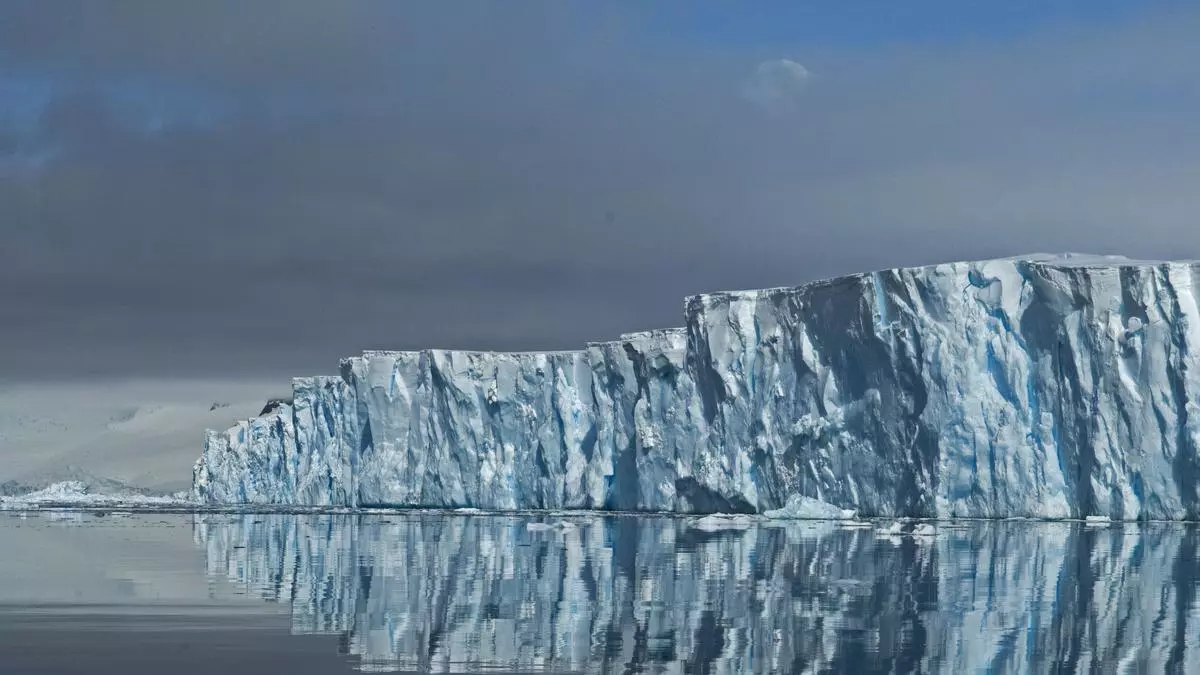
The Thwaites Glacier in Antarctica, discovered in 2018, has sent shivers down the spines of scientists and environmentalists, because its retreat can bring in its wake unforeseen and catastrophic consequences. For this reason, the glacier has earned the sobriquet, “The Doomsday Glacier”.

Ever since its discovery, scientists have known that it is retreating, thanks to global warming — a concern that has given birth to the International Thwaites Glacier Collaboration. Now scientists have found that its retreat is accelerating. Unless something is done to stop or at least delay its demise, the world is in for a big trouble. Scientists are desperate to do something, but they don’t know what to do.

The monstrously large Thwaites, about 120 km across and two km high, is the widest glacier on Earth. Part of it sits on a bedrock and the other part floats over the sea, partly submerged. Tidal action is lifting the sea part of the glacier, letting warmer sea water sneak between the glacier’s underside and the bedrock.

If it melts away entirely, which could happen in the next century, its waters will raise sea levels by more than three feet. That is a goodbye to several islands and large chunks of Bangladesh. But don’t think ‘next century’ means it is someone else’s problem. Full glacier melt is the endgame — there is devil’s work all along the way, starting from now.


Source link

How nanozymes are revamping collagen-based biomaterials

How nanozymes are revamping collagen-based biomaterials


Recreating the complex and precise functions of natural enzymes through artificial means has been one of the formidable challenges in science. Enzymes, which catalyse several vital biochemical reactions in living organisms, possess unmatched specificity, efficiency and biocompatibility.

Replicating these qualities in artificial enzymes has been a significant hurdle, particularly in ensuring that they function as effectively as enzymes without hindering other biochemical processes.

Artificial enzymes

Researchers at the CSIR-Central Leather Research Institute (CSIR-CLRI), Chennai, have made significant achievements in nanozymes (nanomaterials that function like enzymes), unveiling innovative approaches that could transform the field of artificial enzymes and the development of collagen-based biomaterials.

Two studies from Dr Amit A Vernekar’s research group, recently published in Chemical Science, highlight their pioneering work in expanding the field of artificial enzymes.

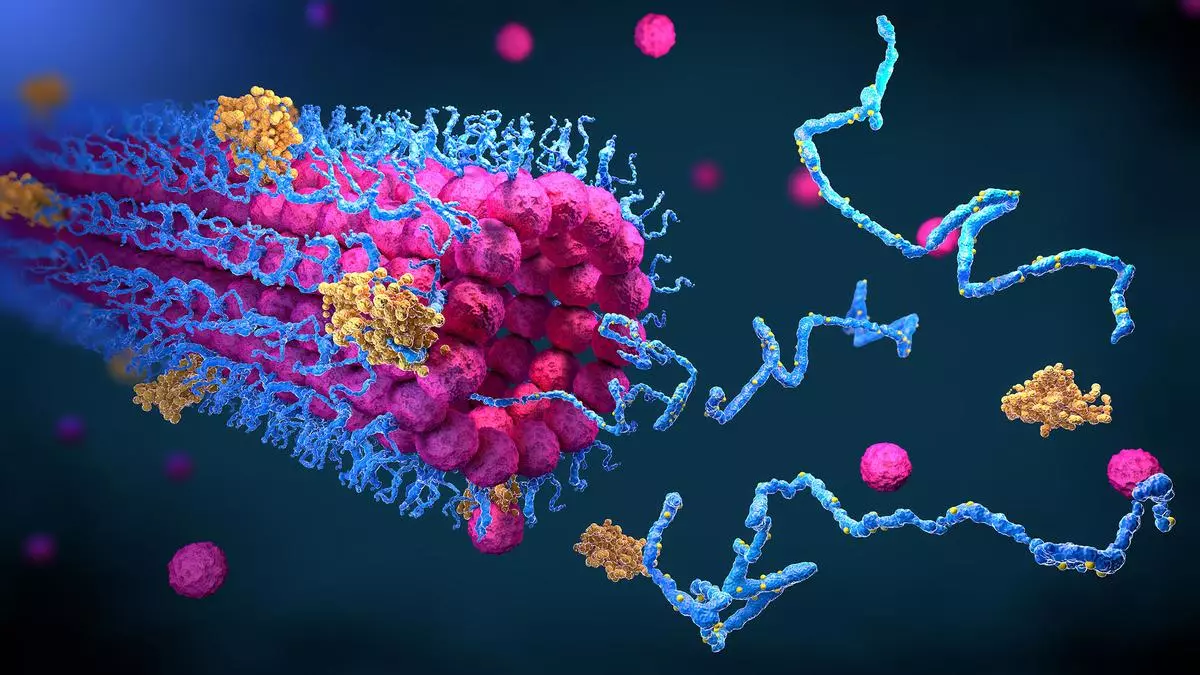
The first study focuses on a manganese-based oxidase nanozyme (MnN) that presents significant potential in the biomedical field. This MnN nanozyme, as described by the first author Adarsh Fatrekar, can activate collagen, a major structural protein, and neatly crosslink its tyrosine residues using only a trace amount of tannic acid. “Our work shows that this process maintains the collagen’s natural triple-helical structure, which is vital for its function in medical applications,” says Fatrekar.

Traditional methods of crosslinking collagen often involve harsh chemicals or extreme conditions, which can lead to toxicity or denaturation of the protein. However, the CLRI team has showed that the nanozyme can function under mild conditions too, ensuring that the collagen retains its structural integrity while offering high resistance to enzymatic degradation. This breakthrough is of high significance for creating durable and stable collagen-based biomaterials for wound healing, tissue engineering and several other medical uses.

Vernekar emphasised the importance of this discovery as thus: “Our research expands the role of nanozymes beyond their conventional uses with small molecules, bridging a crucial gap in the field. This development not only enhances our understanding of nanozymes’ chemistry but also paves the way for the development of new, safer and more effective biomaterials.”

The study reveals that the MnN nanozyme confers remarkable resistance to collagenase, an enzyme that typically degrades collagen, by forming a tannic acid-tyrosine linkage that likely hinders collagenase’s ability to recognise and break down the protein.

Precision medicine

In another related study, Dr Vernekar’s research group has explored how biomolecules interact with the enzyme-like catalytic sites within a metal-organic framework. This research highlights the importance of controlling these interactions, which is crucial for the effectiveness of artificial enzymes in medical applications.

“By recreating enzyme-like activity in the pockets of the metal-organic frameworks, we were able to manage how biomolecules interact in ways that conventional methods can’t achieve. This opens up new possibilities for creating more precise artificial enzymes having lesser side reactivities,” explains the first author, Rasmi Morajkar, a DST-Women in Science and Technology (WISE) PhD fellow.

Together, these studies mark a significant step forward in the field of nanozyme research for developing the next-generation of artificial enzymes.

As the team continues to push the boundaries of nanozyme technology, their work promises to bring about safer, more efficient solutions for biomedical applications, particularly in the development of collagen-based biomaterials.


Source link

CTBTO tunes into infrasound

CTBTO tunes into infrasound


In November, the Comprehensive Test Ban Treaty Organization (CTBTO), is holding a workshop for scientists on using ‘infrasound’. The idea is “to create an international forum for presenting and discussing recent advancements in infrasound research and operational capabilities of global and regional networks.”

Though the CTBTO’s primary mandate is to get more countries to sign the treaty — which India has not signed — it also shares the technologies it develops for monitoring nuclear tests with the industry. One such technology is ‘infrasound’, which refers to sound waves with very, very low frequencies, in contrast to the more ubiquitous ultrasound, which are sound waves of very high frequencies.

The invisible sound

Infrasound can be produced by, well, anything — a passing meteor, a storm, an aurora up north, volcanoes, earthquakes or even nuclear explosions.

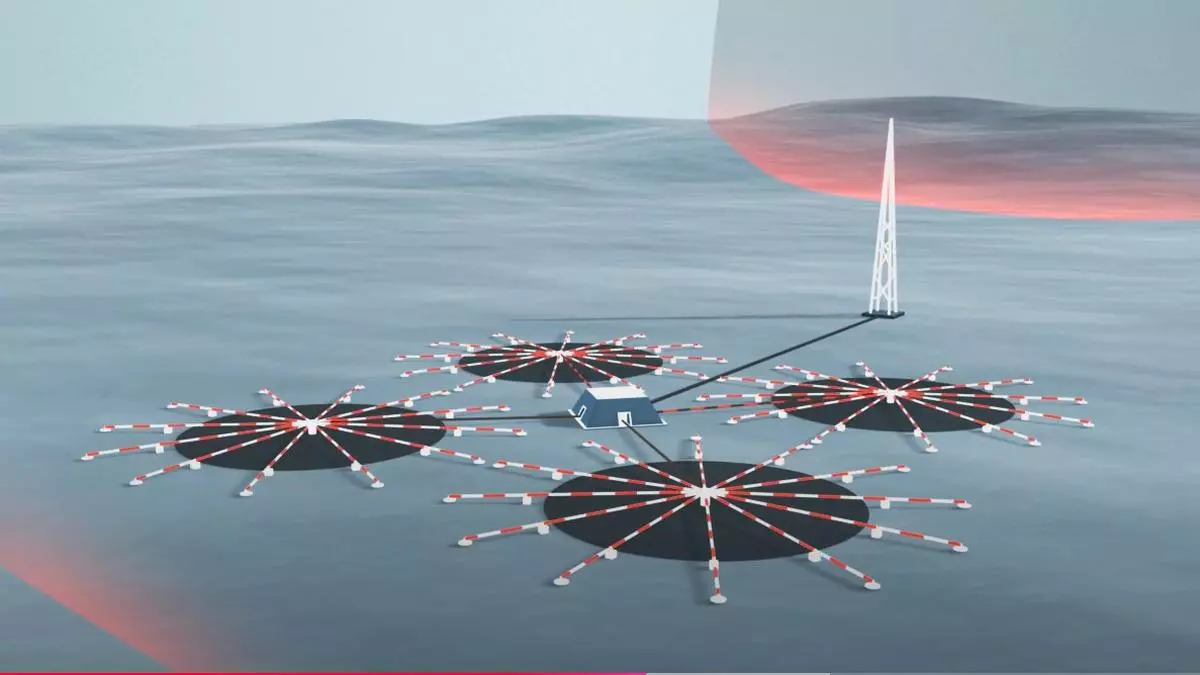
The CTBTO’s International Monitoring System (IMS) uses a range of technologies to detect nuclear explosions. Its Infrasound Network (that is being built) is the only global monitoring network of its kind, with plans to build a network of 60 array stations in 35 countries. (The CTBTO is telling India, “Even if you don’t want to sign the treaty, at least allow us to set up an IMS on your soil”, but that is a different matter.) Each array contains four or more elements arranged in different geometric patterns, a meteorological station, a central processing facility and a communication system for the transmission of data. These stations are being built far from natural sources of noise, such as airports or windy coasts, with dense forests being ideal locations.

Infrasonic waves can cause minute changes in the atmospheric pressure, which can be measured by microbarometers. These noiseless sounds can travel very long distances without losing steam — a property that CTBTO finds useful for detecting distant nuclear explosions. The CTBTO website notes that the first observation of naturally occurring infrasound recorded with instruments was after the 1883 eruption of the Krakatoa volcano in Indonesia. In its aftermath, the infrasonic waves “circled the globe at least seven times, shattering windows hundreds of miles away and were recorded worldwide.”

Industrial applications

Now, it is important to note that infrasound has many industrial applications. For example, it can be used to check the structural health buildings, dams or bridges — because infrasonic waves can pass through dense materials and reveal internal stress, cracks or other defects. In the field of aerospace, low-frequency sounds generated during a rocket’s lift-off can cue the stress and behaviour of a rocket, or detect aerodynamic instabilities of an aircraft. In mining, infrasound can help check the integrity of mine shafts or determine whether a dynamite blast was successful. Infrasound has also been used in wildlife tracking, such as monitoring the movement of whales.

On the flipside, there are concerns about the so-far unknown harmful effects of infrasound on human health, a subject wide that remains open to debate.

Thus, there is a lot to learn about infrasound, so that it becomes as commonplace as ultrasound. The CTBTO workshop is an effort in that direction.


Source link

Cleaning water with bubbles

Cleaning water with bubbles


We know that the water molecule is made of one oxygen and two hydrogen atoms (H2O). By using an electrolyzer, one can split the hydrogen and oxygen atoms (H2 and O). There is another way to split water — into hydrogen and hydroxyl radicals (H and OH). A radical is an atom or an ion or a molecule which has at least one unpaired valence electron in its outermost shell, which makes it highly reactive and therefore, short-lived.

As it turns out, hydroxyl radicals have a special property — they can degrade a wide range of pollutants. So, in recent times, scientists have been burning the midnight oil to find out a way to use hydroxyl as a water cleaner.

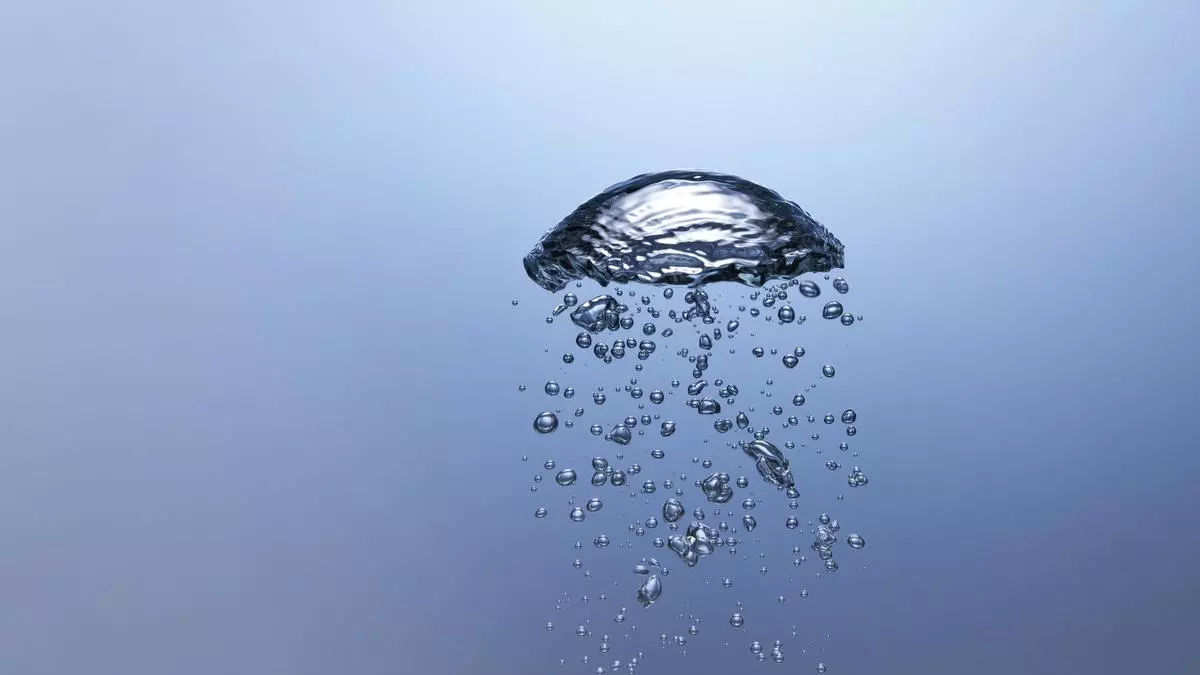
But how do you split water into hydrogen and hydroxyl radicals? The answer to this question is an interesting branch of physics called ‘hydrodynamic cavitation’. In simple words, creating bubbles.

Bubble power

Bubbles in water, or soap water, is something that everyone is familiar with, but few think about how they form. Bubbles appear when a liquid flows quickly through a narrow space, like a small tube. These bubbles, also called cavities, is filled with the liquid’s vapour. When they move to an area of higher pressure, they collapse, generating extremely high temperatures (over 10,000 degrees K) and pressures (1,000 bars). When this happens in water, it breaks the water molecule into hydrogen and hydroxyl radicals.

As mentioned earlier, radicals are highly reactive, eager to bond with other atoms or molecules. The ‘reactive’ hydroxyl radicals fling themselves upon both organic and inorganic pollutants such as those of those of dyes, pharmaceuticals and pesticides, breaking them down into simpler molecules. They can even mineralise organic pollutants, turning them into carbon dioxide, water and simple salts. And, they are ‘non-selective’, meaning they can degrade a wide variety of pollutants, making them very useful for cleaning water. This method is absolutely eco-friendly, as it uses no chemicals — though it does require electricity to run the reactor.

By the way, bubbles can also be created by passing sounds of very high frequency (ultrasonic cavitation) or light from a pulsed laser (photo-induced cavitation), but hydrodynamic cavitation is considered more efficient in producing bubbles, and hence radicals.

The green solution

While the science of hydrodynamic cavitation (HC) has been known for a long time, research into its use for tackling pollution is not very old. “HC has emerged as a promising technology since it offers several advantages over conventional methods making it a scalable solution for large-scale wastewater treatment,” says a scientific paper by Shishir Raut et al of the Department of Chemical Engineering, School of Energy Technology, Pandit Deendayal Energy University, Gandhinagar.

Prof Dhiman Chatterjee from the Department of Mechanical Engineering at IIT Madras is one of the scientists who has been researching hydrodynamic cavitation for wastewater treatment. He told Quantum that although research started in the late 20th century, HC “is yet to become a regular industry solution.”

That said, there is an operating hydrodynamic cavitation reactor at the Nandesari Industries Association in Gujarat. This facility treats 20 million litres per day, requires 5.5 acres of land and has a treatment time of 6-8 hours per batch, compared to 4-5 days for biological processes. The cost is 8 to 14 paise per litre.

Yet, many scientific papers that Quantum checked indicates that the HC reactors are still emerging and are yet to be optimised for efficiency. In this direction, Prof Chatterjee’s recent work, that has been described by another expert, Prof Matevz Dular, from the Faculty of Mechanical Engineering, University of Ljubljana, Slovenia, as “ingenious”, has taken the matter forward.

In a paper co-authored with Jahidul Haque Chaudhuri of IIT Madras, Chatterjee emphasizes that while designing a HC reactor, ‘forget about the volume of cavitation, look at other parameters such as local pressure variation and cavitation volume fluctuations’.

The ‘cavitation number’ is a measure of the possibility of the flow of water to cavitate (make bubbles). The number is based on the pressure difference between the inside and outside of a bubble on the one hand and the kinetic energy per volume on the other.

In essence, Chatterjee has devised a method for predicting the efficiency of a HC reactor, leading to better, more efficient reactors. “The proposed numerical strategy helps to improve cavitation reactor geometry. This improved geometry then needs to be tested at the laboratory scale and then for field testing before a successful launch of the design as a commercial product,” he said.

To sum up, hydrodynamic cavitation is emerging as a climate-friendly method for treating wastewater, especially industrial wastewater.


Source link

YouTube
Instagram
WhatsApp