The hidden genius of our lungs

The hidden genius of our lungs


Scientists have uncovered the secret behind one of nature’s most remarkable designs: the human lung. For years, the asymmetric design of our lungs has puzzled experts. And now, researchers from IIT Madras have found the reason to this asymmetry.

Prof Mahesh Panchagnula, Department of Applied Mechanics and Biomedical Engineering and Debjit Kundu, PhD Research Scholar, IIT Madras delved deep into the architecture of our lung — which unlike a perfectly symmetrical tree, branches out unevenly — to find out why they are designed the way they are.

Through sophisticated mathematical models, the scientists have demonstrated that this seemingly imperfect design is actually a master-stroke in evolutionary engineering, optimised not just for breathing but for protecting us from airborne threats.

Protective design

Says Debjit Kundu: “Take the structure of the lungs. The right lung is larger than the left lung. This is of course to accommodate the heart. However, this asymmetry is seen throughout the structure of the lungs, even down to the airway bifurcation units. This has been suggested to have a functional importance, which we have explored in our research.”

The study modelled how different degrees of asymmetry in lung branching affects its functions. A slight deviation from perfect symmetry enhances the lung’s filtration capability significantly, offering better protection against inhaled pollutants and pathogens at a relatively minor cost to other lung functions.

In essence, nature has designed our lungs to prioritise protection against environmental hazards, reflecting the lung’s role as a critical barrier against airborne diseases.

By constructing geometric models of the lung’s bronchial trees, the researchers were able to meticulously replicate its asymmetrical branching patterns. The models were grounded in morphometric parameters that helped to capture the essence of lung’s complex structure. Employing deterministic equations, the research team precisely defined the branching angles, diameters and lengths of bronchial segments, providing a realistic and accurate representation of the lungs’ anatomical features.

The investigation into the degree of asymmetry in the bronchial tree sheds light on its significant impact on the airway network’s branching pattern and structure. A crucial aspect of the study involved analysing the cut-off diameter within the bronchial tree, which influences the airflow and particle deposition across the tracheobronchial tree. This parameter is key to understanding how the lung’s structure affects its function, particularly in filtering inhaled particles.

Through computational simulations grounded in these geometric models, the researchers explored how varying levels of asymmetry affect functional parameters of the bronchial tree — such as the number of terminal branches, fluidic resistance to breathing, total lung volume and efficiency in particle deposition. These simulations, validated against experimental data, provide insights into the intricate relationship between lung structure and its crucial functions, including airflow, gas exchange and the filtration of inhaled particles, offering a new perspective on the lung’s evolutionary design optimised for both breathing and defence against airborne threats.

Beyond the Lab

The study, published in Scientific Reports, opens up promising avenues across multiple disciplines, from clinical practices to public health initiatives. In the realm of respiratory disease research, insights into how lung asymmetry influences particle filtration can deepen our understanding of conditions like asthma, COPD and respiratory infections, paving the way for novel diagnostic and treatment strategies.

Prof Mahesh Panchagnula, said, “A potential application of this work is to understand the acinar ramifications of diseased lung conditions as well as inter-subject variability. The modelling efforts of this study could be a key factor in developing efficient and personalised drug delivery systems in the future”.

The mathematical models and parameters developed through this study also offer tools for biomedical engineering, facilitating the design of advanced respiratory devices. It sheds light on the relationship between air quality and respiratory health, providing critical data for environmental health studies and policy-making aimed at mitigating pollution-related health risks.


Source link

Turning bauxite residue into resource

Turning bauxite residue into resource


Researchers from the Indian Institute of Technology Madras (IIT Madras) have developed a method for treating bauxite residue using phosphoric acid to extract valuable components from it.

Presently, the cement industry consumes only 2-3 per cent of the bauxite residue produced every year, leaving the bulk to be treated as hazardous waste.

Bauxite residue, also known as Red Mud, contains toxic heavy metals such as arsenic, lead, cadmium, chromium, vanadium and mercury. Its high alkalinity makes it extremely corrosive and damaging to soil and life forms — it can be harmful if ingested or inhaled — posing a significant threat to the environment.

Recent efforts, particularly in Europe, in comprehensive bauxite residue utilisation involve multi-stage processes that yiels multiple products. The current research from the IIT team not only opens up opportunities for the disposal of bauxite residue but also creates opportunities for its utilisation in the recovery of valuable materials, thereby promoting sustainability and a circular economy. Additionally, it serves as a potential alternative source of materials for energy harvesting and storage.

The Research

By treating the bauxite residue with phosphoric acid, the researchers were able to get new materials that were a mix of aluminium, iron and silicon phosphates, along with other compounds such as sodium and calcium.

Some of these new materials — ceramics — have unique attributes, particularly dielectric and optical properties. The dielectric properties such as dielectric constant, loss tangent and dielectric loss, varied among the samples, indicating the tunable nature of the materials. The optical properties of the materials show distinct features in terms of light absorption, reflection and emission, with some samples exhibiting emission in the visible region and even in the pure white region.

Potential Applications

Materials with tailored dielectric properties find applications in electronic components such as capacitors, insulators and semiconductors. The dielectric properties of these materials are beneficial for energy storage applications, such as in capacitors or batteries, where high dielectric constants are desirable.

The ones with optical properties, including emissions in the visible region suggest potential applications in devices such as light-emitting diodes (LEDs) and digital displays. The pure white emission observed in a specific sample could be particularly attractive for lighting applications.

The development of functional materials from waste streams aligns with the growing focus on sustainability and circular economy practices in industries. These materials could find applications in environmental sensors for monitoring and detecting pollutants.

Kishore Kumar Mayuranathan, Research Scholar, IIT Madras, says, “The obtained metal phosphates have undergone testing for their suitability as phosphate fertilizers, addressing concerns about acidity levels in the residue. Our work strives to reconcile the volume versus value dilemma by introducing applications that consume volume, such as fertilizers and glasses, alongside value-generating applications like dielectrics.”

Environmental Impact

Another focus of the research was to establish a secure disposal pathway for the massive volumes of industrial waste generated annually, offering both environmental benefits and economic opportunities.

By converting bauxite residue — a by-product of aluminium production — into functional materials, the study demonstrates a way to valorise industrial waste and reduce the amount of waste sent to landfills.

Repurposing waste materials reduces the need for extracting new raw materials from pristine sources. This promotes resource efficiency and minimises the environmental impact of resource extraction.

Prof Ranjit Bauri, Department of of Metallurgical and Materials Engineering, IIT Madras, says, “Our approach not only offers a safe disposal pathway for bauxite residue but also transforms it into a valuable source of materials, exemplifying the concept of ‘two birds with one stone.’ We aim to reduce the environmental impact of a potentially hazardous industrial waste while simultaneously converting it into resources that are environmentally benign.”


Source link

Space-based infrastructure should cross the ‘valley of death’, says Swati Mohan 

Space-based infrastructure should cross the ‘valley of death’, says Swati Mohan 


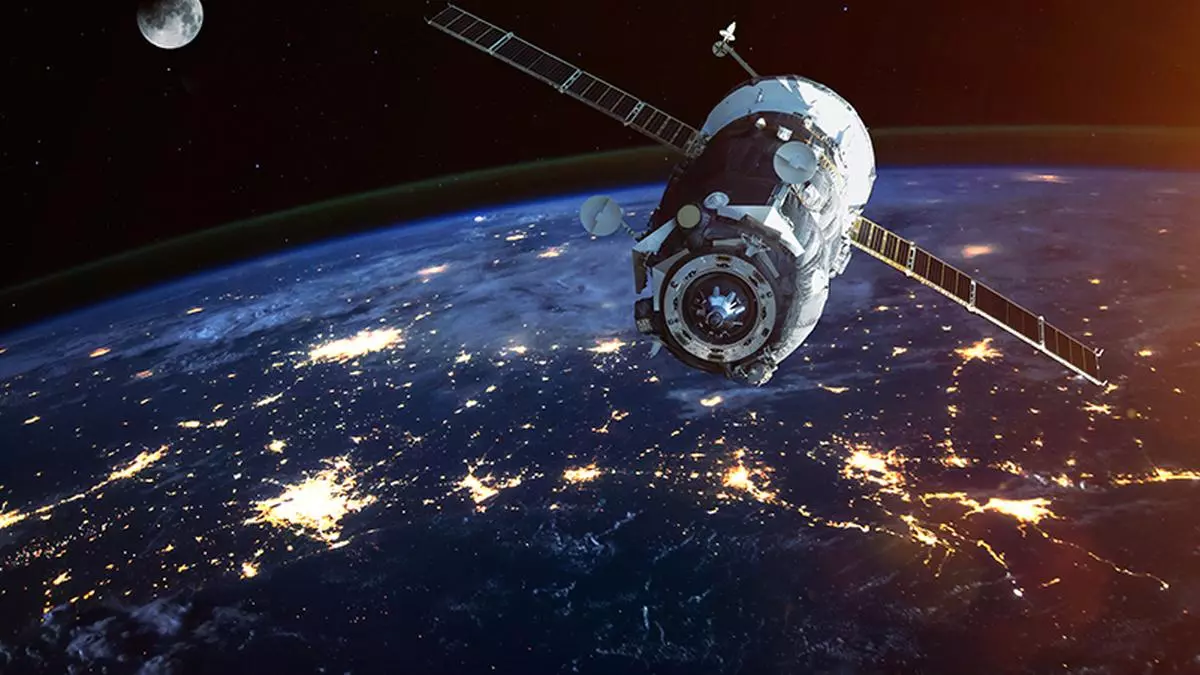
Can you imagine rocketing up the components of a large telescope or a solar power plant and having them all assemble themselves into the telescope or the solar plant in space?

Sounds like science fiction stuff, but it is not. Space-based infrastructure is not basic research anymore, but something that has all signs of becoming reality.

Ask Swati Mohan, the NASA engineer, whose historic words, “touchdown confirmed” announced to the world the successful landing of the Perseverance rover on the surface of Mars, on February 18, 2021. She was the ‘Guidance, Navigation and controls operations Lead’ for NASA’s Perseverance Mars rover mission, and is currently working on the ‘Mars sample return programme’.

So, Dr Mohan should know a thing or two about space-based infrastructure as ‘autonomous assembly of space telescopes’ was the subject of her doctoral thesis at the Massachusetts Institute of Technology, US.

The 41-year-old, Bengaluru-born, US-raised scientist, who loves wearing a bindi —calls herself a “practicing Hindu” and believes that “we as people cannot know everything and the mystery of it inspires me and keeps me humble”— was inspired into ‘space’ by Star Trek as a child. As a school-goer, she won an internship with the institution where her destiny would take her years later — NASA. Her conversation with businessline got to the question of whether self-assembly of space telescopes (and other infrastructure like space solar stations) are mature technologies or not.

“It is not basic research anymore,” she said, but “it is not high enough that a mission will accept it, because it is risky.”

In the ‘technology readiness level’ scale (where TRL-1 is a concept and TRL-9 is a market-ready product), “the middle portion is called the ‘valley of death’,” Dr Mohan explained. One can build prototypes and do lab-based demonstrations, but to demonstrate it in space (or in an environment relevant to the product) is very difficult, she said. (Dr Mohan has earlier spoken about the US ‘OpTIIX mission, for the first telescope assembled in flight’, which was given up “due to various reasons”.) Space-based infrastructure is yet to cross the ‘valley of death’, she said.

“We have a lot of different techniques” for autonomous assembly of a telescope (or any other space infrastructure) she said, stressing that “it is not as simple as declaring whether the technology is mature or not. I think we will eventually get there, but it requires a little bit more coordinated thought and planning.”

Pertinent to note that the Russian President Vladimir Putin has just said that Russia would put up a nuclear power plant in space. (Space-based power stations, whether solar or nuclear, would convert electricity into microwaves and beam them to earth, where it is re-converted into electricity.)


Source link

Meity revises AI advisory after push back from industry

Meity revises AI advisory after push back from industry


Facing backlash from the tech industry, the Ministry of Electronics and Information Technology (MeitY) has revised its advisory asking companies to take government permission before launching “under-tested” or “unreliable” AI platforms in the country.

The revised advisory has dropped this requirement but has asked tech players to label AI-generated deep fake content. Tech platforms have to ensure that their respective AI platforms do not exhibit bias and refrain from interfering with electoral processes. The revised norms are applicable immediately.

The Ministry had set a deadline of March 15 to comply with the earlier advisory. But tech firms skipped submitting status reports as they were still seeking further clarifications from the government on the exact specifics of the AI directives issued by the Centre. 

The advisory appeared shortly after Minister of State for Electronics and Information Technology Rajeev Chandrasekhar took issue with the response of Google’s Gemini chatbot to the query, “Is [Prime Minister Narendra] Modi a fascist?” Screenshots of Gemini’s response had gone viral on social media. 


Source link

Urea-assisted H2 production

Urea-assisted H2 production


Scientists have identified a new catalyst that can oxidise urea and lower the energy demand for hydrogen generation by urea-assisted water splitting.

Electrolytic generation of hydrogen at cathode, while inherently clean and green, has been hampered by the energy demands of the oxygen evolution reaction at the anode (counter electrode). A viable solution emerges from replacing the oxygen evolution reaction with other anodic processes such as urea electro-oxidation reaction (UOR) possessing lesser overall cell potential. By adding urea to water, it has practically been shown to reduce the energy demand for electrochemical hydrogen production by about 30 per cent. This not only reduces the electrical energy input and hence, the cost for hydrogen generation from water but also holds promise for remediating urea from wastewater in conjunction with energy generation while converting urea into nitrogen, carbonate and water. Despite the potential advantages, the catalysts developed so far are not stable to COx poisons (by-products of UOR) posing barriers to industry-scale implementation of this process.

A team of scientists from Centre for Nano and Soft Matter Sciences (CeNS), Bengaluru – Nikhil N Rao, Dr Alex Chandraraj and Dr Neena S John, have demonstrated a non-noble metal catalyst, Ni3+-rich – Neodymium Nickelate (NdNiO3) with metallic conductivity that efficiently oxidises urea, thereby lowering the energy demand for hydrogen generation by urea-assisted water splitting. The team used neodymium nickelate as an electrocatalyst for UOR, and using techniques such as X-ray absorption spectroscopy, electrochemical impedance spectroscopy and Raman spectroscopy performed operando (under operating conditions), substantiated that the catalyst drives the reaction specifically through a ‘direct mechanism’.


Source link

Historic finds

Historic finds


You never know where history hides. It could lurk unobtrusively in a river-bed sand or a dumpster.

In recent weeks, there have been reports about some startling finds of artefacts from the most unusual of places. Two swords that may have belonged to the Vikings have turned up from riverbeds.

In January, some workers were desilting the Vistula River near the city of Wloclawek in Poland and Oophs!, they picked up a 1,000-year-old sword. Rusted, of course, but otherwise in good shape. Wojciech Sosnowski from the archaeology department at WUOZ in Torun, Poland, calls it a “major archaeological sensation”. X-ray imaging has revealed the word ‘Ulfberht’ on the artefact, a marking that is found on medieval swords in northern Europe.

Treasure hunter Trevor Penny turned lucky when he was “magnetic fishing” in the Cherwell River in Oxfordshire, England, when his powerful neodymium magnet latched onto something hard and rust — a Viking sword which may have severed necks around 850 AD.

But the cake goes to a find in 1980. In a dumpster at Newcastle University, a worker chanced to find a trove of rare seashells that are believed to have been collected by a person named George Dixon, a crewmember on board Captain James Cook’s ill-fated third voyage. While Cook was killed by a Hawaiian king he tried to kidnap, little is known of Dixon, except that he had been collecting natural pieces of the natural world for a connoisseur back home — to whom he dispatched the shells. The shells were preserved by a lecturer of the University, whose descendants have recently donated them to English Heritage, which preserves such things.


Source link

YouTube
Instagram
WhatsApp