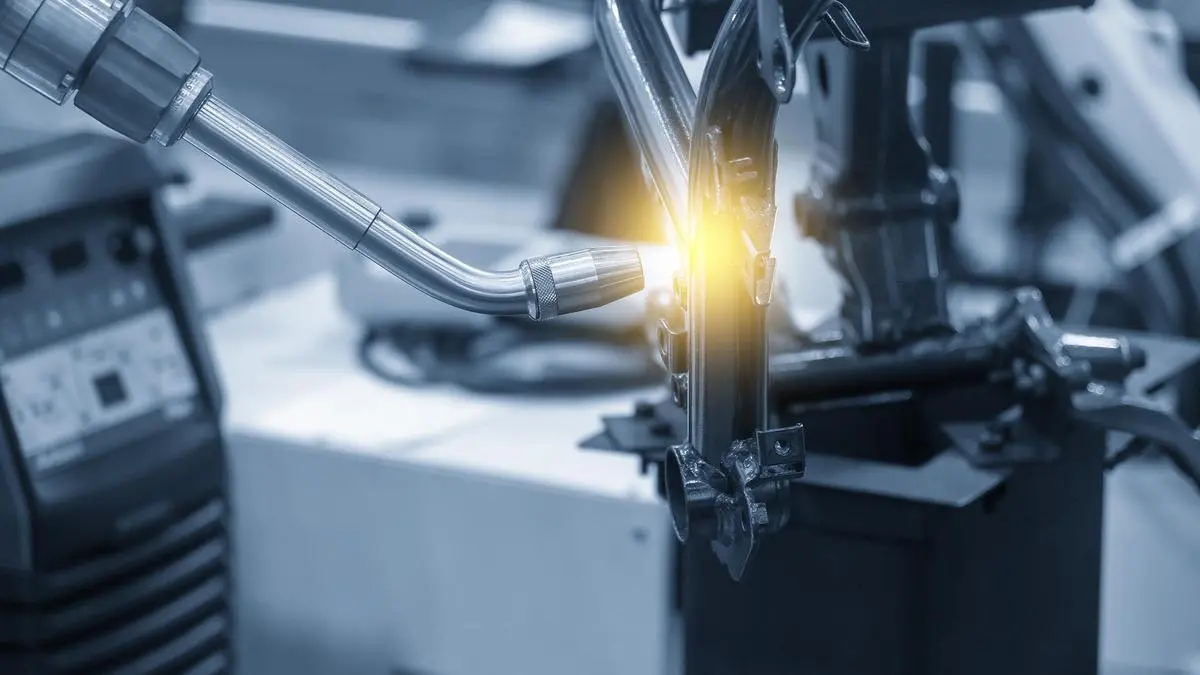

IIT-Bombay’s superalloy for ultra-efficient boilers

IIT-Bombay’s superalloy for ultra-efficient boilers


Researchers at IIT Bombay have tested an oxidation-resistant, nickel-based superalloy that is able to stand the extreme temperatures and pressures of the most efficient boilers in coal-fired thermal power plants.

While further work is required to be done for validation of ‘Alloy 617’, the conclusions of the research work mark a milestone in the evolution of the Advanced Ultra Super Critical (AUSC) technology.

In boiler technology, efficiency—a measure of how much of energy contained in the fuel is converted into useful energy—increases as the temperature and pressure of steam go up. In the subcritical boilers, these are about 570 degrees and 175 bars, with 33-37 per cent efficiency. Then come the supercritical boilers with 570 degrees, 250 bars and 38-42 per cent efficiency. Supercritical boilers are the norm in the industry today. Ultra supercritical boilers (620 degrees, 275 bars, 42-46 per cent) are just around the corner. But the most efficient boilers are the AUSCs, of 710 degrees, 320 bars, with more than 50 per cent efficiency.

As India gears up to add another 87 GW of coal-fired power plants by 2032, it is imperative to go in for the best technologies, which produce more energy from the same amount of coal.

For some time now, there is a talk about bringing in the Advanced Ultra Super Critical (AUSC) boilers, where the ultra-hot steam zips through the turbines with more energy, generating more electricity. The AUSCs have about 30 per cent less carbon footprint than the subcritical boilers.

The problem in developing these very high efficiency boilers is ‘materials’. You need to make boilers whose walls and tubes can stand such tortuously high temperatures and pressure.

The IIT Bombay research team, headed by Prof VS Raja of the Department of Metallurgical Engineering and Material Science, tested the commercially available alloy, called Alloy 617, for boiler applications. This heat-resistant alloy of nickel, iron and cobalt can withstand high temperatures. The team performed tests in a simulated Advanced Ultra Supercritical (AUSC) environment, which was designed to replicate the extreme temperature and pressure conditions that exist in a coal-fired power plant.

“IIT Bombay was invited by the government of India to undertake the study. It was a national project in mission mode and the Government of India wanted to go ahead with thermal power plants with higher thermal efficiency,” says Prof Raja.

New territory

Until now, Alloy 617 has remained relatively unexplored for potential use in AUSC technology due to difficulties in creating a test loop that simulates the extreme conditions of an AUSC steam oxidation test loop, says an article on IIT-B’s website. Previous studies have been limited and inconclusive, with the steam temperature and pressure conditions examined not exceeding 670oC and 27 MPa, respectively and water chemistry not controlled precisely.

Speaking to Quantum, Prof Raja said that the objective of the research was to understand the alloy for AUSM applications. While the alloy has been found to be able to withstand harsh temperatures and pressures, more work would need to be done to make a functional boiler, he said.

The researchers also tested another alloy, Alloy 740, which showed better mechanical strength, but oxidised earlier. Asked whether India has the capability to manufacture Alloy 617, Prof Raja says the public sector alloy company, MIDHANI (Mishra Dhatu Nigam) might be able to do it.

The alloy for the experiments was locally fabricated by Symec Engineers and this is a first-of-its-kind study in India. “Very few such setups exist across the world and this is the only setup in India,” says Prof Raja.

Reacting to this development, boiler design expert M R Ganesan, a former Executive Director at BHEL, said that the IIT Bombay research findings are very significant and useful for the development of better boilers. Ganesan also wanted BHEL to revive the ‘magneto hydro dynamics’ project, which can handle coal gas at temperatures of 4000oC and generate power with much less carbon footprint.


Source link

Return of CSP to aid round-the-clock green power

Return of CSP to aid round-the-clock green power


Concentrated Solar Power (CSP), which had been almost elbowed out of business by the low-cost solar PV, is now making a comeback. Quantum learns that recently NTPC, the state-owned power generating company, sent out feelers to various companies asking if they would be interested in putting up CSP plants; and the response was overwhelming.

“CSP with thermal storage can provide 24×7 renewable energy at less than ₹3 per kWhr,” says Rajan Varshney, Deputy General Manager at NTPC, in a LinkedIn post.

While producing electricity from CSP is one option, a few others are being explored in the scientific and business worlds. CSP works by concentrating sun’s rays onto a point to generate heat. Why convert the heat to steam and producing electricity? Why not use the heat directly?

NTPC wants CSP companies to produce and sell hot steam, which reduces the load on the boilers to heat up the steam—implying burning lesser coal and smaller carbon footprint. Some others are suggesting that CSP heat can be used to produce hydrogen.

Prof KS Reddy and Saurabh Mohite of the Heat Transfer and Thermal Power Laboratory, Department of Mechanical Engineering, IIT-Madras, have recently published the results of their research into photo-electrolysis of water using heat from CSP.

Their method is simple. Use the heat produced by the CSP plant to heat zinc oxide, splitting it into zinc and oxygen. Put the zinc into water, the metal will grab the oxygen in the water to form zinc oxide again, which leaves hydrogen in the water. The second reaction—hydrolysis of zinc—releases heat, about 104 KJ/mole. This is lesser than the 456 KJ/mole demanded by the first reaction, but there is some additional heat kick-back  from the second reaction. In a paper in Energy Conversion and Management, Reddy and Mohite say that the method yields significantly more hydrogen. “Though CSP is an old system, it is gaining popularity among researchers for hydrogen production due to its high temperature applications in the range of 500–2000°C,” the paper noted.

Further, it doesn’t have to be zinc oxide—any metal oxide will work, though each one would need to be studied for its yield.

CSP technologies come in different forms—Parabolic trough collectors (PTC), linear fresnel reflectors, parabolic dish collectors and solar power towers (SPT). In 2020, the world had 6.5 GW of CSP, most of it was PTC. However, solar power towers are gaining more attention as they are able to achieve high solar concentration factors — over 1,000 suns — and operate at higher temperatures, 1000o C and above. “SPT presents a higher room for improvement and a bigger potential for cost decrease due to a higher solar-to-electric efficiency, higher energy densities, a low-cost solar field, less maintenance and oil-free plants with lower environmental impact,” says Javier Bigorri et al of the National Renewable Energy Center, Navarre, Spain.

Experts now are suggesting combining CSP plants with solar PV and wind, so that the same system is used for storing electricity from multiple sources. The conventional way of storing CSP energy has been molten salts, but more advanced CSP-linked storage technologies are emerging—(i) Sensible Heat Storage including novel molten salts, sensible packed-bed thermocline and liquid metals; (ii) Latent Heat Storage: phase change materials packed-bed thermocline and (iii) Thermochemical Energy Storage: hydrides, hydroxides, carbonates and redox reactions.

In sum, CSP is padding up for its second innings.


Source link

Orange River

Orange River


Orange River is a 2,432-km long river of southern Africa—but we are not talking about that here.

We are talking about a river that has turned orange in the Alaskan wilderness, which still remains untouched by civilisation.

In an article on ‘Why rivers in Alaska are turning orange’, the Scientific American turns the focus lights on to a disturbing effect of climate change.

Climate change is the result of global warming, or the Earth catching fever, due to mankind spewing greenhouse gases into the atmosphere. Talks about limiting global warming to 1.5oC have been going around for a while now, but that is only the average. The Kobuk Valley National Park has warmed by 2.4oC since 2006—that is like person with a fever of 102.92oF. The increasing warmth is melting polar permafrost and is turning the rivers orange.

Scientists theorise that as the permafrost thaws, a few things begin to happen. The earth below holds incredible amounts of dead plants and animals from a distant era before the ice-age, as well as oxidised iron. Microbes like bacteria de-oxidise (or, reduce) the iron oxide, leaving the pure metal behind, which is soluble in water. This iron is carried by groundwater into oxygenated streams, where the iron rusts again, giving the streams a disagreeable, orange colour.

Well, there might just be some other explanation. But it is still linked to loss of permafrost, which is undeniably due to global warming.


Source link

Medical micro-bots cruising towards reality

Medical micro-bots cruising towards reality


A scientist who has sensitive information falls into a coma and must be saved. A submarine and its crew are miniaturised to the size of a microbe and introduced into the scientist’s blood stream to repair the problem-causing clot. This was the plot of a 1966 science-fiction movie, Fantastic Voyage.

What was ‘fantastic’ half a century ago, is cruising towards reality today. Physics and biology are joining hands to produce very tiny robots that could enter a person’s bloodstream and perform important tasks, such as delivering drug to specific sites—for applications like treating cancer and reproductive medicine.

Bradley J Nelson of the Institute of Robotics and Intelligent Systems, Zurich, Switzerland, is a known name in this field. In a co-authored article published in Annual Reviews last year, he writes that “over the past decade, significant progress has been made in the construction of intelligent micromachines, evolving from simple micromachines to soft, compound, reconfigurable, encodable, multifunctional and integrated micromachines, as well as from individual to multiagent, multiscale, hierarchical, self-organising and swarm micromachines.” That is quite a lot for a machine that may only be a few hundred nanometres in size.

A word of caution: medical microrobotics is not yet a market-ready technology—but is getting there.

Last year, a group of scientists from the Colorado University, Boulder, USA, put a fleet of microrobots carrying dexamethasone—a steroid—to the bladders of lab mice. Their bubble-based, polymeric microrobots were able to “swim with non-linear trajectories”, mechanically pin themselves to the epithelium (inner lining of hollow organs) and “slowly release therapeutic drugs”, the scientists say in a paper published in Small. “The sustained release of the drug is shown to temper inflammation in a manner that surpasses the performance of free drug controls,” the paper says, adding that the system “provides a potential strategy to use microrobots to efficiently navigate large volumes, pin at soft tissue boundaries, and release drugs over several days for a range of diseases.

Swallow a surgeon

Medical microrobotics is an excellent illustration of how a wild dream could become a reality. The origins of this field traces back to an epoch-making speech delivered by the American theoretical physicist, Richard Feynman, on December 29, 1959, on the topic ‘There’s Plenty of Room at the Bottom’, in which he said that “small machines might be permanently incorporated in the body to assist some inadequately functioning organ.” Feynman is said to have credited the “very wild idea of swallowing the surgeon” as originally proposed by mathematician Albert Hibbs.

But, manufacturing these microrobots presents a huge challenge. All the components need to be packaged in an ultra-tiny space. Even within that space, some onboard computing capabilities must be given to impart some intelligence to the microrobot. The design also varies with the degree of autonomy the microrobot will have, be it internally (they pick up energy from their interactions from other bodies) or externally (ultrasound) powered.

“Medical microbots for surgery use two methods to guide its motion inside the human body. One is optical-based guidance and the other is magnetic field-based guidance. In India, researchers have worked intensely in both ways of navigation in the last decade. The microbots are fabricated in-house using nanotechnology techniques and tested specifically for the purpose of cell specimen reshaping, drug delivery and cell removal from target area,” Dr Jayant Kumar Mohanta, Assistant Professor, Department of Mechanical Engineering, IIT Jodhpur, told quantum.

In Fantastic Voyage, the scientist’s immune system thinks of the rescue submarine as an enemy and starts attacking it. Today’s microrobots will face the same problem, so they must either become invisible to the body’s immune system or advertise themselves as friends. Therefore, scientists are developing microrobots with materials that are compatible with the body’s immune reactions. They may design surface coatings or camouflage techniques that help microrobots avoid detection. Some strategies involve bio-mimetic coatings that resemble cells or tissues in the body, which can deceive the immune system into recognising the microrobots as ‘self’ rather than ‘foreign’.

In a paper published in Surgery, scientists at the University of Sheffield, UK, note that medical microrobots can be classified into three categories, depending upon their task difficulty level (TDL). TDL-1 microrobots are devices like sensing devices including remotely activated stents and scaffolds and capsule endoscopes “that can carry out telemetry and send information about the internal environment.” TDL-2 robots show basic levels of local environment sensing, motion and simple decision-making capabilities which enable them to assist medical professionals with a series of one-time treatments including drug delivery and biopsies. This is where much of the current research is on. These are not yet robots with onboard intelligence and hence require human control. TDL-3 microrobots, are “still in the exploration stage and are far from realisation.” They are fully autonomous and can carry out various diagnostic and treatment processes.

Microrobotics can—will—revolutionise medicine. Microrobots for drug delivery at site seems to be the nearest hanging fruit. Take cancer treatment (chemotherapy) for example. A microrobot can be enabled to detect acidity or temperature gradients of a tumor and move towards the tumor, carrying a drug.

The submarine crew of Fantastic Voyage did come out successfully through a tear drop out of the scientist’s eye (even if one of them—a baddie—was killed by the scientist’s antibodies.) In real life too, by the looks of it microrobotics will be similarly successful. When it happens, it will be a huge breakthrough in medicine.


Source link

COP28 Climate Talks: Decoding the Phase Out of Fossil Fuels and its Impact on India

COP28 Climate Talks: Decoding the Phase Out of Fossil Fuels and its Impact on India


n this episode of GreenShift, M Ramesh delves deep into the much-talked-about UAE Consensus that the COP28 climate talks produced, to separate reality from the hype in the now-famous ‘transition away from fossil fuels’ agreement. Unravelling the nuances of the decision text, he recognises the positive aspects of the decision text, but cautions against unbridled optimism. 

He also analyses the usefulness of COP meetings and weighs the progress brought in by the conferences.

Watch the video to learn more.


Source link

ATOM’s alloy solution to prevent fuel explosions

ATOM’s alloy solution to prevent fuel explosions


Between 2016 and 2020, fire-related accidents killed 35 people every day in India, according to the data from National Crime Records Bureau (NCRB). Increasing consumption of flammable fuels have also added to the risk of fuel-caused explosions.

This is where ATOM, a companythat “provides tested and easy integration fuel storage solutions” to prevent fuel explosions comes in.

Establishing in 2011, with the aim of finding a solution for safely transporting oil and gas, the company gained initial momentum when the Special Protection Group (SPG) was looking for explosion-resistant fuel tanks for their VIP bulletproof vehicles. This marked the starting point of ATOM’s journey in providing bulletproof and explosion-resistant solutions for vehicles, saysVinod Menon, CTO of the company.

Since then, they have successfully developed various products for the safe storage and transportation of hydrocarbon fuels. They have also expanded its expertise to include pressurised vessels for LPG and propane.

The science behind it

Ninety per cent of global accidents result from human error, with major explosions often originating from small, mobile fuel storage tanks, says Ajit Tharoor, CEO, ATOM.

Their technology involves the addition of a proprietary alloy inside fuel storage tanks. This alloy takes care of the explosive vapour inside the tanks by employing flame quenching techniques.

Without the addition of any mechanical, chemical or electrical triggers, this simple physical solution breaks the vapour down into smaller units, allowing for confined burning through the process of ‘controlled deflagration’.

In addition, the alloy’s high heat conductivity reduces hot points and structured packing optimises tank volume without compromising on the fuel’s capacity. These principles collectively make the technology effective in preventing explosions inside fuel tanks.

The alloy structures itself into a honey comb structure and fills more than 85 per cent of the tank so that there are no hot points. The fuel is distributed within the molecules of the honey comb structure which causes it to burn inside but prevents it from exploding.

The company said that it has also entered into a research and development agreement with the Foundation for Science Innovation and Development, Indian Institute of Science, Bangalore.

“This is part of ATOM’s road map towards research on multiple fronts to actively innovate and develop explosion-resistant fuel tanks and storages tailored for future fuels, including hydrogen,” says a release from the company.

Beyond this, the technology also addresses carbon footprint concerns, says Tharoor. As the tech utilises an alloy with high conductivity to address evaporation loss during fuel transportation, there is potential to reduce the carbon footprint of transportation by up to 60 per cent, says Tharoor.

While many countries have given ATOM the go-ahead to enter their markets, the Indian Petroleum and Explosives Safety Organisation (PESO) has yet to approve the technology. Since “it’s a completely new set of technology, they have no idea how to certify it,” says Anil Nair, Chairman of ATOM. The start-up applied for approval two years ago.

As they wait for approval, they continue conducting trials with the Indian Army to store fuel at high altitudes and deserts.

“We must react to which market comes to us faster, but for us, the prime market is India, and we hope India will soon turn around for us,” hopes Nair.


Source link

YouTube
Instagram
WhatsApp