Urea-assisted H2 production

Urea-assisted H2 production


Scientists have identified a new catalyst that can oxidise urea and lower the energy demand for hydrogen generation by urea-assisted water splitting.

Electrolytic generation of hydrogen at cathode, while inherently clean and green, has been hampered by the energy demands of the oxygen evolution reaction at the anode (counter electrode). A viable solution emerges from replacing the oxygen evolution reaction with other anodic processes such as urea electro-oxidation reaction (UOR) possessing lesser overall cell potential. By adding urea to water, it has practically been shown to reduce the energy demand for electrochemical hydrogen production by about 30 per cent. This not only reduces the electrical energy input and hence, the cost for hydrogen generation from water but also holds promise for remediating urea from wastewater in conjunction with energy generation while converting urea into nitrogen, carbonate and water. Despite the potential advantages, the catalysts developed so far are not stable to COx poisons (by-products of UOR) posing barriers to industry-scale implementation of this process.

A team of scientists from Centre for Nano and Soft Matter Sciences (CeNS), Bengaluru – Nikhil N Rao, Dr Alex Chandraraj and Dr Neena S John, have demonstrated a non-noble metal catalyst, Ni3+-rich – Neodymium Nickelate (NdNiO3) with metallic conductivity that efficiently oxidises urea, thereby lowering the energy demand for hydrogen generation by urea-assisted water splitting. The team used neodymium nickelate as an electrocatalyst for UOR, and using techniques such as X-ray absorption spectroscopy, electrochemical impedance spectroscopy and Raman spectroscopy performed operando (under operating conditions), substantiated that the catalyst drives the reaction specifically through a ‘direct mechanism’.


Source link

Historic finds

Historic finds


You never know where history hides. It could lurk unobtrusively in a river-bed sand or a dumpster.

In recent weeks, there have been reports about some startling finds of artefacts from the most unusual of places. Two swords that may have belonged to the Vikings have turned up from riverbeds.

In January, some workers were desilting the Vistula River near the city of Wloclawek in Poland and Oophs!, they picked up a 1,000-year-old sword. Rusted, of course, but otherwise in good shape. Wojciech Sosnowski from the archaeology department at WUOZ in Torun, Poland, calls it a “major archaeological sensation”. X-ray imaging has revealed the word ‘Ulfberht’ on the artefact, a marking that is found on medieval swords in northern Europe.

Treasure hunter Trevor Penny turned lucky when he was “magnetic fishing” in the Cherwell River in Oxfordshire, England, when his powerful neodymium magnet latched onto something hard and rust — a Viking sword which may have severed necks around 850 AD.

But the cake goes to a find in 1980. In a dumpster at Newcastle University, a worker chanced to find a trove of rare seashells that are believed to have been collected by a person named George Dixon, a crewmember on board Captain James Cook’s ill-fated third voyage. While Cook was killed by a Hawaiian king he tried to kidnap, little is known of Dixon, except that he had been collecting natural pieces of the natural world for a connoisseur back home — to whom he dispatched the shells. The shells were preserved by a lecturer of the University, whose descendants have recently donated them to English Heritage, which preserves such things.


Source link

Space start-ups get 0 million investments in three years 

Space start-ups get $330 million investments in three years 


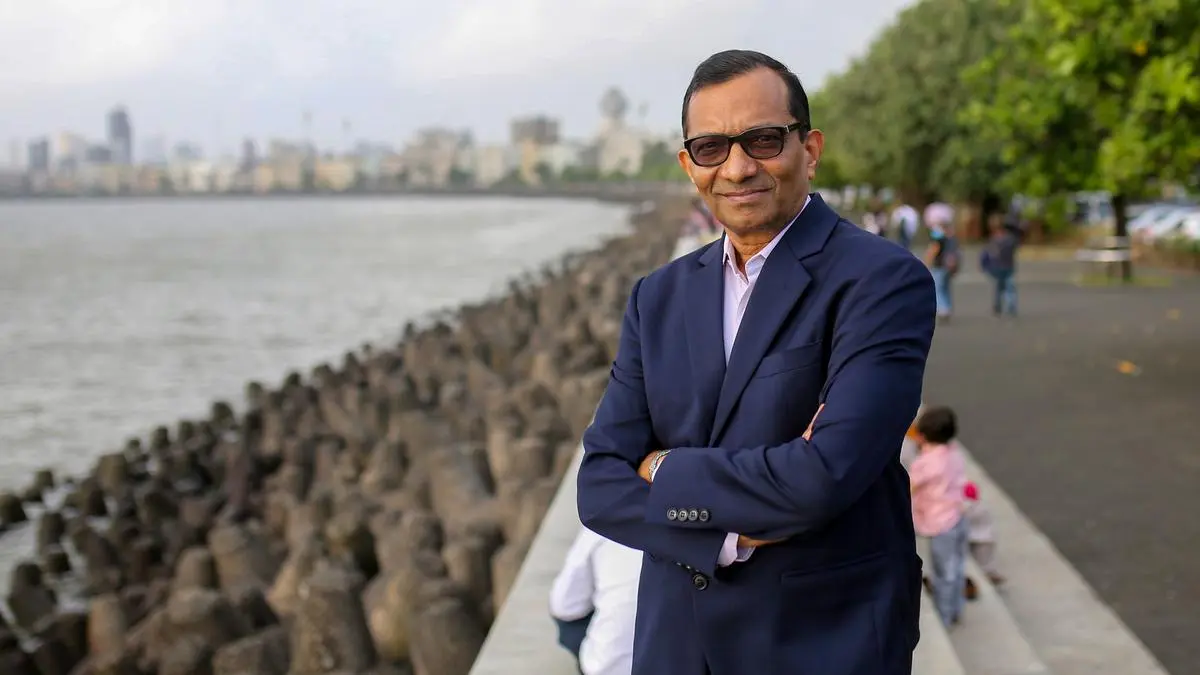
Recently, the government amended rules governing foreign direct investments (FDI) in the Indian space sector, making it easier for investors to enter the market. At the helm of affairs is Dr Pawan Goenka, the Chairman of IN-SPACe, the space regulator. In a chat with businessline, Dr Goenka spoke about how roomy space is for investors. Excerpts: 

How many proposals have IN-SPACe received? How many space start-ups do we have today?

As on March 1, we received 466 applications from various companies and academic institutions for authorisation or facilitation of space activities. We have signed about 50 MoUs and a dozen agreements for the transfer of ISRO’s technologies.

There are about 200 space start-ups which attracted investments amounting to $135 million this financial year, as against $115 million last year and $80 million the year before. This was before the (liberalised) new space FDI policy. With the new policy, we are expecting the level of investments to go up sharply.

What kind of ideas are you seeing? What do these start-ups want to be doing?

The good thing is, none of the companies we interface with wants to do anything routine. Each company is trying to create a niche; every space start-up is a deep-tech start-up.

What they want to do falls in four or five buckets?

The first is launch vehicles. There are two start-ups in this space — Agnikul Cosmos and Skyroot — and there are two more who want to build launch vehicles, whom I cannot name. A lot of innovation is happening in launch vehicles. For example, Agnikul has developed a fully 3D printed engine in their own factory in IIT Madras. This is a first in India, and I think globally too. Also, they have brought in a lot of innovation in the propulsion system. They are test-firing their rocket coming Friday (March 22). It is a big day for them.

Then there are satellite companies, who are working on platforms that will be cutting edge in terms of reducing weight and complexity of satellites and launching their own satellites. Right now, most of the satellites are in demonstration phase, after which they will be able to generate business not just in India but also globally.

Then there are things that go into the satellites. There are 2-3 companies working on developing solar panels for them. Right now, in India, we don’t make solar cells for space applications. These companies are importing cells and making the panels here. They have got a small order for exports also.

Then there is payload, where a lot of innovation is happening. For example, there is a company called Pixel that is developing a camera to provide very high-resolution images. They are trying to get images of the order of 5 metres, with 18 satellites that will fully cover the globe and be able to provide updates every day. This development includes new satellite platforms. They have created their own satellite platform and have developed their own payload as well. Then there are satellites for space situational awareness.

The third bucket is ground stations and antennas. Right now, all ground stations are either owned by ISRO or the Defence. Nothing is owned by the private sector.

There is a company that is developing a smaller, low-cost antenna and is supplying to the Defence in a big way. Finally, the big thing will be the ‘applications’ — meaning, how do you take the images and data that come from space and do meaningful analysis to give useful outcomes.

The scope for this is unlimited.

How is India’s NAVIC system? Are there companies that are using the data?

Right now, India has a NAVIC system which is primarily used for Defence and homeland security. Not for any civil applications. There were certain constraints in the NAVIC constellation, which are now getting removed by launching new satellites and soon we will have a NAVIC constellation. Soon the Indian private sector will be able to use NAVIC data for civil applications, rather than having to depend upon GPS.

Would you say the emerging geo-political situation has influenced India’s space FDI policy? Are more foreign companies coming to India because of the Russia-Ukraine, Israel-Hamas tensions?

Well, no and yes. ‘No’, because the FDI policy was not due to any geo-political situation. We felt that we need investments from abroad — the Indian investors are still a little shy of investing in space. ‘Yes’ because the geo-political situation is in favour of India right now and it could lead to increased interest in India. Every large company in space has an interest in India, and they have approached us. We are in the process of enabling these companies to come to India. We also have to make sure that the Indian companies have a level playing field.

How much of FDI can Indian space sector get in the next 3-5 years?

That would be difficult to say. What I can say is, we have an aspiration that the annual space economy should be $44 billion by 2033. Three-fourths of this will come from within India and 25 per cent from abroad. To make this $44 billion happen we would need investments of about $22–25 billion.

Published on March 17, 2024


Source link

India working to develop own pure-hydrogen based DRI tech for green-steel making

India working to develop own pure-hydrogen based DRI tech for green-steel making


NEW DELHI, March 5 India is looking at developing its own pure-hydrogen based DRI (direct reduction of iron) technology to be used in making of green steel. The process will be unique to the country and the detailed project report so prepared “is under – scrutiny” across ministries, a senior government official aware of the discussions, told businessline.

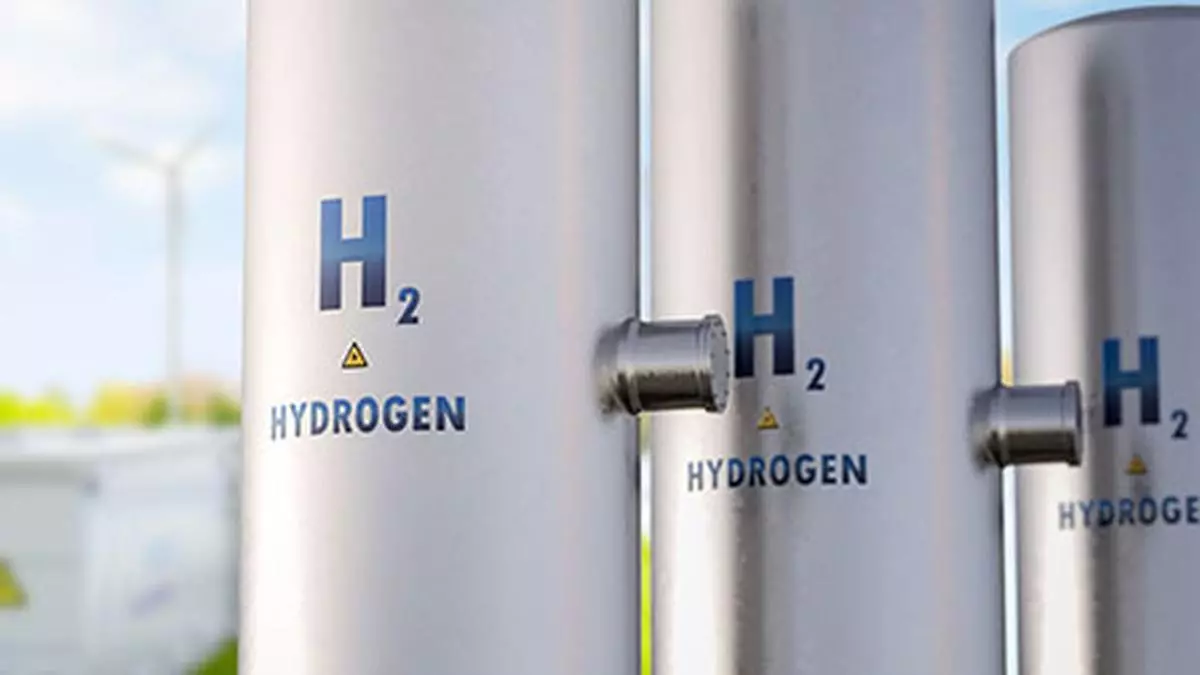
Industrial-scale hydrogen-iron making — also known as direct reduction of iron (DRI) using hydrogen — is where oxygen is removed from the iron-ore and instead of using high carbon emitting fossil fuels, the process is done using hydrogen, with the waste gas removed as water. The DRI so produced, also called sponge iron, is then fed into an electric arc furnace where electrodes generate a current to use it to produce steel.

“This technology is still developing and some of the ministries — such as steel and MNRE — and industry players like integrated steel makers and secondary steel-makers, are working together to get the pilots going on-ground,” the official said, requesting anonymity.

“Its an ambitious project,” the official added.

Sources aware of the discussions say that a pilot plant using pure hydrogen-based DRI making is being proposed in a “consortium mode”. It involves integrated (steel) players, secondary players and CSIR Lab (Council for Scientific & industrial Research) for development of the technology and necessary IP (intellectual property).

“The Scheme has been approved by MNRE (Ministry of New and Renewable Energy) last month,” the official said.

Hydrogen can be extracted from hydrogen-bearing fuels such as natural gas and biogas, and from water using electrolysis. Primary source of hydrogen-production is currently natural gas, accounting for around three quarters of the annual global dedicated hydrogen production of around 70 million tonnes. At present, less than 0.1 per cent of global dedicated hydrogen production comes from water electrolysis.

Hydrogen in Steel Making

So far, there are two prominent avenues of hydrogen-usage in steel making, which are tapped in India.

The first involves injection of hydrogen in the tuyeres (a nozzle through which air is forced into a smelter or furnace) of the blast furnaces as a partial substitution of pulverized coal injection (PCI).

The second process is where mixing or blending of hydrogen with the natural gas or fossil fuel based reductants in the DRI furnaces is carried out. Hydrogen acts as a partial replacement of the Natural Gas.

“These two options can be deployed on a pilot scale in some units in India with partial support from the National Green Hydrogen Mission both in terms of capital grants and subsidised green hydrogen availability,” the official said adding advertisement for the selection of the participants under the more popular two modes will be issued soon.


Source link

Mapping India’s future with a billion virtual citizens

Mapping India’s future with a billion virtual citizens


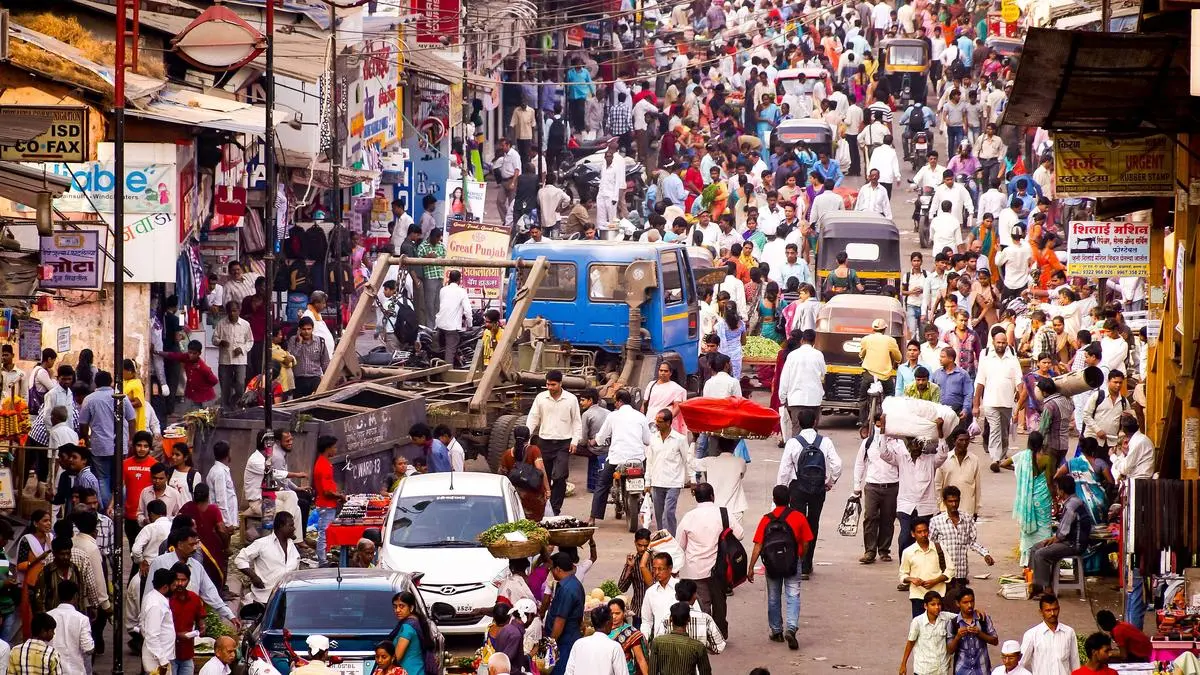
The ongoing development of BharatSim — India’s first ultra-large-scale simulation of 100 million to 1 billion agents representing the population of India with a detailed synthetic population — by Ashoka University is a cutting-edge multi-disciplinary initiative. This billion agent simulation can help governments, NGOs and others in the healthcare sector to understand areas where targeted interventions may make a difference. These simulations, played out by agent-based modelling using synthetic data (which includes the details of economic activity as well), can potentially help other fields such as business and logistics, economics and banking.

The BharatSim framework has three core components — a core synthetic population, a simulation engine and a visualisation engine.

The synthetic population

The synthetic population is created by combining and processing data from various sources to generate a representative population with characteristics similar to the real population.

Data from diverse sources such as surveys (for example, IHDS, NSS), census data and population density maps (for example, GPW) are collected. These datasets provide information on demographics, socio-economic factors, employment, geographic distribution and other relevant attributes. The collected data is processed to remove inconsistencies, errors and missing values so that it is clean and ready for further analysis and modelling.

Relevant features such as age, gender, location, socio-economic status and health conditions are extracted from the datasets. These serve as the basis for defining the attributes of the synthetic population. Statistical techniques are used to match the distributions of key variables in the synthetic population to those observed in the real population.

Methods such as Iterative Proportional Updating (IPU) and machine learning models are also employed to use the processed data and statistical matching to create individuals with attributes that closely resemble those of the real population.

The quality of the synthetic population is then evaluated to ensure that they accurately represent the target population.

The Simulation engine

The simulation engine is a system to conduct experiments, analyse scenarios and study complex systems. Researchers can use this by specifying their models using a domain-specific, high-level language provided by the simulation engine. This allows researchers to define agent-based models with specific attributes, behaviours and relationships.

Behaviours of agents specifying the actions to be executed at each simulation time-step are also defined. These can be based on probabilistic rules, agent attributes or external factors. For example, agents may exhibit behaviours like vaccination decisions based on their age, socio-economic status or health history.

Specialised extensions of the agent class, such as stateful agents, can also be used to model agents that transition between different states over time. This is particularly useful for modelling systems where agents can exist in distinct states and undergo state transitions based on certain conditions.

Throughout the simulation, researchers will be able to collect data on agent behaviours, states, interactions and system dynamics. This provides insights into the evolution of the simulated system and allows researchers to analyse the outcomes of different scenarios. The simulation results are then validated by comparing them to real-world data or known benchmarks. This also helps in calibration of the simulation parameters to ensure that the model accurately represents the dynamics of the system under study.

The Visualisation Engine

Researchers can transform complex simulation data into meaningful visual representations using the visualisation engine. It can serve as a valuable tool for interpreting simulation results, identifying trends and communicating findings to a wider audience.

Particularly useful and effective are the representations for time-series data and geographical data allowing them to track changes over time and spatial relationships and identify trends or patterns in the simulated system. This helps in understanding temporal and spatial dynamics within the simulated environment and also to forecast future behaviour.

Anyone can use it

BharatSim is an open-source collaborative project between Ashoka University and Thoughtworks, funded by the Bill & Melinda Gates Foundation. The ongoing development of BharatSim at Ashoka University is funded by the Mphasis F1 Foundation.

Agent-based modelling frameworks like BharatSim can have various applications in the business domain. Some potential applications are:

Market analysis, product development and innovation: Simulate market dynamics by modelling individual agents as consumers, producers, and/or investors to make informed decisions about product development, marketing campaigns and investment opportunities;

Risk assessment and management: Different risk scenarios and interactions between agents can be simulated to identify potential vulnerabilities, evaluate risk exposure and develop strategies to minimise risks;

Customer relationship management: By modelling individual agents as customers with different characteristics and decision-making processes, one can optimise marketing strategies, personalise customer experiences and improve customer retention;

Scenario planning and strategic decision-making: Agents can be modelled as stakeholders, competitors or regulatory bodies to evaluate outcomes of strategic choices, test alternative scenarios and inform long-term planning and decision-making processes.


Source link

Personalising foetal care with the AI midwife 

Personalising foetal care with the AI midwife 


Researchers at Indian Institute of Technology Madras (IIT Madras) and Translational Health Science and Technology Institute (THSTI), Faridabad, have developed an India-specific AI model to determine the age of a foetus in a pregnant woman in the second and third trimesters precisely. This first-of a-kind research was carried out as a part of ‘Interdisciplinary Group for Advanced Research on Birth Outcomes – DBT India Initiative’ (GARBH-Ini) programme.

Accurate estimation of gestational age is fundamental for providing optimal care to pregnant women, monitoring foetal well-being, identifying and managing pregnancy complications and ensuring the best possible outcomes for both mother and baby.

In India, several challenges exist in accurately estimating the gestational age (GA) during pregnancy. This includes late initiation of antenatal care, typically as late as 14 weeks after gestation. Late initiation can make it challenging to accurately determine GA using traditional methods like the last menstrual period (LMP) due to uncertainties in LMP recall and irregular menstrual cycles.

The ethnic diversity is also an issue as India has a diverse population with variations in foetal growth patterns and biometric measurements compared to the populations for which standard GA estimation formulas were developed. Variability in foetal growth patterns influenced by factors such as maternal nutrition, health conditions and genetic factors can affect the accuracy of GA estimation. Therefore, population-specific models that account for these variations are essential for accurate GA assessment.

In many parts of the country, especially in rural and underserved areas, access to ultrasound facilities and trained sonographers are limited. This can hinder the use of ultrasound-based methods for accurate GA estimation during the second and third trimesters.

India-specific Model

Currently, the age of a foetus is determined using a formula developed for the Western population. So, they are likely to be erroneous when applied to the Indian mothers due to variations in the growth of the foetus in the later part of pregnancy.

In light of this, a new model was developed using the data from the GARBH-Ini cohort study, which involved collecting detailed clinical data on pregnant women in India. Researchers from IIT-M and THSTI analysed this data to identify the key parameters and factors that influence GA estimation in the late trimesters. The resulting model — Garbhini-GA2 — takes into account the unique foetal biometry and growth patterns observed in the Indian population.

The Garbhini-GA2 model demonstrated higher accuracy in GA estimation compared to existing formulas like the Hadlock and InterGrowth-21st models.

Evaluation metrics such as root-mean-squared error, bias and pre-term birth rates were utilised to assess the performance of the model. It was found that the new model significantly reduced the median error in GA estimation by more than three times when compared to the Hadlock formula, indicating its better suitability for the Indian population.

GA estimation is vital for managing complications such as gestational diabetes, preeclampsia and other conditions that may require specific monitoring and treatment based on the stage of pregnancy. Hence, reliable GA data is essential for conducting research on pregnancy outcomes, including stillbirth, preterm birth and fetal growth restriction. Accurate GA estimation also ensures the correct classification of outcomes for epidemiological studies.

Welcoming this research, Dr Rajesh Gokhale, Secretary, Department of Biotechnology, Government of India, said, “The development of population-specific models for estimating gestational age is a commendable outcome of GARBH-Ini. These models are being validated across the country.”

This research was undertaken by Dr Himanshu Sinha, Associate Professor, Bhupat and Jyoti Mehta School of Biosciences, Department of Biotechnology, IIT Madras, Dr Shinjini Bhatnagar, the Principal Investigator of GARBH-Ini programme and a distinguished professor at THSTI.

Once validated, Garbhini-GA2 can be deployed in clinics across India, improving the care delivered by obstetricians and neonatologists, thereby reducing maternal and infant mortality rates in India.


Source link

YouTube
Instagram
WhatsApp