New fluorescent material detects anti-cancer drug overdose in minutes

New fluorescent material detects anti-cancer drug overdose in minutes


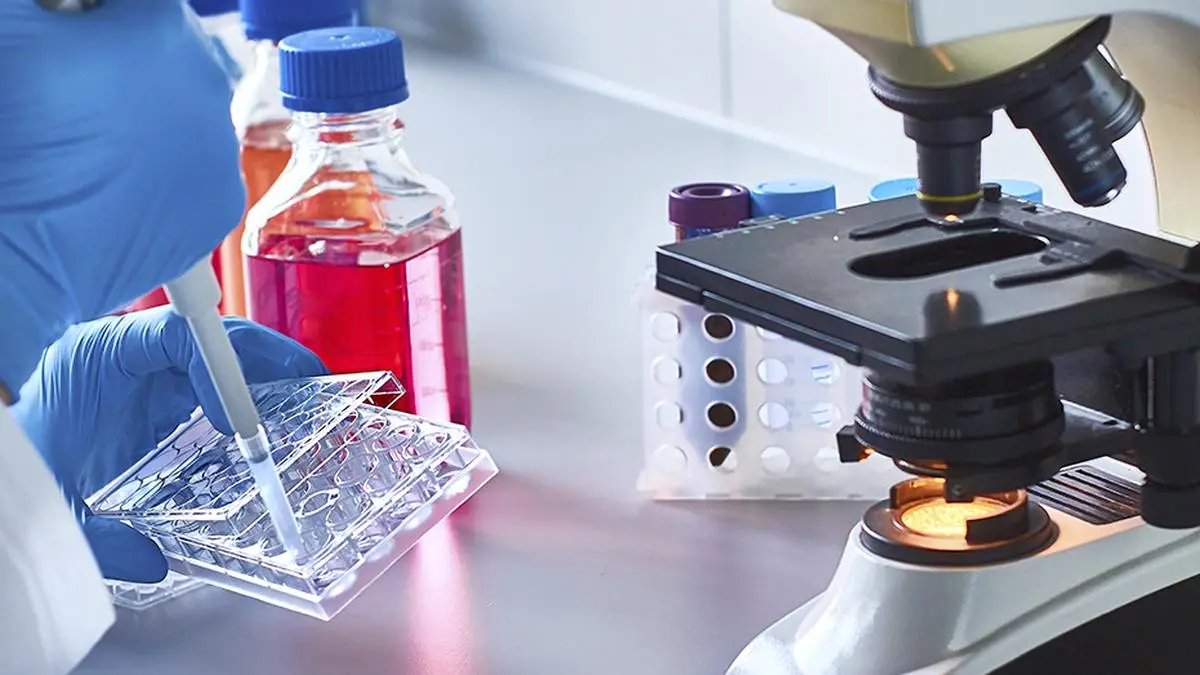
A new highly fluorescent material with exceptional optical properties has been developed using phosphorene, cystine, and gold (Ph-Cys-Au) which can be used as a visual sensing platform for detecting widely-used anti-cancer drug Methotrexate (MTX). An overdose of MTX is toxic and can affect on lungs, stomach and heart.

Monitoring therapeutic drugs and their elimination is crucial because they may cause severe side effects on the human body. The MTX value of more than 10 µM in blood plasma is hazardous if it remains in the system for more than 10 hours. MTX is highly expensive and the detection of overdose is time-consuming and involves complex instrumentation. Considering all these issues, the development of fast and sensitive detection using simple methodologies is required.

To address this issue, scientists of Institute of Advanced Study in Science and Technology (IASST), an autonomous institute of Department of Science and Technology (DST) have developed a highly fluorescent material Ph-Cys-Au. The material — made by the team consisting of Professor Neelotpal Sen Sarma, Dr Mojibur R Khan, and research scholars Nasrin Sultana and Chingtham Thanil Singh — has exceptional optical properties and thus can be used as a visual sensing platform for detecting the anti-cancer drug MTX. “This non-enzymatic approach for the detection of anticancer drug Methotrexate can help cytotoxicity screening for therapeutic analysis,” says a press release.

The developed sensing platform outperforms all former systems as the materials are biocompatible with an appreciable detection limit, the release says.


Source link

3D printing silicone for soft robotics

3D printing silicone for soft robotics


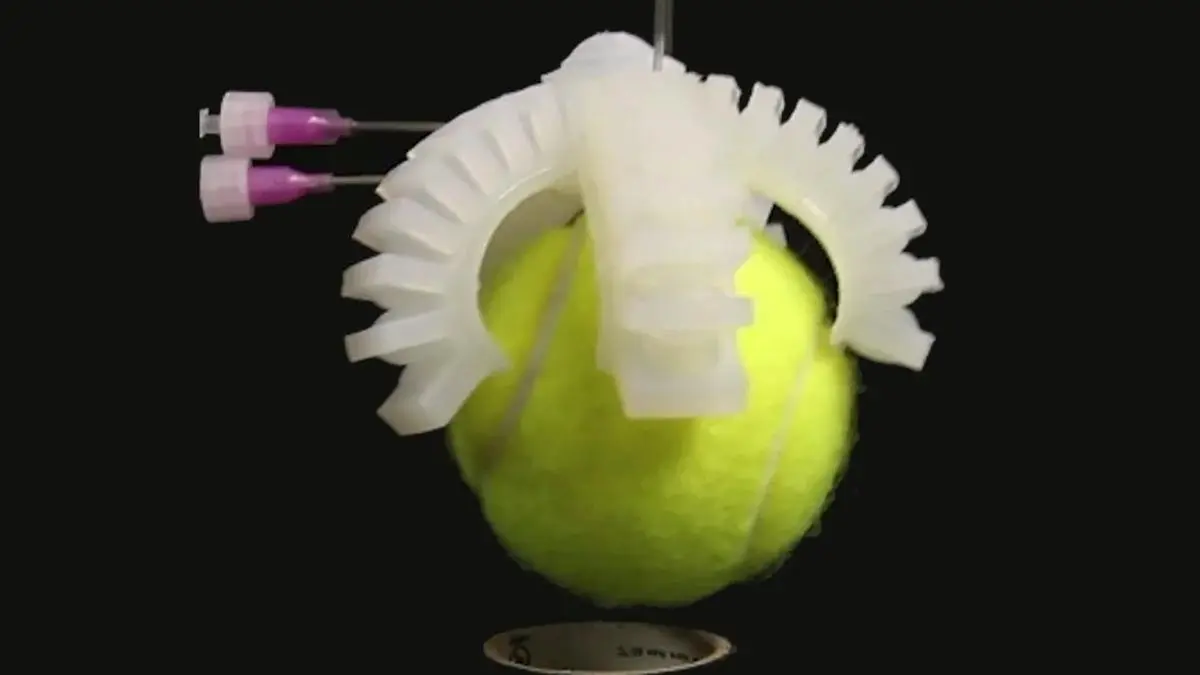
Soft robotics, where the arms of a robot are flexible as opposed to being made of rigid tubes and boxes, is gaining ground. Silicone (not silicon), a soft, rubbery material is a good choice for soft robotics. Typically, additive manufacture of silicones is through the ‘extrusion method’, which is not good, as the silicone ends up containing pores, which in turn affects the mechanical properties of the printed parts.

A team of researchers from IIT Mandi and Hannover University, Germany, have demonstrated 3D printing of silicone using a different technique of additive manufacturing, called material jetting—a method suitable for 3D printing of viscous materials. When they printed silicone in this way, they found it contained “almost negligible” pores.

This makes silicone a potential material for soft robotics applications when printed using the ‘material jetting’ process as not many commercially available 3D printers can print silicone with level of hardness. The silicone thus produced “not only withstands a moderate force but possesses compliance or flexibility which is integral for soft robots,” the researchers, Dr Sudhanshu Gangwar et al, say in their paper published in Materials Letters.

However, they recommend that this material be used in applications that has “low to moderate force” of about 30 Newtons.


Source link

ISRO’s Aditya-L1 captures full-disk images of the Sun

ISRO’s Aditya-L1 captures full-disk images of the Sun


The Solar Ultraviolet Imaging Telescope (SUIT) instrument on board the Aditya-L1 spacecraft has successfully captured the first full-disk images of the Sun in the 200-400 nm wavelength range.

On September 2, Aditya-L1 was launched by PSLV-C57, and placed the satellite precisely into its intended orbit. Thus began India’s first solar observatory with Sun-Earth L1 point being the destination.

SUIT captures images of the Sun’s photosphere and chromosphere in this wavelength range using various scientific filters, says a release by the Indian Space Research Organisation (ISRO).

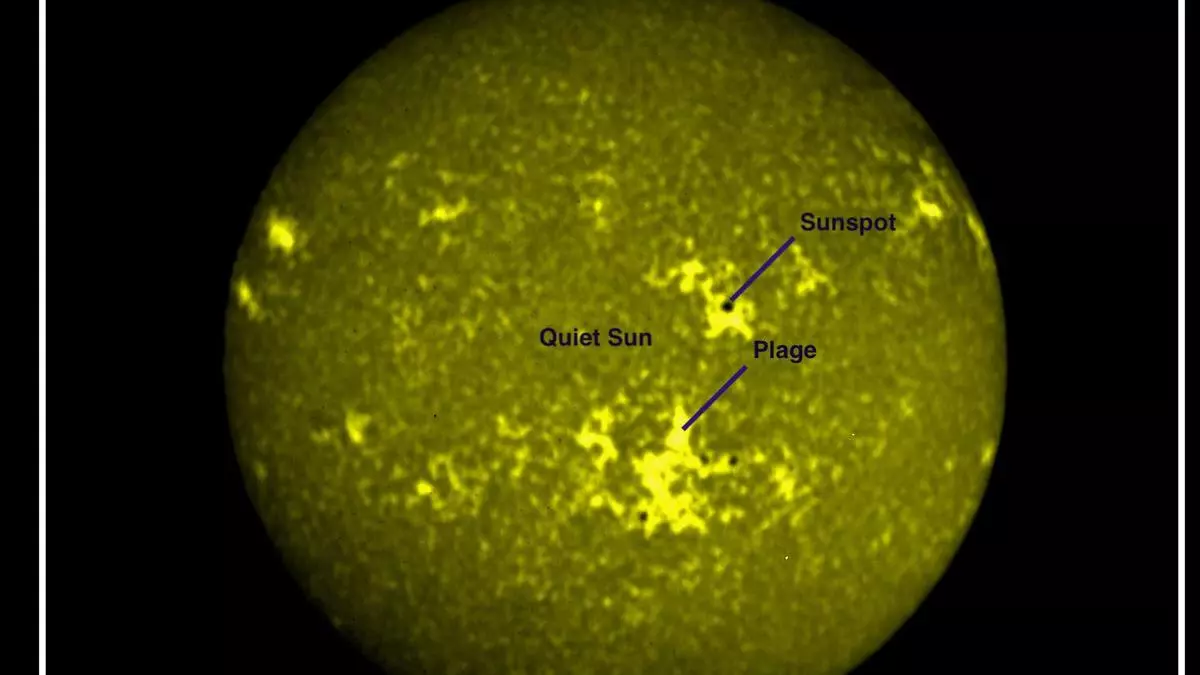
On November 20, 2023, the SUIT payload was powered on. Following a successful pre-commissioning phase, the telescope captured its first light science images on December 6, 2023. The images, taken using eleven different filters, include the first-ever full-disk representations of the Sun in wavelengths ranging from 200 to 400 nm, excluding Ca II h. The full disk images of the Sun in the Ca II h wavelength have been studied from other observatories.

Among the notable features revealed are sunspots, plage, and quiet Sun regions, as marked in the Mg II h image, providing scientists with pioneering insights into the intricate details of the Sun’s photosphere and chromosphere. SUIT observations will help scientists study the dynamic coupling of the magnetised solar atmosphere and assist them in placing tight constraints on the effects of solar radiation on Earth’s climate, the release said.

The development of SUIT involved a collaborative effort under the leadership of the Inter-University Centre for Astronomy and Astrophysics, Pune. This collaboration included ISRO; the Manipal Academy of Higher Education; the Centre for Excellence in Space Science Indian at IISER-Kolkata; the Indian Institute of Astrophysics Bengaluru; the Udaipur Solar Observatory and Tezpur University Assam, the release said.


Source link

Carbon capture and the controversy of ‘unabated fossil fuels’

Carbon capture and the controversy of ‘unabated fossil fuels’


One phrase that has crept into the climate lingo is ‘abated’ (or, conversely, ‘unabated’) fossil fuels use. There are calls for ‘phasing out’ or ‘phasing down’ of unabated fossil fuels use and much controversy revolves around the idea of abatement. The final text of the COP28 climate talks, currently underway in Dubai, is expected to focus heavily on unabated fossil fuels. 

But what are abated or unabated fossil fuels? 

‘Abated fossil fuels use’ refers to the burning of fossil fuels while simultaneously picking up and neutralising the carbon dioxide emissions, either by using them or securely storing the gas underground—forever. ‘Unabated’ refers to burning fossil fuels and letting the emissions to be released into the atmosphere. 

Developed countries want coal to be phased out. In the concluding moments of the Glasgow Conference of 2021 (COP26), India—much to the chagrin of developed countries—forced the COP Presidency (UK) to change the language from “phase out” to “phase down” unabated coal. So, phasing down has come to be accepted as the standard language, but much debate is around whether the phase down should apply only to coal (as the developed countries want) or to all fossil fuels, including oil and gas (which India and other developing countries favour). 

Secondly, the definition of ‘abatement’ itself is a key issue. What level of carbon capture should qualify as ‘abated’ use? If a thermal power plant captures and sequesters, say, 10 per cent of the carbon dioxide it emits, would it still be considered “unabated coal” burning? 

So, the present situation is that while ‘phase down’ has been accepted with mumbles and moans, many discussions are around whether only coal should be phased down or all fossil fuels, and the definition of abatement. 

What is abatement? 

But pushing aside all of this are questions arising over the very concept of abatement—many shrill voices are saying that ‘carbon capture and sequestration’ itself is hardly anything. Among the many voices are those of two well-known climate experts—Laurence Tubiana and Emmanuel Guérin. Tubiana is the CEO of the European Climate Foundation and was France’s climate change ambassador and special representative for COP21, which resulted in the Paris Agreement. Guerin is the executive director for global policies at the European Climate Foundation (ECF). 

Writing in Climatechangenews.com, a respected online publication dedicated to climate change, Tubiana and Guerin tell readers, “Don’t be fooled: CCS is no solution to oil and gas emissions.” 

CCS, at best, might be helpful “at the margins”, but “cannot possibly deliver reductions in greenhouse gas emissions on the scale needed to avert climate disaster,” they say, adding that CCS might deliver “less than a tenth” of the cumulative carbon dioxide emissions over 2023-2050 period. 

Climate activists fear that CCS might be used by fossil fuel companies as a smokescreen to continue producing and selling fossil fuels. Dr Al Khourdajie, a research fellow at Imperial College London, notes that the vague definition of “abated” fossil fuel gives a “false, if not dangerous, sense of security” that could lead to inadequate policy measures and investment decisions.” 

Experts, such as those at Carbon Brief, note that “CCS barely exists and relying on a major scale-up is considered “risky”. 

CCS can be useful only if almost all the emissions are captured and sequestered. The Intergovernmental Panel for Climate Change (IPCC), an UN-mandated international body of scientists formed to assist policymakers by generating scientific data on climate change, has said that “even if realized at its full announced potential, CCS will only account for about 2.4 per cent of the world’s carbon mitigation by 2030.” 

IPCC has said that ‘unabated’ fossil fuels use can be green-flagged only if the CCS plants capture 90 per cent or more of CO2 emissions. The clinching argument against CCS is that today there is no established technology that can capture 90 per cent of emissions. A recent study by the think-tank, Institute for Energy Economics and Financial Analysis reviewed the capacity and performance of 13 flagship projects and found that 10 of the 13 failed or underperformed against their designed capacities, mostly by large margins. 


Source link

IN-SPACe launches seed fund for start-ups focused on urban development, disaster management

IN-SPACe launches seed fund for start-ups focused on urban development, disaster management


The Indian National Space Promotion and Authorisation Centre (IN-SPACe) has announced a seed fund scheme to offer start-ups focusing on urban development and disaster management a financial assistance of up to Rs 1 crore each.

It has launched the scheme in collaboration with ISRO’s National Remote Sensing Centre (NRSC) to provide a leg-up to companies that leverage space technology for societal benefit.  

The selected start-ups will receive seed funding for transforming an original idea into a prototype using space technology, ISRO facility support, including earth observation (EO) data, for validation of the concept, mentorship support, and access to a data algorithm as a transfer of technology from the Department of Space.

Dr Pawan Goenka, Chairman, IN-SPACe, said, “The role of the space sector is crucial to the overall development of the national economy. The latest seed fund scheme is a part of our efforts to provide a special thrust to enhance the space activity capabilities of the nation with the active participation of start-ups.” The last date of application for the scheme is December 20.

Further details are available at https://www.inspace.gov.in/. In addition to financial assistance and mentorship, the scheme also offers training and networking opportunities.

In urban development, opportunities are available for start-ups active in the domains of urban planning, infrastructure management, telecommunication, navigation, broadband connectivity, water resources management, energy efficiency, climate and weather monitoring, disaster risk reduction, public health, healthcare, and more. 

Similarly, under disaster management there are opportunities for start-ups specialising in Geographical Information System (GIS), early warning and monitoring systems, insurance and risk assessment, communication and navigation systems, climate change monitoring, search and rescue operations, and space-borne sensors and instruments, among others. 


Source link

Managing human-allied Artificial Intelligence 

Managing human-allied Artificial Intelligence 


Some of the recent developments have led people to believe that “singularity” — a hypothetical future point in time when AI becomes smarter than humans — is imminent. The reality is that the current AI systems still blindly follow patterns in the data and do not truly understand the world.

The need of the hour is the development of Human-Allied AI systems, where Humans and AI work together to amplify their capabilities and mutually cover for their deficiencies. To enable such systems, one need to adhere to the principles of responsible AI. Here are the key ideas behind these principles.

Explainable AI

In order to trust the outcomes of AI models, we must be able to understand the reasons for the decisions/recommendations made by the model. Success for many AI applications are achieved by the use of what are known as ‘black box models’ — where the process of computation is known, but the reasons for the outcomes are not fully understood.

Even models that are not black boxes can only be explained in terms of the statistical properties of the model. A “responsible AI system” will offer explanations so that anyone can understand the decisions made by it. This would require aligning the AI models to the accepted modality of explanations in the application domain.

Data discipline is an aspect of responsible AI that has received the most attention. The European Union’s General Data Protection Regulation was the first-ever comprehensive framework created for controlling collection, access, and usage of data. The rights of the end-user, whose data is used for building AI systems, are made paramount in the framework. India’s Digital Personal Data Protection Act, 2023, also aims to do the same.

The fairness and ethical aspects of AI have received much attention in both research and popular media. Reports of AI systems that routinely identify people of a certain race as more likely to be criminals, or that women are more likely to be nurses than doctors, are often seen. AI chatbots have been known to become toxic in their language with suitable encouragement from the other participant. While much progress have been made in addressing such issues, techniques and policies must be developed for adopting them into the local social context. India has her own dimensions of discrimination, and one cannot blindly adopt the West-centric views on it. Existing prejudices against certain castes or groups or about people from certain regions will be reflected in AI systems trained on this data. This must be identified and guarded against. For which, AI researchers and social scientists must work in close collaboration to understand the existing human biases and the ways in which they manifest.

Another aspect of responsible deployment of AI models is the ‘performance expectations’ of such systems. AI systems are not simple programs. They solve complex problems and the outcome of their calculation may not be always right. And the end-user of such programs often do not fully understand the implications of it. So, when a designer says that my system will be correct 93 times out of 100, does that mean an AI-enabled medical scan will not detect the illness in 7 patients? It could well be that the AI system says a patient has a disease just because the x-ray was damaged!

Hence, development of regulations to mandate performance guarantees in each application domain is required. At the same time, one needs to understand that researchers cannot guard against all possible eventualities and hence one would need appropriate insurance models for AI systems.

Teamwork

The capabilities of AI can be fully realised when humans and AI systems work together. Responsible deployment of AI systems will require one to understand how work will be disrupted with AI, and development of new AI-in-the-loop protocols for solving the problems. Companies will have to /re-skill workers to operate effectively in such a hybrid environment.

The Centre for Responsible AI (CeRAI) has been set up at IIT Madras to study these issues under three themes — making AI understandable, AI and safety, and AI and society. The centre is set up in multi-stake holder consortium model, with participation from industry, government, legal experts, social scientists and industry bodies apart from different academic institutions.

(Prof. Balaraman Ravindran is Head, Centre for Responsible AI, IIT Madras)


Source link

YouTube
Instagram
WhatsApp