How ISRO is working on next generation rockets 

How ISRO is working on next generation rockets 


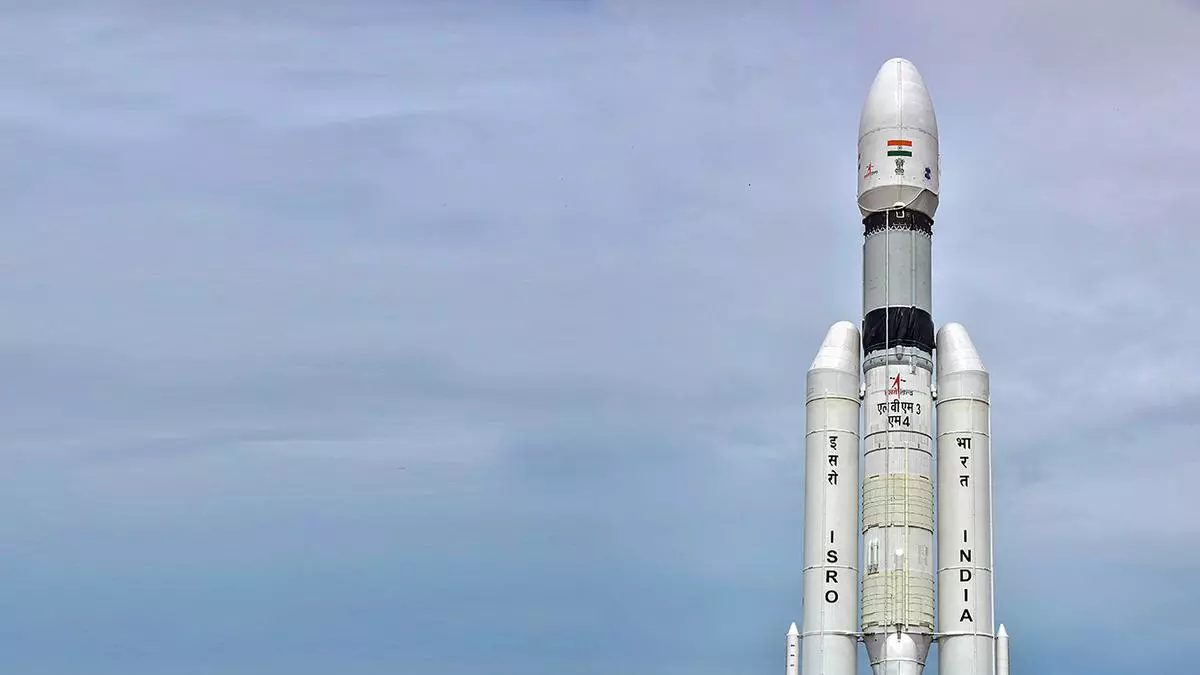
With seven straight successful launches, the LVM-3 rocket that took the 3.9-tonne Chandrayaan-3 spacecraft to the drop-off point 180 km above the earth has proved to be a reliable one. Now ISRO, India’s space agency, is working on upgrading it further so that it can carry 6-tonne heavy payloads up to Geostationary Transfer Orbits (GTO).

But a rocket like the LVM-3 is good only up to a point. To go further and faster, the LVM-3 will not do. Nor is LVM-3 quite the thing for bringing down the cost of launching satellites, for which purpose, you would need reusable launch vehicles and vehicles that use cheaper fuels. 

Also read: Chandrayaan-3 launch: ‘How beautiful that was!’ comments ISRO Chairman Somnath

The good news is, ISRO is working on a bunch of rocket technologies- some of which are sure to hit commercial service in a decade. 

Here is a quick look at some of them. 

Air-breathing rockets 

ISRO’s Chairman, Sreedhara Panicker Somanath, calls air-breathing rockets “a dream”. Air-breathing rockets have scramjet engines that can accelerate by themselves during their flight through the atmosphere, conserving chemical fuels for use later. 

To put it simply, ‘scramjet’, or supersonic ram jets, have funnel-like openings on their bodies, with the mouth of the funnel facing the direction of flight. During flight, air enters the funnels at very high speeds and gets compressed as it passes through the thin end of the funnel.

The compressed air is fed into the combustion chamber where it meets the vaporised fuel (as in an automobile engine) and self-ignites. This creates a thrust. In a ramjet, air is fed into the combustion chamber at speeds lesser than the speed of sound (subsonic); in a scramjet engine, it happens at supersonic speeds. 

Also read: Chandrayaan-3 launch: Indian-origin CEOs in Silicon Valley are over the moon

Ramjets and scramjets are commonplace in missile technology. India’s Brahmos missile is fitted with ramjets; a supersonic variant has a scramjet engine. However, scramjets have not been successfully used in rockets, which need to travel not at supersonic speeds (1.2 to 5 Mach), but at hypersonic speeds (above Mach 5). 

One Mach is the speed of sound, roughly 1,225 km per hour. 

Some years ago, ISRO successfully tested an air-breathing engine on a sounding rocket, but it is now working on a bigger engine (called air-frame integrated air breathing engine) that can sustain longer durations in flight. The engine is actually under manufacture for testing, but even as this is happening, ISRO is in talks with the industry for producing the rockets.

LOx methane engines 

Methane engines are hot today, they take rocketry to the next level. The advantages are well known. Liquid methane—essentially LNG—is not as potent a fuel as hydrogen. But the temperature at which it needs to be kept in rocket tanks is much higher than hydrogen–about minus 161°C compared with minus 253°C for hydrogen. 

Moreover, it does not leak—the methane molecule is a much bigger one than hydrogen. And, methane is a lot cheaper and abundantly available. 

Also read: Chandrayaan-3: Some questions and answers 

So, every space company is eyeing methane rockets—or, Liquid Oxygen-Methane (or LOx)–because you need an oxidizer for methane to burn. Yet, liquid methane rockets are not yet commonplace, because quite a few challenges must be first overcome.

One is the problem of ‘coking’, or ‘soot deposition’. As the gas approaches the combustion chamber, some of it splits into carbon and hydrogen and the carbon gets deposited on the insides of the tubes as soot, which creates a host of problems such as combustion instability. Researchers are trying to tackle this problem by developing soot-resistant materials, such as ceramics, and adding specially designed additives to the fuel.  

Also, the industry needs to get familiar with this technology to develop confidence to put in money into manufacturing. 

While practically everybody (SpaceX, Blue Origin, Rocket Lab, etc.) is working on methane rockets, the first to do a proper space flight with one is the Chinese company Landscape, whose Zhuque-2 rocket achieved the feat on July 11—three days before the Chandrayaan-3 launch.  

Somanath had told this writer in 2019 that ISRO was working on a LOx methane (or, Methalox) rocket, but it is still under development. Its idea is to convert a cryogenic engine into a LOx-methane.  

Also read: Chandrayaan and the Tamil connect

Jayant Patil, Member of Executive Council of Management, L&T, says that LOx-methane engines are ideal for reusable rockets. Compared with kerosene, liquified methane has 20 per cent lower relative density with the same calorific value and a slightly higher specific impulse—therefore, the fuel is a fifth less heavy than kerosene with a better thrust.  

HAVA-India’s space shuttle 

ISRO is also working on a space shuttle—a vehicle that can deliver payloads to orbit. It is called HAVA, for Hypersonic Air-breathing Vehicle Assembly, which can deliver payloads of up to 500 kg to low earth orbit. Based on the ‘re-usable launch vehicle’ technology, which itself is under development, the HAVA is a space-shuttle-like vehicle, which will fly on the back of a GSLV, deliver the payload, and return to land on an airstrip, like an airplane. A prototype is expected to be ready for testing in a few years. 

These are just a few technologies that ISRO is working on, but there are many more—such as vertical take-off and landing (V-TOL), electric propulsion, nuclear propulsion, not to speak of areas like additive manufacturing in space and research into functional materials. 


Source link

Google unveils NFT policy for Play Store as token interest wanes

Google unveils NFT policy for Play Store as token interest wanes


Google’s decision to allow developers to expand the ways nonfungible tokens can be used in their games on the Play Store was met with a collective sigh of relief on crypto Twitter. 

NFT investors, who have for months watched the prices of their collections fall and interest in this colorful corner of the digital-asset market wane, see the changes in Google’s policy as a sign that the market is not dead yet.

“We’re so back,” said Kyle McCollom, a co-founder at a Brooklyn-based crypto startup. 

ALSO READ | Meta to shut down testing NFTs on Instagram, Facebook

“You thought NFTs were dead?” tweeted Daniel Borovik, creator of multiple collections listed on OpenSea, the largest marketplace by volume for nonfungible tokens. 

In a blog post published Wednesday, Alphabet Inc.’s Google said it will allow developers to offer games where players can buy, sell and earn tokenised digital assets—like nonfungible tokens—subject to specific guidelines. 

Plummeting values

NFTs once ranked among the crypto industry’s hottest assets, attracting the attention of celebrities like Madonna, Justin Bieber and superstar DJ Steve Aoki. 

But in the months since the collapse of FTX, the digital assets most closely associated with cartoonish pictures of apes have since seen their value and popularity plummet. Monthly global sales volumes for NFTs fell 38% to $653 million in June compared with the same period last year, according to blockchain data provider CryptoSlam. 

ALSO READ | WazirX shuts NFT marketplace amid crypto downturn

Google has had a mixed strategy on blockchain and crypto: Google Play still bans crypto mining apps from its marketplace, while Google Cloud in 2021 teamed up with Dapper Labs, the creator of the NBA Top Shot digital collectibles.

The move to clarify its policies also further aligns Google with main rival Apple Inc., which introduced new App Store guidelines in October on crypto trading, as well as on the use of NFTs within apps and games. Both Google and Apple have been lambasted by the crypto and gaming industries for high fees on in-app transactions.

Brian Armstrong, Chief Executive Officer of crypto exchange Coinbase, publicly criticised Apple last year over these in-app transaction rules, citing their “app store monopoly.”

Google Play’s updated guidelines, which go into effect December 7, say that games can support transactions involving tokenized assets under the platform’s existing Real-Money Gambling, Games, and Contests policy. Developers will have to follow specific rules, such as ensuring that the value of an NFT is made clear to a player at the time of purchase. 


Source link

New graphite anode alternative

New graphite anode alternative


A newly-developed high-capacity anode that is extremely stable at high rates, could be a potential alternative to the commercial graphite anode. It can be used as a substitute for safe, stable and rapid-charging next-generation LIBs with higher storage capacity. A team at the Centre for Nano and Soft Matter Sciences (CeNS), Bengaluru, led by Dr HSS Ramakrishna Matte, has developed this high-capacity anode. The anode is a ternary FeOOH-rGO-MnO2 composite anode made from a simple low-temperature synthetic procedure.

The work, which is published in ACS Applied Energy Materials, showcases the stable performance of the anode, wherein it delivered capacities of 9,56,842, and 688 mAh g-1 (milliampere-hours per gram mass-unit of specific capacity) at 1, 2, and 5 A g-1 respectively for 200 cycles along with cycling stability of 900 mAh g-1 at 1 A g-1 for 100 cycles.

Take a liberal pinch of salt

Can we ever add as much salt as we like to our food without affecting our health? Yes, we can—the answer lies in low sodium salt. The Central Salt and Marine Chemicals Research Institute (CMSCRI), Bhavnagar, has developed a low sodium salt called ‘Saloni K’. It is a mixture of sodium chloride and potassium chloride,“useful for those who have been advised to eat less common salt,” CMSCRI says.

Saloni K is made from Slicornia brachiata, a high salt-accumulating and edible oil bearing plant and Kappaphycus alvarezii, a red algae.

The know-how for cultivation of the plants and making Saloni K is market ready. While it has been transferred to a local small-scale company, CMSCRI is open to technology transfer.

Bone-friendly implants

The problem with putting metal implants into our bodies is that they take most of the mechanical load, leaving little for the bones around them to bear. Though it may sound very kind to the bones, it is not actually so. Bones need mechanical load to grow strong and because of the “stress shielding” offered by the metal implants, the natural bones around them die out and dissolve.

Researchers at IIT-M have found a solution to this problem by using a technique called ‘multi-phase topology optimisation’—a simulation technique that determines the optimal distribution of two or more different materials in a combination under thermal and mechanical loads. Prof Sourav Rakshit and S Rajaram of the Department of Mechanical Engineering have used ‘macroscale optimisation’ and ‘microscale optimisation’ on the pelvic bone, with good results, according to a paper produced by them.

Solar cell shows 26% efficiency

The National Centre for Photovoltaic Research and Education at IIT-Bombay has developed a solar cell that combines a perovskite solar cell and a conventional crystalline silicon cell. The cell has been demonstrated an efficiency of over 26 per cent. Comparatively, the best cells in the market have efficiencies of 22 per cent. “We have fabricated a stable 4T (four terminal) Si/perovskite tandem solar cells which provides outstanding stability in the dark as well as continuous heating conditions” says Prof Dinesh Kabra, who led the research at IIT-B. The cell could be “the gateway for use in niche applications like building integrated photovoltaics (BIPV)”, says Kabra.


Source link

Ancient world’s ‘Ivory Man’ turns out to be ‘Ivory Lady’

Ancient world’s ‘Ivory Man’ turns out to be ‘Ivory Lady’


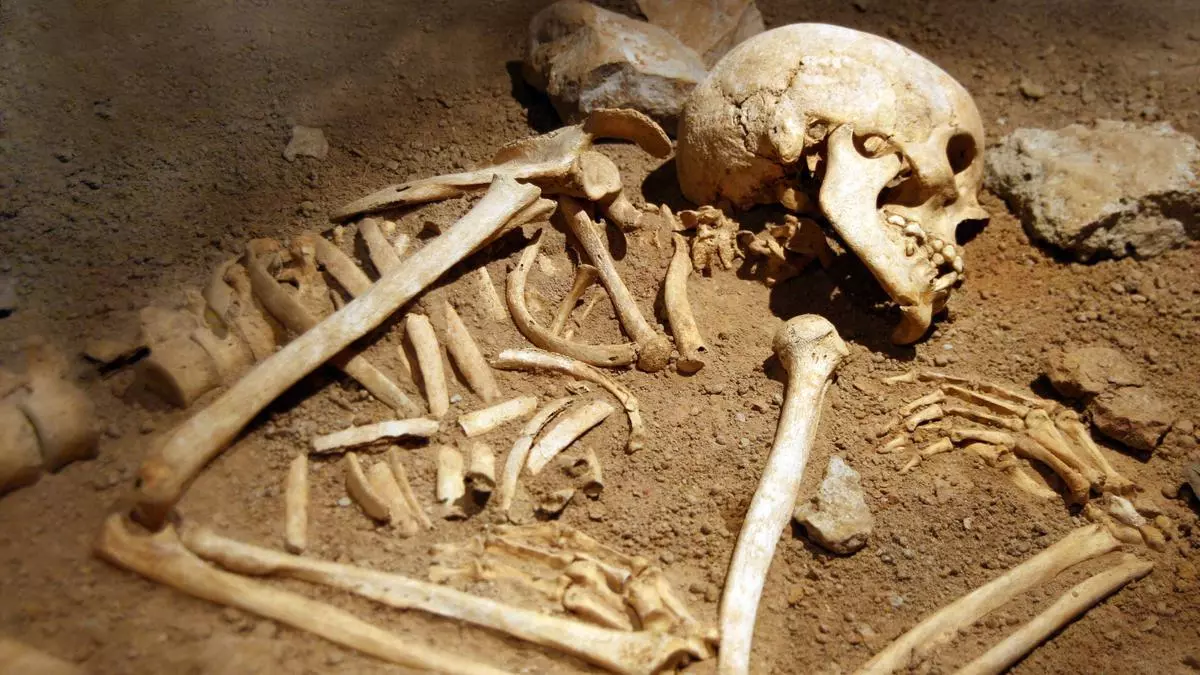
At a time when Indiana ‘Indy’ Jones is back in our midst and ‘archaeology’ is buzzing in our heads, a new scientific technique to determine the sex of a long-deceased and skeletonised individual has been tried out with success.

To tell whether a 5,000-year-old skeleton is a ‘he’ or a ‘she’ is almost impossible unless you can get hold of some genetic material, which is not always available. Therefore, “archaeologists have for decades struggled with sex estimation of poorly preserved human remains,” say the authors of a Spanish research whose work recently revealed that the ‘Ivory man’, a powerful individual buried in a lavish tomb 5,000 years ago, was actually a woman.

The ancient individual was apparently of a high social order and was buried with a number of sumptuary items produced with exotic items like ivory, rock crystal and amber, and a large ceramic plate that had traces of wine and cannabis.

To make the sex determination, scientists Marta Cintas-Peña, et al, of the Department of Prehistory and Archaeology, University of Seville, Spain, looked into the tooth enamel of the ‘Ivory man’. Through the analysis of sexually dimorphic amelogenin peptides in the enamel, they have established that the most socially prominent person of the Iberian Copper Age (c. 3200–2200 BC) was a female, not male as previously thought.

The technique uses proteomics and can provide highly reliable sex determinations even for poorly preserved human skeletons, the researchers say.


Source link

Wishing India’s moon lander a happy touchdown

Wishing India’s moon lander a happy touchdown


In the wee hours of September 7, 2019, India’s moon lander Vikram met its end on the lunar surface, hurtling down at 58 m per second when it was supposed to descend gently at 2 m per second.

The disappointment left Dr K Sivan, the then chairman of India’s space agency ISRO, in tears, prompting a consoling hug from Prime Minister Narendra Modi at the mission control room.

Sreedhara Panicker Somanath, ISRO’s current chief, would for sure prefer a pat on the back rather than a comforting hug at the end of the upcoming ₹615-crore Chandrayaan-3 mission.

Landing (not crashing) on the moon is the central objective of ISRO’s planned third lunar exploration mission, slated to launch on July 14. It is the most important of the mission’s three elements of technology demonstration — reaching the lunar orbit, soft-landing a lander, and getting a rover to slide out of it and crawl on the moon surface.

The lander in the previous mission, Chandrayaan-2, failed due to a software glitch, which has since been fixed; ISRO says other precautions have also been taken this time around to ensure a successful landing.

The lander is slightly heavier this time — 1,752 kg, compared with 1,471 kg previously, despite having only four engines in place of the five earlier. (These engines are meant to provide an upward thrust to the descending lander, in order to slow it down.) The removal of one engine is presumably to offset the added weight of the stronger legs in the new lander. Somanath has said that some redundancies have been built in, to ensure a safe touchdown. The lander has a number of sensors, including an accelerometer, altimeters (Ka-band and laser), Doppler velocimeter, star sensors, inclinometer, touchdown sensor, and a suite of cameras for hazard avoidance and positional knowledge.

The side-mounted solar panels of the Chandrayaan-3 lander are designed to provide more power — 738 W compared with 650 W earlier, though this is not a factor in the landing.

Soft-landing power

Apart from these — and perhaps luck — there is little difference between the Chandrayaan-3 and Chandrayaan-2 lander-rovers. A touchdown on the moon surface on August 23 or 24 would make India the fourth country to demonstrate lunar soft-landing (after the US, the former Soviet Union and China.)

All the scientific instruments of Chandrayaan-3 are the same as those of its predecessor — they will probe the lunar regolith to determine which elements are present in it by burning the mud into a plasma and analysing the plumes; check how heat is conducted on the moon surface near the polar region by drilling a probe 10 cm into the ground; and study the gas and plasma environment of the moon. But the main objective of the mission is to master the technology of soft-landing.

However, there is one crucial difference with respect to an instrument that will not land on the moon but remain with the ‘propulsion module’, the vehicle that will take the lander across the distance between the earth and the moon. The LVM-3 rocket will take the propulsion module plus the lander from the Sriharikota launch station to an elliptical earth orbit of 170 km (nearest to earth) and 36,500 km (farthest from earth). At this point, whatever remains of the LVM-3 rocket (the upper stage with a cryogenic engine, after the other parts have fallen off into the sea) will bid goodbye to the propulsion module and wander off into space. The propulsion module, having thanked the LVM-3 for ferrying it upto there, will circle the earth five times in elliptical loops, each bigger than the previous one, before gathering enough velocity to shoot off on a month-long journey towards the moon.

Earthy spectrum

As it closes in, it will circle the moon in 5-6 elliptical orbits, each time getting closer, until it reaches 100 km above the lunar surface and divests itself of the lander. At this point, an interesting instrument on board the propulsion module will come to life — one that was not part of the Chandrayaan-2 mission.

The Spectropolarimetry of HAbitable Planet Earth (SHAPE) will look at the earth from the moon’s neighbourhood to see what kind of spectrum is generated by the light emerging from earth. Light is affected by the type of gases in an atmosphere, because different elements absorb or deflect different wavelengths of light. So, if you know what the earth spectrum is like, then you can look for similar spectra from exoplanets (planets of other stars) — if they match, you might want to believe that the exoplanet could, like earth, hold life.


Source link

CTBT: Scientific spin-offs from network for monitoring nuclear tests

CTBT: Scientific spin-offs from network for monitoring nuclear tests


Between 1945 and 1996, the world witnessed as many as 2,000 nuclear explosion tests; since then there have been six tests in all — two by India, one by Pakistan, and three by North Korea.

What happened in 1996?

The Comprehensive Test Ban Treaty (CTBT), which seeks to fully halt critical nuclear tests, opened for signature. The treaty can come into force only after all 44 nuclear weapon states have signed and ratified it, which hasn’t happened yet.

Guess who refused to sign?

India, Pakistan and North Korea. India sees the CTBT as no different from the nuclear Non-Proliferation Treaty (NPT), which it vehemently opposes as discriminatory. Secondly, India wants to use the CTBT as a bargaining chip to gain concessions elsewhere.

The US, China, Israel, Egypt and Iran have signed but not ratified the treaty. And now, with the nuclear sabre-rattling in the Russia-Ukraine war, the US appears unlikely to ratify it any time soon.

But the Comprehensive Test Ban Treaty Organisation (CTBTO), which was set up to bring the treaty into force, remains hopeful.

Moreover, the work-in-progress treaty has achieved a key objective — preventing countries from conducting any further nuclear tests. The CTBTO credits this to its ability to detect any nuclear test anywhere — on ground, underground, atmosphere, or underwater.

Interestingly, the organisation’s network of sensors and sensing technologies have useful spin-offs for industry and society. For example, they find application in monsoon forecast, tsunami warning, tracking whale movements, and research in radio nuclides.

The CTBTO’s International Monitoring System (IMS) runs over 300 ‘monitoring stations’ around the world, including many in some of the “most remote and inhospitable environments”.

The IMS rests on four pillars — seismic, infrasound, hydroacoustic and radionuclides.

Seismic

With two seismic networks — primary (50 stations) and auxiliary (120 stations) — the IMS can detect any vibration on ground. The primary network consists of seismic array stations that can determine the type of seismic wave and its origin or cause. The auxiliary seismic stations supplement the work of the primary stations.

Typically a seismic event generates two types of waves — body waves (P and S waves) and surface waves (Rayleigh and Love waves), which differ in speed, direction and medium of propagation. Body waves travel through earth’s depths, surface waves move along the surface. IMS seismic network can detect both types of waves.

Infrasound

Audible sound frequency is 20-20,000 Hz; infrasound is below 4 Hz. Infrasonic waves cause minute changes in atmospheric pressure, which are measured by micro-barometers. Infrasound travels long distances, hence it is useful in detecting atmospheric nuclear explosions. The IMS infrasound monitoring system has 60 array stations in 35 countries. Each array has four or more elements arranged in geometric patterns, a meteorological station, a central processing facility, and a communication system for data transmission.

Hydroacoustic

Hydroacoustic technology is used to measure changes in water pressure caused by sound waves. Hydroacoustic data can pinpoint the location of a nuclear explosion underwater, near the ocean surface, or near a coastline. Sound propagates efficiently through water but, at one level in the water, sound travel is slower but particularly efficient: the ‘sound fixing and ranging channel’ or SOFAR, at about 1,000 m depth. “Hydroacoustic monitoring makes use of the unique phenomenon of sound waves being trapped in that layer,” says CTBTO. The 11 IMS hydroacoustic stations keep a ear on all the oceans and provide tsunami warnings.

Radionuclide

The presence of radionuclides — isotopes of elements that undergo radioactive decay — is the clinching evidence of a nuclear explosion. Isotopes of noble gases — xenon, in particular — are produced only by nuclear fission; hence, radionuclides are a ‘smoking gun’. The IMS has 80 radionuclide stations and 16 radionuclide laboratories.

All the stations of IMS generate a lot of data daily, which is sent to its international data centre (IDC) in Vienna. The IDC today is a massive repository of data, which serve as fantastic raw material for scientific research.

The CTBT is not born yet, says Dr Robert Floyd, Executive Secretary of the CTBTO, “but it is already a success.” Except for North Korea, no country has since dared to conduct a nuclear test, because detection is inevitable and would lead to consequences.

(The writer was in Vienna at the invitation of CTBTO to attend its science conference SnT 2023)


Source link

YouTube
Instagram
WhatsApp