Motionless tracker technology that can revolutionise solar industry

Motionless tracker technology that can revolutionise solar industry


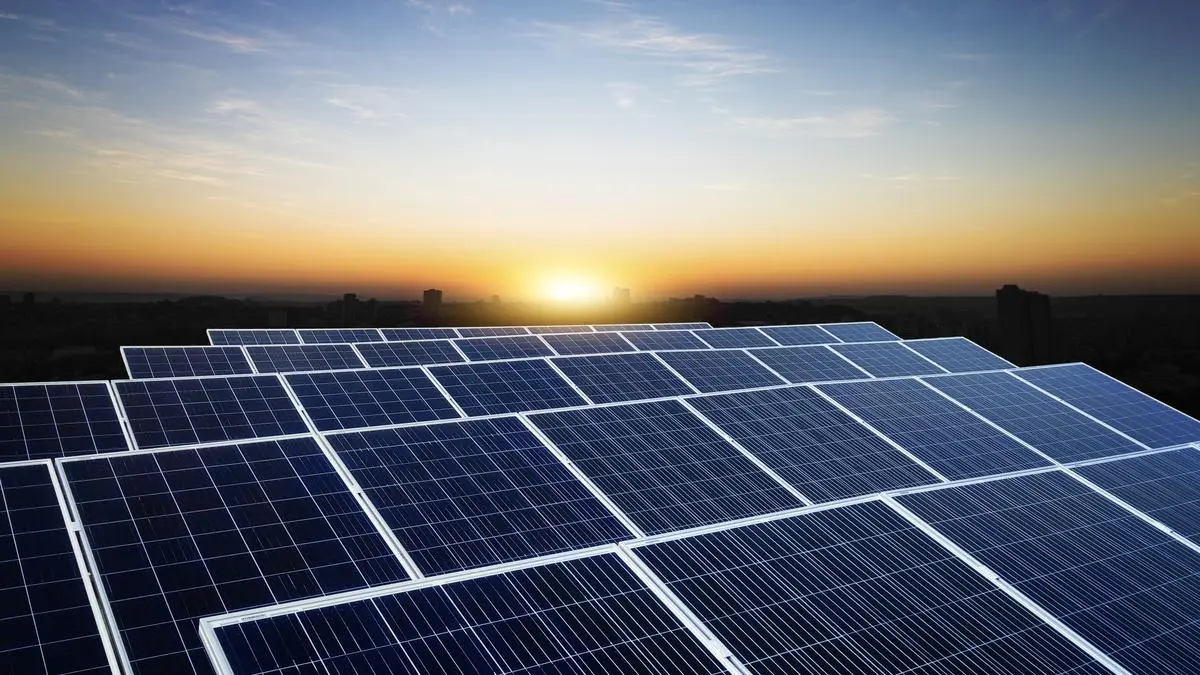
Renkube, a Bengaluru-based start-up, is gearing up to unveil its proprietary ‘motion-free optical tracker’ technology in the solar energy market. The technology has the potential to revolutionise the solar energy industry.

The conventional tracker-based system to keep the solar panels always facing the sun — as the sun moves from east to west across the firmament — is not a great one as the mechanical trackers on the system, with motors and many moving parts, makes maintenance a headache.

But, Renkube’s trackers are motionless. “The tracking capability is embedded inside the glass,” says Dr Lakshmi Santhanam, Co-Founder and CEO, Renkube.

The heart of the system is an AI-based proprietary software, with more than 2,00,000 lines of code. With the help of the software, grooved patterns are created on glass to make it behave like a prism. Once the design is done, the glass is manufactured and assembled with the solar panels.

The critical part of the fixture is the ‘grooving’ on the glass. Dr Santhanam, a software professional who has a PhD in network security from the University of Cincinnati, US, says the company applied the team’s expertise in machine learning algorithms to design the grooves in a manner that capture more sunlight — the grooves impart certain geometric design on the glass, which enables it to harvest and redirect sunlight.

The team comprises the Founder, Balaji Lakshmikanth Bangolae, the lead inventor of the motion-free tracker technology and three co-founders—Janardhana Vittalrao Kshirsagar, who has a PhD in microwave communications and Deepika Gopal, who has a Masters in Computer Science from the University of California, San Diego.

Solar prisms

The team’s collective expertise has come up with a unique geometry on glass that can bend the path of light to make it fall on the solar panels. These light-redirecting ‘prisms’ are assembled on the solar panels at a module manufacturing plant. Once fixed, there is no tilting or adjusting needed, and the panels will generate more energy throughout the year. Conventional mechanical trackers have motors, actuators, sensors, etc, but Renkube’s system is just a special sheet of glass. They can be cleaned with water.

The architecture has been piloted for a year in Bengaluru and the company is now preparing to get the product contract-manufactured. The company has tied-up with Swelect Energy for using their module plant in Coimbatore for producing the panels.

Dr Santhanam told Quantum that the system would cost 5-10 per cent more than a tracker-less solar plant, but generation will be higher by at least 20 per cent. The company reckons that a 100 MW solar plant would cost $5 million more with Renkube’s products, but the additional cost will be paid back in two years.

However, Renkube’s system would need to be manufactured right when the modules are produced — no retrofit is possible. At present, the grooved glass is manufactured in Singapore and brought to the Coimbatore module plant. However, Dr Santhanam sees the scope for further cost reduction if the glass could be locally-produced. For that, Renkube is in talks with Saint Gobain, Chennai, for making the glass. The glass does not have to be special; a regular, tempered borosilicate glass will be fine, says Santhanam. Logistics is a big cost driver as the imported glass would need to be packed and shipped with extra care and costs.

The product could be further customised for rooftops, building facades and balcony windows, says Santhanam.

Agri-Friendly

The start-up is pitching Renkube for agro-photovoltaic—where the solar panels are put up at a height, allowing regular farming to be done on the ground below. A typical agro-PV lets about half of the land for cropping, but Rekube’s redirecting prisms sends the excess sunlight to the ground below. The panels are mounted so high that tractors can ply below them, notes Santhanam.


Source link

How AI helps Tata Steel save  billion in EBIDTA

How AI helps Tata Steel save $2 billion in EBIDTA


Guess what the crucial raw materials for running a profitable steel company are? Iron ore, coke, a lot of energy and data.

Tata Steel, for one, will never face any shortage or cost spike of the last. And, with artificial intelligence (AI), the company is squeezing data to extract profits.

Around 2018, the $33 billion steel major set itself a somewhat direction-giving target of achieving EBIDTA savings of $2 billion only from using its data, over an unspecified number of years. Today, it reckons, it has milked $1.4 billion and is all set to move the goal post to a higher level of ambition.

One does not readily connect AI with something as ‘physical’ as steel making, but Jayanta Banerjee, Chief Innovation Officer at Tata Steel, explains how data and AI have become as important as iron ore and coke.

Banerjee is a steel-outsider. An IT professional, he wrote a paper on AI back in the early 1990s before joining Tata Consultancy Services, where he worked for a quarter century in TCS’s overseas offices.

In 2018, Tata group’s Chairman, Natarajan Chandrasekaran, hand-picked a few IT wizards from TCS and put them into various other companies of the group. Banerjee ended up in Tata Steel.

“I knew nothing about steel,” says Banerjee. But he knew data, and Tata Steel is always drowned in a flood of data.

A date with Data

Steel making is a heavily sensorised business; Tata Steel uses several lakhs of sensors in its five (Indian) plants. Most of them are electronic, but some chemical and acoustic sensors too. In 2018, the company had about 6 terabytes of data; today it has 5.2 petabytes (roughly, thousand times more).

Humongous amounts of data implies you need to keep them somewhere. That is where ‘cloud’ enters the picture. “We invested heavily in cloud in 2018 and 2019,” says Banerjee, adding, “today 95 per cent of my estate is on multiple clouds.” The company uses the cloud services of Amazon, Google, Microsoft, Tata Communications and IBM. Multiple providers are necessary for reasons of security and building redundancy.

So, Tata Steel had data and cloud, and Banerjee brought in AI, to make use of the former. Banerjee calls data, cloud and AI ‘three macros’. An in-house team developed about 260 algorithms on which the business runs. Alongside, the company scrapped the individual control rooms in its various mines and plants — each blast furnace had its own control room — and consolidated them under one IT building, the integrated remote operations center (iROC), in Jamshedpur. This brought in an added advantage — employees didn’t have to be transferred to different places, as all the operations of the company are controlled from here.

AI is used a lot in decision making. Take raw material procurement for example. As Banerjee explained, questions such as which raw material to buy; when, where and what is the best route to ship it into the plant;how to efficiently allocate the raw materials to different plants, are best answered by AI models.

Furthermore, AI is used in optimising chemical mix in blast furnaces. This is important because when raw materials like coal are transported across long distances, some impurities (moisture, foreign materials) will inevitably seep in. The quality of the raw material will determine what else should go into the furnace — how much manganese, zinc, among others. “Impurities in the output product will be much lesser if I have better chemistry upstream,” explains Banerjee adding that fine-tuning the mix is done by AI.

Fault finder

Further along the production line, AI also helps in identifying the origin of a defect. All products are fully imaged to find defects (crack, bubble) before it becomes final . If a defect shows up in an image, the product is not supplied to the customer. The image is then image is compared with an outsourced library of defect images, to see which one it resembles the most. This gives them an idea of what could have gone wrong. Once the origin of the defect is known, it is created on the ‘digital twin’ of the plant, where an AI model learns about the defect and its origin — it won’t let it happen another time.

All this happens on the production side. Tata Steel also uses AI in a whole lot of areas like forecasting and planning, HR and customer and financial analytics as well.

Banerjee keeps a sharp eye on the costs. Technology is used only when it positively impacts at least one of yield, energy, throughput, quality and productivity. Over the years, cost-benefit has improved. “When I started the transformation (around 2018) it used to be in the range of 1:4.3, today we’re almost running 1:10. Every dollar I spend, I get $10 back,” he says.


Source link

Unreported industrial accidents: Hidden environmental consequences in India

Unreported industrial accidents: Hidden environmental consequences in India


Nobody can forget the night of December 2, 1984. It was the night when toxic gases from a pesticide company killed more than 15,000 people in Bhopal. While many cases were filed asking for justice for the affected people, who recorded how the  Bhopal tragedy impacted the environment?  

Startling statistics

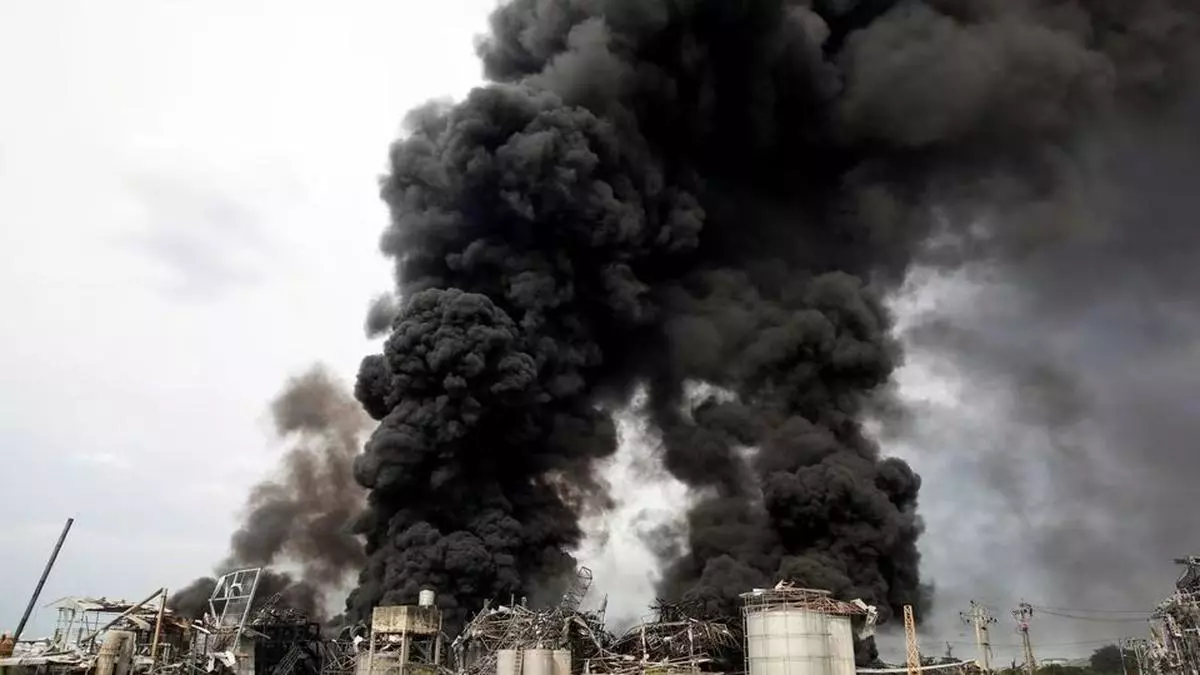
A recent research paper titled “Industrial Accidents and Environmental Damage in India: A Decade-long Analysis” discusses  the rising environmental damage caused by industrial accidents in India. The study, conducted from 2010 to 2020, shows that India witnessed 560 industrial accidents that resulted in significant environmental damage. The most common forms of environmental harm reported were air and water pollution. Tragically, these accidents led to the loss of approximately 2,500 lives and caused injuries to another 8,500 individuals.  

Unreported cases

However, the authors, Lavanya Suresh from BITS Pilani and Mousami Prasad from IIT Kanpur said to businessline that this dataset is very conservative as the the availability and documentation of data limits the estimates, so it’s highly likely that there are many unreported cases.  

India’s rapid industrialization has significantly contributed to its economic growth and employment rates. However, the research paper raises concerns about the increasing number of industrial accidents and their adverse effects on human lives and the environment.   

Database maintenance

The research paper emphasizes the necessity of maintaining and regularly updating a national-level database to track environmental damage from industrial accidents. “One reason for neglecting these accidents is the lack of systematic recording and reporting,” Suresh said. “Even though there are provisions for companies to report injuries or deaths, they don’t provide detailed information about the accidents themselves. Additionally, there has been limited attention to man-made disasters compared to natural disasters. It’s only in recent years that there has been some progress in acknowledging and reporting these accidents, but there is still a long way to go,” she added.  

Such a database would not only aid in understanding the scale of the problem but also signal India’s commitment to sustainable manufacturing growth. Prasad said that to mitigate the risks associated with industrial growth and ensure sustainable manufacturing, policymakers must enforce safety measures, promote community awareness of potential risks, and establish mechanisms for holding organizations accountable for human and environmental damage caused by accidents.  

Balancing growth and safety

The findings significantly affect public policy, company managers, and civil society. With the manufacturing sector projected to contribute substantially to India’s economic output, controlling and reducing environmental damage caused by industrial accidents. The study highlights the need for stricter safety regulations, improved awareness, and accountability mechanisms to ensure the well-being of workers, communities, and the environment.   

Suresh said, “It’s important to highlight that even smaller incidents can have substantial consequences for local environments and communities. However, the attention given to these incidents is often inadequate. The focus tends to be on the immediate and visible impacts, rather than conducting comprehensive impact studies. This lack of sustained reporting and detailed assessment further contributes to the neglect of environmental damages caused by industrial accidents.”  

Bhopal gas tragedy case

For instance, in the  Bhopal gas tragedy case, reports found that the mercury levels when the gas leak took place were between 20,000 and 6 million ppm. More than 2,000 animals were dead from the effects of the gas and were disposed of together in the nearby river. Even after decades, samples from around the site contained chlorinated benzene compounds and organochlorine pesticides, which were 561 times higher than the national standard. According to several reports, the groundwater levels are reported to have toxicity levels around 40% higher than the Indian safety standards and even higher than the standards specified by the World Health Organization.  

The research suggests that accountability and safety standards within organizations are critical to mitigating industrial accidents and their environmental repercussions.   

Recommendations

The paper proposes recommendations for policymakers and company managers to ensure sustainable manufacturing growth. These include enforcing appropriate safety measures, engaging in community awareness programs regarding the risks associated with industrial operations, and taking responsibility for human and environmental damage in the event of an accident.    


Source link

Apple’s  fake-suede iPhone case is its biggest dud of 2023

Apple’s $59 fake-suede iPhone case is its biggest dud of 2023


When Apple Inc. introduced a new material for phone cases and watchbands earlier this month, the company heralded it as a groundbreaking alternative to leather with “subtle luster and a soft, suede-like feel.”

Consumers and reviewers haven’t seen it that way. The fabric, which Apple calls FineWoven, has been panned for being prone to scratches and stains — with an almost-slippery feel that’s off-putting to some. What began as a high-minded effort to make Apple’s products carbon neutral is now threatening to be one of the company’s biggest misfires of 2023.

Also Read | Apple iPhone 15 launched in India, starting at ₹79,900

Apple describes FineWoven as an all-new textile that’s made from 68% post-consumer recycled material. It’s part of a push to phase out leather throughout its product line, including iPhone cases and Apple Watch bands, in a step toward being carbon neutral across the company’s entire global operations.

But FineWoven has yet to clear its first hurdle: winning over the Apple fanatics and early adopters who snapped up the product before anyone else. Federico Viticci, a blogger and podcaster who runs the MacStories site, is one such user. He posted on Mastodon that he saw a stain on his FineWoven case after going out for dinner.

“I honestly think this is one of the worst accessories Apple’s produced,” he said. “I may just throw this out now. (Great for the environment!)”

One product review video posted to YouTube by MobileReviewsEh shows how easily the case can retain scratches. And a blogger at 512 pixels complained that the holes on the case don’t line up with the port on the phone or the speakers. A reviewer for the Verge put it bluntly: “FineWoven is very bad.”

Also Read | Apple’s iPhone seen gaining market share in India as Pro model demand rises

A representative for the Cupertino, California-based company didn’t immediately respond to a request for comment.

Touching the material in person, FineWoven does take some getting used to. The case feels like a rough pair of tights — weirdly coarse but plush when you press on it. The sides look sleek, but one wrong move and it can scratch instantly.

The product also carries a premium price. A FineWoven iPhone case is $59, $10 more than the plastic and silicone versions that Apple sells — and far more expensive than the options offered by third parties.

There’s some irony in FineWoven being one of the biggest controversies surrounding the launch of the iPhone 15. This is the year that Apple switched the phone to a USB-C connector, and that was expected to trigger outrage among consumers. 

The last time the company switched power connectors on the iPhone — the move to Lightning in 2012 — consumers decried the change. They suddenly had drawers full of obsolete cords and accessories, and either needed to replace them or get a clunky adapter.

But this year’s switch to USB-C hasn’t brought the same criticism, perhaps because it’s been a long time coming. Many consumers already have many products that use the standard, including other Apple devices.

Also Read | Apple tech support staff urged to stay mum on iPhone 12 radiation issue

The company has suffered other high-profile gaffes with product launches. In 2010, the iPhone 4’s antenna didn’t work properly if the bottom left corner was covered. The executive responsible for hardware design left after the controversy, known as “Antennagate.” In 2014, the iPhone 6 was so thin that it would bend, something Apple claimed was a rare occurrence.

With FineWoven, the question is whether the outcry will extend beyond early adopters and critics. Viticci believes that ordinary consumers are finding fault as well.

“I really like the thinking behind FineWoven cases,” he said. “Unfortunately, the execution isn’t there yet.”

More stories like this are available on bloomberg.com


Source link

NASA’s first asteroid samples land on Earth after release from spacecraft

NASA’s first asteroid samples land on Earth after release from spacecraft


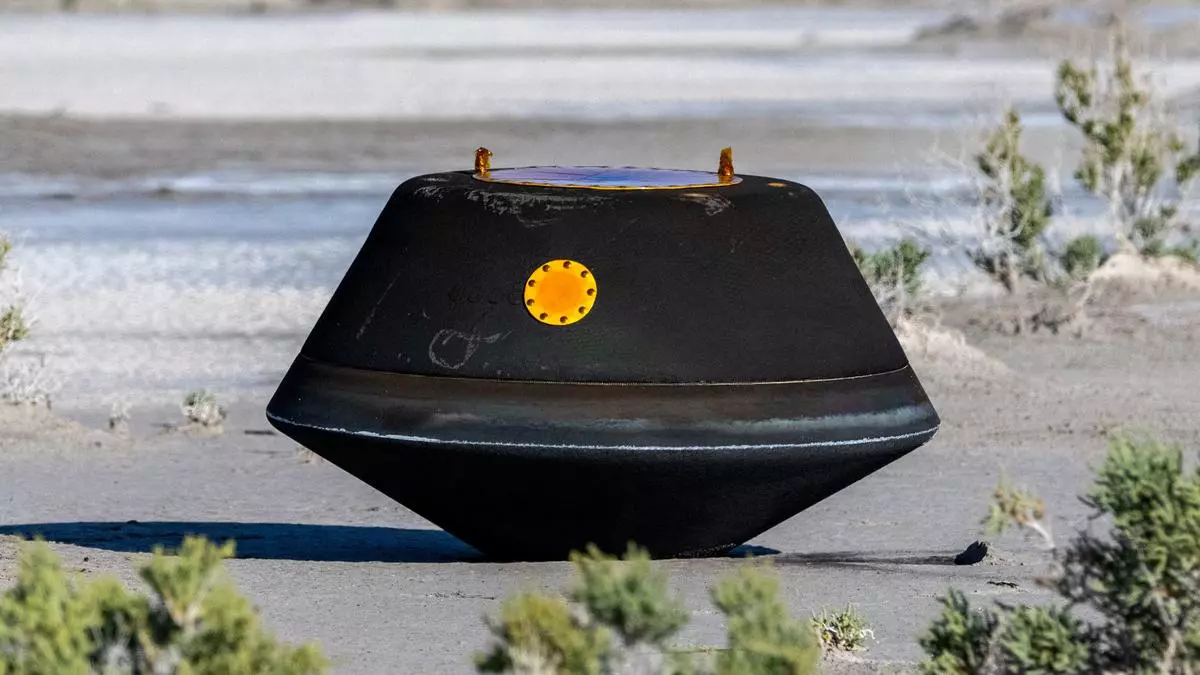
NASA’s first asteroid samples fetched from deep space parachuted into the Utah desert on Sunday to cap a seven-year journey.

In a flyby of Earth, the Osiris-Rex spacecraft released the sample capsule from 63,000 miles (100,000 kilometres) out. The small capsule landed four hours later on a remote expanse of military land, as the mothership set off after another asteroid.

Scientists estimate the capsule holds at least a cup of rubble from the carbon-rich asteroid known as Bennu, but won’t know for sure until the container is opened. Some spilled and floated away when the spacecraft scooped up too much and rocks jammed the container’s lid during collection three years ago.

Japan, the only other country to bring back asteroid samples, gathered about a teaspoon in a pair of asteroid missions.

Asteroid samples to help understand how Earth, life formed

The pebbles and dust delivered on Sunday represent the biggest haul from beyond the Moon. Preserved building blocks from the dawn of our solar system 4.5 billion years ago, the samples will help scientists better understand how Earth and life formed.

The return capsule containing a sample collected from the asteroid Bennu in October 2020 by NASA’s OSIRIS-REx spacecraft is seen shortly after touching down in the desert at the Department of Defense’s Utah Test and Training Range in Dugway, Utah, U.S. September 24, 2023.
| Photo Credit: REUTERS

Osiris-Rex, the mothership, rocketed away on the $1 billion mission in 2016. It reached Bennu two years later and, using a long stick vacuum, grabbed rubble from the small roundish space rock in 2020. By the time it returned, the spacecraft had logged 4 billion miles (6.2 billion kilometres).

NASA’s recovery effort in Utah included helicopters as well as a temporary clean room set up at the Defense Department’s Utah Test and Training Range. The samples will be flown on Monday morning to a new lab at NASA’s Johnson Space Center in Houston. The building already houses the hundreds of pounds (kilograms) of Moon rocks gathered by the Apollo astronauts more than a half-century ago.

Also Read | Asteroids brought life to Earth?

The mission’s lead scientist, Dante Lauretta of the University of Arizona, will accompany the samples to Texas. The opening of the container in Houston in the next day or two will be “the real moment of truth,” given the uncertainty over the amount inside, he said ahead of the landing.

NASA to host public show in October

Engineers estimate the canister holds 250 grams (8.82 ounces) of material from Bennu, plus or minus 100 grams (plus or minus 3.53 ounces). Even at the low end, it will easily surpass the minimum requirement of the mission, Lauretta said.

It will take a few weeks to get a precise measurement, said NASA’s lead curator Nicole Lunning.

NASA plans a public show-and-tell in October.

Currently orbiting the Sun 50 million miles (81 million kilometres) from Earth, Bennu is about one-third of a mile (one-half of a kilometre) across, roughly the size of the Empire State Building but shaped like a spinning top. It’s believed to be the broken fragment of a much larger asteroid.

During a two-year survey, Osiris-Rex found Bennu to be a chunky rubble pile full of boulders and craters. The surface was so loose that the spacecraft’s vacuum arm sank a foot or two (0.5 metres) into the asteroid, sucking up more material than anticipated and jamming the lid.

Also Read | NASA developing first asteroid deflection mission

These close-up observations may come in handy late in the next century. Bennu is expected to come dangerously close to Earth in 2182 — possibly close enough to hit. The data gleaned by Osiris-Rex will help with any asteroid-deflection effort, according to Lauretta.

Osiris-Rex is already chasing after the asteroid Apophis, and will reach it in 2029.

This was NASA’s third sample return from a deep-space robotic mission. The Genesis spacecraft dropped off bits of solar wind in 2004, but the samples were compromised when the parachute failed and the capsule slammed into the ground. The Stardust spacecraft successfully delivered comet dust in 2006.

NASA’s plans to return samples from Mars are on hold after an independent review board criticised the cost and complexity. The Martian rover Perseverance has spent the past two years collecting core samples for eventual transport to Earth.


Source link

US co, BrightNight Power, to put up 7GW of hybrid renewable plants in India 

US co, BrightNight Power, to put up 7GW of hybrid renewable plants in India 


US company, BrightNight Power, which is gearing up to commissioning its first, Rs 800-crore, 100MW wind-solar hybrid project, has ambitions to build and own 7 GW of renewable energy assets in five years, the company’s global CEO, Martin Hermann, has told businessline

The company expects to invest a billion dollars in India over the next five years. 

Last week, wind turbine manufacturer, Suzlon, announced its deal with BrightNight India for the supply of 29 MW of turbines. The machines are for the wind part of the 100 MW project, which is coming up at Narangwadi, Maharashtra. 

“I have been observing the Indian market for a very, very long time, and I can tell you that India has always delivered on its promises,” Hermann said, adding that the country gave foreign investors “fair and transparent” access to market. 

Accordingly, BrightNight plans to build 1 GW in three years, 7 GW in five years. Of this, 1.2 GW will be developed through a joint venture with ACEN Renewables International, part of the Ayala group of the Philippines.  

A proprietary software enables BrightNight, which has 23GW of project pipeline globally, to guarantee its customers 80 per cent replacement of grid power with renewable energy.  

Even as the Naragwadi plant is being built, the company has lined up about six customers for supply of electricity from 53 MW of capacity, power purchase agreements (PPAs) with whom would be signed next quarter.  

K V Sajay, BrightNight India’s CEO, says that ‘commercial and industrial’ (C&I) customers are increasingly looking for long-duration PPAs, about 15-25 years—which suits a developer like BrightNight. 

The company is also working on building the next project—600 MW—in Rajasthan, which also would be (as in the case of Naragwadi) co-located wind-solar (perhaps battery storage too) plant. After buying the lands, the company would bid for ‘peak power supply’ tenders.  

It is learnt from market sources that the tariffs for all-RE peak power supply are settling at around ₹4.7-5 a kWhr. This would come down as and when the cost of battery storage declines. 


Source link

YouTube
Instagram
WhatsApp




