CSIR seeks industry needs first before developing technology, says Director General N Kalaiselvi

CSIR seeks industry needs first before developing technology, says Director General N Kalaiselvi


The Council of Scientific & Industrial Research (CSIR), India’s largest R&D organisation, has tweaked the way it develops technology for the industry. Instead of first developing a technology and then looking for a company to take it up, it now first seeks the industry’s needs and then works on the technology. This is a win-win for both, said N Kalaiselvi, Director General, Council of Scientific & Industrial Research, the first woman to hold the post.

Working with the industry will give lots of synergy. It is high time that the Council of Scientific & Industrial Research works closely with the industry and vice versa to solve various problems and on R&D, she told businessliine on the sidelines of the 11th Convocation of the Indian Institute of Technology Design and Manufacturing, Kancheepuram, on Thursday.

Also Read | Indigenisation of technology is crucial for country, Director General CSIR

CSIR comes up with many industry-specific projects like fast commercialisation projects where it makes the industry an indispensable partner from day one of the project. Working with the industry will give a lot of synergy, she said.

In the past, CSIR would make a technology on its own and wait for the industry to take it up. However, now it first talks with the industry to get their wishlist of their critical challenges and throw these challenges across CSIR and make people submit projects accordingly. Through this from day one, the project person also understands what industry he/she is working for. The industry also will know that he/she is working for them, she said. “This kind of an understanding between the CSIR and industry we try to have from day one. This kind of working culture is taking a new shape. This is really beneficial to both of us, gives synergy and we are able to meet the industry’s requirement,” she added.

Revenue

When asked if the new model will help CSIR get more revenue, Kalaiselvi said, “Being a non-profit organisation – CSIR was established by the Government of India in 1942 as an autonomous body – we are not worried about the revenue. However, whatever small financial support that is funded from our end and we ask the industry to support it many times in kind rather than in cash. Whatever facilities we have and they have, we make use of it as common facilities. We become the knowledge partner and they become the implementing agency,” she said.

Green technology

CSIR is working on many things in green technology. It has been working on the Green Hydrogen mission for the last two years on projects like hydrogen generation, application and storage. Similarly, for renewable energy also, it has been working on renewable energy generation, application and storage. Whether it is green hydrogen or any other form of renewable energy including wind and solar, CSIR addresses all the three verticals, she said.

Talking on the latest R&D, Kalaiselvi said CSIR demonstrated a fuel cell-powered car and bus where it worked with private industries. Similarly, for lithium, it created a 1,000-cell-making facility, which has been given to a private company called Godi India Private Limited of Hyderabad. “This is how we are now working very closely with the industry. Due to these technological advancements, the industry has also started coming to us,” she said.




Source link

Apple tech support staff urged to stay mum on iPhone 12 radiation issue

Apple tech support staff urged to stay mum on iPhone 12 radiation issue


Apple Inc., facing a controversy in France over the iPhone 12’s radiation levels, has advised tech-support staff not to volunteer any information when consumers ask about the issue. 

If customers inquire about the French government’s claim that the model exceeds standards for electromagnetic radiation, workers should say they don’t have anything to share, Apple employees have been told. Staff should also reject customers’ requests to return or exchange the phone unless it was purchased in the past two weeks — Apple’s normal return policy. 

Customers asking if the phone is safe should be told that all Apple products go through rigorous testing to ensure that they’re safe, according to the guidance.

The French government asked Apple earlier this week to cease sales of the iPhone 12 because tests showed that the device emits electromagnetic waves that are too strong. The country’s digital Minister told Apple it has two weeks to fix the issue via a software update.

Apple rebutted the claims and said it would engage with France to show that the iPhone 12 is compliant. The Cupertino, California-based technology giant said it provided officials with in-house and third-party lab testing to demonstrate that the product is within the legal range. 

Apple was already phasing out the iPhone 12 just as the issue flared up. The model debuted in 2020, and Apple stopped selling it Tuesday with the announcement of the iPhone 15 line. But France’s stance threatens to spark concern among the millions of existing iPhone 12 users. Apple sold more than 100 million units of the device within its first seven months on sale, according to Counterpoint Research.

In the days since France’s initial statement, other countries in the European Union, including Belgium and Germany, have started to assess the iPhone 12’s radiation levels.

More stories like this are available on bloomberg.com


Source link

Aditya L1 successfully undergoes fourth earth-bound manoeuvre: ISRO

Aditya L1 successfully undergoes fourth earth-bound manoeuvre: ISRO


Aditya L1 spacecraft, India’s first space-based mission to study the Sun, during the early hours on Friday, underwent the fourth earth-bound manoeuvre successfully, ISRO said.

“The fourth Earth-bound manoeuvre (EBN#4) is performed successfully. ISRO’s ground stations at Mauritius, Bengaluru, SDSC-SHAR and Port Blair tracked the satellite during this operation, while a transportable terminal currently stationed in the Fiji islands for Aditya-L1 will support post-burn operations,” the space agency said in a post on X, a platform formerly known as Twitter.

The new orbit attained is 256 km x 121973 km, it said: “The next manoeuvre Trans-Lagragean Point 1 Insertion (TL1I) — a send-off from the Earth — is scheduled for September 19, around 02:00 Hrs. IST.”

Also Read | Deep dive into Aditya L-1: Some questions and answers 

Aditya-L1 is the first Indian space-based observatory to study the Sun from a halo orbit around the first Sun-Earth Lagrangian point (L1), which is located roughly 1.5 million km from the Earth.

The first, second and third earth-bound manoeuvre was successfully performed on September 3, 5 and 10 respectively.

The manoeuvres are being performed during the spacecraft’s 16-day journey around the Earth during which the spacecraft will gain the necessary velocity for its further journey to L1.

With the completion of four earth-bound orbital manoeuvres, Aditya-L1 will next undergo a Trans-Lagrangian1 insertion manoeuvre, marking the beginning of its nearly 110-day trajectory to the destination around the L1 Lagrange point.

Upon arrival at the L1 point, another manoeuvre binds Aditya L1 to an orbit around L1, a balanced gravitational location between the Earth and the Sun.

Aditya-L1, destined for the Sun-Earth L1 point, takes a selfie and images of the Earth and the Moon.
| Photo Credit: PTI

The satellite spends its whole mission life orbiting around L1 in an irregularly shaped orbit in a plane roughly perpendicular to the line joining the Earth and the Sun.

ISRO’s Polar Satellite Launch Vehicle (PSLV-C57) on September 2 successfully launched the Aditya-L1 spacecraft from the Second Launch Pad of Satish Dhawan Space Centre (SDSC), Sriharikota.

After a flight duration of 63 minutes and 20 seconds that day, the Aditya-L1 spacecraft was successfully injected into an elliptical orbit of 235×19500 km around the Earth.

According to ISRO, a spacecraft placed in the halo orbit around the L1 point has the major advantage of continuously viewing the Sun without any occultation/eclipses.

Also Read | Checking out the Sun: Why ISRO’s Aditya L-1 mission is unique in many ways

This will provide a greater advantage in observing solar activities and their effect on space weather in real-time.

Aditya-L1 carries seven scientific payloads indigenously developed by ISRO and national research laboratories, including the Indian Institute of Astrophysics (IIA) in Bengaluru and the Inter-University Centre for Astronomy and Astrophysics (IUCAA) in Pune.

The payloads are to observe the photosphere, chromosphere and the outermost layers of the Sun (the corona) using electromagnetic particle and magnetic field detectors.

Using the special vantage point L1, four payloads directly view the Sun and the remaining three payloads carry out in-situ studies of particles and fields at the Lagrange point L1, thus providing important scientific studies of the propagatory effect of solar dynamics in the interplanetary medium.

The suits of Aditya L1 payloads are expected to provide the most crucial information to understand the problem of coronal heating, coronal mass ejection, pre-flare and flare activities and their characteristics, dynamics of space weather, and propagation of particles and fields.

According to scientists, there are five Lagrangian points (or parking areas) between the Earth and the Sun where a small object tends to stay if put there. The Lagrange Points are named after Italian-French mathematician Joseph-Louis Lagrange for his prize-winning paper — “Essai sur le Probleme des Trois Corps, 1772.”

Also Read | Who was Lagrange?

These points in space can be used by spacecraft to remain there with reduced fuel consumption.

At a Lagrange point, the gravitational pull of the two large bodies (the Sun and the Earth) equals the necessary centripetal force required for a small object to move with them.


Source link

UR Rao—the man behind the solar mission

UR Rao—the man behind the solar mission


Many scientists involved with the Aditya L-1 mission have given credit to Udupi Ramachandra Rao (1932-2017), ISRO’s former Chairman between 1984 and 1994, for the mission’s success.

But why? The idea of the mission was born in 2006, when a group of scientists of the Astronomical Society of India and the Indian Institute of Astrophysics made a presentation to ISRO, stressing that it would be useful to have a satellite in the Low Earth Orbit, from where it would be observing the sun and taking pictures, whenever the sun is in view.

Dr Dipankar Banerjee, Director, Aryabhatta Research Institute of Observational Sciences, Nainital, and Dr Sankarasubramanian, Principal Scientist, Aditya L-1 mission, say that it was Dr UR Rao, who suggested that the sun-observing coronagraph should not be put in a satellite that is orbiting the earth, but should be put at the Lagrange-1 point, where it would have an uninterrupted view of the sun. With this, the scope of the mission was expanded.

Rao, an alumnus of the Massachusetts Institute of Technology in the US, guided India’s space program in the initial days. He received the Padma Bhushan for his contributions by the Government of India in 1976.


Source link

Readying an alternative landing spot for Vikram

Readying an alternative landing spot for Vikram


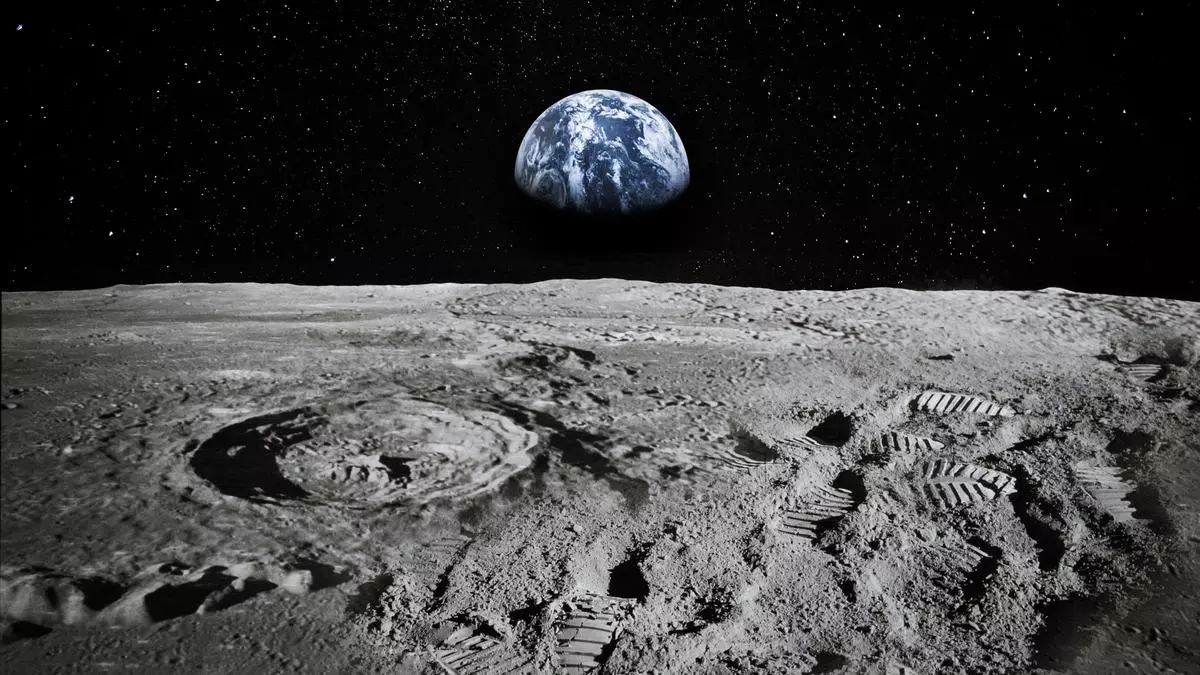
Now that Chandrayaan-3’s Vikram lander has touched down successfully on the moon and its rover, Pragyan, has been rolling around on the lunar surface, sending home some fabulous pictures and intriguing data, such as the temperature variation between the surface and near-surface, here’s a peek into an alternative history.

This is the story of the selection of an alternative landing site (ALS), the backup site for the mission in case the primary landing site (PLS) proved elusive.

A paper by K Durga Prasad et al, titled ‘Chandrayaan-3 Alternate Landing Site: Pre-landing Characterisation’, describes the selection methodology, which was based on factors such as proximity to the PLS, conditions for safe landing, and whether it was of interest for scientific purposes. The ALS is an approximately 4 km x 2.4 km area in the same latitude (about 69 degrees South) as the PLS and about 450 km away. A hazard map was plotted using data from the Chandrayaan-2 orbiter’s high-resolution camera, which confirmed that 75 per cent of the ALS was hazard-free, making it suitable for landing and rover operations. Variability within the local terrain, illumination, and surface temperatures were studied to enable safe operations.

The ALS was found to be a scientifically interesting site with scope for sampling ‘ejecta materials’ from the lunar craters Tycho and Moretus formed during the Eratosthenian age (3.2-1.1 billion years ago).

An ‘ejecta blanket’ is formed when material ejected from a crater during an impact fall back on the lunar surface. It can extend for several kilometres beyond the rim of the crater and can be studied to determine the geology of the surrounding area.

The Eratosthenian age is a geological epoch of the Moon that occurred between 3.2 and 1.1 billion years ago. It represents a period of intense geological activity on the Moon, including the formation of large impact basins and the emplacement of volcanic deposits. 

To help interpret observed in-situ data, a set of studies were carried out:

Geomorphological characterisation, which was based on observations from the Chandrayaan-2 orbiter, particularly the best spatial resolution (25 cm) images from its high-resolution camera and the derived digital elevation model.

Thermophysical characterisation, which is the study of how materials respond to changes in temperature, was used to determine the temperatures and thermal behaviour of the ALS. The study used datasets from the Diviner radiometer aboard the lunar reconnaissance orbiter and a three-dimensional thermophysical model to understand the temperatures and thermal behavior of the alternate landing site.

Mineralogical and compositional characterisation, which is the study of the minerals and other chemical composition of a material, to understand the variations within the ALS. The study used data from the Moon Mineralogy Mapper (M3) of Chandrayaan-1.

Given that the same level of rigour would have been applied to the PLS, now known as Shiv Shakti Point, it was inevitable that ChaSTE (Chandra’s Surface Thermophysical Experiment) was the first direct measurement of the topsoil and subsoil near the lunar south pole.

As we wrap-up the story of where Shiv Shakti might have been, a quick appreciation of why the mission is important: knowledge from these missions help us better in better lunar exploration planning including designing better equipment and calibration; exploring resources and solar power generation; and establishing energy bases for future space missions.


Source link

Chandrayaan-3 findings show moon is habitable

Chandrayaan-3 findings show moon is habitable


Ever since the Vikram lander touched down on the lunar surface, there has been a steady flow of data and information from the instruments onboard the lander and the rover.

Separately, the information may look like some scientific hickery-pockery, but when you stitch them together you can read one message: the moon is more habitable than thought earlier.

The biggest supporter of this notion is the data point thrown up by the lander, which sent a probe down 10 cm into the lunar surface and measured the temperature there. It came up with the revelation that when the lunar surface is about 50o C hot, just 8 cm below the surface, it is as cold as minus 10o C. There is more to this data point than the ‘wow’ feeling it evokes.

For a while now, scientists have known that the lunar subsurface is cold. Vikram has only provided proof that the lunar topsoil is a super-insulator.

Regolith shielding

In a 2015 paper titled ‘Determination of temperature variation on lunar surface and subsurface for habitat analysis and design’, published in the journal Acta Astronautica, the authors, Ramesh B Malla and Kevin M Brown, of the University of Connecticut in the US mathematically determined that “the outermost layer of regolith fluff has very strong insulating capabilities causing the temperature to drop 132.3 K (-140.85o C) from the maximum daytime magnitude of 387.1 K (113.95o C) within the first 30 cm at which point it then remains constant with increasing depth.”

The moon, which has no atmosphere, is directly exposed to the sun. It gets extremely hot (123o C) during daytime and incredibly cold during night (-233o C). To build a habitat there calls for a stupendous amount of insulation. Imagine carrying all the insulating material all the way from the earth! But now, as Vikram has shown, we see that it is not really necessary.

A layer of processed regolith spread on top of the habitat can make the inhabitants nice and comfy inside. Malla and Brown further say that when you have a regolith shielding atop a lunar habitat, the reflection of sunlight from the surrounding area (albedo) raises the temperature of the shielding, with a corresponding drop below a foot of the regolith cover.

Now that the Vikram lander has shown that the temperature drops by 60o C from the top of the 2 cm-thick ‘fluff’ to 8 cm below the ground, one can design a habitat accordingly. The fluff has very low thermal conductivity.

In another research paper, titled ‘Energy requirements of a thermally processed ISRU radiation shield for a lunar habitat’, authors Christopher Spedding et al of the Open University, Walton Hall, UK, note that it is possible to set up MW-scale solar or nuclear power plants and use the energy to “thermally process” construction material (with lunar regolith), “making large, permanent human presence on the moon more easily realisable.”

More good news

The Pragyan rover, on its part, has also helped confirm something heartening — the presence of oxygen in the lunar soil. The ‘Laser Induced Breakdown Spectroscopy’ (LIBS) instrument on the rover, threw laser beams on to the soil and analysed the reflections. It has shown the presence of sulphur, calcium and many metals such as iron, chromium, titanium, manganese and aluminium and oxygen.

The presence of oxygen in the soil, in the form of ilmenite (FeTiO3), means you have an alternative to ice for oxygen production. So, you don’t have to build your house only near an ice-source if you were to settle on the moon. Ice is not present everywhere, but soil is. Ilmenite can be reduced to make oxygen for breathing.

The findings from the lander and the rover go to strengthen a growing branch of science called In-situ resource utilisation (ISRU), alternatively known as ‘space resource utilisation’ (SRU).


Source link

YouTube
Instagram
WhatsApp



