Why bacterial cellulose is a sought-after material

Why bacterial cellulose is a sought-after material


The word ‘cellulose’ generally brings to mind plant-derived fibres, but the biopolymer can be produced by bacteria too. Plant cellulose is ubiquitous, but it suffers from drawbacks such as contamination with lignin, wax and hemicellulose.

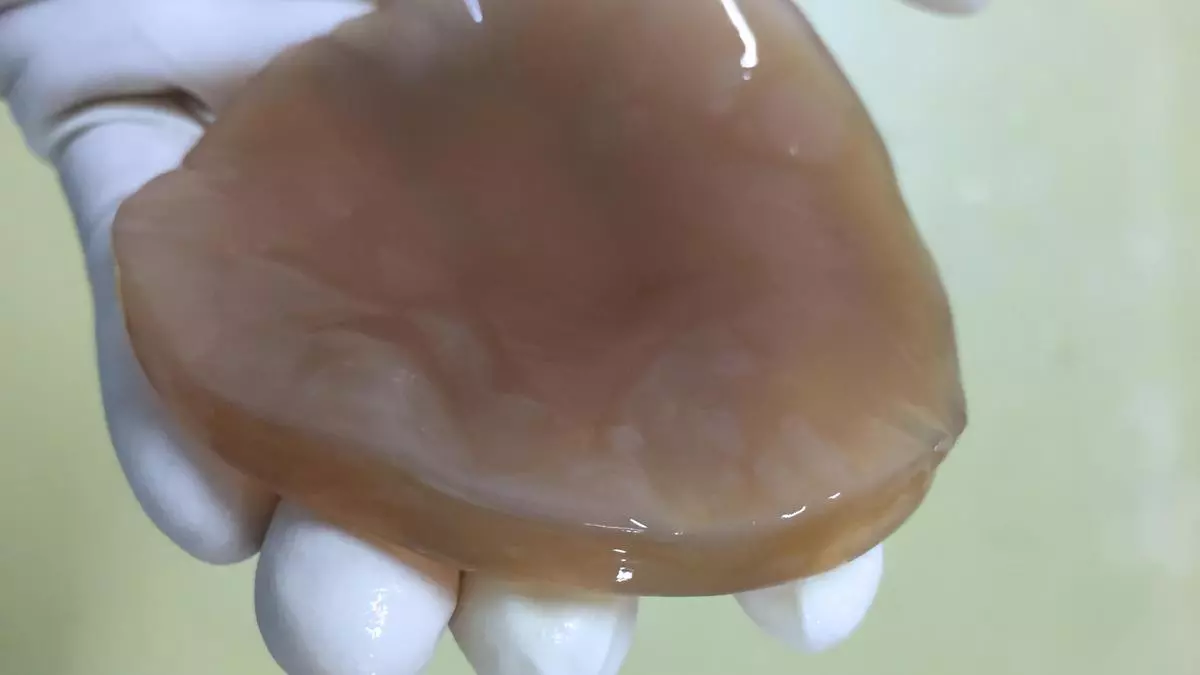
Bacterial cellulose (BC), on the other hand, is free from impurities such as lignin and wax, shows water retention capacity and other mechanical properties. BC, with its leather-like looks and properties, is gaining popularity the world over.

Although BC has been known for decades, research into it has perked up in the last 2-3 years because the world wants materials with better functionalities and looks, and made without harming animals. Scientists are trying to solve two issues — how to make BC cheaper; and how to make it more functional. Also, the search for more climate-friendly materials is leading scientists to BC. Leather making involves using a lot of water and chemicals; animals also let out huge amounts of methane.

BC can replace leather in the making of products such as bags. ‘Vegan leather’ is gaining ground in the West. German company ScobyTec and Brazilian firm Intervém Design manufacture fashion products such as bags and cachepots using BC.

BC polymers are finding use in other industries such as biomedicine, too. “BC, fabricated with gelling materials like sodium alginate, chitosan, polyethylene glycol and gelatin, can also be used as a carrier for bioactive compounds such as antibiotics,” says a scientific paper produced by Dr Ahmed Saleh et al of the National Research Centre, Egypt, and published in Nature. Wound dressing is emerging as a key application of BC.

“BC and BC-derived materials are essential in developing pure and environmentally safe functional materials,” says another paper on the subject, published by scientists of the Chennai-based Central Leather Research Institute, which comes under the Council for Scientific and Industrial Research (CSIR).

Dr Debasis Samanta, one of the authors of the CLRI paper, told Quantum that the institute’s efforts have been in the direction of combining other polymers with BC. Samanta and his team have succeeded in combining poly-triazole with BC using click chemistry techniques. He said polyurethane can be similarly “immobilised” into BC and such material would be cheaper.

Cost reduction

“The high cost of BC production represents a challenge in its commercial adoption,” says Dr Saleh in his paper. One way of hammering down costs is to increase the yield, which means identifying strains of bacteria that can produce more.

The most used bacteria for producing BC is the Komagataeibacter.

Saleh and his team identified a novel BC-producing strain called Lactiplantibacillus plantarum and isolated it from rotten fruit. In experiments, this bacterium turned out to be a high-yielding one.

Desired traits

An emerging branch of science is ‘engineered living materials’, or ELMs. Because BCs are produced by bacteria culture, it is possible to impart desirable properties by engineering the bacteria. Research now focuses on genetic engineering of Komagataeibacter and other organisms such as Saccharomyces cerevisiae that can be co-cultured with Komagataeibacter. Scientists at the Imperial College, London, have succeeded in genetically manipulating Komagataeibacter rhaeticus.

Black dye is one of the most consumed dyes in the world, and one of the most difficult to recreate using sustainable dyeing methods. Scientists have experimented with biosynthesis of the dark melanin pigment eumelanin into Komagataeibacter rhaeticus. The experiment seems to have been a success.

In a paper that is yet to be peer-reviewed, Kenneth Walker et al say: “We demonstrate here that the production of pigmented cellulose from K. rhaeticus can be produced at large enough quantities for the prototyping of fashion products.”

They further note that their work underscores the value of genetic engineering “to design and construct strains intended to grow materials with desired properties; in this case with a chosen colour grown into the material, rather than having to be added to it later by an industrial chemical dyeing process.”

Therefore, by the looks of it, BC is emerging as a major industrial product.



Source link

How machine learning can forewarn about disasters

How machine learning can forewarn about disasters


In his iconic best-seller The Tipping Point, American author Malcolm Gladwell talks about how a bunch of kids wore Hush Puppies shoes, then an almost-dead brand, and triggered a wave of sales that made the shoes a rage across the US.

A tipping point is when a system changes its state suddenly and irretrievably. For long, no changes in input parameters (say, temperature) seemed to cause any impact on the system — a phase known as ‘scale invariance’ — but, abruptly, ‘scale invariance’ ceases to exist, and the system has changed for good.

So, the tipping point is much like the ‘last straw that breaks the camel’s back’ — weight kept building up on the animal’s back, until a lightweight straw proved enough to finally crack it.

The principle of ‘tipping point’ — called ‘critical transitions in complex systems’ — is sought to be used in predicting many things in life such as onset of diseases, stock market crashes, and climate change. It is still work-in-progress, but the world is definitely cruising towards developing early warning systems.

For example, Prof RI Sujith of the Department of Aerospace Engineering, IIT-Madras, has used this principle to build a model that can predict an impending blowout in aircraft and rocket engines, “enabling us to take action in time to evade it”.

To be able to time a tipping point, it may be good to divine its precursors. For example, events at the cellular or molecular level — such as gene expression or protein synthesis — slow down before the tipping point. Scientists discern a link (in some cases) between protein synthesis and bacterial growth.

Such ‘critical slowing down’ (CSD) is a focus area of research. In an April 2022 paper titled ‘Identifying critical transitions in complex diseases’, published in the Journal of Biosciences, Smita Deb, et al, of the Indian Institute of Technology, Ropar, note that “CSD is the phenomenon where the system’s return to the current equilibrium state is slowed down upon perturbations in the vicinity of a tipping point”. One of the authors of the paper, Prof Partha Sharathi Dutta of the Department of Mathematics, told Quantum, “Now we know fairly well that CSD-based early warning signals can forecast an upcoming tipping point.” However, he cautioned that more research is needed to determine precisely “when” the transition will occur.

Powered by machine learning

Dutta said that while the concept of ‘tipping point’ has been around for decades, the advent of machine learning has rejuvenated it for research in developing early warning systems.

In their paper, the authors say they have developed “a novel detection method, using simple theoretical models to train a deep neural network to detect critical transitions — the Early Warning Signal Network (EWSNet)”.

This network, trained on simulated data, can reliably predict observed real-world transitions in systems ranging from rapid climatic change to the collapse of ecological populations. “Our work highlights the practicality of deep learning for addressing further questions pertaining to ecosystem collapse, and has much broader management implications.”

In essence, the ‘critical transitions in complex systems’ is an old idea now energised by ML, which holds a lot of promise. Prof Sujith points out that the ‘complex system theory’ has been well adopted by the medical research community.

However, it still appears to be in the ‘research’ stage.

Need for data

Yet another author of the paper, Dr Mohit Kumar Jolly, Assistant Professor at the Centre for BioSystems Science and Engineering (BSSE), Indian Institute of Science, Bengaluru, said that in biomedical science most research is now retrospective — finding out the precursors to a tipping point.

Jolly is working on ‘metastasis’ (spreading of cancer). “We would ideally like to look at the data of a patient from his primary tumour and predict whether he would develop metastasis or not,” he said, “but we have not reached that stage yet.” He, however, noted that proof-of-concept has been established and “we are cruising towards that stage”.

Dr Dutta is more circumspect, though he too certifies that the field shows a lot of promise with the advent of machine learning. Nonetheless, the data required for training the machine is huge — “if the machine is trained well, it can forecast well”. However, that will take a few more years, he said.


Source link

Snake venom to the rescue

Snake venom to the rescue


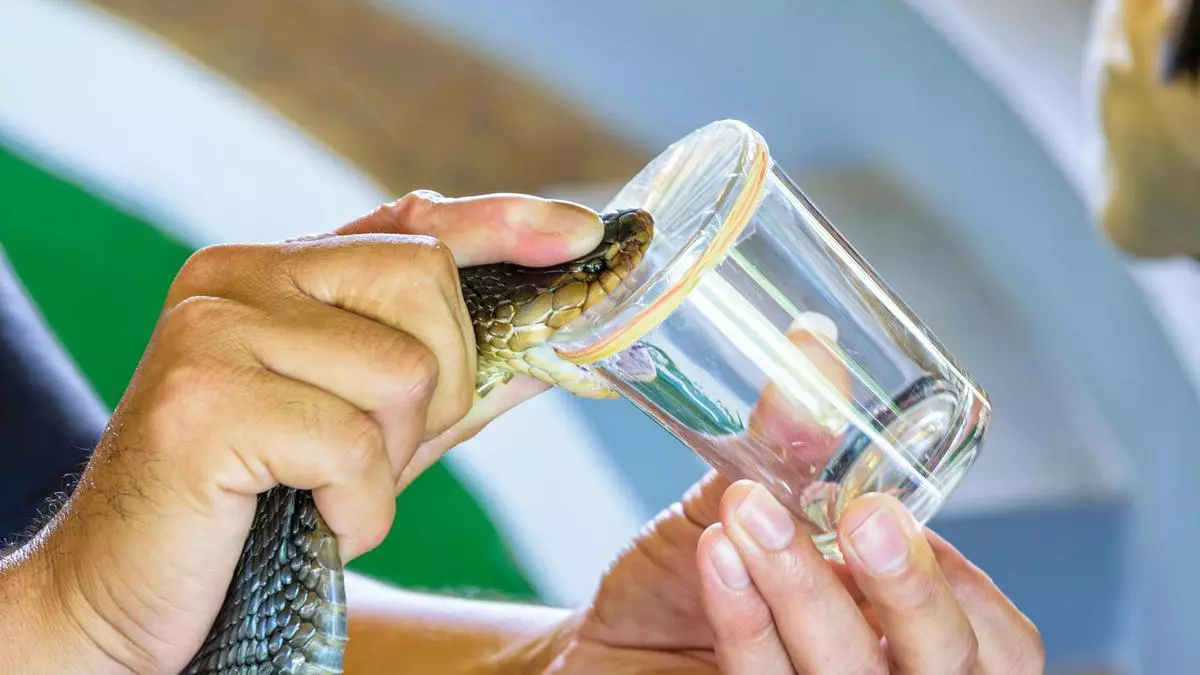
Computational analysis has been used to design two peptides inspired from snake venom neurotrophin molecules that hold promise as future therapeutics for preventing and treating neurological disorders such as Parkinson’s disease and Alzheimer’s disease.

Parkinson’s and Alzheimer’s are among the most commonly found neurodegenerative disorders. There are no medications to stop, slow, or prevent these diseases.

This has spurred exploration into the molecular and cellular processes that lead to neurodegeneration.

Prof Ashis Kumar Mukherjee, Director, Institute of Advanced Study in Science and Technology (IASST), Guwahati, worked on snake venom and found it to be a “treasure house of drug prototypes” for various biomedical applications.

They can be moulded into lifesaving drug prototypes for cancer, cardiovascular disease, and covid-19, among other conditions.

However, the researchers point out that drug development from a native toxin of snake venom is tedious.

To overcome this problem, Mukherjee and his collaborators developed two novel custom peptides (commercially produced peptides for use in biomedical laboratories) — TNP and HNP, inspired by snake venom neurotrophin, that regulate the development, maintenance, and function of vertebrate nervous systems.

These peptides show selective binding to human TrkA receptor of nerve cells and, hence, can improve the selectivity and specificity of drug molecules toward the receptor, thereby enhancing the therapeutic potency of those drug molecules.

Mukherjee emphasises that the low molecular weight, structural stability, small size, and target sensitivity of the peptides make them powerful tools for conquering the limitations of using endogenous neurotrophins as therapeutic agents.

This drug-like peptide discovered by the group can potentially reduce the progression of neurodegenerative diseases through an entirely new strategy.

The treatment would be most effective for people with fewer symptoms earlier during the onset of the disease.

Bacteria-busting water

Researchers from IISc have demonstrated the generation of plasma-activated water containing reactive oxygen and nitrogen species such as hydrogen peroxide, nitrogen dioxide and nitrate in high strengths.

This high-strength plasma-activated water (hs-PAW) was found capable of inactivating even hyper-virulent multidrug-resistant pathogens.

The study, led by Lakshminarayana N Rao and Dipshikha Chakravortty, also shows that plasma-activated water is neutral, making it suitable for biomedical applications, says IISc’s in-house newsletter Kernel.

The team found that the reactive species in hs-PAW disintegrates the bacteria’s outer cell membrane by perforation, arresting the metabolic activity, eventually inactivating or killing the bacteria.

The team also found that the hs-PAW could retain its bactericidal activity even after 15 days.

They suggest that hs-PAW can be used in several medical applications, such as wound healing, apart from tackling hard-to-treat multidrug-resistant pathogens.

Anemia mukht Bharat

The Central Salt and Marine Chemicals Research Institute in Bhavnagar has developed a ‘Double Fortified Salt’ using “an innovative new cost-effective fortified food product”. Using this salt helps in delivering small but crucial amounts of iodine and iron in our diet. This helps in improving mental capacity, maternal and infant survival and human productivity with an endeavor of “Anaemia mukht Bharat”, says CSMCRI.

Both iron (Fe3+) and iodine are very stable in this salt. “The additional nutrition that one gets out of this salt is magnesium, an important nutrient that helps in preventing diabetes mellitus,” says CSMCRI website.


Source link

Thermo-chemical upcycling of crop residues

Thermo-chemical upcycling of crop residues


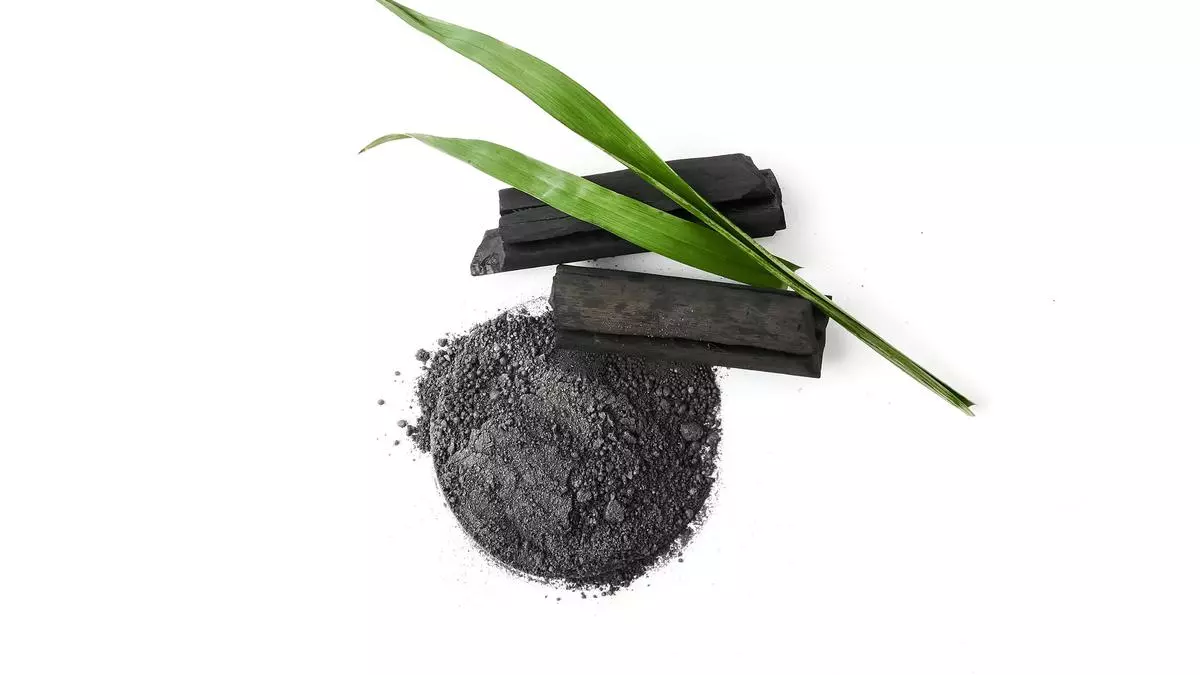
Extracting heat and making biochar (charcoal) from agri residues has been known to mankind for millennia. Recent innovations are helping do this in a clean and efficient way. Over the last eight years, our laboratory in IIT-Madras has been developing ‘thermo-chemical’ technologies to convert crop residues into value-added products.

Activated carbon is a highly porous form of charcoal. Porosity is the ‘intrinsic surface area’. It is 1,500 sq m per gram for activated carbon, compared with about 20 sq m per gram for charcoal. Such high porosity is achieved by reacting high-temperature steam with charcoal (known as activation) — the steam strips away carbon from charcoal in the form of carbon monoxide, leading to microscopic pores and an increase in intrinsic surface area. Although it appears straightforward, the activation step requires careful control of parameters.

Products of significantly greater value compared with heat energy and charcoal include liquid hydrocarbons, alcohols and ethers. Extracting these involves complex processes with multiple steps. The complexity arises because the carbon and hydrogen in agro-residues co-exist with oxygen as cross-linked polymeric chains made of cellulose, hemi-cellulose and lignin.

One way of making value-added products is by breaking down these polymeric chains into simpler units by exposing them to high temperatures and then assembling the simpler units in a specific order to form the required products. Catalysts are needed for the latter step. These two steps together are known as a thermo-chemical process; the ‘thermo’ refers to the use of high temperatures to break down the polymeric chains, and ‘chemical’ is a reference to the catalyst-driven assembly of the simpler units.

Yet another useful product is syngas, which is the end-product of the thermal breakdown of agro-residues in the presence of oxygen. That is, syngas is the product of the ‘thermo-chemical’ process minus the catalytic assembly. This process is popularly known as gasification. The useful part of syngas is carbon monoxide, hydrogen and traces of methane and other higher hydrocarbons; the rest is a mixture of carbon dioxide, water vapour and nitrogen, whose proportion depends on the source of oxygen used for gasification, namely, atmospheric air, enriched air (atmospheric air combined with pure oxygen), or a mixture of air, pure oxygen, carbon dioxide and steam. Steam is used to enhance hydrogen in syngas, while carbon dioxide is used to enhance carbon monoxide. Liquid hydrocarbons like gasoline and diesel, and alcohols like methanol and ethanol can be obtained through catalytic assembling with carbon monoxide and hydrogen as starting material.

We now have three processes for clean and efficient extraction of biochar, activated carbon, and syngas from agro-residues. The biochar process has been scaled up to one tonne per hour and is in commercial operation. The activated carbon and syngas processes are being scaled up.

(The writer is Associate Professor, Mechanical Engineering, IIT-Madras)


Source link

CSIR-NIIST to host start-up conclave on March 13 

CSIR-NIIST to host start-up conclave on March 13 


FOR WEB ONLY

The National Institute for Interdisciplinary Science and Technology (NIIST), a constituent laboratory of the Council of Scientific and Industrial Research (CSIR) based here, will organise a ‘Start-up Conclave’ on March 13.

To be conducted jointly with the Kerala Start-up Mission on the sidelines of the ‘One Week One Lab’ programme on the CSIR-NIIST campus from March 13 to 17, the conclave is expected to be attended by at least 300 representatives from start-ups from across the country, a CSIR-NIIST spokesman said here..

Registration link

Applicants may register themselves either on link bit.ly/NIISTCON23 or by phone 9995632522 (RS Praveen Raj, convenor). This would be a great opportunity for start-ups to come together and deliberate on R&D support from research institutes and financial support from funding agencies, among others, the spokesman said.

There will be two panel discussions after the inauguration. The first is on ‘Technology and R&D requirements of Startups’, while the second is on ‘Opportunities and Financial support for Startups.’ An exhibition of CSIR-NIIST technologies and products is also being arranged. There will also be stalls from startu-ps and industries, who have licensed technologies/ knowhow from CSIR-NIIST, the spokesman added.


Source link

YouTube
Instagram
WhatsApp