Gold, silver may face selling pressure as Fed meeting, US-Iran talks loom

Gold, silver may face selling pressure as Fed meeting, US-Iran talks loom


Gold and silver may face some selling pressure this holiday-shortened week as traders track peace talks between the US and Iran, crude oil rates and the Federal Reserve’s policy decision, analysts said.


Domestic commodity markets would remain closed on Friday on account of Maharashtra Day.


“Focus in the coming week will remain on the progress in peace talks between the US and Iran, and their potential impact on oil, gold, and broader financial markets,” Pranav Mer, Vice President, EBG – Commodity & Currency Research, JM Financial Services Ltd, said.


On the macroeconomic front, traders will monitor monetary policy decisions from the US Federal Reserve, Bank of Japan, Bank of England and European Central Bank.


Besides this, key US data on housing, Personal Consumption Expenditures (PCE) inflation and consumer confidence, along with factory activity numbers from major economies later in the week, will also guide sentiment, he added.


Analysts said the April 29 Federal Open Market Committee (FOMC) meeting will be the last chaired by Jerome Powell, making the policy statement and post-meeting press conference particularly significant for precious metals prices.


On the Multi Commodity Exchange, gold futures dropped Rs 1,910, or 1.23 per cent, to close the week at Rs 1.54 lakh per 10 grams, while silver plunged Rs 12,506, or 4.9 per cent, to settle at Rs 2.44 lakh per kilogram.


According to analysts, gold’s downside in the domestic market was limited by a weaker rupee, which declined around 1.4 per cent during the past week.


In the international markets, Comex gold fell $138.7, or 2.8 per cent to close the week at $4,740.9 per ounce, and silver declined $5.4, or 6.6 per cent to $76.41 per ounce.


“Gold prices pared some of the recent gains last week after failing to breach past $5,000 per ounce in the international market and were weighed by multiple factors, including profit-booking after a gain of 10-12 per cent in the previous four weeks,” Mer said.


Meanwhile, the US-Iran blockade of the Strait of Hormuz pushed crude oil prices above $100 per barrel.


Mer added that the demand for the US dollar and Treasury bond yields remained firm. Stronger-than-expected US retail sales, weekly jobless claims and consumer sentiment data supported the greenback and weighed on gold and silver.


He further stated that buying and selling activity among global central banks remained mixed, while uncertainty over future interest rate cuts or hikes amid higher commodity-led inflation may keep bullion prices volatile.


Going ahead, analysts expect gold to find support near lower levels but remain vulnerable to further correction if the dollar stays firm and geopolitical risks ease. Silver may remain more volatile due to its dual role as both a precious and an industrial metal.


Any escalating tensions in West Asia, particularly developments around the Strait of Hormuz or dovish signals from major central banks, could revive buying interest, analysts added.


Source link

WGC proposes physically-backed common infrastructure to scale digital gold

WGC proposes physically-backed common infrastructure to scale digital gold


The World Gold Council (WGC) has proposed an initiative to build a physically-backed shared infrastructure to advance the growth of digital gold.


WGC through a white paper has proposed the concept of ‘Gold as a Service’, a platform owned and operated by the World Gold Council and built as shared infrastructure that any market participant can access to build digital gold products without needing to develop their own end-to-end systems.


While digital gold products exist, they operate across fragmented infrastructure with inconsistent custody standards, redemption terms and governance frameworks, WGC Chief Strategy Officer Terry Heymann told PTI.


“The idea behind this initiative is to provide a shared infrastructure which could help gold to play a greater role in the digital economy. This will be backed by physical gold this will be accredited, inspected regularly, with processes in place to make sure that gold has been responsibly sourced and is accounted for,” Heymann said.


Gold as a service aims to strengthen trust, reduce complexity, and enable digital gold to function as a coherent, interoperable asset class fit for a digital financial era, he noted.


Such infrastructure aims change how gold participates in the financial system, he said.


According to the WGC white paper, the investor behaviour is shifting toward digital access.


Retail investors increasingly use digital platforms and expect fractional ownership, seamless transferability and real-time settlement.


Recent ETF (Exchange Traded Funds) inflows and the growth of tokenised gold signal rising demand for digital exposure, however, digital gold remains small relative to the broader market due to structural frictions that limit scale and integration.


These structural frictions constrain fungibility, fragment liquidity, and limit gold’s broader financial utility and without common infrastructure, digital gold risks remain a collection of isolated products rather than a unified asset ecosystem.


“So we are just getting started on that. There’s been an ongoing conversation around the evolving gold landscape and regulatory environment. We are planning to take inputs from all stakeholders. This is a global initiative and we are engaging with the government representatives, market participants and others to understand their concerns and expectations and meet the needs of stakeholders and that of consumers,” he added.


Source link

West Asia situation, crude oil prices likely to steer markets this week

West Asia situation, crude oil prices likely to steer markets this week


The geopolitical situation in West Asia, particularly developments around the Strait of Hormuz, Q4 earnings from corporates and crude oil prices are the major factors to drive sentiments in the stock market in a holiday-shortened week ahead, analysts said.


Stock markets would remain closed on Friday for Maharashtra Day.


“Looking ahead, markets are expected to remain highly news-driven and volatile, with key focus on developments in US-Iran negotiations, trends in crude oil prices, and broader global cues. Stability or a decline in oil prices could help ease macro concerns and support risk sentiment, while any escalation or prolonged disruption in the Strait of Hormuz may trigger renewed volatility and profit booking,” Ponmudi R, CEO – Enrich Money, an online trading and wealth tech firm, said.


The ongoing Q4 earnings season is expected to act as a key catalyst for stock-specific price action, with market participants closely tracking reported numbers, forward guidance, and sectoral outlooks to reassess earnings visibility and valuation comfort across segments, he added.


The standoff in the Strait of Hormuz has kept crude oil prices higher, reinforcing inflation concerns.


The US Fed interest rate decision would also be keenly tracked by investors.


Hariprasad K, Research Analyst and Founder, Livelong Wealth, said, “The continued escalation in West Asia, particularly around the Strait of Hormuz, and the breakdown of US-Iran negotiations have introduced a significant event risk premium into global markets. This uncertainty is directly feeding into crude oil prices, with Brent hovering near USD 107 per barrel.


“For India, this remains the single most critical macro variable, as elevated oil prices not only pressure inflation and the rupee but also weigh on corporate profitability across sectors.” 
From a corporate standpoint, the week is heavy on earnings, which will drive stock-specific action, he said.


Reliance Industries Limited on Friday reported a 12.5 per cent decline in March-quarter net profit, as the global energy crisis weighed on its core oil-to-chemicals business, offsetting gains in its consumer-facing telecom and retail segments.


“Domestically, March 2026 Industrial Production (IIP) data releases on April 28, while foreign exchange reserves come on May 1. Globally, the US Federal Reserve policy decision on April 29, along with US Q1 GDP advance estimate and ISM Manufacturing PMI will set the tone,” Santosh Meena, Head of Research at Swastika Investmart Ltd, said.


However, the biggest macro swing factor remains the geopolitical situation in West Asia, particularly developments around the Strait of Hormuz and US-Iran tensions, which continue to drive crude oil price volatility and influence inflation and margin concerns, he added.


Key results include UltraTech Cement, Coal India, Varun Beverages on April 27, Maruti Suzuki on April 28, Bajaj Finance and Adani Power on April 29, and a packed Thursday featuring Hindustan Unilever, Adani Ports, Adani Enterprises, and Bajaj Finserv, Meena said.


Last week, the BSE benchmark Sensex tanked 1,829.33 points or 2.33 per cent, and the NSE Nifty dropped 455.6 points, or 1.87 per cent.


“Global developments continued to dominate market direction, with ongoing uncertainty around the West Asia crisis and concerns over supply disruptions keeping crude oil prices elevated,” Ajit Mishra SVP, Research, Religare Broking Ltd, said.


Source link

Mcap of 7 most valued firms erodes by ₹2 trn, TCS biggest laggard

Mcap of 7 most valued firms erodes by ₹2 trn, TCS biggest laggard


The combined market valuation of seven of the top-10 most-valued firms eroded by Rs 2 lakh crore last week, with Tata Consultancy Services and Reliance Industries emerging as the biggest laggards, in-tandem with a bearish trend in equities.


Last week, the BSE benchmark Sensex tanked 1,829.33 points, or 2.33 per cent, and the NSE Nifty dropped 455.6 points, or 1.87 per cent.


“Markets ended lower after two consecutive weeks of gains, weighed down by heightened geopolitical tensions and weak earnings commentary from IT majors,” Ajit Mishra — SVP, Research, Religare Broking Ltd, said.


Global developments continued to dominate market direction, with ongoing uncertainty around the West Asia crisis and concerns over supply disruptions keeping crude oil prices elevated, he added.


The combined market valuation of seven of the top-10 most valued firms dropped by Rs 2,05,343.06 crore.


The market valuation of Tata Consultancy Services (TCS) tumbled Rs 66,699.44 crore to Rs 8,67,364.12 crore.


Reliance Industries lost Rs 50,670.34 crore from its valuation, which stood at Rs 17,96,647.50 crore.


The valuation of HDFC Bank dived Rs 23,090.05 crore to Rs 12,08,225.48 crore and that of Life Insurance Corporation of India (LIC) dropped by Rs 19,670.75 crore to Rs 5,13,020.56 crore.


The market capitalisation (mcap) of Bharti Airtel declined Rs 19,406.59 crore to Rs 11,05,718.62 crore.


ICICI Bank’s mcap edged lower by Rs 14,663.27 crore to Rs 9,50,345.40 crore and that of Larsen & Toubro diminished by Rs 11,142.62 crore to Rs 5,52,171.88 crore.


However, the valuation of Hindustan Unilever jumped Rs 20,652.91 crore to Rs 5,47,219.80 crore.


The mcap of State Bank of India climbed Rs 19,522.76 crore to Rs 10,16,752.53 crore and that of Bajaj Finance went up by Rs 8,253.64 crore to Rs 5,73,690.81 crore.


Reliance Industries remained the most-valued domestic firm followed by HDFC Bank, Bharti Airtel, State Bank of India, ICICI Bank, TCS, Bajaj Finance, Larsen & Toubro, Hindustan Unilever, and LIC.


Source link

Passive defence play

Passive defence play


Nifty India Defence index, in the four years since launch, has grown at an astounding pace of 52 per cent CAGR compared to 8.2 per cent for Nifty 50 in the period. Defence sector is in the midst of an upcycle that is likely to sustain at least in the medium term.

But the index valuations (one year forward PE) at a 30 per cent premium to last four-year average (44 times versus 34 times average) should temper investor interest despite the strong outlook.

We examine the primary sector drivers and provide an outlook for key index constituents. Alongside, we highlight mutual funds tracking the sector for investors seeking an exposure.

Sector drivers

Defence spending has been elevated in India and also rest of the world. In India, capital outlay for defence services has grown at 10 per cent CAGR in FY21-26 which includes a 22-per cent growth this year.

European nations of NATO alliance have committed to increase their proportion of defence spending from 2 per cent to 5 per cent of GDP by 2035. With US, Russia and Israel locked in conflicts of their own, defence spending is on an upward cycle across major economies.

Domestically, the higher spending has been complemented by a policy of indigenisation as well which mandates Indian design, developed and manufactured supply chain.

Positive indigenisation lists, PLI schemes, dedicated defence corridors, defence acquisition procedure and gradual opening of export markets for private and public defence companies have provided strong policy support to the growth that should support strong margins.

Sector constituents

As on March 30, 2026 Nifty India Defence index has 19 constituents with Bharat Electronics (BEL), HAL, Bharat Forge, Solar Industries and Mazagon Dock accounting for 20, 20, 16, 11 and 6 per cent of index by weight respectively.

The common factor for the key constituents is a large order book that provides revenue visibility for next three to four years. BEL is central to the three-armed forces with its competency as a integrator of electronic systems and subsystems.

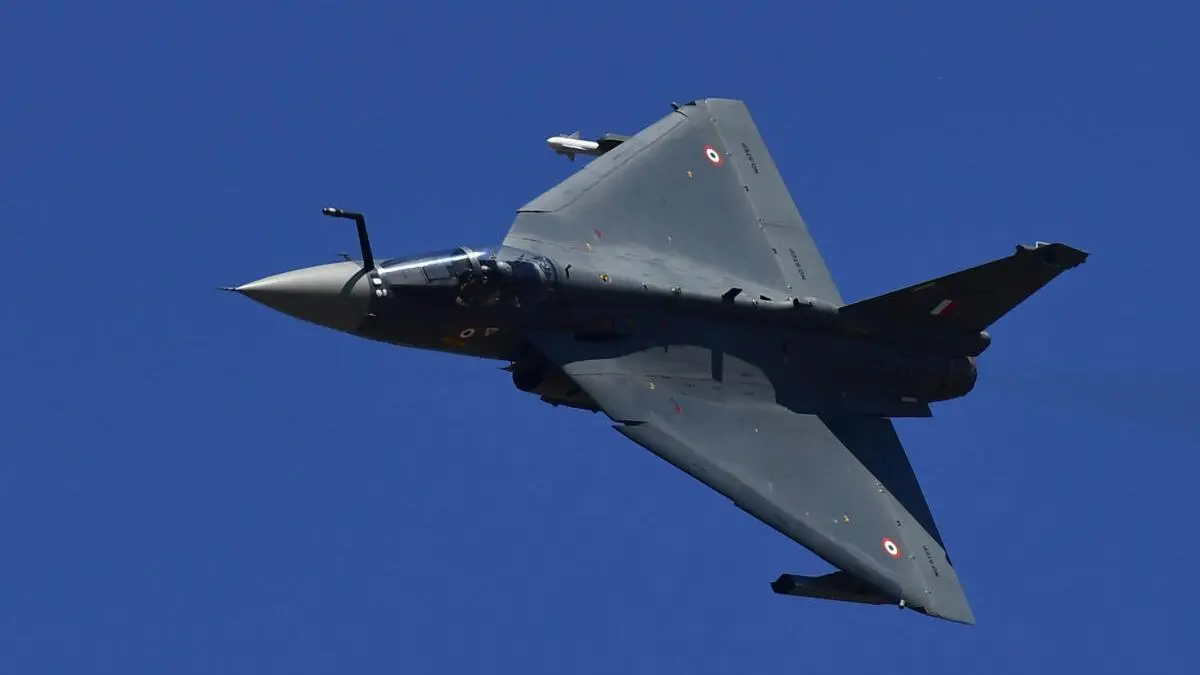
With LCA Tejas, next-generation Corvettes, and missles, BEL order book spans the three branches of the armed forces. In the next wave of orders; Project Kusha, AMCA and P-75I submarine will involve sizeable orders for systems integration for BEL.

For HAL, on one side, the significant shortfall of fighter squadrons for Airforce places a large demand on deliveries which may start ramping in FY27.

But on the other hand, significant delays in GE engines for Tejas and risk of private competition or order delays/downsizing are an overhang on HAL.

The company has visibility from other more reliable platforms including Sukhoi upgrades and Prachand light combat helicopters, that alleviate the risk to an extent. On the sea front, current and expected order book from Indian Navy that includes P17A frigates nearing completion for one of four orders and next generation submarine P-75I which is expected to be announced shortly, support a healthy order book visibility for Mazagon and also Cochin Shipyard and GRSE in next few years. The timely contract signing and order book execution are key monitorables.

While the large companies anchor the large projects, the indigenisation policy has allowed new private players to expand their addressable markets in defence contracts.

Bharat Forge’s current defence contribution is around 10 per cent of revenues.

The company has secured orders in diverse defence verticals including drones, unmanned vehicles, small guns, and ATAGS (Advanced Towed Artillery Gun System). The defence proportions should grow to 20-30 per cent of revenues in the medium term as per the company.

This, in addition to its auto and industrial business, are also in an upcycle.

Similarly, Data Patterns should benefit from the larger orders of radar and electronic warfare suites for aircraft and submarines. Zen Technologies primarily focusses on simulators and anti-drone systems.

The company has recently bagged a licence to manufacture cannons for air defence expanding its addressable market. Astra Microwave’s software-designed radio systems or Paras’ optronics systems are in the next phase of development.

Fund options

While the sector is enjoying strong momentum, there are only a few mutual funds. Aditya Birla, Groww and Motilal Oswal have passive funds tracking Nifty India Defence sector while HDFC Defence Fund is the only active option in the sector. All the funds were launched only in the last 3-4 years. Axis MF also launched a passive fund recently. Our analysis is constrained by the shorter performance track record.

In the limited timeframe for analysis, HDFC Defence fund has underperformed the Nifty India Defence index significantly. The daily one-year rolling return average since the fund launch at 38.5 per cent is still lower compared to index average of 56.2 per cent. Amongst the passive funds, Motilal Oswal has tracked the index closely in its period of performance.We recommend investors gain a passive exposure to the sector. The sector revenue momentum should last through next 3-4 years with the current order book and geopolitical climate. With valuations at a high, investors can wait for it to cool down and gain a margin of safety for long-term exposure.

Published on April 25, 2026



Source link

Balancing risk and return

Balancing risk and return


ICICI Prudential Equity and Debt Fund (IEDF) is among the few schemes that have consistently maintained a high rating under the bl.portfolio Star Track MF ratings, earning either a five-star or four-star rating since the framework was introduced in October 2018. In the latest edition, it holds a five-star rating, reflecting its ability to generate relatively strong risk-adjusted returns within its category. Earlier known as ICICI Prudential Balanced Fund, it is one of the oldest hybrid funds in the Indian mutual fund industry. Since its launch in November 1999, the fund has delivered a compounded annualised return of around 15 per cent. With assets under management of ₹46,700 crore, it is currently the second-largest fund in its category, after SBI Equity Hybrid Fund, which manages ₹76,292 crore as of March 2026.

In line with SEBI guidelines for aggressive hybrid schemes, IEDF allocates a majority of its portfolio to equities, typically within the 65–80 per cent range, while the balance is deployed in debt instruments. The fund follows a rule-based asset allocation framework that guides shifts between equity and debt using a mix of valuation metrics and macroeconomic signals. Valuations form the core of the model, while macro indicators play a supporting role. These include factors such as crude oil prices and liquidity conditions, which are not fixed but are periodically refined to reflect evolving economic realities. Over the past five years, its equity allocation has largely stayed in the 65–75 per cent band, adjusting in response to changing market conditions.

Equity allocation

In equities, stock selection is guided by a contrarian, bottom-up, and counter-cyclical approach. Under the contrarian strategy, the fund invests in out-of-favour sectors when market sentiment is negative. For instance, about a year ago, amid concerns that quick commerce would disrupt traditional retail, the fund considered these fears overdone. It increased exposure to stocks like Trent and Avenue Supermarts, expecting resilience, as it believed quick commerce lacked durable competitive advantages. However, these additions have yet to deliver meaningful returns.

The counter-cyclical strategy involves investing in sectors undergoing temporary downturns or heightened competitive pressure. The fund has benefitted from such allocations in the past, particularly in sectors such as power, metals, autos, and telecom, where it capitalised on recovery phases. A contrarian strategy means doing the opposite of the crowd, buying what others are avoiding and selling what’s popular. A counter-cyclical strategy means adjusting based on the economy, taking more risk in bad times and becoming cautious in good times. One follows sentiment; the other follows economic cycles.

The overall equity portfolio currently shows overweight positions in power, pharmaceuticals, and automobiles, along with selective exposure to retail-oriented stocks. Banking is maintained at an equal weight, while IT remains underweight. The top three sectors were banks (15 per cent), auto (5 per cent), and pharma (6 per cent) as of March 2026. Over the past year, the fund increased its allocation to FMCG, IT, and petroleum products by 2–3 per cent, while reducing exposure to banks, auto, and telecom by 2–4 per cent.

The fund has demonstrated a clear preference for large-cap stocks, maintaining an average allocation of 60 per cent to large-caps over the last five years. Apart from this, only two other funds from Quant MF and Groww MF follow a large cap oriented approach in the category. However, it has recently increased exposure to mid- and small-cap stocks, especially during market corrections. Twelve out of 29 funds increased their allocation to mid- and small-cap stocks during the period, including funds from Kotak MF and Union MF. Currently, the large-, mid-, and small-cap allocation stands at 62 per cent, 7 per cent, and 6 per cent, respectively.

Debt allocation

The fund manages its debt portion within the requirement of maintaining at least 20 per cent exposure to fixed-income instruments, using a flexible and actively managed approach. It balances short- and long-term securities and shifts between accrual and duration strategies depending on interest rate trends. When rates are rising, the focus is on earning higher yields by increasing exposure to AA-rated papers with better spreads, as seen in 2020–2021, when such exposure rose to 24 per cent. In contrast, when rate cuts are anticipated, the fund increases allocation to government securities and high-rated instruments to benefit from duration gains. This was evident in 2024–2025, when AAA and G-sec exposure rose to 17 per cent. Currently, G-sec and AAA exposure stands at about 15 per cent, while exposure to non-AAA papers has reduced to around 5 per cent.

The present portfolio includes small allocations to A+ rated issuers such as Adani Capital and Bamboo Hotel and Global Centre (Delhi), along with AA-rated names like 360 One Prime, JM Financial Credit Solutions, Manappuram Finance, and Vedanta. The Macaulay duration of the portfolio has ranged from 1 year to 4.6 years and currently stands at 3.7 years. Simply put, Macaulay duration indicates how long, on average, it takes for a debt fund to recover its invested capital through bond cash flows, including interest payments. As of March, 2026, the fund’s debt portfolio reported a yield to maturity of 7.7 per cent, compared with the category average of 7.5 per cent. 

Performance

A look at five-year rolling returns over the last 10 years shows that the fund posted an average annual return of 18 per cent, significantly outperforming the category average of 14 per cent. The five-year return range has varied between 11.8 per cent and 30 per cent, indicating both resilience and upside potential. The fund also demonstrated strong performance in three-year rolling returns, delivering a 17 per cent CAGR compared with the category average of 13 per cent.

From a cost perspective, the regular plan has an expense ratio of 1.54 per cent, lower than the category average of 2 per cent. The direct plan, however, has an expense ratio of 0.94 per cent, slightly higher than the category average of 0.84 per cent.

Investors new to equity markets who want limited exposure to equity risk, as well as those with a moderate risk profile, can consider this fund. Given the current volatile environment, investing through a systematic route is preferable, with a minimum investment horizon of five years.

Published on April 25, 2026


Source link

YouTube
Instagram
WhatsApp




