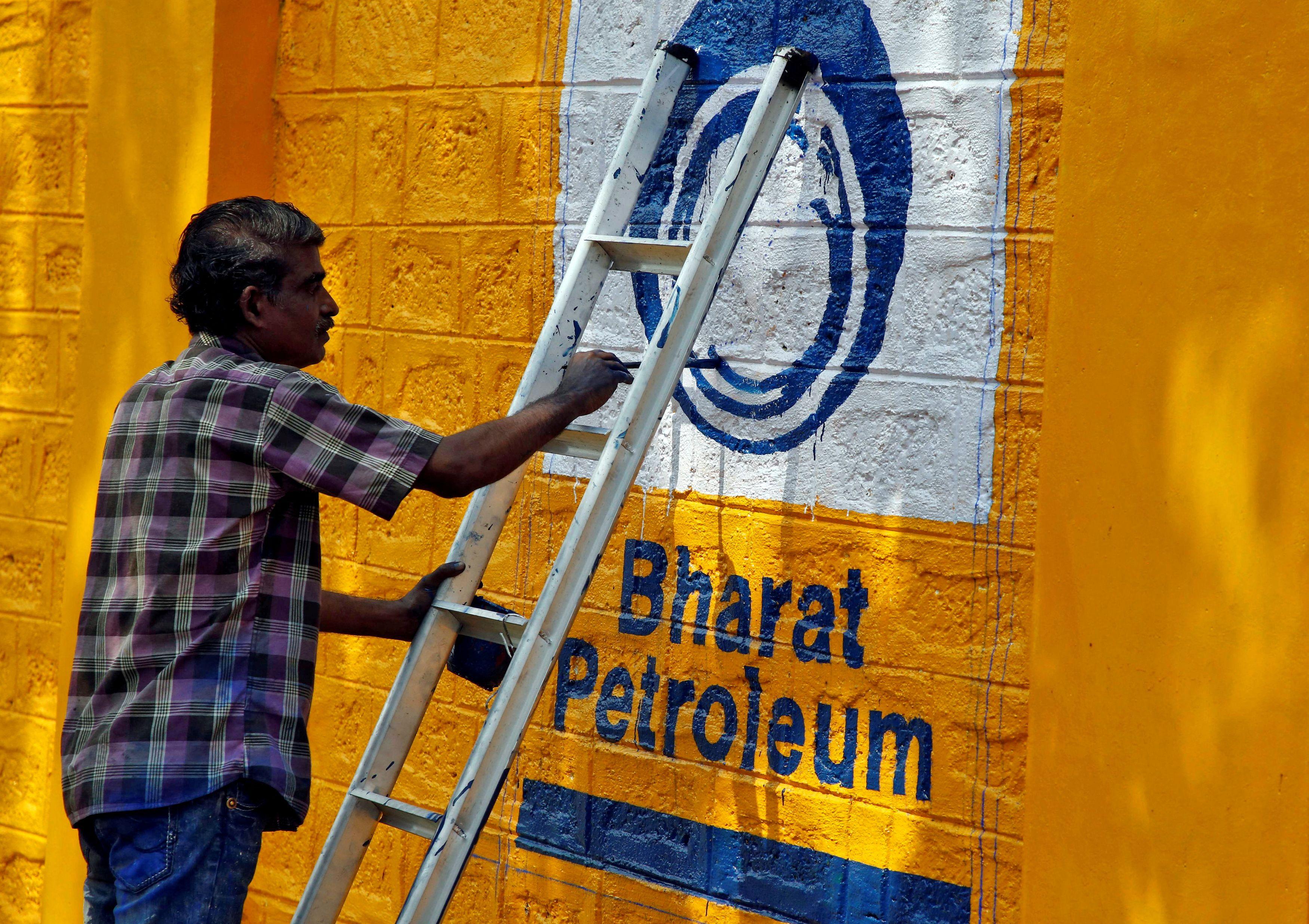
Markets unprepared for a steep petrol, diesel price hike: Analysts

Markets unprepared for a steep petrol, diesel price hike: Analysts


Markets are not prepared for a steep hike in petrol and diesel prices, if any, amid a sharp surge in crude oil amid the West Asia conflict, suggest analysts.  


A hike of around Rs 5 – 6 per litre post the state elections in case the West Asia conflict prolongs till then is already factored in, they said. 


On the other hand, a steep hike of say Rs 10 – 12 per litre and beyond, analysts believe, could dent sentiment in the medium term. 


On its part, the government has denied reports of hiking petrol and diesel prices despite the surge in crude oil. 


“I wouldn’t assign a high probability of a hike in auto fuel prices. While around Rs 5 – 6 per litre hike has already been factored in, a sharper hike can dent the market sentiment badly,” said Manoj Bahety, founder, Carnelian Asset Management. However, such a need will not arise if a solution to the (West Asia) crisis is arrived by the time state elections are over, he added. 
ALSO READ: OMCs losing ₹18/litre on petrol, ₹35 on diesel amid price freeze: Macquarie


The markets, according to G Chokkalingam, founder and head of research at Equinomics Research, have adequately priced in the possibility of a minor hike, if at all it happens. The government, he suggests, has enough cushion against the rising oil prices. The hike, if any, he believes, is likely to be staggered.


“The stocks may not fall badly as a hike to some extent is priced in. The markets will be comfortable even if the government hikes the petrol and diesel prices by 3 per cent – 5 per cent. That said, the hike will be staggered and a 10 per cent jump in auto fuel prices in one go is completely ruled out,” Chokkalingam said. 


The contra view


Retail fuel prices in India have been largely stable since May 2022, even as global oil prices remained volatile. This, analysts at Kotak Institutional Equities, believe is likely to change post the state elections (last voting on April 29), and if there is no truce in West Asia.  
ALSO READ: Indian Oil hikes premium petrol, diesel prices amid West Asia tensions


While excise duty cuts and windfall export taxes provide partial relief, they believe, a price hike is warranted to limit refiners’ losses and signal demand restraint.  


“The issue is no longer if, but when and by how much, with political considerations outweighing economics. Based on Indian basket of $120/bbl and low fixed margins ($8/15 per bbl for petrol/diesel), there is a case to raise prices by Rs 25-28/liter. However, political considerations will likely prevail and actual hikes may be more modest,” wrote Anil Sharma and Keshav Soni of Kotak Institutional Equities in a recent note.


“As a result, stock rebuilding, logistics repricing, and repair costs are expected to keep oil prices structurally supported, with near-term equilibrium above around $80/bbl,” wrote Maulik Patel and Khushboo Balani of Equirus Securities in a recent note.


Marketing margins


Petrol and diesel marketing margins, according to analysts’ estimates, deteriorated sharply in March 2026, with petrol averaging around Rs -20/litre (vs. +Rs. 12/litre in February) and diesel losses deepening to nearly Rs. -50/lit (versus +8/lit), significantly pressuring OMCs profitability alongside LPG under-recoveries. 


While the government partially offset losses through excise duty cuts, current margins remain negative at around Rs. -6 to Rs. -8/lit for petrol and close to Rs. -20/lit for diesel. Additionally, higher export duties on diesel and aviation turbine fuel (ATF) were imposed to prioritize domestic supply, keeping overall margins under strain for standalone refiners too.


“OMCs may see a significant decrease in their margins if oil prices stay elevated like this. That said, the government will also assess how much they can absorb, to what extent can the OMCs take a hit and what to pass on to the consumers post the state elections,” said Bino Pathiparampil, head of research at Elara Capital.


Source link

ABSL AMC Q4 profit down 18%; Invesco MF launches first equity index funds

ABSL AMC Q4 profit down 18%; Invesco MF launches first equity index funds


Aditya Birla Sun Life Asset Management Company (AMC) reported a 18 per cent cent year-on-year decline in net profit in the fourth quarter (Q4) of 2025-26 (FY26). The AMC recorded a net profit of ₹187 crore for the March quarter. The net profit for FY26 was up 5 per cent at ₹975 crore. The decline in Q4 profit was largely a result of ₹33 crore loss in other income compared to gains of ₹84 crore in the same period of FY25. The company has proposed a dividend of ₹25.5 per share. 


Invesco MF launches first equity index funds 


Invesco Mutual Fund (MF) on Thursday announced the launch of Invesco India BSE Sensex Index Fund and Invesco India Nifty Bank Index Fund. These are the first equity index funds from the fund house which so far had only limited passive portfolio, largely comprising ETFs and fund of funds. “The index funds are designed to offer investors transparent, cost-efficient access to India’s long-term growth opportunities through passive investing,” it said. 


Nippon AMC to pay ₹96.4 cr to settle Yes Bank case 


Nippon Life India Asset Management will pay ₹96.46 crore ($10.25 million) to settle charges it offered its customers high-risk Yes Bank bonds and in return the lender extended loans to companies backed by the unit’s previous owner, industrialist Anil Ambani, according to the letter from the Securities and Exchange Board of India to Nippon India dated April 15. The settlement stipulates 93 per cent of the settlement will go to Nippon India’s investors that lost money, a rare condition in regulatory settlement offers, which typically require companies to deposit the penalties with the Indian government.

First Published: Apr 23 2026 | 11:41 PM IST


Source link

IKS announces acquisition of Nasdaq-listed TruBridge Inc.

IKS announces acquisition of Nasdaq-listed TruBridge Inc.


Inventurus Knowledge Solutions, Inc. (IKS), the U.S. subsidiary of Inventurus Knowledge Solutions (IKS Health), announced it has entered into a definitive agreement to acquire TruBridge, Inc. (NASDAQ: TBRG) (TruBridge), a prominent provider of healthcare technology solutions for rural and community hospitals. This proposed strategic acquisition underscores a commitment to broaden access to high-quality care and support the clinicians and hospitals that serve communities across the United States.

By bringing together IKS Health’s comprehensive care enablement capabilities that serve a range of healthcare organizations with TruBridge’s deep expertise in supporting rural and community hospitals through revenue cycle management and electronic health record (EHR) solutions, the combined healthcare technology company is expected to strengthen local healthcare systems, and enable patients to receive essential care closer to home while also enhancing care delivery across the ambulatory and acute care continuum.


Post closing, the combined company will deliver continuous improvement and connected workflows to the core of rural healthcare and to medical groups overall, combining agentic artificial intelligence (AI) with human-in-the-loop expertise to proactively address complex operational challenges. As the platform incorporates a broader range of clinical and financial data, it is designed to become increasingly intelligent and efficient. This growing intelligence, reinforced by human insight, is anticipated to ensure community hospitals and medical groups have the financial resilience and advanced support needed to focus on the health of their patients.

Disclaimer: No Business Standard Journalist was involved in creation of this content

First Published: Apr 23 2026 | 7:50 PM IST


Source link

Rupee weakens to three-week low, tracking rise in crude, dollar index

Rupee weakens to three-week low, tracking rise in crude, dollar index


The rupee weakened for the fourth consecutive trading session to breach the 94 per dollar mark on Thursday, tracking the rise in crude oil prices amid uncertainties around the West Asia crisis, dealers said. The local currency settled at 94.11 per dollar, the lowest since March 30, against the previous close of 93.80 per dollar.


“Driven by high hedging dollar demand and a broader shift towards safe-haven assets, the Indian rupee has weakened past the 94 level against the greenback. Central bank interventions failed to arrest the slide as a simultaneous rally in crude oil and the US dollar exerted additional downward pressure. In the near term, the rupee retains its bullish momentum, with support around 93.80 per dollar and resistance at 94.60 per dollar,” said Dilip Parmar, research analyst, HDFC Securities.


The domestic unit has depreciated by 4.50 per cent in the current calendar year so far; however, it has witnessed 0.74 per cent appreciation in April so far.


Brent crude oil prices rose beyond $104 per barrel as stalled peace talks between the United States and Iran heightened supply concerns.


US President Donald Trump has not set a clear deadline for Iran to submit a peace proposal, even as negotiations remain uncertain. Iran, for its part, appears unwilling to compromise on key demands, limiting the scope for fresh talks.


The situation has effectively reached a stalemate, with the Strait of Hormuz remaining disrupted amid continued tensions and restrictions from both sides.


“Since the removal of the circular by the RBI, the Indian rupee has been consistently falling from 92.70 to 94.20, losing Rs 1.50 over a period of four days. The arbitrage opportunity is only existing for corporates and for banks to the extent of $100 million (maximum overnight position allowed). Oil companies are not there in the market (though SBI was seen buying dollars for oil companies through spot), yet the buying of $ has not died despite all efforts by RBI to curb the same,” said Anil Kumar Bhansali, head of treasury and executive director, Finrex Treasury Advisors LLP.


The dollar index was at 98.75, against the previous day’s 98.30. It measures the strength of the greenback against a basket of six major currencies.


Source link

IKS announces acquisition of Nasdaq-listed TruBridge Inc.

Infosys Q4 PAT climbs 28% QoQ to Rs 8,501 cr


Infosys reported a 27.75% increase in consolidated net profit to Rs 8,501 crore on a 2.02% rise in revenue from operations to Rs 46,402 crore in Q4 FY26 compared with Q3 FY26.

On a year-on-year (YoY) basis, the company’s net profit jumped 20.9%, while revenue increased 13.4% in Q4 FY26.

Profit before tax (PBT) stood at Rs 10,797 crore in Q4 FY26, up 17% quarter-on-quarter (QoQ) and 11.7% YoY.

Operating profit for Q4 FY26 came in at Rs 9,743 crore, rising 16.6% QoQ and 13.6% YoY. Operating margin improved to 21% during the quarter, compared with 18.4% in Q3 FY26 and 21% in Q4 FY25.


Revenues in constant currency (CC) terms grew 4.1% YoY but declined 1.3% QoQ. In dollar terms, the IT firm reported revenues of $5,040 million, reflecting a decline of 1.2% QoQ and growth of 6.6% YoY for the quarter ended 31 March 2026.

Free cash flow (FCF) stood at Rs 7,711 crore as of 31 March 2026, down 0.33% YoY and 5.68% QoQ. FCF conversion was 90.6% of net profit.

The total contract value (TCV) of large deal wins was $3.2 billion in Q4 FY26, with net new deals accounting for 55%.

For FY27, the company guided revenue growth at 1.5%3.5% in constant currency terms, compared with its earlier guidance of 3.0%3.5%, while maintaining its operating margin guidance at 20%22%.

The company had 1,965 active clients as of 31 March 2026, compared with 1,869 a year earlier. Total headcount stood at 328,594, up 1.55% YoY. The IT services attrition rate declined to 12.6% from 14.1% in the previous year.

Salil Parekh, CEO and MD, said, We delivered a resilient performance in FY26 with growth of 3.1% with strong large deal wins of $14.9 billion, reflecting the robustness of our enterprise AI value proposition and market share gains in large transformation opportunities. The simplicity and strength of our AI services strategy across six areas are gaining traction in the market, further strengthened by strong ecosystem AI partnerships enabling clients to get value from AI.

Our AI First value framework and differentiated Topaz Fabric position us uniquely to deepen client trust and gain greater share of the market,” he added.

Meanwhile, the companys board has recommended a final dividend of Rs 25 per equity share of face value Rs 5 for FY26. The record date is set for 10 June 2026, and the dividend will be paid on 25 June 2026.

Infosys is a global leader in next-generation digital services and consulting.

Shares of Infosys slipped 2.04% to end at Rs 1,242.60 on the BSE.


Source link

IKS announces acquisition of Nasdaq-listed TruBridge Inc.

Central Government's gross fiscal deficit stood at 4.4% of GDP in FY26


Reserve Bank of India (RBI) has stated in a latest monthly update that the Central Governments gross fiscal deficit (GFD) stood at 4.4 per cent of GDP in 2025-26 (RE) adhering to its medium-term target of a GFD below 4.5 per cent by 2025-26 (as announced in the Union Budget 2021-22). This was achieved through rationalisation of expenditure, and higher than budgeted non-tax revenue receipts. For 2026-27, the Central Government budgeted a lower GFD at 4.3 per cent of GDP, thus adhering to the path of fiscal prudence. Further consolidation is budgeted mainly through containment of revenue expenditure to 10.5 per cent of GDP [from 10.8 per cent in 2025-26 (RE)], while maintaining capital expenditure at 3.1 per cent of GDP. Revenue expenditure to capital outlay ratio (RECO) has remained low at 4.4, suggesting the preservation of expenditure quality.
 

Disclaimer: No Business Standard Journalist was involved in creation of this content

First Published: Apr 23 2026 | 6:50 PM IST


Source link

YouTube
Instagram
WhatsApp




