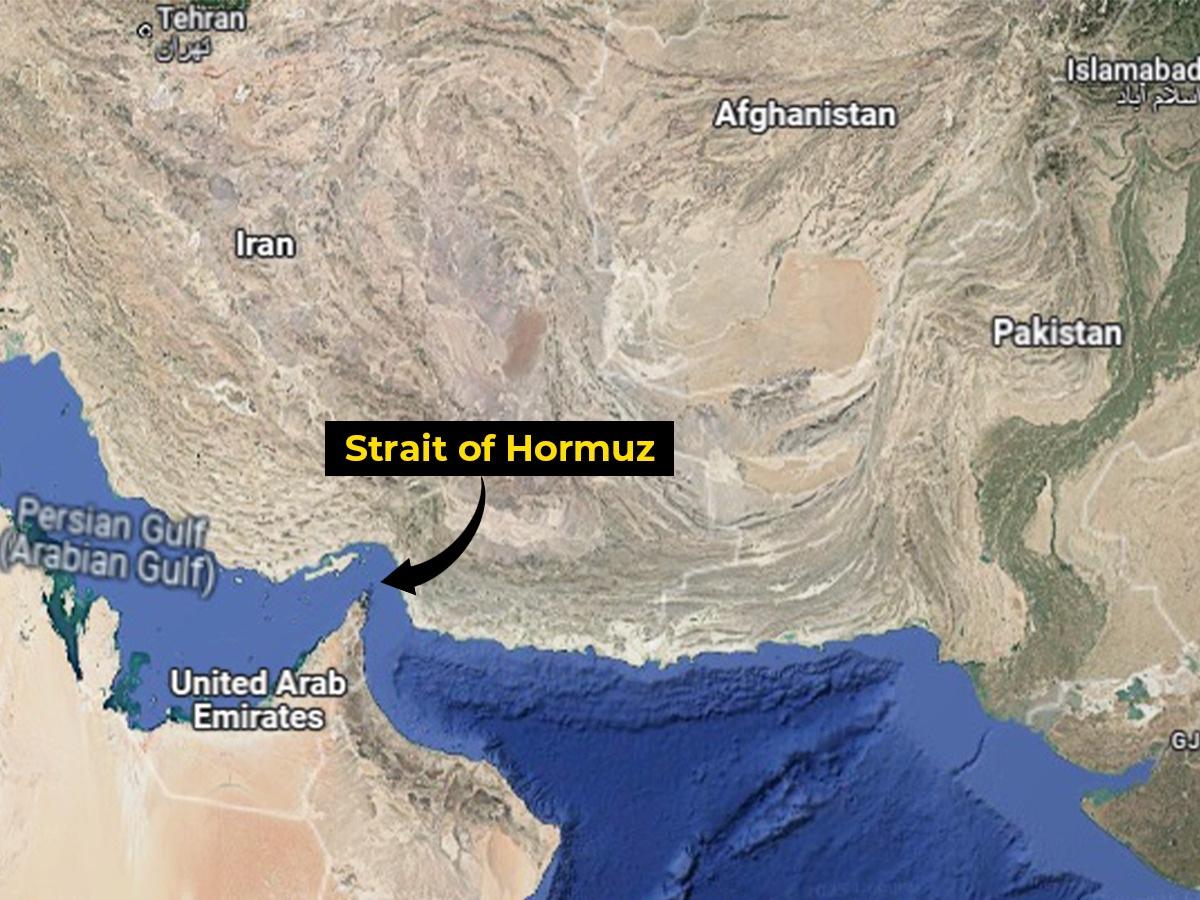
Strait of Hormuz blockade impact: 2.3mbpd oil supply at risk, says Nomura

Strait of Hormuz blockade impact: 2.3mbpd oil supply at risk, says Nomura


A complete blockade of the Strait of Hormuz (SoH) by the United States could disrupt oil supply materially, with analysts at Nomura pegging the incremental shortfall at around 2.3 million barrels per day (mbpd) in March 2026. Compared to March 2025, the shortfall is seen at 9.3mbpd, a sharp drop of 57 per cent year-on-year (y-o-y). 


Saudi Arabia, United Arab Emirates (UAE), Iraq, Iran, Kuwait and Qatar saw oil flows totaling 16.3mbpd in March 2025, as per their estimates.


“We estimate around 2.3mbpd loss of incremental oil supplies versus March 2026, and nearly 9.3mbpd loss versus March 2025 in the event the US were to completely block the SoH. A complete blockade of the SoH may also impact LPG supplies for India, as over the past month India managed to have several LPG tankers (at least eight) safely crossed through the strait,” wrote Bineet Banka, an analyst tracking the sector at Nomura in a recent note. 


Meanwhile, the US and Iran are reported to be considering another round of talks after negotiations in Pakistan’s Islamabad led by US Vice President JD Vance reached a stalemate over the weekend. Crude oil prices, as a result, hit $107 a barrel (bbl) on Monday, before cooling off to below $100/bbl on Tuesday on renewed hopes of talks between the two nations. 


In the last one week, Brent crude oil prices have surged 6.5 per cent to nearly $98/bbl now. As the latest peace talks between the US and Iran have failed to yield any result, Nomura sees an increased likelihood of higher war risk premium on oil prices. With President Trump now threatening to completely block the SoH for all inbound and outbound ships, Nomura expects the oil supply situation to deteriorate further. 


“As the conflict lingers on, the effectiveness of balancing lost supplies via SPR (Strategic Petroleum Reserves) may gradually become ineffective, and that may be reflected in higher oil prices,” Nomura said.


The rise in oil prices in the last few weeks, Nomura said, has more than compensated for the fall in export volumes of Saudi Arabia, with its oil revenues rising 4 per cent year-on-year (y-o-y) in March. Saudi Arabia, reports suggest, has achieved full oil flow capacity of 7mbpd on its East-West pipeline that bypasses the SoH and opens on the Red Sea.  


“Assuming that 2mbpd is used by its refineries in the western coast, we might still expect higher export volumes from Saudi Arabia going forward (~5mbpd) compared to what it did in March 2026 (~4.4mbpd). The UAE also did relatively well as compared with other gulf countries, with a minor ~3 per cent y-o-y drop in oil revenues,” Nomura said. 


Revenue hit


Iran, according to Banka’s estimates, has been the biggest beneficiary since the war broke out in terms oil revenues that rose 36 per cent y-o-y in March 2026 to $5.7 billion.


However, that might change with the US potentially enforcing a complete blockade of the SoH, Nomura cautions. The biggest revenue hit in March 2026 has been on Iraq that saw its oil revenues tank 77 per cent y-o-y to $1.7 billion versus $7.3 billion in March 2025, Nomura estimates. 


“Iran (as per reports) has accumulated ~140mn barrels of floating storage buffer that might provide some buffer against a US blockade, if it should materialize,” the Nomura note said. 


A sustained disruption in SoH, analysts warn, would remove a volume of supply that cannot be quickly replaced, forcing an aggressive repricing across commodities, currencies, equities, and fixed income markets.


“Take that flow out of the system and Brent doesn’t move five or ten dollars, it moves structurally higher. A spike toward $120 or beyond becomes realistic very quickly, and that resets inflation expectations globally. Energy equities stand to be immediate beneficiaries. Integrated oil majors, US shale producers, and West Asian exporters would see margin expansion and stronger cash generation. At the same time, energy-import-dependent sectors face a direct hit,” cautions Nigel Green, chief executive officer (CEO) of deVere Group, a global consulting firm that has $14 billion assets under management (AUM).


Source link

ArisInfra Solutions signs Rs 800-cr MoU with Capacit'e Infraprojects for material supply

ArisInfra Solutions signs Rs 800-cr MoU with Capacit'e Infraprojects for material supply


ArisInfra Solutions said that it has signed a memorandum of understanding (MoU) with Capacit’e Infraprojects for the procurement of construction and building materials worth a minimum aggregate value of Rs 800 crore.

The agreement covers the supply of materials for various infrastructure, commercial, and real estate projects undertaken by Capacite Infraprojects and its subsidiaries/associates. The MoU has been entered into for a tenure of five years from the effective date and is on a domestic basis.

The company clarified that neither the promoter/promoter group has any interest in the counterparty nor does the transaction fall under related party transactions.

ArisInfra Solutions is a B2B tech company that simplifies the procurement process for construction materials throughout India. It serves real estate and infrastructure developers. It provides a complete digital platform for sourcing materials such as cement, steel, aggregates, RMC, and more.


The company’s consolidated net profit surged 791.2% to Rs 18.27 crore on a 49% rise in revenue to Rs 270.84 crore in Q3 FY26 as compared with Q3 FY25.

Shares of ArisInfra Solutions ended flat at Rs 113.01 on 13 April 2026.

Disclaimer: No Business Standard Journalist was involved in creation of this content

First Published: Apr 14 2026 | 9:16 AM IST


Source link

ArisInfra Solutions signs Rs 800-cr MoU with Capacit'e Infraprojects for material supply

Swaraj Engines Q4 PAT jumps 20% YoY to Rs 55 cr; declares dividend of Rs 110/share


The Mohali-based diesel engine maker Swaraj Engines reported a 20.12% jump in net profit to Rs 54.56 crore in Q4 FY26, compared with Rs 45.42 crore in Q4 FY25.

Revenue from operations rose 20.18% year-on-year to Rs 545.79 crore in the quarter ended 31 March 2026. Profit before tax (PBT) increased 19.55% to Rs 73.19 crore in Q4 FY26, as against Rs 61.22 crore in the corresponding quarter last year.

Engine sales for the quarter stood at 55,004 units, up from 45,594 units sold in Q4 FY25. The company highlighted consistent growth across all four quarters of FY26, marking its sixth consecutive year of higher engine sales and profit compared to previous years.


For the full year, net operating revenue rose 19.3% YoY to Rs 2,007.13 crore, up from Rs 1,681.89 crore in FY25. Profit before exceptional items and tax stood at Rs 266.98 crore, compared to Rs 223.05 crore in the previous year. Profit after tax increased 18.3% to Rs 196.31 crore from Rs 165.98 crore, marking the companys highest-ever annual profit.

The company also reported its highest-ever annual engine sales volume in FY26, crossing the 200,000-unit milestone for the first time. Q4 FY26 also recorded the highest quarterly engine sales volume.

The board has recommended an equity dividend of 1100% (Rs 110 per share) for the financial year ending 31 March 2026. The record date for the AGM and dividend is set as 3 July 2026. The dividend, if approved, will be paid or dispatched after 20 July 2026, within the stipulated timeline.

Swaraj Engines (SEL) was set up in 1985 in Mohali, Punjab, and is primarily engaged in the business of supplying engines to the Swaraj Division of Mahindra & Mahindra (M&M).

Shares of Swaraj Engines shed 0.96% to settle at Rs 3,900.95 on 13 April 2026.


Source link

Gold price falls ₹10 to ₹1,52,450; silver down ₹100, trading at ₹2,54,900

Gold price falls ₹10 to ₹1,52,450; silver down ₹100, trading at ₹2,54,900


Gold Price Today: The price of 24-carat gold fell ₹10 in early trade on Tuesday, with ten grams of the precious metal trading at ₹1,52,450, according to the GoodReturns website. The price of silver also declined by ₹100, with one kilogram of the precious metal selling at ₹2,54,900. 


The price of 22-carat gold decreased by ₹10, with ten grams of the yellow metal selling at ₹1,39,740. 


The price of ten grams of 24-carat gold stood at ₹1,52,450 in Mumbai, Kolkata, Hyderabad and ₹1,53,370 in Chennai.


In Delhi, the price of ten grams of 24-carat gold stood at ₹1,52,600.


In Mumbai, the price of ten grams of 22-carat gold was ₹1,39,740, the same as in Kolkata, Bengaluru, Hyderabad, and ₹1,40,590 in Chennai.


In Delhi, the price of ten grams of 22-carat gold stood at ₹1,39,890.  


The price of one kilogram of silver in Delhi, Kolkata, and Mumbai stood at ₹2,54,900. 


The price of one kilogram of silver in Chennai stood at ₹2,59,900.


US gold prices rose on Tuesday, supported by a weaker dollar, while a drop in oil prices eased concerns over inflation and the prospect of US interest rates staying higher for longer.


Spot gold was up 0.6 per cent at $4,769.52 per ounce as of 0059 GMT. US gold futures for June delivery rose 0.6 per cent to $4,793.40.


Among other metals, spot silver rose 0.5 per cent to $75.94 per ounce, platinum gained 0.8 per cent to $2,087.80, and palladium was up 0.5 per cent to $1,581.48.


(with inputs from Reuters)  


Source link

Rupee weakens, bond yields rise as crude spikes amid US-Iran tensions

Rupee weakens, bond yields rise as crude spikes amid US-Iran tensions


The rupee declined 0.7 per cent on Monday, pressured by a sharp rise in crude oil prices following the US move to block ships transiting the Strait of Hormuz after the collapse of peace talks with Iran. Government bond yields also inched up, tracking the rise in crude and renewed concerns over imported inflation.


During the day, the Indian unit fell to 93.44 per dollar before settling at 93.38 against 92.73 in the previous session. So far in April, the rupee appreciated 1.54 per cent against the dollar.


The domestic currency opened weaker and extended losses through the session, slipping by over half a rupee against the US dollar. The fall comes after a brief phase of relative stability, with the rupee once again tracking movements in crude oil, capital flows, and overall risk sentiment.


The rupee was the worst-performing Asian currency on Monday. In April, however, the Indian unit gained 1.54 per cent against the dollar.


“Today the rupee fell by 65 paise as the dollar index rose, as well as oil prices, and oil companies were buying dollars,” said Anil Kumar Bhasali, head of treasury, Finrex Treasury Advisors.


Meanwhile, the dollar index, which gauges the greenback’s strength against a basket of six currencies, was up 0.32 per cent at 98.75. Brent crude, the global oil benchmark, rose 7.69 per cent to $102.52 per barrel.


The surge in oil prices has raised concerns over India’s import bill and inflation outlook, given the country’s dependence on crude imports. This weighed on the currency, with market participants also pointing to cautious foreign fund flows amid global uncertainty.


“The rupee is reacting largely to the sharp spike in crude prices. With oil back above $100 per barrel, demand for dollars from oil companies has picked up, putting pressure on the currency,” said a forex trader at a state-owned bank.


Bond yields also hardened in response to the rise in crude prices. The benchmark 10-year government bond yield edged up to 6.97 per cent before settling at 6.94 per cent, compared with its previous close of 6.91 per cent. The move reflects expectations that higher oil prices could feed into inflation and limit the scope for monetary easing.


“The market opened weaker, but later it recovered and cut about half of its losses. This was mainly because traders who had earlier bet on prices falling started buying back their positions, which supported the recovery. In other words, the bounce was driven by traders reversing their negative bets, helping the market move up,” said a dealer at a private bank.


Traders said the uptick in yields follows a recent softening trend, as markets reassess the inflation trajectory in light of volatile commodity prices. The move also comes ahead of key domestic macroeconomic data, which could provide further cues on price trends.


Going ahead, market participants expect both the rupee and bond yields to remain sensitive to global developments, particularly movements in crude oil and geopolitical risks. RBI liquidity conditions and foreign portfolio flows will also be closely tracked for directional cues. Bond and foreign exchange markets will remain closed on Tuesday on account of Ambedkar Jayanti.


Source link

Citius TransNet Investment Trust's ₹1,105 crore IPO to open on April 17

Citius TransNet Investment Trust's ₹1,105 crore IPO to open on April 17


EAAA India Alternatives-backed Citius TransNet Investment Trust’s initial public offering (IPO) issue to raise ₹1,105 crore will open on April 17, 2026, as the infrastructure investment trust (InvIT) is aiming to expand its portfolio by acquiring 11 hybrid annuity model (HAM) projects.


The InvIT’s current portfolio has 10 road assets, including seven toll roads and three annuity assets. The adjusted enterprise value of the project special purpose vehicles (SPVs) was estimated at ₹12,058 crore at the end of December last year.


The price band for the InvIT’s IPO is set at ₹99–100 per unit. It is seeking a valuation of ₹6,100 crore at the top of the price band. The InvIT has a Right of First Offer (ROFO) agreement for the acquisition of 11 National Highways Authority of India (NHAI) HAM assets, held or to be acquired by the EAAA platform.


If all 11 identified ROFO assets are successfully acquired by the InvIT, its total portfolio shall comprise 21 road assets representing approximately 5,773 lane-kilometres across 12 different states. EAAA TransInfra Managers is the investment manager of the InvIT. The investment manager is a wholly owned subsidiary of EAAA.


For further expansion apart from roads, Sreekumar Chatra, managing director, infrastructure funds at EAAA Alternatives, stated that the InvIT will explore adjacent transport asset classes — such as logistics infrastructure and other transport assets — with similar contractual frameworks, credible counterparties, predictable cash flows, and regulatory safeguards.


Chatra added that there are opportunities of around ₹33–35 trillion in roads alone, with additional opportunities in metro rail, logistics infrastructure, ropeways, and airports. “However, highways will remain the primary focus area given the size of the opportunity.”


The InvIT reported revenue from operations of ₹1,987 crore in 2024–25, up from ₹1,773 crore in 2022–23. Net cash flow from operating activities rose to ₹1,044 crore in 2024–25 from ₹907 crore in 2022–23. For the nine months ended December 31, 2025 (9M FY26), revenue from operations stood at ₹1,496 crore, while net cash flow from operating activities came in at ₹782 crore.


On being asked about the current market conditions, Sujaya Moghepadhye, head, capital markets and investor relations – Infra Yield, EAAA Alternatives, said, “We believe InvITs have relatively low-beta products in terms of volatility, as they are quasi-debt in nature. Therefore, broader equity market conditions are less relevant. The investor base for InvITs is also different because the product is not equity-like.”


The issue will close on April 21, 2026. Bhavyang Oza, chief investment officer of the InvIT, stated that of the total amount raised, ₹1,000 crore will be used to acquire securities of certain identified initial portfolio assets. The balance will be used for general purposes.


Source link

YouTube
Instagram
WhatsApp




