Auto Sector Q4 Results preview: Demand resilience to aid growth; margins face cost squeeze

Auto Sector Q4 Results preview: Demand resilience to aid growth; margins face cost squeeze


A steady demand environment and GST-led tailwinds are expected to support revenue growth for automobile companies in Q4FY26, although rising input costs and geopolitical uncertainties may weigh on margins. 


Most brokerages expect healthy earnings growth across auto original equipment manufacturers (OEMs) and ancillary players on both a year-on-year (Y-o-Y) and quarter-on-quarter (Q-o-Q) basis. However, margin expansion is likely to remain constrained due to elevated commodity prices and supply-side risks.


Demand momentum remains strong across segments


Auto OEMs are expected to report robust performance in Q4FY26, supported by sustained domestic demand, improved affordability following GST rate cuts, and festive tailwinds such as Chaitra Navratri. 


Analysts at Axis Securities said earnings are likely to remain positive, “with improvement across select companies driven by strengthening domestic demand, supported by the GST rate cut and the festive season,” although macro headwinds in March could weigh on exports. 


Revenue for OEMs is expected to grow 22–26 per cent Y-o-Y, driven by double-digit volume expansion across passenger vehicles (PVs), two-wheelers (2Ws), and commercial vehicles (CVs), along with strong traction in tractors. 


Sequentially, revenue is estimated to rise 3–4 per cent, aided by stable demand and improved realisations.


OEMs set for earnings growth, margins to stay range-bound


According to Axis Securities, “Revenue/Ebitda/PAT for our OEM coverage universe is expected to register strong Y-O-Y growth of 25 per cent/29 per cent/15 per cent,” driven by sustained demand momentum, stable commodity inflation, and supportive regulatory norms. 


Margins, however, are likely to remain range-bound. “Ebitda margin expansion… is anticipated to be supported by a richer product mix… partially offset by elevated discounts and higher advertisement spends,” said the brokerage. 


JM Financial noted that while demand remains resilient, cost pressures are building up. “We expect 4QFY26E to reflect limited impact from these disruptions, supported by continued demand momentum,” it said, adding that margins are likely to see only “marginal pressure” during the quarter.


Auto ancillaries to sustain momentum


Auto ancillary companies are expected to report steady growth, supported by volume expansion and diversified product portfolios. 


Axis Securities said, “We estimate revenue/Ebitda in Q4FY26 to grow by 19 per cent/15.6 per cent Y-O-Y for auto ancillary companies,” driven by sustained demand momentum and premiumisation trends. 


Centrum Broking also highlighted strong growth visibility. “We expect our Auto OEM and Ancillary coverage universe to deliver 26.3 per cent Y-O-Y revenue growth in Q4FY26E, underpinned by double-digit volume expansion,” it said. 


Sequential growth for ancillaries is expected to remain healthy, supported by better product mix and operating efficiencies.


Input cost pressures, geopolitical risks persist


Rising commodity prices remain a key concern. Steel, aluminium, and copper prices have all moved higher during the quarter, increasing cost pressures across the value chain. 


JM Financial said “heightened geopolitical uncertainties have resulted in elevated energy prices, supply chain disruptions, and increased inflationary pressures,” warning that the duration of these risks remains uncertain. 


Centrum Broking added that “margin expansion [is expected] though input cost pressure exists,” with elevated commodity costs likely to partially offset gains from operating leverage.


Company-specific factors to watch

Among stock-specific triggers, brokerages highlighted continued strength in Maruti Suzuki India, supported by GST-led demand and a richer export mix, along with improving realisations and new model launches. Within the broader OEM space, Tata Motors, Mahindra & Mahindra, Hyundai Motor India, and Hero MotoCorp are expected to benefit from sustained domestic demand momentum and improving segment mix.  Schaeffler India is likely to see steady traction in its auto-tech and industrial bearing segments, while Divgi TorqTransfer Systems may benefit from higher transfer case offtake and export-led growth


FY27 Outlook: Growth intact, margin visibility cautious


While Q4FY26 is expected to remain strong, brokerages remain cautious on the outlook. 


JM Financial said margin pressures are likely to intensify going ahead, estimating a contraction of around 110–130 basis points in FY27 for OEMs and ancillaries, with “gradual normalisation anticipated in 2HFY27.” 


Axis Securities also flagged risks to exports and production. “Export volumes are expected to remain broadly stable in Q4FY26 but may face pressure… amid the ongoing US–Iran conflict,” it said. 

Overall, while demand momentum remains intact, the sector’s margin trajectory, brokerages believe, will depend on commodity prices, supply chain stability, and the evolution of geopolitical risks.  ===============================


  (Disclaimer: View and outlook shared belong to the respective brokerages/analysts and are not endorsed by Business Standard. Readers’ discretion is advised.)


Source link

China uses West Asia conflict to advance yuan's global payments debut

China uses West Asia conflict to advance yuan's global payments debut


By Andy Mukherjee


It has been China’s long-held dream to dethrone King Dollar. Beijing got its first break after Vladimir Putin invaded Ukraine, and Russian lenders were deleted overnight from the messaging system that moves the world’s money. However, back in 2022, the yuan was nowhere close to confronting the hegemon. It would take four more years of preparation — and another war — to make it a contender. 


I argued in early February that those looking for evidence of the challenge to the US currency in payment flows were searching in the wrong place. For years to come, de-dollarisation will remain hidden in additions and alterations to financial plumbing.


But that was before the conflict in West Asia. A lot has changed in the past six weeks. China is the largest buyer of Iran’s seaborne oil. The price its refineries pay stays in “controlled accounts” at small Chinese banks cut off from dollar trade. According to the Atlantic Council, these funds are used to pay Chinese contractors or cover imports: an “oil-for-goods” swap. And now Tehran says that it will accept toll payments from ships crossing the Strait of Hormuz in cryptocurrencies or the yuan.


It’s a rebellion against America’s financial hegemony on three fronts simultaneously: the payment currency, the messaging system, and the settlement mechanism. Were a peace plan to remove US sanctions against Iran, the greenback might regain some of the trust it has lost. But China’s currency won’t go away. It will simply lie in wait for the next geopolitical crisis.  


At nearly 50 per cent of all international payments, the dollar’s dominance is stark. The yuan’s share, according to the Society for Worldwide Interbank Financial Telecommunication, or Swift, is just 2.7 per cent, lower than in 2024. Yet China is serious about pitching its currency as an alternative. The digital version, e-yuan, moves over the blockchain. The technology integrates messaging, reconciliation and asset transfer into a single, seamless operation, bypassing Swift, the panopticon through which the US surveils global financial flows. Project mBridge, a digital platform shared by the central banks of China, Hong Kong, Thailand, the United Arab Emirates and Saudi Arabia, has already processed over $55 billion in trade, with the e-yuan accounting for 95 per cent of the volume.


But the blockchain is still a small part of how claims get disposed of. Most international transfers gravitate to a New York private institution, known as the Clearing House Interbank Payments System, or Chips. Its participants liquidate obligations using pre-funded accounts at the Federal Reserve. They all maintain US offices and are subject to US law.


Beijing’s discomfort is precisely on that point. The US Department of Justice built its bank-fraud and wire-fraud case against Huawei Technologies Co.’s finance chief Meng Wanzhou by finding dollar transactions routed through Chips in New York. In US law, the moment a digit representing a dollar touches a server on American soil — even for a millisecond — it grants the US government jurisdiction.


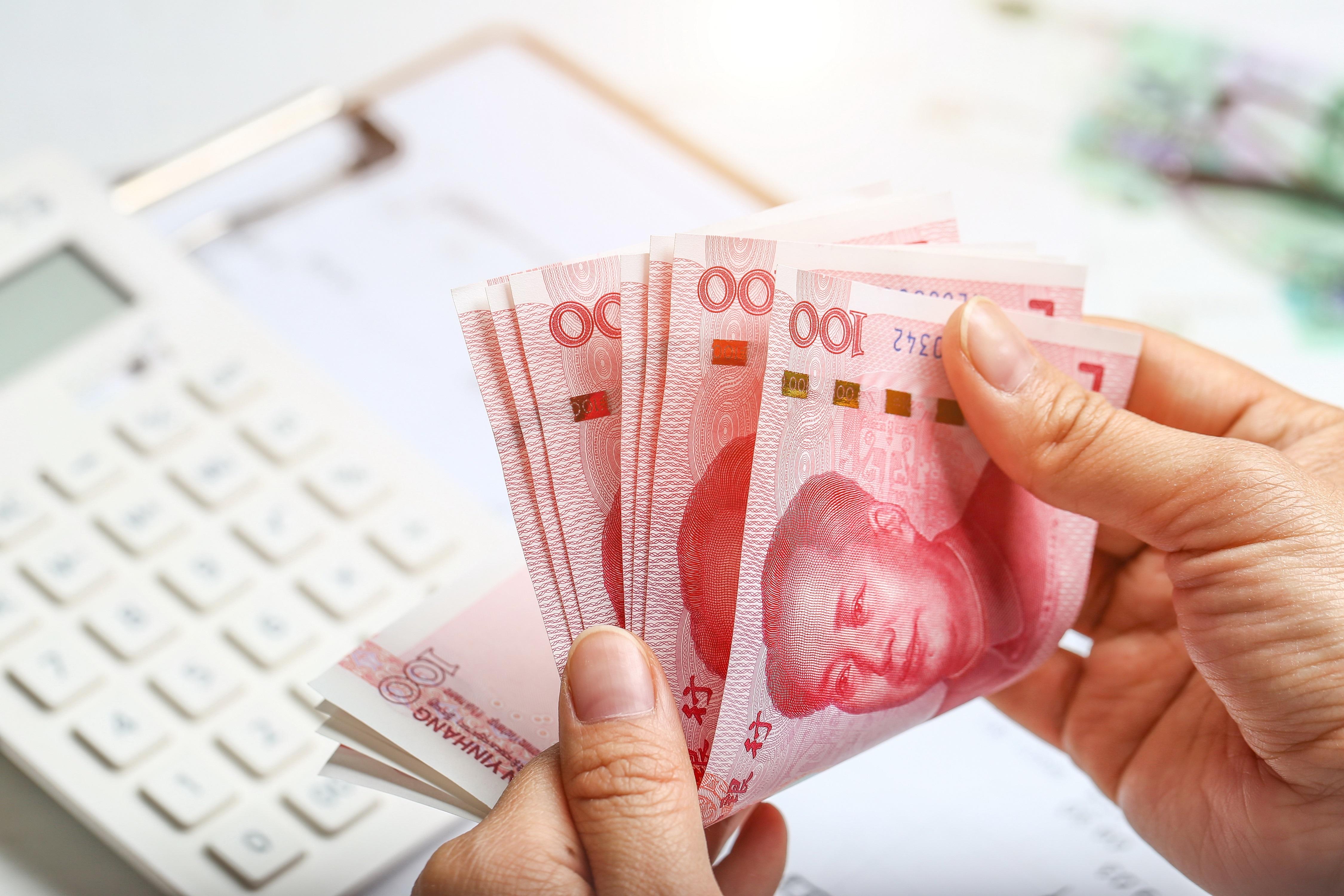
To bypass Chips, China has developed its own Cross-Border Interbank Payment System, or Cips, which clears payments in yuan. In March, when the Iran war flared up, Cips handled a record 921 billion yuan ($135 billion) in average daily volumes, a near-50 per cent jump from the previous month.  


Although that’s a fraction of the $2.2 trillion that passes through New York, the growth of the alternative network is worth noting. The datareveals a remarkable transformation, galvanised by structural and geopolitical shifts. In 2021, Cips was a quiet utility, averaging roughly 350 billion yuan in daily turnover. By early 2024, it had breached the 600 billion-yuan ceiling.


The trigger was Washington’s December 2023 executive order authorising secondary sanctions on foreign banks facilitating trade for Russia. Fearing a total disconnect from the dollar, banks in the UAE, Turkey, and Central Asia scrambled to migrate their settlement to the yuan. The mainland’s weak domestic economy also helped. Disinflation led to lower onshore interest rates just when the cost of borrowing dollars was rising. That boosted the attractiveness of the Chinese currency in trade financing.


Hong Kong banks recently doubled their permissioned access to onshore Chinese liquidity amid strong client demand for yuan-denominated loans. Last year, DBS Group Holdings Ltd.’s Singapore unit became an overseas direct participant of Cips. Banks connecting directly to Cips using its internal messaging protocol — bypassing Swift entirely — have grown by nearly 40 per cent since 2024, reaching 193 institutions. With just 42 members, Chips, the New York club, is a lot more elitist. 


As analysts Benn Steil and Yuma Schuster noted in a Council on Foreign Relations report last month, the decline in the yuan’s share in Swift payments data is misleading: It doesn’t mean less usage; it means that trade messages have gone private and become less visible. 


Back in 2020, Syracuse University professor Daniel McDowell argued that the more the US wields its unmatched financial power, the less it may have left. Subsequent events have proved him right. After all, if payments accompanying 20 per cent of the world’s oil and gas can move through a digital pipe that the US Treasury cannot see, then America’s dominance of global finance has effectively been handed an expiry date. 

 
(Disclaimer: This is a Bloomberg Opinion piece, and these are the personal opinions of the writer. They do not reflect the views of www.business-standard.com or the Business Standard newspaper)


Source link

Fake trading apps, shell firms: ₹800 cr investment scam busted by UP cops

Fake trading apps, shell firms: ₹800 cr investment scam busted by UP cops


If you’ve ever received a WhatsApp message promising “guaranteed returns” in IPOs, crypto or forex trading, this story should worry you.The Uttar Pradesh Special Task Force has busted two major fraud rackets that together duped investors of hundreds of crores—using exactly the kind of tactics many retail investors encounter daily.


And the alarming part? These scams were designed to look completely legitimate.


In one of the cases, the Special Task Force (STF) arrested Rupesh Bhardwaj, 26, a resident of Sahibabad in Ghaziabad, from Gurugram on Wednesday, officials said on Thursday. 


He was charged duping investors with promises of high returns in the share market and IPOs, following a complaint from the Securities and Exchange Board of India (SEBI).


Rupesh Bhardwaj, allegedly posed as a stock market expert.


He:


  • Promised high returns in shares and IPOs

  • Used a firm called X Traders Enterprises

  • Showed fake share certificates and documents


But here’s the key detail most investors miss:


The firm was not registered with Securities and Exchange Board of India. That’s often the first red flag.


He shut down his Ghaziabad office and went into hiding in Gurugram as complaints mounted, the officials said.


During his arrest, the police seized forged Aadhaar cards, four mobile phones, a PAN card, bank passbooks, and bank statements.


Investigations revealed that around 14 cyber fraud complaints had been registered against him across several states, including Uttar Pradesh, Maharashtra, Karnataka, Rajasthan, Gujarat, and Puducherry.


The bigger crypto-forex scam: ₹700–800 crore network


The second case is even more worrying in scale.


The alleged mastermind, Jatindra Ram, ran a nationwide network through a company called Sea Prime Capital.


Here’s how the scam pulled people in:


  • Promised high returns in cryptocurrency and USDT

  • Used social media ads, seminars and agents

  • Built a network of 3,500+ agents

  • Created over 30,000 user accounts


 Total funds involved: ₹700–800 crore


Jatindra Ram was nabbed on Wednesday evening from a restaurant on Delhi Road in Saharanpur in connection with a case registered at Masuri Police Station in Ghaziabad.


Officials said Jatindra Ram lured investors into an online trading company named ‘Sea Prime Capital’ by promising high returns in cryptocurrency and USDT, using advertisements, social media campaigns and seminars to attract investors.


During interrogation, Jatindra Ram revealed that he and his associates – Mohit Rana, Gaurav Singh, Geeta Hazarika – operated a well-organised network with over 3,500 agents across the country, creating more than 30,000 user IDs, and managing funds totaling Rs 700-800 crore.


The STF said the gang used a trading application called MT-5, which is not authorised in India, to create fake user accounts and display inflated profits to mislead investors.


Some victims were given initial returns to build trust and encourage further investments.


The collected funds were allegedly converted into cryptocurrency and transferred to accounts in Dubai and Mauritius, where the money was used to buy assets.


The accused created shell companies in India to launder the proceeds and present them as legitimate income.


Jatindra Ram was booked under the Bharatiya Nyaya Sanhita (BNS), the Prevention of Money Laundering Act, 2002, and the Foreign Exchange Management Act, 2000.


Why victims believed it


The scam didn’t look like a scam.


Victims were shown:


  • Fake profits on a trading app (MT-5)

  • Rising account balances

  • Initial payouts to build trust


This is a classic tactic:


Give small returns first → build confidence → push for bigger investments


By the time investors realised the truth, the money had already been moved.


Where the money went


According to investigators:


Funds were converted into cryptocurrency


Transferred to accounts in Dubai and Mauritius


Used to purchase assets abroad


Routed through shell companies to appear legitimate


This makes recovery extremely difficult.


Why this matters to you


These cases are not rare exceptions—they reflect a growing pattern.


Today’s scams are:


  • More organised

  • More digital

  • More convincing


And they specifically target:


 Retail investors looking for higher returns


The red flags you should never ignore


If you’re investing, watch out for these warning signs:


  • “Guaranteed returns” in stock market or crypto

  • Unregistered firms or advisors

  • Apps showing unusually high profits

  • Pressure to invest quickly

  • Initial small payouts to build trust


If it sounds too good to be true—it usually is.


With inputs from PTI


Source link

Gold price falls ₹10 to ₹1,51,470; silver down ₹100, trading at ₹2,54,900

Gold price falls ₹10 to ₹1,51,470; silver down ₹100, trading at ₹2,54,900


Gold Price Today: The price of 24-carat gold fell ₹10 in early trade on Friday, with ten grams of the precious metal trading at ₹1,51,470, according to the GoodReturns website. The price of silver also declined by ₹100, with one kilogram of the precious metal selling at ₹2,54,900.


The price of 22-carat gold decreased by ₹10, with ten grams of the yellow metal selling at ₹1,38,840. 


The price of ten grams of 24-carat gold stood at ₹1,51,470 in Mumbai, Kolkata, Hyderabad and ₹1,52,720 in Chennai.


In Delhi, the price of ten grams of 24-carat gold stood at ₹1,51,620.


In Mumbai, the price of ten grams of 22-carat gold was ₹1,38,840, the same as in Kolkata, Bengaluru, Hyderabad, and ₹1,39,990 in Chennai.


In Delhi, the price of ten grams of 22-carat gold stood at ₹1,38,990.  


The price of one kilogram of silver in Delhi, Kolkata, and Mumbai stood at ₹2,54,900. 


The price of one kilogram of silver in Chennai stood at ₹2,59,900.


US gold prices edged lower on Friday as the dollar firmed, but the metal remained on course for a third consecutive weekly gain as renewed US-Iran ceasefire optimism softened inflation fears and expectations for higher US interest rates.


Spot gold was down 0.2 per cent at $4,755.84 per ounce by 0055 GMT. The metal, however, has gained 1.8 per cent so far this week. US gold futures for June delivery fell 0.8 per cent to $4,779.20. 


Spot gold has fallen about 10 per cent since the US-Israel conflict with Iran erupted on February 28, highlighting sharp swings in investor sentiment during the ongoing crisis.


Among other metals, spot silver rose 0.1 per cent to $75.11 per ounce, platinum lost 1.2 per cent to $2,077.67, and palladium fell 1.1 per cent to $1,540.03.


(with inputs from Reuters)


Source link

Kotak Mutual Fund launches Multi Asset Active Fund of Fund

Kotak Mutual Fund launches Multi Asset Active Fund of Fund


Nilesh Shah, Managing Director at Kotak Mahindra AMC (File Photo: Kamlesh Pednekar)


Kotak Mutual Fund on Thursday announced the launch of Kotak Multi Asset Active Fund of Fund (FoF), an asset allocation product which will dynamically invest into equity-oriented schemes, debt-oriented schemes and commodity-based schemes.


The scheme will invest 10-80 per cent of the corpus into equity and hybrid schemes, 10-60 per cent into debt funds, and 10-30 per cent into commodity ETFs. Nilesh Shah, Managing Director at Kotak Mahindra AMC, said the scheme solves the complexity of allocating across schemes.  


“Most investors either over-monitor and overtrade, or they set it and forget it and end up with a lopsided portfolio. The FoF would endeavour to solve this by doing the asset allocation, rebalancing, and scheme selection across Kotak and other AMC schemes within a single fund structure,” he said.  (Disclosure: Entities controlled by the Kotak family have a significant holding in Business Standard Pvt Ltd)


First Published: Apr 09 2026 | 11:16 PM IST


Source link

Oil rebounds above 0 as Hormuz remains blocked, supply fears linger

Oil rebounds above $100 as Hormuz remains blocked, supply fears linger


Oil recovered after its biggest one-day drop since April 2020, as the Strait of Hormuz remained largely blocked and Israeli attacks on Lebanon threatened to derail the fragile ceasefire in the Middle East. 


West Texas Intermediate for May climbed above $102, while Brent edged up to about $99 a barrel after plunging more than 13% on Wednesday. Iran’s semi-official Fars news agency reported that passage of tankers through the strait was halted after Israeli strikes, though US Vice President JD Vance said there were “signs that the straits are starting to reopen.”


The boss of the UAE’s biggest oil company said that Hormuz was still shut and that Iran is restricting access to passage through the vital waterway. Iran’s deputy foreign minister told a UK news outlet that ships need the country’s consent to transit. 


The near-closure of the waterway — through which about a fifth of the world’s oil and liquefied natural gas flowed before the US and Israel first struck Iran at the end of February — has caused the biggest-ever oil market supply disruption. Vance is slated to lead a US delegation to Islamabad for direct talks with the Iranian side on Saturday morning local time.


On Thursday, two fully-laden Chinese oil tankers in the Persian Gulf were approaching the strait, potentially putting them on track to become the first such vessels to cross since the ceasefire was announced. A successful passage is not guaranteed, and there’s been little change in traffic over the past day.


“While paper markets tend to price a full reopening, the physical reality is that any recovery in flows will be gradual — and hasn’t meaningfully begun,” said Rebecca Babin, a senior energy trader at CIBC Private Wealth Group. 


Iranian Parliament Speaker Mohammad-Bagher Ghalibaf said in a statement on X that three clauses of the ceasefire proposal have been violated.


Meanwhile, the Islamic Republic’s Ports and Maritime Organization announced two designated safe routes for vessels entering and exiting the strait, according to state-run Nour News. The passageways were established to avoid possible mines, according to the report.


White House Press Secretary Karoline Leavitt reiterated Wednesday that President Donald Trump expected the Strait of Hormuz to be “reopened immediately.”


Trump said in a social media post that US military personnel and weaponry would remain in place around Iran “until such time as the REAL AGREEMENT reached is fully complied with.” If Iran doesn’t comply, ‘the ‘Shootin’ Starts,’ bigger, and better, and stronger than anyone has ever seen before,” he said.


Even once Hormuz transit picks up, the return of energy supplies won’t be instant. Output has been reduced at oil and gas fields, while refineries have curtailed production or shut down. Some of those will take weeks — or possibly longer — to return to normal. Traders continued to seek North Sea crudes at elevated premiums in a sign that supply remains tight. 


“The ceasefire announcement has not yet lifted oil flows through the Strait of Hormuz but a quick normalization is largely in the price, in our view,” Barclays analyst Amarpreet Singh said in a note. “A potential delay or further escalation poses upside risks to our $85/b Brent forecast for 2026.”


Source link

YouTube
Instagram
WhatsApp