West Asia de-escalation hopes boost Wall Street as crude prices climb

West Asia de-escalation hopes boost Wall Street as crude prices climb


Global shares rose on Tuesday and Brent crude oil prices were poised for a record monthly increase, as traders came to the end of a tumultuous March dominated by the Iran war. 


Iran attacked a fully-loaded oil tanker off Dubai early on Tuesday after President Donald Trump warned the US would obliterate Iran’s energy plants and oil wells if it does not open the Strait of Hormuz. 


Still, markets got a lift from a Wall Street Journal report that Trump had told aides he is willing to end the military campaign even if the strait remains largely closed. 


The war, which began with the US and Israel launching coordinated strikes against Iran on February 28, has sent shockwaves across global markets and raised the risk of a worldwide recession. MSCI’s gauge of stocks across the globe rose 10.42 points, or 1.08 per cent, to 971.29. 


“We’re in an oversold condition and then that coupled with this element of potentially encouraging news has helped to shape the bounce that we’re seeing today,” said Fiona Cincotta, senior market analyst at City Index. She cautioned, however, that the move should be treated carefully. 


On Wall Street, the Dow Jones Industrial Average rose 0.9 per cent to 45,646, the S&P 500 added 1.2 per cent to 6,418 and the Nasdaq Composite climbed 2.02 per cent to 21,214.90. 


Source link

Weak rupee, higher fuel costs, Iran war weigh on IndiGo's FY27 outlook

Weak rupee, higher fuel costs, Iran war weigh on IndiGo's FY27 outlook


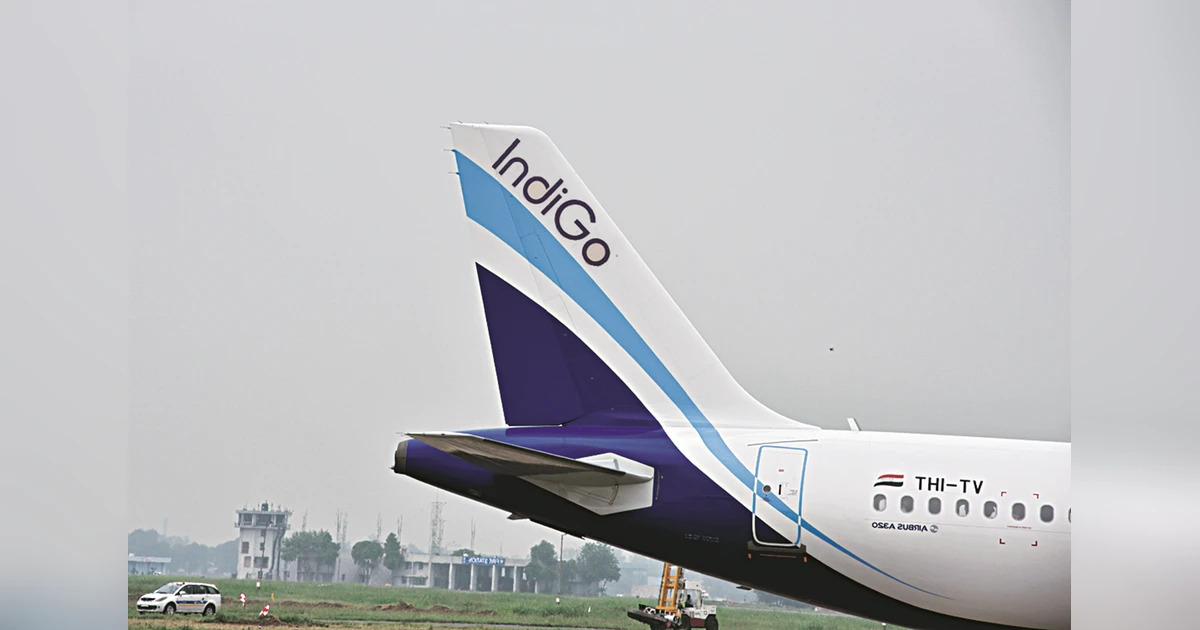
The stock of the country’s largest listed company, InterGlobe Aviation (IndiGo), has slipped 18 per cent to Rs 3,943 a share since the start of the Iran war. While the Flight Duty Time Limitation (FDTL) norms had hit the December quarter (Q3) financials, the market leader faces demand, cost, and revenue headwinds in Q4FY26 and FY27 on account of hostilities in the Gulf region. Given the negative impact of the same, brokerages have cut their margin and net profit estimates for Q4 as well as FY27. While these factors will weigh on the stock, the appointment of Willie Walsh as the chief executive officer replacing Pieter Elbers, who resigned on March 10, could offer some stability to the stock price.


The immediate impact of the Iran war will be on revenues. Analysts led by Meet Jain of Motilal Oswal Research point out that the escalation of the US-Iran conflict from late February 2026, compounded by the continued Pakistan airspace closure for Indian carriers, has effectively neutralised IndiGo’s entire Middle East and large portions of its European network for the time being. This resulted in the progressive closure and restriction of the Middle East airspace across a corridor that handles a quarter of global international air traffic by passenger volume. The suspension of the Gulf routes, which account for about 18–20 per cent (or Rs 14,500 crore to Rs 16,000 crore) of total revenue on an annual basis, not only impacts travel during the month but also hits advance sales, creating a revenue shortfall in Q4FY26.


The other impact is on the cost front given the sharp rise in Brent crude oil prices. They have gone up by over 60 per cent from under $70 per barrel earlier in the year to over $115 per barrel currently. Aviation turbine fuel, which is linked to crude oil prices, rose in March after witnessing cuts in January and February. Every dollar per barrel increase in crude oil prices reduces profitability by Rs 360 crore, estimates Motilal Oswal Research. The brokerage has estimated an incremental cost impact of Rs 1,600 crore as fuel forms about a third of overall costs.


What has aggravated the cost base is a weak rupee and higher non-fuel cost per available seat kilometres (CASK). ICICI Securities says that compared to FY25 CASK (excluding fuel) of Rs 3.09, 9MFY26 CASK has been Rs 3.17. Analysts led by Ansuman Deb of the brokerage factor in a CASK of Rs 3.54 for Q4FY26, while the estimates for FY27 and FY28 are pegged at Rs 3.40 and Rs 3.37, respectively. Beyond generic inflation and a weaker rupee, IndiGo also has higher capex and finance leases, which will limit increases in cash and profit margins, says the brokerage.


Factoring in higher fuel costs, rupee depreciation, and lower international operations leading to adverse operating leverage, Motilal Oswal Research has reduced its FY26 and FY27 operating profit before rental estimates by 7 per cent each. It has cut its net profit estimate for FY26 by 31 per cent, while those for FY27 and FY28 have been reduced by 15 per cent and 10 per cent, respectively. Though Motilal Oswal Research has reduced its target price to Rs 5,500 per share, it has maintained a buy rating.


ICICI Securities, too, has a buy rating, though it has cut its target price from Rs 5,680 to Rs 5,210 per share. The elevated crude and cracks, along with the rupee’s sharp depreciation, have led to an increase in cost assumptions, which is expected to be partially offset by price hikes, says the brokerage. Accordingly, its FY27 estimates now reflect a sharp downward revision, while FY28 estimates remain intact — assuming a partial recovery in spreads and volume growth.


Source link

RBI Supervisory Data Quality Index for commercial banks edges up

RBI Supervisory Data Quality Index for commercial banks edges up


The Reserve Bank of India (RBI) has released Supervisory Data Quality Index (sDQI) for commercial banks or SCBs for December 2025. It measures data quality in terms of the Accuracy, Timeliness, Completeness and Consistency in the submission of returns. The objective of sDQI is to assess the adherence to the principles enunciated in the Master Direction on Filing of Supervisory Returns 2024. The overall Supervisory Data Quality improved with the sDQI index moving up to 90.9 in quarter ended Dec-25 compared to 90.7 in Sep-25. The sDQI for SCBs covers 87 SCBs and their key returns. Biggest improvement was seen in accuracy while timeliness component saw a decline on quarterly basis.

Powered by Capital Market – Live News


Disclaimer: No Business Standard Journalist was involved in creation of this content

First Published: Mar 31 2026 | 5:31 PM IST


Source link

Market outlook for FY27 remains structurally optimistic once geopolitical tensions, crude prices ease: Analysts

Market outlook for FY27 remains structurally optimistic once geopolitical tensions, crude prices ease: Analysts


The outlook for Indian markets in the next fiscal year remains structurally optimistic once geopolitical tensions subside and crude oil prices stabilise, analysts said, even as domestic equities ended FY26 on a bearish note, with Sensex plunging 7 per cent.


In 2025-26, the BSE benchmark plunged 5,467.37 points, or 7 per cent, and the NSE Nifty dropped 1,187.95 points, or 5 per cent.


The year was dominated by global macro uncertainty, persistent geopolitical tensions, elevated crude prices, and aggressive FII (Foreign Institutional Investors) outflows, which collectively capped upside momentum, an expert said.


Markets have been reeling under the immense pressure ever since the West Asia conflict began, creating chaos, rattling energy markets globally and generating a risk-off environment.


This month alone, the BSE benchmark crashed 9,339.64 points, or 11.48 per cent, since the beginning of the West Asia conflict on February 28.


“The current bearish trend is largely externally driven rather than fundamentally broken. Elevated crude oil prices, geopolitical risks in the Middle East, and sustained FII selling have created a risk-off environment. At the same time, stretched valuations at the start of the fiscal year made markets vulnerable to corrections,” Ponmudi R, CEO – Enrich Money, said.


Brent crude, the global oil benchmark, jumped to $115 per barrel on Friday’s trading.


“Looking ahead to the next fiscal year, the outlook for Indian markets remains structurally optimistic once the immediate geopolitical dust settles. The first half of FY27 will likely see continued sideways movement and heightened volatility as inflation and interest rate trajectories adjust to the recent energy shock.


“However, robust domestic institutional inflows and a strong corporate earnings pipeline provide a solid floor against further severe downsides, setting the stage for a strong recovery in the latter half of the year,” Santosh Meena, Head of Research at Swastika Investmart Ltd, said.


The current bearish trend in domestic equities is undeniably unsettling, but it represents a predictable reaction to severe macroeconomic shocks rather than a failure of India’s core corporate fundamentals, Meena said.


Foreign investors have pulled out over Rs 1 lakh crore from domestic equities in March, making it the worst monthly outflow, weighed down by escalating tensions in West Asia and a weakening rupee.


On foreign institutional investors, Meena said FIIs are expected to return to Indian equities, but a significant reversal of the recent exodus hinges heavily on the stabilisation of global macroeconomic headwinds.


“For foreign capital to flow back aggressively, there must be a definitive de-escalation of the West Asia conflict, a cooling of Brent crude prices, and a stabilisation of the Indian Rupee against the dollar,” Meena noted.


FY26 has been a tale of two distinct phases for Indian equities, Hariprasad K, Research Analyst and Founder, Livelong Wealth, said.


“The first half reflected strength and optimism, while the closing quarter exposed the market’s vulnerability to global disruptions,” he noted.


He explained that markets entered the fiscal year on a strong footing, supported by domestic liquidity, steady earnings, and retail participation and indices even scaled record highs towards the end of the calendar year 2025.


“However, the final quarter saw a sharp reversal, driven largely by external shocks. Escalating geopolitical tensions in West Asia, a spike in crude oil prices, and persistent global uncertainty triggered a significant risk-off sentiment,” Hariprasad added.


Looking ahead to the next fiscal, the outlook remains cautiously optimistic, with recovery likely to be earnings-driven rather than sentiment-led, he said.


The BSE benchmark index hit its record high of 86,159.02 on December 1, last year.


Ravi Singh, Chief Research Officer, Master Capital Services Limited, said, “Looking ahead, the outlook remains cautiously positive. If global factors, like crude prices and lower interest rates, ease markets can stabilise and regain momentum. Earnings growth will be the key driver. In the near term, volatility may continue, but over time, the market is likely to find its footing again”.


Echoing a similar sentiment, Ponmudi said, “Going into the next fiscal, expect markets to remain volatile in the near term but gradually transition into a recovery phase, especially once global uncertainties ease and earnings visibility improves”.


Equity benchmark indices Sensex and Nifty ended the last trading session of the 2025-26 fiscal year over 2 per cent lower on Monday. The market capitalisation of BSE-listed companies stood at Rs 4,12,41,172.45 crore on the last trading day of FY26.


Source link

RBI Supervisory Data Quality Index for commercial banks edges up

Japanese stocks slide sharply amid Middle East uncertainty


Japans stock markets extended their losses on Tuesday, with the Nikkei 225 falling 1.58% to 51,064 and the broader Topix Index dropping 1.26% to 3,498, marking a fourth straight day of declines. Investor sentiment remained under pressure due to rising uncertainty around the Middle East conflict.

For the month of March, both indices recorded steep losses, with the Nikkei down 13.23% and the Topix falling 11.19%, their worst monthly performances since the 2008 global financial crisis.

Japan is also facing higher energy costs as the conflict involving Iran continues, highlighting the countrys dependence on oil imports from the region. Mixed signals from the US on resolving the situation have added to market concerns, with reports suggesting President Donald Trump may consider ending military action without fully reopening the Strait of Hormuz.


Most sectors ended lower on Tuesday, led by declines in technology, financial, consumer, and defense stocks.

Powered by Capital Market – Live News

Disclaimer: No Business Standard Journalist was involved in creation of this content

First Published: Mar 31 2026 | 4:50 PM IST


Source link

RBI Supervisory Data Quality Index for commercial banks edges up

China stocks fall as geopolitical tensions outweigh positive data


Chinas stock markets ended Tuesday lower, with the Shanghai Composite slipping 0.8% to 3,892 and the Shenzhen Component dropping 1.8% to 13,478. Both indexes recorded their worst monthly performance since January 2024, as ongoing conflict in the Middle East continued to weigh on investor sentiment.

Earlier in the session, markets found some support after data showed improvement in Chinas economy. Manufacturing activity rose to a one-year high, while the services sector also returned to growth, pointing to a broader recovery.

Despite this, investors remained cautious due to geopolitical uncertainty. Concerns increased after US President Donald Trump indicated a possible halt to US operations against Iran without reopening the Strait of Hormuz, while Iran reportedly targeted a Kuwaiti oil tanker near Dubai.


Energy stocks, however, stood out with strong gains for the month. PetroChina jumped 12.3%, marking its best monthly performance since October 2025, while CNOOC rose 11.5%, its strongest since January. Both companies benefited from rising oil price expectations linked to the Middle East tensions.

Powered by Capital Market – Live News

Disclaimer: No Business Standard Journalist was involved in creation of this content

First Published: Mar 31 2026 | 4:50 PM IST


Source link

YouTube
Instagram
WhatsApp




