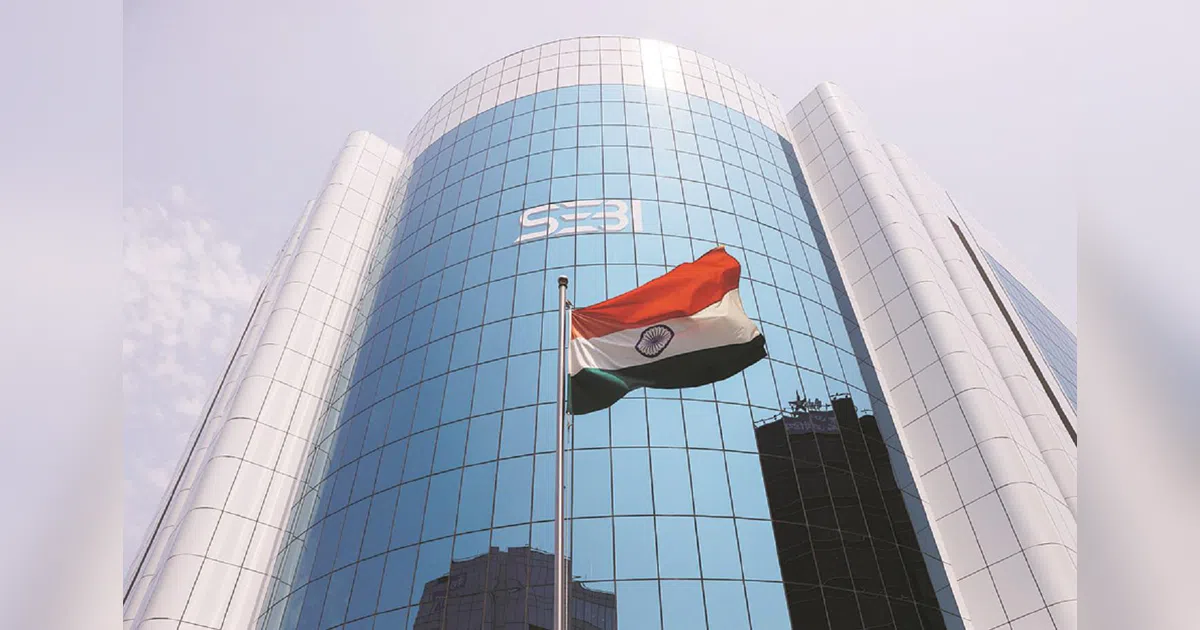
JP Morgan Chase Bank NA settles Sebi case for ₹34.42 lakh over FPI lapses

JP Morgan Chase Bank NA settles Sebi case for ₹34.42 lakh over FPI lapses


Polite Powertech files IPO papers 


Integrated power infrastructure EPC company Polite Powertech has filed its draft red herring prospectus (DRHP) with market regulator Sebi to raise funds through an initial public offering (IPO). 


The IPO comprises a fresh issue of 1o million equity shares and an offer for sale of 2.5 million equity shares. 


Proceeds from the issue will be utilised for funding working capital requirements of the company and general corporate purposes. Polite Powertech is an integrated power infrastructure engineering, procurement, and construction (EPC) company, engaged in the design, supply, installation, testing, and commissioning of power transmission, distribution, and renewable energy projects.


CMPDIL’s IPO booked 7% on Day 1 


The initial public offering (IPO) of Central Mine Planning and Design Institute, an arm of state-owned Coal India, got subscribed 7 per cent on the first day of share sale on Friday. 


The IPO received bids for 52,44,320 shares, as against 7,97,89,500 shares on offer, according to NSE data. The category for retail individual investors (RIIs) received 10 per cent subscription, while the quota meant for non-institutional investors got subscribed 5 per cent.Central Mine Planning and Design Institute on Wednesday said it has mobilised ₹470 crore from anchor investors. [PTI]



Source link

Sensex and Nifty rise after rout, volatile crude oil prices cap gains

Sensex and Nifty rise after rout, volatile crude oil prices cap gains


Indian equities rose on Friday as crude prices eased at the start of the day, emboldening investors to hunt for bargain-buying opportunities after the selloff in the previous session. But a surge in crude prices during the day made investors jittery, capping the gains. 


The Sensex rose as much as 1,079 points or 1.5 per cent before ending the session at 74,533, a gain of 326 points or 0.4 per cent. The Nifty, meanwhile, ended the session at 23,115, a gain of 112 points or 0.5 per cent. The total market capitalisation of BSE-listed firms rose by ₹3 trillion to ₹429 trillion. The gains on Friday helped both indices to end the week with minor losses. During the week, the Sensex declined 0.04 per cent, and the Nifty fell 0.2 per cent. Both indices have posted declines in the past four weeks. 


The gains on Friday came a day after benchmark indices posted their steepest falls in nearly two years amid a surge in oil prices. Higher oil prices tend to push up inflation in India and hurt economic growth, as the country imports most of its crude oil requirements. News reports suggested that Iran went ahead with attacks on Gulf states on Friday, and the US was considering taking over Iran’s Kharg Island — a key oil export site — to put pressure on Tehran to reopen the Strait of Hormuz. The rupee hit an all-time low against the US dollar and was at 93.7. The Brent crude was trading at $105.4, a gain of 0.3 per cent. 


“Despite a positive start, the underlying tone remained fragile, with macro headwinds continuing to influence market direction. The near-term outlook remains cautious, with pressure from elevated crude oil prices and ongoing geopolitical tensions in West Asia. Sentiment continues to be weighed down by persistent foreign investor selling,” said Siddhartha Khemka, head of research for wealth management at Motilal Oswal Financial Services. 


Market breadth was strong, with 2,414 stocks advancing and 1,863 declining. More than two-thirds of Sensex stocks gained. Reliance Industries, which rose 2.1 per cent, was the biggest contributor to Sensex gains, followed by Infosys, which rose 2.8 per cent. HDFC declined 2.4 per cent. It was the worst-performing Sensex stock and the biggest drag on the index. The private lender’s stock declined in the last two sessions after its chairman abruptly resigned, citing ethical differences. 


Foreign Portfolio Investors (FPIs) were net sellers worth ₹5,518 crore, while domestic institutions were net buyers of ₹5,706 crore. 


“For the Nifty, the 23,400-23,600 zone is likely to act as a resistance area in case of a rebound, while 22,800 remains a critical 

support level. A break below this level could lead to further downside towards the 22,500 mark, despite the oversold conditions,” said Ajit Mishra, senior vice president-research of Religare Broking. 


Source link

RBI Central Board of Directors assesses evolving geopolitical developments and their impact on financial markets

RBI Central Board of Directors assesses evolving geopolitical developments and their impact on financial markets


The 622nd meeting of the Central Board of Directors of Reserve Bank of India was held today in Patna under the Chairmanship of Sanjay Malhotra, Governor. The Board assessed the emerging global and domestic economic scenario, including the evolving geopolitical developments and their impact on financial markets, along with associated challenges. The Board approved the Banks budget for the accounting year 2026-27 and also the Banks Medium Term Strategy Framework (Utkarsh 3.0) for the period 2026-29.

Powered by Capital Market – Live News


Disclaimer: No Business Standard Journalist was involved in creation of this content

First Published: Mar 20 2026 | 6:31 PM IST


Source link

RBI Central Board of Directors assesses evolving geopolitical developments and their impact on financial markets

Soaring oil prices and widening trade deficit sends INR tumbling sharply beyond Rs 93 per dollar; Further downside likely


The Indian rupee crashed 82 paise, or nearly 1 per cent, to settle at an all-time low of 93.71 (provisional) against the US dollar on Friday, weighed down by persistent foreign fund outflows and a steep rise in crude oil prices amid mounting geopolitical tensions. The Indian rupee is under tremendous pressure as surging crude oil prices and a shift toward risk-aversion dented investor sentiments. Moreover, heightened geopolitical uncertainty risks are driving energy costs higher, which could widen the trade deficit and stoke inflationary pressures. Rebound in domestic equities and slight retreat in dollar from 100 mark failed to provide any support to the local unit. Indian shares rebounded on Friday after witnessing one of their sharpest intraday declines in recent sessions the previous day amid broad-based selling across sectors. Sensex: closed at 74,532.96, up 325.72 points (+0.44%) while NSE Nifty 50: settled at 23,114.50, gaining 112.35 points.


Powered by Capital Market – Live News

Disclaimer: No Business Standard Journalist was involved in creation of this content

First Published: Mar 20 2026 | 5:50 PM IST


Source link

Indian asset managers dump government bonds at record pace on oil shock

Indian asset managers dump government bonds at record pace on oil shock


Mutual funds have sold Indian government bonds at a record pace in March so far, as the Iran war drove up ​oil prices, heightening inflation risks, pushing the rupee to record ​lows and prompting a broad selloff across the debt market.


This has led some asset ‌managers to shift to short-duration corporate debt where they see greater value.


Mutual funds have net sold government bonds worth 356 billion rupees ($3.82 billion) so far this month, a record for any month, clearing house data showed.


Brent crude’s surge to near $120 per barrel has intensified inflation concerns and pushed the rupee to a record low beyond 93 per dollar, prompting investors to demand higher yields on both government and corporate bonds.


Corporate bonds have come under greater pressure than sovereign bonds, in line with broader risk-off sentiment. LSEG AAA-rated corporate bond yield with 2-5 year maturity has jumped 20-25 basis ‌points, while its government bond counterpart is up less than 10 bps.


As corporate-government bond spreads widen, some investors see value in the former.


Corporate bonds have become “more attractive from a risk-reward perspective”, said Basant Bafna, head of fixed income at Mirae Asset Investment Managers (India).


Mutual funds’ selling of government bonds reflect heightened caution due to the Iran war, alongside improving relative value in corporate bonds, Bafna said.


Fund managers are adjusting strategies to take advantage of ​current market conditions.


“The strategy is largely to shift towards segments offering better carry and relative value,” said ‌Anurag Mittal, senior executive vice president and head of fixed income at UTI AMC.


Moderate-duration funds were favouring 1-3 year accrual, while active duration strategies are selectively investing ​in longer-end ‌state debt and money market securities, Mittal added.


Mutual fund managers said wider corporate bond spreads were ‌creating an opportunity to rebalance portfolios before the financial year-end.


Rajeev Radhakrishnan, CIO-fixed income at SBI Mutual Fund, the nation’s largest fund manager in terms of assets under management, said ‌some ​investors may opt ​to switch to other asset categories in hybrid schemes.


“Apart from tactical positioning to potentially benefit from market dislocations and supply pressures (on government bonds) in the current ‌stage of the ​cycle, moderate duration and credit risks strategies are preferred.”


Source link

RBI Central Board of Directors assesses evolving geopolitical developments and their impact on financial markets

Central Mine Planning & Design Institute IPO subscribed 0.07 times


The offer received bids for 52.44 lakh shares as against 7.97 crore shares on offer.

Central Mine Planning & Design Institute received bids for 52,44,320 shares as against 7,97,89,500 shares on offer, according to stock exchange data at 17:00 IST on Friday (20 March 2026). The issue was subscribed 0.07 times.

The issue opened for bidding on 20 March 2026 and it will close on 24 March 2026. The price band of the IPO is fixed between Rs 163 and 172 per share. An investor can bid for a minimum of 80 equity shares and in multiples thereof.

The issue comprises an offer for sale of 107,100,000 equity shares of Rs 2 face value by the promoters of the company, i.e., Coal India.


The offer being only for sale, no proceeds from the issue accrue to the company apart from listing benefits.

Central Mine Planning & Design Institute (CMPDI), a wholly owned subsidiary of Coal India, is a leading mining consultancy firm in India, providing end-to-end services across exploration, mine planning, environmental management and geomatics. The company plays a key advisory role to the Ministry of Coal and holds a dominant market share of around 61%, with a strong order book of about Rs 925 crore as of December 2025.

Ahead of the IPO of Central Mine Planning & Design Institute on 19 March 2026, the company raised Rs 469.74 crore from anchor investors by allotting 2.73 crore shares at Rs 172 each to 22 anchor investors.

For the nine months ended 31 December 2025, the firm recorded a consolidated net profit of Rs 425.36 crore and sales of Rs 1,489.65 crore.

Powered by Capital Market – Live News


Source link

YouTube
Instagram
WhatsApp



