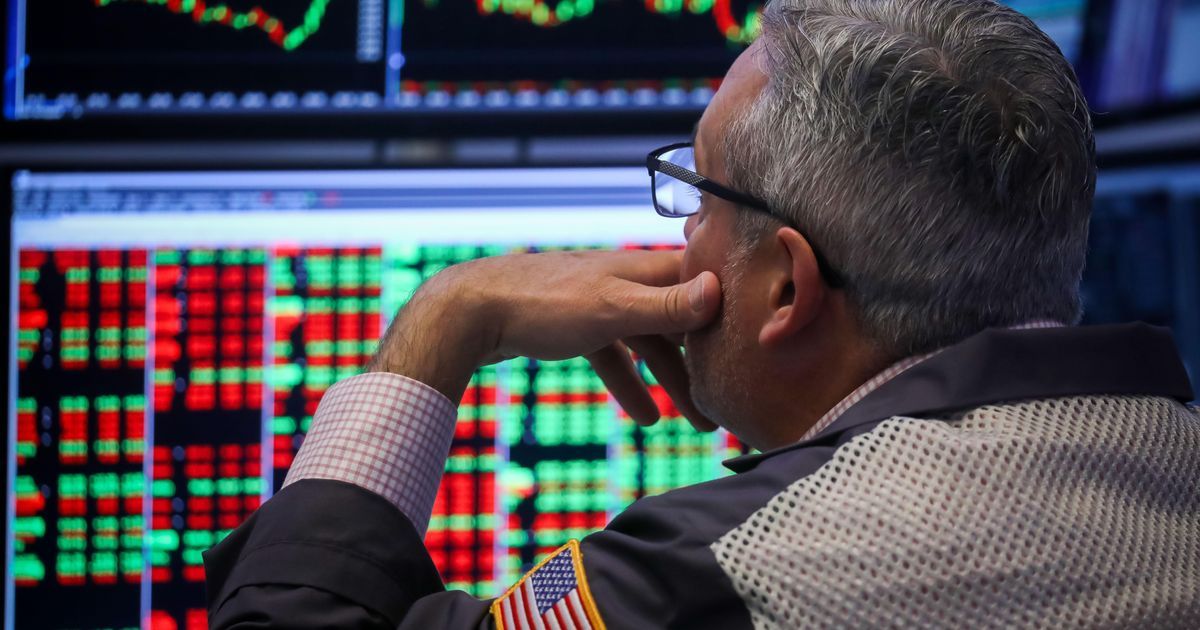
UPL plunges as restructuring plan flags leverage risks

UPL plunges as restructuring plan flags leverage risks


UPL tumbled 14.47% to Rs 643 after the company’s restructuring plan triggered concerns over leverage and the post-rejig capital structure.

The company announced restructuring plan to consolidate its India and international crop protection businesses into a new listed entity, UPL Global Sustainable Agri Solutions (UPL Global).

Under the scheme, UPL will first amalgamate UPL Sustainable Agri Solutions (SAS) with itself. This will be followed by a vertical demerger of its India crop protection business into UPL Global, along with the amalgamation of UPL Corp, which houses the international crop protection business, into UPL Global.

UPL Global Sustainable Agri Solutions will be listed on stock exchanges and will house both the India and international crop protection platforms upon completion of the proposed steps.


Meanwhile, the domestic brokerage has downgraded the stock to hold from buy, citing unresolved concerns around leverage and dilution following the restructuring. Although it marginally raised its target price to Rs 816 per share from Rs 806 earlier implying an upside of around 28% from current levels. The brokerage cautioned near-term risks continue to cap investor confidence. The brokerage flagged that the exercise does not materially reduce net debt at the group level, with leverage being redistributed between the two resulting listed entities.

Mike Frank, CEO of UPL Global, added, Bringing our crop protection businesses under one platform creates the worlds second largest listed pure-play crop protection platform. With a presence in more than 140 countries, this unified platform will enable us to deliver innovations to farmers faster, more efficiently to gain greater market share. This will position us to strengthen operational synergies and drive long-term value for our stakeholders.”

Bikash Prasad, Group CFO of UPL, said, This structural simplification strengthens our financial foundation and accelerates our journey towards a more efficient and resilient UPL. By driving deleveraging, reinforcing balance sheet strength, and improving return metrics, we are creating a sharper, more focused organization designed to deliver sustainable long-term value for all shareholders.

UPL is a global provider of sustainable agricultural products and solutions that cover the entire agrifood value chain. It is one of the largest agriculture companies worldwide, serving growers in more than 140 countries. UPL comprises of four pure-play platforms that include UPL Corporation (UPL Corp); UPL Sustainable Agri Solutions (UPL SAS); Advanta Enterprises; and Superform Chemistries (formerly known as UPL Speciality Chemicals).

The companys consolidated net profit declined 52.2% to Rs 396 crore despite 12.5% increase in net sales jumped 12.5% YoY to Rs 12,269 crore in Q3 FY26 over Q3 FY25.

Powered by Capital Market – Live News


Source link

UPL plunges as restructuring plan flags leverage risks

Market opens on firm note; breadth strong


The domestic equity benchmarks traded with substantial gains in early trade. The Nifty traded above the 25,750 mark. Barring the Nifty IT index, all other sectoral indices on the NSE traded in the green, with the PSU Bank, Financial Services and Auto indices gaining the most.

At 09:30 IST, the barometer index, the S&P BSE Sensex, jumped 611.33 points or 0.74% to 83,426.04. The Nifty 50 index surged 182.40 points or 0.71% to 25,754.05.

The broader market underperformed the frontline indices. The BSE 150 MidCap Index added 0.39% and the BSE 250 SmallCap Index gained 0.98%.

The market breadth was strong. On the BSE, 2,038 shares rose and 977 shares fell. A total of 253 shares were unchanged.


Foreign portfolio investors (FPIs) sold shares worth Rs 934.61 crore, while domestic institutional investors (DIIs) were net buyers to the tune of Rs 2,637.15 crore in the Indian equity market on 20 February 2026, provisional data showed.

Stocks in Spotlight:

Sathlokhar Synergys E&C Global rose 0.89%. The company has secured new orders aggregating to Rs 37.57 crore for the execution of civil and pre-engineered building (PEB) works.

Suraj Estate Developers added 0.96%. The company announced that it has entered into an agreement to acquire a 100% stake in Hally Pacific to undertake the development of a plot situated in Prabhadevi, Mumbai.

Quality Power Electrical Equipments gained 1.49% after the company announced that its material subsidiary, Mehru Electrical and Mechanical Engineers, has received a letter of award (LoA) worth Rs 18 crore for the supply of instrument transformers from a domestic entity.

Numbers to Track:

The yield on India’s 10-year benchmark federal paper rose 0.07% to 6.730 compared with previous session close of 6.674.

In the foreign exchange market, the rupee edged higher against the dollar. The partially convertible rupee was hovering at 90.7300 compared with its close of 90.9450 during the previous trading session.

MCX Gold futures for 2 April 2026 settlement jumped 1.91% to Rs 159,855.

The US Dollar Index (DXY), which tracks the greenback’s value against a basket of currencies, was down 0.34% to 97.39.

The United States 10-year bond yield fell 0.51% to 4.068.

In the commodities market, Brent crude for April 2026 settlement lost 71 cents or 0.71% to $71.05 a barrel.

Global Markets:

Asian stock markets traded mostly with gains on Monday as investors monitored developments related to the United States tariffs.

While the Supreme Court ruled on Friday that the Trump administration unlawfully imposed the measures last year, US President Donald Trump used different legal means to raise global levies to 15% from 10% over the weekend.

Markets in China and Japan were closed for a holiday.

On Friday, U.S. stocks rose after the Supreme Court ruling, potentially providing relief for companies burdened by higher costs from the duties and easing concern about sticky inflation still plaguing the U.S. economy.

The S&P 500 advanced 0.69% and closed at 6,909.51, while the Nasdaq Composite gained 0.9% and settled at 22,886.07. The Dow Jones Industrial Average added 230.81 points, or 0.47%, and ended at 49,625.97. The 30-stock index recovered from a 200-point loss earlier in the session on disappointing economic data.

Data released on Friday showed that the US economy expanded an annualized 1.4% in Q4 2025, the least since Q1 2025, following a 4.4% growth in Q3 and well below widely reported forecasts of 3%, the advance estimate showed.

Powered by Capital Market – Live News


Source link

Aligning ETF Price, Circuits With Market Reality

Aligning ETF Price, Circuits With Market Reality


Sometimes, market stress reveals gaps in trading rules. On February 1, 2026, silver ETFs slipped into sharp discounts (to their NAV) and repeatedly hit lower circuits amid heavy selling. The episode exposed the limitations of the existing price-band mechanism at the exchanges and highlighted the need for more current reference prices and better-calibrated trading limits that reflect real-time market conditions.

Less than two weeks later, on February 13, SEBI released a consultation paper titled “Review of provisions related to Base Price and Price Bands for Exchange Traded Funds” (https://tinyurl.com/sebietf2026), seeking public comments on these issues. They can affect the price at which you are able to buy or sell during volatile sessions.

The consultation paper focusses on two questions: what price should exchanges use as the daily reference point, and what circuit limits should apply to ETFs?

To understand the proposals, it is important to first grasp three key concepts: NAV, iNAV and closing price.

An ETF effectively has two price references. NAV, or Net Asset Value, represents the actual value of what the ETF holds. For example, a Nifty ETF’s NAV reflects the value of its underlying Nifty stocks in the same proportion. NAV is calculated by the fund house at the end of the day and is typically published late at night, around 11 PM. In the case of commodity ETFs with derivative exposure, NAV may even be disclosed the following morning by 9 AM. NAV is therefore considered the fundamental value of the ETF’s holdings.

iNAV, or indicative NAV, is an intraday estimate of the ETF’s NAV. It is published during market hours and keeps updating based on live prices of the underlying assets. It gives investors a live estimate (not the final NAV) of the ETF’s underlying value.

Closing price is the actual traded price of the ETF on the exchange. This price is determined by demand and supply. It reflects premiums or discounts to NAV, liquidity conditions and investor sentiment. Unlike NAV, which is calculated, the closing price is discovered in the market. On exchanges, the official closing price is usually based on a weighted average of trades in the last 30 minutes.

Structural constraints

Currently, exchanges determine ETF price bands using the T-2 day (two trading days earlier) closing NAV. In simple terms, if today is Wednesday, the trading limits may still be based on Monday’s NAV. Exchanges also apply a fixed price band of ±20 per cent on the base price for equity, debt, gold and silver ETFs, while Overnight ETFs investing in TREPs operate with a ±5 per cent band.

This practice introduces a lag. Using T-2 NAV means the reference can be stale when markets move sharply. If markets move sharply on Tuesday, Wednesday’s trading limits remain anchored to older data. This can compress the effective trading range or create a disconnect between prevailing market prices and regulatory guardrails.

For example, the Nippon India Silver ETF’s NAV was ₹359 on January 29, 2026, and that value was used as the base price for the circuit filter on February 1. This set the allowable trading range at ₹287 to ₹431 (±20 per cent). In other words, the trading band was being calculated from an older, higher reference point, even though market prices had already moved lower. As selling intensified, the ETF repeatedly hit the lower circuit. The existing circuit framework left too little room for fresh price discovery, so SEBI and the exchanges allowed an exception. They used the T-1 (previous trading day) traded price of ₹316 as the revised base price, which reset the band to ₹252.5 to ₹379. This gave the market a more workable range and allowed trading to continue. A similar pattern was seen in other silver ETFs as well.

Proposals on base price

SEBI has proposed four possible base-price options for day T:

1.    Previous day’s closing traded price,

2.    Previous day’s closing NAV (if available in time),

3.   Average iNAV in the last 30 minutes, or

4.  Latest available iNAV on T-1.

Arun Sundaresan, Head – ETF, Nippon Life India Asset Management, prefers using the T-1 closing price over NAV. ETFs today have grown significantly in terms of AUM and trading volumes. ETFs, like stocks, undergo price discovery on exchanges. If an ETF is trading at a premium or discount, that reflects genuine demand and supply. Anchoring limits to an older NAV may fail to capture this market dynamics, Sundaresan adds.

However, using the closing price may not be ideal for ETFs with thin trading volumes. Limited trades near market close can distort the final price and may not accurately reflect fair value.

Those who favour NAV argue that it represents the underlying fundamental value of the assets. However, the T-1 day NAV is typically published late in the night, and may not be available early enough for exchanges to set the next day’s bands.

On the other hand, iNAV (either the latest number or the average of the last 30 minutes) is similar to NAV in that it reflects the indicative value of the underlying assets. But it may not capture genuine demand and supply dynamics in the secondary market, including premiums, discounts and liquidity conditions.

Over the long term, the T-1 closing price may offer a better anchor for trading, as it reflects the previous day’s market-discovered close.

Revised circuit limits

The second major proposal relates to price bands. At present, most ETFs operate with a fixed ±20 per cent band. SEBI has proposed a tiered framework.

For equity and debt ETFs, the initial band would be ±10 per cent. If breached, trading would pause for 15 minutes (or 5 minutes in the last half hour). The band could then be relaxed in 5 per cent increments, up to a maximum of ±20 per cent in a day. For gold and silver ETFs, the initial band would be ±6 per cent, with 15-minute cooling-off periods and subsequent relaxations in 3 per cent increments, again capped at ±20 per cent. Overnight ETFs would continue with the existing ±5 per cent band.

The idea is to slow sudden moves without freezing trading for the day.

However, there is another view. Hemen Bhatia, ED & CEO of Angel One AMC, argues that there should be no price band for equity ETFs whose underlying indices have futures. For instance, Nifty 50 index futures and cash market stocks do not have such bands. Similarly, gold and silver are traded globally without price limits. If the underlying asset has no restriction, imposing limits on the ETF may not be necessary. That view supports free price discovery, but regulators may still prefer guardrails for ETFs with uneven liquidity.

Takeaways

For retail investors, these changes do not alter what your ETF owns or how it tracks its benchmark. Instead, they affect how the ETF behaves during volatile sessions. The regulator aims to reduce distortions caused by outdated reference prices and to manage extreme movements in a more orderly manner. Particularly for gold and silver ETFs, where global prices move overnight, the revised framework could improve alignment between domestic trading and international trends.

Published on February 21, 2026


Source link

Blending Equity, Debt & Arbitrage

Blending Equity, Debt & Arbitrage


In an environment where investors seek the benefits of equity taxation without fully embracing equity market volatility, equity savings funds offer a balanced solution.

These hybrid schemes typically allocate across three avenues — equities, debt and arbitrage — with roughly 30–35 per cent in each segment.

By combining cash equity and arbitrage positions, they maintain over 65 per cent exposure to equity instruments, thereby qualifying for favourable equity taxation. This structure makes them particularly appealing to conservative investors who aspire for returns superior to traditional fixed income, yet prefer to avoid the sharper swings associated with pure equity funds.

Mirae Asset Equity Savings Fund has now completed seven years, making it eligible for inclusion in the bl.portfolio Star Track MF Rating process. In the latest edition, the fund has secured a 4-star rating under the framework. Since its launch in December 2018, it has delivered a compounded annualised growth rate (CAGR) of 11.3 per cent.

Asset allocation

The fund operates with a defined structure that blends cash equities, arbitrage strategies and high-quality debt to deliver relatively stable returns with moderated downside risk. It typically maintains net equity exposure in the 37–38 per cent range, within a historical band of 36 to 45 per cent. Gross equity exposure is kept above 65 per cent by combining cash equity with arbitrage positions. The arbitrage component is primarily used to bridge the gap between net equity and the 65 per cent threshold, rather than to actively chase arbitrage spreads.

Changes in net equity exposure within the permitted range are guided by a valuation framework that compares prevailing market price-to-earnings and price-to-book ratios with their long-term averages over the past 12–13 years. Currently, the allocation stands at about 40 per cent in cash equity, 25 per cent in arbitrage and 35 per cent in debt.

Portfolio strategy

Within the equity portion, stock selection is anchored in sustainable double-digit revenue growth visibility over four to five years, return on capital employed above 12–12.5 per cent post-tax, rigorous assessment of management quality and balance sheet strength, and discounted cash flow-based valuation approach. The portfolio broadly follows an 80–85 per cent growth and 15–20 per cent value orientation, with a core-plus-tactical overlay and a minimum three-year investment horizon.

Sectorally, the fund is overweight in private financials, pharma, consumption excluding staples, select auto names, cement and telecom, while remaining underweight in capital goods, infrastructure and IT services. The constructive stance on consumption is supported by policy measures such as tax reductions and lower EMIs, which the fund manager believes are gradually translating into improved demand conditions.

The fund maintains a clear large-cap bias, with at least 60 per cent of the equity allocation typically invested in large-cap stocks. Currently, this proportion is closer to 72–73 per cent, reinforcing stability within the equity sleeve.

The arbitrage allocation is mechanically calibrated to ensure the scheme maintains at least 65 per cent gross equity exposure to qualify for equity taxation. The equities deployed for arbitrage trades are entirely separate from the long (cash) equity portfolio and are not influenced by the stocks held in the core investment book. These arbitrage positions are designed to exploit price differentials between the cash and futures markets, thereby generating relatively low-risk, market-neutral returns rather than directional equity gains.

On the debt side, the mandate focuses on G-secs and high-quality corporate bonds, with a modified duration of less than four years, emphasising capital stability over yield enhancement. Over the past three years, the portfolio’s modified duration has ranged between 1.8 and 3.5 years. As of January 2026, it stands at 2.7 years. The latest portfolio shows around 11 per cent in AAA-rated corporate bonds, 7 per cent in papers rated AA+/AA and 10 per cent in G-secs. Among the AA-rated exposures are names such as Piramal Finance, Muthoot Finance and Torrent Pharmaceuticals.

Performance

Performance, measured through three-year rolling returns over the past seven years, indicates that the fund delivered an average three-year CAGR of 11.3 per cent, outperforming the category average of 9.5 per cent. During this period, three-year returns ranged between 8.4 per cent and 17.4 per cent, and in nearly 84 per cent of the observations, the fund delivered returns above 10 per cent.

The regular plan carries an expense ratio of 1.4 per cent, lower than the category average of 1.7 per cent, while the direct plan’s expense ratio stands at 0.4 per cent, below the category average of 0.7 per cent.

The fund is suitable for cautious investors seeking relatively lower drawdowns and for those looking to park surplus funds for a two- to four-year horizon while benefiting from equity taxation.

Published on February 21, 2026


Source link

NSE to cut response time to nanoseconds, targets 100 mn trades per second

NSE to cut response time to nanoseconds, targets 100 mn trades per second


The National Stock Exchange of India (NSE) will reduce its system response time to nanoseconds from April 11, a move that will allow the bourse to handle close to 100 million transactions per second, Managing Director and Chief Executive Officer Ashishkumar Chauhan said on Saturday.


NSE’s current response time is around 100 microseconds, enabling processing of roughly 50–60 lakh transactions per second. One second equals a million microseconds, while one nanosecond is a billionth of a second.


“We are going to give you response time in nanoseconds. Your speed is going to increase manifold — almost 1,000 times from what you are experiencing currently from NSE,” Chauhan said, adding, “We are real-time finance.”


He was speaking at an event organised by the Association of NSE Members of India (ANMI).


How will NSE’s nanosecond upgrade boost trading capacity?


As trading activity intensifies across segments, the enhanced processing capability is expected to help the exchange manage significantly higher transaction volumes with lower latency.


However, Chauhan also cautioned that higher speeds increase cyber risks and urged brokers and vendors to strengthen their cyber security frameworks.


“Ours is an unbelievable scale; not many people can understand. And that also brings me to the issue of cyber security. All this can come to a grinding halt if we are not able to handle cyber security. All vendors must ensure that cyber security is of paramount importance,” he said.


What is NSE doing to expand infrastructure and new products?


To support rising demand, NSE is expanding its colocation infrastructure. It currently operates over 2,000 colo racks, with the capacity to scale up to around 4,500 racks.


Colocation services allow trading members to place their servers within the exchange’s data centre, enabling faster access to market data and order execution by reducing network latency. These services are widely used by high-frequency and institutional traders.


Chauhan also said the use of artificial intelligence could help vendors deliver more efficient solutions at lower costs.


Separately, NSE is expanding into newer asset classes with products such as electricity futures and gold futures. Chauhan said contracts for difference (CFDs) are also under development, while 10 gm gold futures will soon be available for trading on the exchange. The 10 gm gold futures have recently received approval from market regulator Securities and Exchange Board of India (Sebi).


Source link

YouTube
Instagram
WhatsApp




