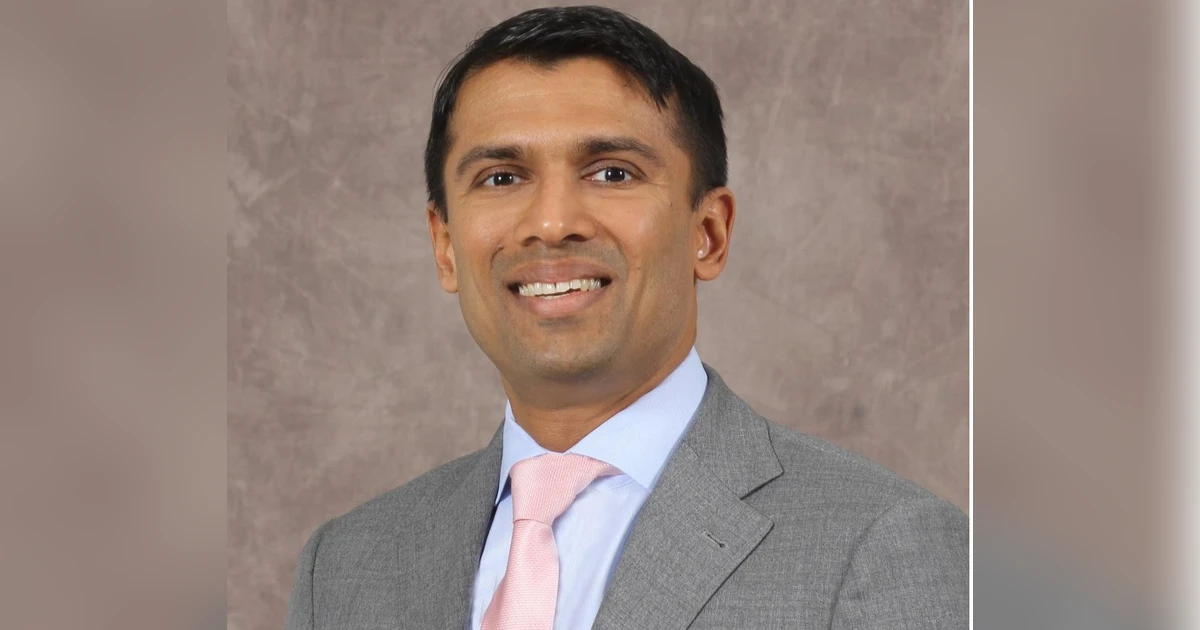
'Surprised by market reaction to Kevin Warsh's nomination to the US Fed'

'Surprised by market reaction to Kevin Warsh's nomination to the US Fed'


Kevin Warsh’s nomination as the next Fed chair surprised the markets, especially precious metals segment. US-based Aditya Bhave, senior US economist at BofA Global Research, tells Puneet Wadhwa in an email interview that with the US midterm elections in November, they expect trade policy to pivot to a more supportive stance for growth. The recent announcement of the India-US trade deal, he said, has reduced uncertainty around India’s growth outlook. Edited excerpts:


What’s your view on India?


Our India strategists believe that the Indian markets (Nifty Index) are already trading in the upper band of long-term valuations and thus valuation expansion/re-rating led upside is likely limited.  They believe returns from here on out would mirror earnings growth, which could accelerate to 14 per cent in FY27 from the mid-single digit earnings growth Nifty witnessed in FY25 & FY26. They, therefore, see 13 per cent upside for Nifty by the year-end (Dec’26).


How do you see the economic growth in India play out over the next 12 months?


India weathered significant external headwinds last year. Our India economists recently upgraded their forecasts on the back of improvement in the data flow. They now look for 6.8 per cent GDP growth in FY27. They see private consumption growing consistently above 7 per cent through the next 12 months, though investment spending is likely to moderate. 


The recent announcement of the India-US trade deal has reduced uncertainty around India’s growth outlook. Our India team doesn’t see further cuts by the Reserve Bank of India (RBI) in the next 12 months, unless there is some weakness in growth following the change in the GDP series. They see this as a low-probability outcome. 


How do you think the US economy will shape up in 2026 in the backdrop of a challenging geopolitical situation?


We are bullish on the US economy. We are forecasting 2.8 per cent GDP (gross domestic product) growth in 2026. Our optimism is driven by five factors. First, the OBBBA (One Big Beautiful Bill Act), which was passed last summer, should add 0.3-0.4pp to GDP growth this year via consumer and capex stimulus. Second, the 75 basis points (bp) of Fed cuts late last year should work their way through the economy in coming months.


Third, with the midterm elections in November, we expect trade policy to pivot to a more supportive stance for growth. Fourth, AI-related investment should continue to grow at a solid pace this year. Last, the government shutdown late last year will mechanically boost 2026 GDP growth.


Do you see actions of the US Federal Reserve (US Fed) being driven more by political compulsions rather than economic concerns?


Kevin Warsh, who has been nominated to be the Chair of the Federal Reserve, has called for significant rate cuts. His premise is partly that AI-related productivity growth will be disinflationary. However, if GDP growth is robust in the first half of the year – as we expect – it might be difficult for him to convince the rest of the Federal Open Market Committee (FOMC) that cuts are needed to support the economy. Especially if there is no progress on inflation, which has been stuck above the Fed’s target for nearly five years.


Did the global financial markets, especially the precious metals, over-reacted to the Fed chair nominee?


We were surprised by the market reaction to Kevin Warsh’s nomination. His recent comments on Fed policy rates have been dovish. Although he has retained a hawkish stance on the Fed’s balance sheet, it will be very challenging to shrink the $6.6 trillion balance sheet absent significant banking deregulation. Even then, the scope for reduction is only modest.


We would not expect Warsh to be hawkish in practice on either policy rates or the balance sheet. It’s possible that the market response to his nomination was more due to pricing out of outcomes under other nominees, who had taken a far more dovish stance than Warsh on balance-sheet policy.


What are the key risks to the US economy over the next few months?


The proximate downside risk to the US economy is that the labor market, which has been soft for a few quarters, deteriorates significantly further. If the unemployment rate rises to 5 per cent or more, spending could collapse under the weight of labor income losses. Markets over-reacted to the drop in the unemployment rate to 4.4 per cent in December. It had been rising for a few consecutive months before that, and we see about a one-in-four chance that it will start increasing steadily again.


Another risk is that AI investment could slow if power supply turns out to be a major bottleneck. If an AI investment slowdown (or any other factor) causes a big sell-off in tech stocks, which will probably also have knock-on effects for consumption, given that higher-income spending appears to be partly driven by equity wealth effects. Any shock to the US economy would have substantial knock-on effects on the rest of the world. That said, the dollar will most likely remain the world’s reserve currency. This reduces the urgency for fiscal tightening by generating additional demand for US Treasury securities. 


What’s the road ahead for US bond yields and 10-year GSec in India?


Our rates strategists expect US 10-year yields to remain range-bound, ending the year at 4.25 per cent. We see upside risks if the strong growth that we are forecasting causes a pickup in inflation, or the Fed cuts rates too aggressively. 


It’s a similar story in India: our economists think yields will remain in the 6.65-6.75 per cent range, because positioning is light. Stepping back, deficit concerns are coming to the fore across developed markets, not just in Japan. As a result, in the last several months there has been broad debasement of fiat currencies in favor of commodities, particularly gold.



Source link

Bharat Heavy Electricals secures work order of Rs 2,800 cr

Bharat Heavy Electricals secures work order of Rs 2,800 cr


Bharat Heavy Electricals (BHEL) has received a Letter of Acceptance from Bharat Coal Gasification and Chemicals (BCGCL), a joint venture company of BHEL and Coal India (CIL). The contract is for Design, Engineering, Supply of equipment, Civil works, Erection, Commissioning and O&M
Services for Syngas Purification Plant (LSTK 2 Package) of BCGCL’s Coal to 2000 TPD Ammonium Nitrate Project at Lakhanpur, Jharsuguda
District, Odisha, India. The contract is valued at approximately Rs 2,800 crore.

Powered by Capital Market – Live News


Disclaimer: No Business Standard Journalist was involved in creation of this content

First Published: Feb 10 2026 | 9:31 PM IST


Source link

Bharat Heavy Electricals secures work order of Rs 2,800 cr

Ion Exchange secures work order worth Rs 1,730 cr


From Petroleum Development Oman

Ion Exchange (India) announced that its subsidiary, Ion Exchange and Company LLC, located in Oman, has been awarded contract from Petroleum Development Oman, for the Design, Build, Own, Operation and Maintenance agreement for Potable Water Facility and Sewage Treatment Facility in the South PDO Concession Area aggregating to OMR 73.46 Million for a period of twenty years (approximately Rs 1,730 crore for twenty years).

Powered by Capital Market – Live News


Disclaimer: No Business Standard Journalist was involved in creation of this content

First Published: Feb 10 2026 | 9:04 PM IST


Source link

Bharat Heavy Electricals secures work order of Rs 2,800 cr

GHV Infra Projects secures work order of Rs 135 cr


GHV Infra Projects has received a work order from MHK Buildcon LLP (LLPIN- ACC-3530), for the construction of water Storage pond and other associated/miscellaneous works in the state of Haryana. The work order is valued at Rs 135 crore and is to be completed within 22 months.

Powered by Capital Market – Live News


Disclaimer: No Business Standard Journalist was involved in creation of this content

First Published: Feb 10 2026 | 8:51 PM IST


Source link

Rupee gains tracking Asian peers, corporate dollar demand caps rise

Rupee gains tracking Asian peers, corporate dollar demand caps rise


The rupee appreciated on Tuesday, tracking its Asian peers; however, dollar demand from large corporates capped gains, dealers said. The local currency settled at 90.58 per dollar against the previous close of 90.77 per dollar.


The dollar index fell below 97 to 96.84, from the previous day’s 97.35, which further aided the local currency. The index measures the strength of the greenback against a basket of six major currencies.


“The rupee was tracking the Chinese currency, which appreciated. Dollar demand from corporates continued,” said a dealer at a state-owned bank.


The dollar index fell as concerns intensified over weakening foreign demand for US assets amid expectations that the Federal Reserve could deliver two rate cuts later this year. Reports that Chinese regulators had advised institutions to limit exposure to US Treasuries also added to the pressure.


The Indian unit has appreciated 1.56 per cent so far in February on the back of the trade deal with the United States. The local currency was the worst-performing Asian currency in 2025 and in January. 


So far in FY26, the rupee has depreciated 5.04 per cent against the dollar.


“In the near term, the 90.00–90.20 per dollar zone stands out as a very strong support area. As long as this region holds, the rupee may gradually drift higher towards 91.00–91.20 per dollar in the coming days. A key anchor remains the Reserve Bank of India. On rupee dips, the RBI is expected to step in with dollar purchases, absorbing inflows rather than allowing sharp appreciation,” said Amit Pabari, managing director at CR Forex.


Goldman Sachs, which has lowered its estimate of India’s current account deficit by around 0.25 per cent of GDP to 0.8 per cent of GDP in CY26 following the US tariff reduction announcement, said pressure on the rupee has eased but there is limited room for further gains from current levels. Any pick-up in portfolio inflows following the conclusion of the India–US trade deal is likely to be met with a gradual unwind of the short forward book and a further build-up of foreign exchange reserves by the RBI.


India’s foreign exchange reserves rose to a record high of $723.77 billion in the week ended January 30.


Source link

In a first, gold ETF flows outpace equity funds amid market volatility

In a first, gold ETF flows outpace equity funds amid market volatility


The net inflows into gold exchange-traded funds (ETFs) outpaced collections by active equity mutual fund (MF) schemes for the first time last month, signalling a major shift in investor preferences as price volatility in gold and silver grabbed headlines.


Gold ETFs attracted net inflows of Rs 24,040 crore in January, a two-fold rise compared with Rs 11,647 crore in December 2025. Silver ETFs saw an even sharper surge, with investors pouring in nearly Rs 9,500 crore, compared with Rs 3,962 crore in December, show data from the Association of Mutual Funds in India (Amfi).


The jump in inflows came amid a surge in volatility in gold and silver last month. Gold prices ended January nearly 17 per cent higher in the international market, while silver surged 39 per cent despite a sharp fall in the last session of the month.


“The surge suggests gold demand remained exceptionally strong, supported by continued investor preference for safe-haven and diversification exposure. Part of the strength likely reflects fresh allocations at the start of the year, as investors rebalance portfolios and add hedges after a volatile period across risk assets,” said Nehal Meshram, senior analyst, Morningstar Investment Research India.


While investors poured record sums into precious metal ETFs, inflows into equity schemes witnessed a decline. At Rs 24,040 crore, net inflows in January were the lowest in seven months.


“The highlight (in January), with no surprise, has been flows in gold and silver ETFs. Investors have diversified their incremental flows from equities into precious metals, given the return profile over recent times,” said Akhil Chaturvedi, executive director and chief business officer, Motilal Oswal AMC.


The decline in net inflows for the second consecutive month was largely driven by a rise in outflows. Investors pulled out Rs 41,639 crore last month, the highest in 18 months.


Gross inflows, while moderating to some extent, remained buoyant, supported by systematic investment plan (SIP) inflows. Equity funds, which garner the bulk of SIP inflows, recorded gross inflows of Rs 65,667 crore last month, 5 per cent lower than the December tally. SIP inflows remained at a record high of Rs 31,002 crore.


In the hybrid space, multi-asset funds continued to garner strong inflows. These schemes, which have been the best-performing diversified MF offering owing to their precious metal exposure, attracted over Rs 10,000 crore of inflows last month.


“Flows into hybrid, multi-asset and passive products — including increased allocations to gold and silver ETFs — suggest a measured approach by investors towards diversification and portfolio balance. Overall, these developments indicate that mutual funds remain a widely used investment avenue, with participation levels holding up across varying market conditions,” said Venkat Chalasani, chief executive, Amfi.


Source link

YouTube
Instagram
WhatsApp



