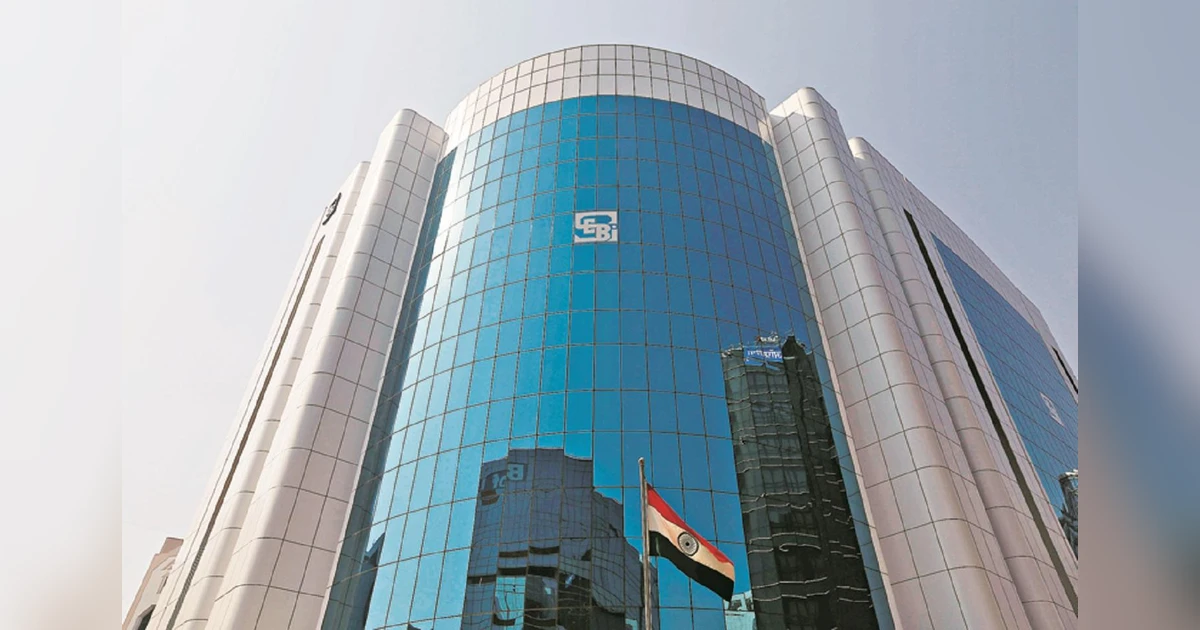
Sebi works with Google to crack down on finfluencers violating norms

Sebi works with Google to crack down on finfluencers violating norms


Securities and Exchange Board of India (Sebi) Chairman Tuhin Kanta Pandey on Wednesday said the markets regulator has asked tech giant Google to ramp up its artificial intelligence (AI) tools and enforcement measures to monitor financial influencers who “transgress the regulations”.


He also urged Big Tech firms to coordinate more closely to act against fraudulent players.


The regulator has taken down over 100,000 links of misleading content on social media. “We have also requested Google to actively take up their own AI measures, and we will help them develop it where they can actually track those influencers who transgress our regulations,” Pandey added.


“We must develop tools according to our laws and regulations, which will prevent this thing and help kick out such people out of the cyber space which they are destroying through social media platforms and creating so much of a problem for the community,” he said.


Pandey was speaking at the launch of verified app labelling in partnership with Google — a move aimed at protecting investors from fake apps impersonating market intermediaries.


Apps of Sebi-registered intermediaries, such as stock brokers, on the Google Play Store will carry a verification tick mark to help investors identify authentic applications. At present, over 600 apps have been verified, and the facility will soon be extended to other intermediaries.


Pandey said the move will make the journey of first-time investors safer. “Today for many investors the market begins on a screen, it begins with an app, but where access becomes digital, so does the risk. Fake apps are now a serious threat and can cause irreparable financial harm,” he said, alluding to instances of fraudsters luring investors with promises of quick returns.


In addition, Sebi may soon sign a Memoranda of Understanding with the Ministry of Electronics and Information Technology (MeitY) and the Department of Telecommunications (DoT) to strengthen action against cyber fraud.


The regulator had earlier launched initiatives like @valid handles for UPI handles of registered investor-facing intermediaries, and the Sebi Check platform to verify such UPI IDs, so investors can ensure payments are made only to authentic entities.



Source link

Board of HFCL approves fund raising up to Rs 555 cr via warrants

Board of HFCL approves fund raising up to Rs 555 cr via warrants


At meeting held on 25 March 2026

The board of HFCL at its meeting held on 25 March 2026 has approved raising of funds through issuance of up to 7,50,00,000 warrants convertible into equity shares at an issue of Rs 74 per equity share, aggregating to Rs 555 crore.

The proposed fund raise is aimed at strengthening the Company’s balance sheet and enhancing financial flexibility as HFCL enters a phase of accelerated growth and strategic investments.

Powered by Capital Market – Live News


Disclaimer: No Business Standard Journalist was involved in creation of this content

First Published: Mar 25 2026 | 7:31 PM IST


Source link

Board of HFCL approves fund raising up to Rs 555 cr via warrants

LG Electronics India signs PPAs with Hinduja Renewables Energy and Sunsure Energy


As part of its commitment to expand clean energy adoption across its manufacturing operations, LG Electronics India (LGE India) has signed long-term solar Power Purchase Agreements (PPAs) with Hinduja Renewables Energy (HREPL) and Sunsure Energy.

LGE India will source solar power for its Greater Noida and Pune manufacturing facilities, thereby reducing its carbon footprint while strengthening its transition towards sustainable manufacturing.

As part of these tie-ups, LGE India has signed a 9.80 megawatt peak (MWp) solar PPA with HREPL for its Pune manufacturing facility and an 11 MWp solar PPA with Sunsure Energy for its Greater Noida facility.

LGE India will source approximately 3.21 crore units of renewable energy annually for both facilities, collectively offsetting around 0.61 million metric tonnes of CO2e over the project lifetime.


HREPL will supply 1.61 crore units of clean power annually from its 27.7 MWp solar plant in Nanded, Maharashtra, helping meet 40% of the Pune facility’s energy needs and offset 0.31 million metric tonnes of CO2e over the project lifetime.

Similarly, Sunsure Energy will supply approximately 1.6 crore units of renewable electricity annually from its 82.5 MWp solar plant in Erach, Uttar Pradesh, enabling LGE India to meet around 30% of its Greater Noida facility’s energy requirement and increase total renewable energy consumption at the plant to approximately 50%, while offsetting 0.30 million metric tonnes of CO2e over the project lifetime.

Powered by Capital Market – Live News


Source link

Rupee hits new low on dollar demand from maturing NDFs, month-end flows

Rupee hits new low on dollar demand from maturing NDFs, month-end flows


On a day when domestic equities surged and crude oil prices declined amid hopes of de-escalation in the West Asia conflict, the rupee slipped to a fresh low. Dealers attributed this to dollar demand linked to maturing non-deliverable forwards (NDFs) and month-end buying. 


On Wednesday, the rupee settled at a new closing low of 93.98 per dollar against the previous close of 93.87. 


Market participants said the Reserve Bank of India (RBI) intervened in the foreign exchange market through dollar sales, preventing the rupee’s slide beyond 94 per dollar. 


“Risk sentiment has improved slightly because of reports of talks between the US and Iran, though uncertainty persists. There was month-end dollar buying from importers and traders,” said a dealer at a state-owned bank. “Some positions maturing in NDFs put pressure on the rupee. The RBI intervened at 93.98 per dollar. Strong resistance is seen at 94.” 


The outstanding net short dollar position in the rupee forward market rose to $67.77 billion by the end of January, from $62.35 billion at the end of December. 


Short positions in maturities of less than one year fell by around $3 billion, while those in longer tenures rose by about $9 billion.


After hitting a fresh high of $728.5 billion for the week ended February 27, India’s foreign exchange reserves fell by around $20 billion over the next two weeks to $709.8 billion for the week ended March 13.


Foreign exchange import cover is tracking at 9.2 months, taking into account the forward book, as of March, according to a note by IDFC First Bank. The estimate assumes a further decline in reserves to $696 billion by March-end and the forward book’s dollar deficit widening to $80 billion.


“Markets were in risk-on mode, but the rupee was still being sold against the dollar, with month-end demand keeping bids high despite stock markets rising and the dollar index easing. Most risk assets gained against the dollar as markets expected some agreement between the warring sides — the US-Israel bloc and Iran,” said Anil Kumar Bhansali, head of treasury and executive director at Finrex Treasury Advisors LLP.


The rupee is heading for its worst year in more than a decade, having depreciated 9.05 per cent against the dollar in the current financial year. In March alone, it has weakened by 3.19 per cent so far.


The dollar index was flat at 99.30 on Wednesday. It measures the strength of the greenback against a basket of six major currencies. Brent crude oil prices fell to $99.31 per barrel from the previous day’s $101.75 per barrel. 


Source link

Sebi widens auditor pool for investment advisers, research analysts

Sebi widens auditor pool for investment advisers, research analysts


In two separate circulars issued on Wednesday, the regulator amended provisions in its master circulars for investment advisers and research analysts to formally include cost accountants alongside chartered accountants and company secretaries


The Securities and Exchange Board of India (Sebi) has expanded the pool of professionals eligible to conduct annual compliance audits of investment advisers (IAs) and research analysts (RAs), allowing members of the Institute of Cost Accountants of India (ICMAI) to undertake such audits.


In two separate circulars issued on Wednesday, the regulator amended provisions in its master circulars for investment advisers and research analysts to formally include cost accountants alongside chartered accountants and company secretaries.


The move follows representations from the Institute of Cost Accountants of India (ICAI) and aligns with existing regulatory provisions that already recognise cost accountants for such audits.


The changes are expected to ease capacity constraints in the audit ecosystem while providing regulated entities greater flexibility in meeting compliance requirements, without altering the underlying audit framework.


Both circulars take effect immediately.


First Published: Mar 25 2026 | 6:12 PM IST


Source link

Board of HFCL approves fund raising up to Rs 555 cr via warrants

Board of Indian Renewable Energy Deve. Agency recommends interim dividend


Of Rs 0.6 per share

Indian Renewable Energy Deve. Agency announced that the Board of Directors of the Company at its meeting held on 25 March 2026, inter alia, have recommended the interim dividend of Rs 0.6 per equity Share (i.e. 6%) , subject to the approval of the shareholders.

Powered by Capital Market – Live News


Disclaimer: No Business Standard Journalist was involved in creation of this content

First Published: Mar 25 2026 | 5:50 PM IST


Source link

YouTube
Instagram
WhatsApp