
India to join FTSE Russell EMGB index starting September 2025

India to join FTSE Russell EMGB index starting September 2025


Illustration: Binay Sinha


FTSE Russell on Wednesday said it will add India to its emerging markets government bond index from September 2025.


FTSE Russell is the third index provider to include Indian bonds in its emerging market bond index after JPMorgan and Bloomberg Index Services.

Click here to connect with us on WhatsApp


According to FTSE, India’s bonds will constitute 9.35 per cent of the index on a market-value weight basis, making it the second-largest component after China.


Bond market participants said the inclusion will not have an immediate effect on the market given that the date of official inclusion is still some time away.


“It will not have any impact because it is too little and too far away,” said Vikas Goel, managing director and chief executive officer, PNB Gilts.


This follows inclusion of local bonds in JP Morgan and Bloomberg Index Services, which could lead to significant inflows into India’s government bonds market.


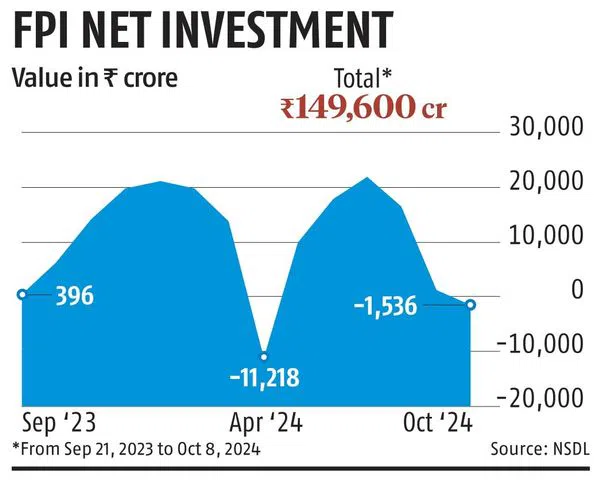
In September 2023, JP Morgan announced the inclusion of India’s bonds into the JPMorgan Government Bond Index-Emerging Markets (GBI-EM).
On March 5, Bloomberg Index Services revealed that Indian government bonds would be added to its Emerging Market Local Currency Government Index starting January 31, 2025.

chart


Since JP Morgan’s announcement on September 21, 2023, India’s debt market has seen net inflows totalling Rs 1.49 trillion.


The JP Morgan bond index inclusion process will be phased over a 10-month period; with 1 per cent weight included each month until March 31, 2025. Indian bonds will have 10 per cent weight, similar to China.


Since the official inclusion on June 28 of the current year, the debt market has witnessed Rs 2, 234 worth net inflows.  A net total of Rs 62,974 crore was infused in government securities designated under the Fully Accessible Route (FAR) during the same period, Clearing Corporation of India (CCIL) data showed.


Indian securities will be incorporated into FTSE’s EMGBI after spending the last three years on the index provider’s watch list. As of the October 2024 index profiles, 32 Indian governments FAR bonds, denominated in INR and with a combined outstanding par value of $473.8 billion, are projected to be eligible for inclusion in the EMGBI.


Meanwhile, the yield on the benchmark 10-year government bond fell in early trade after FTSE Russell announced that it will include Indian bonds in its indices.


The yields fell further to 6.74 per cent during the day, before settling at 6.77 per cent, post the domestic rate setting panel decision to change the stance to neutral. The benchmark yield had settled at 6.81 per cent on Tuesday.


Market participants said that the yields inched up slightly by the end of the trade as the market perceived the tone of the policy hawkish. However, the benchmark yield is seen moderating by the end of the current financial year once the RBI initiates rate cut.


“The 10-year yield was trading lower at 6.75 per cent post the policy. We expect the 10-year yield to trade in the range of 6.7 per cent -6.8 per cent in the near-term and ease to 6.6 per cent -6.7 per cent by the end of this fiscal year with the start of RBI’s rate cutting cycle and a moderation in US yields (amid Fed rate cuts – 50 bps cut expected in the remainder of 2024 and 5-6 rate cuts expected in 2025),” said HDFC bank in a note. 


The London-based index provider also revealed that South Korean government bonds will be added to the FTSE World Government Bond Index. These bonds constitute 2.22 per cent of the index based on market value, with inclusion from November 2025.

First Published: Oct 09 2024 | 7:25 PM IST


Source link

Nomura sees robust growth ahead for domestic asset management cos

Nomura sees robust growth ahead for domestic asset management cos


Indian asset management companies (AMCs) are showing strong growth potential as the “underpenetrated” mutual funds (MFs) continue to grow their share in household savings, Nomura said on Tuesday.


Initiating its coverage on the sector, the brokerage noted that increasing retail participation and the resultant momentum in systematic investment plan (SIP) inflows are the key tailwinds for the sector.

Click here to connect with us on WhatsApp


It expects the assets under management (AUM) of MFs to grow at a compounded annual growth rate (CAGR) of 18 per cent over the next five years. The MF AUM as a percentage of nominal GDP, which is around 18 per cent now, is expected to increase to 26 per cent by financial year 2030, according to Nomura.


The decrease in margins owing to growing AUMs is unlikely to hit profitability, it said.


“We expect core-operating profitability for the sector to remain healthy despite gradual moderation, as the decrease in revenue yields due to a rise in AUM and faster growth in the passive segment should be largely offset by operating leverage,” it stated.


MFs follow a slab-based fee model. As the AUM grows, schemes have to lower the charges.


The brokerage has given a “buy” rating to HDFC AMC and Nippon India AMC, and a “neutral” rating to UTI AMC.


It sees an upside of 21 per cent in HDFC AMC, 24 per cent in Nippon India AMC, and 8 per cent in UTI AMC. The brokerage is yet to start coverage of the only other listed AMC, Aditya Birla Sun Life (ABSL).


Regarding its bullish outlook on HDFC and Nippon, the brokerage stated that the two AMCs have been expanding their market share on the back of consistent performance in the equity segment.


“It [HDFC AMC] remains one of the most profitable AMCs, driven by strong equity AUM and operational efficiency. The company leads with a 13.3 per cent retail AUM market share. It is witnessing consistent improvement in market share in the equity segment,” Nomura said, adding that the AMC is poised to capture more market share, with its AUM expected to grow at 19 per cent CAGR over the next five years.


“As India’s fourth-largest asset manager, we believe Nippon India is well-positioned to benefit from rising industry flows, especially in small-/mid-cap segments. With a robust retail franchise, growing SIP market share, and a greater than 90 per cent dividend payout policy, we expect strong performance ahead, projecting a 21 per cent AUM CAGR and 21 per cent core-earnings CAGR over FY24-28F,” it stated.


Following Nomura’s report, AMC stocks logged strong gains on Wednesday even as the benchmark indices ended with losses. Shares of HDFC AMC and UTI AMC went up over 4 per cent, while ABSL AMC rose 2.8 per cent. Nippon India AMC went up nearly 2 per cent.

First Published: Oct 09 2024 | 6:59 PM IST


Source link

Mkt regulator Sebi approves appointment of Vijay Chandok as new NSDL head

Mkt regulator Sebi approves appointment of Vijay Chandok as new NSDL head


The Securities and Exchange Board of India (Sebi) has approved the appointment of Vijay Chandok as the managing director and chief executive officer (MD & CEO) of National Securities Depository (NSDL), the country’s largest depository.


Chandok currently serves as the MD & CEO of ICICI Securities, the broking and investment banking arm of ICICI Bank.

Click here to connect with us on WhatsApp


His appointment comes at a time when NSDL, a key market infrastructure institution, will launch its initial public offering (IPO).


NSDL has just received the nod from Sebi for its maiden share sale, which will see key stakeholders such as National Stock Exchange (NSE), IDBI Bank, and HDFC Bank pare their holdings.


Chandok’s appointment has been approved for the next five years or until he attains the age of 65, whichever is earlier, NSDL said in a notice. The market regulator granted approval for his appointment on August 30. NSDL, in its notice, stated that the appointment is subject to Chandok’s acceptance of the offer.

First Published: Oct 09 2024 | 6:45 PM IST


Source link

Demat account tally tops 175 mn; rises by 4.4 mn in September 2024

Demat account tally tops 175 mn; rises by 4.4 mn in September 2024


The number of dematerialised (demat) accounts — used for holding shares and other securities electronically — rose by 4.4 million in September, reaching a total of 175.4 million. It marks an average addition of 4 million accounts monthly since the beginning of 2024.

The demat tally was boosted by record initial public offerings (IPOs) in September. Last month, 12 companies raised Rs 11,058 crore via IPOs. And in this calendar year, more than 62 companies have raised Rs 64,511 crore. A significant number of investors open demat accounts primarily to participate in IPOs.  Investors open fresh demat accounts for family members to increase their chances of securing IPO allotments.

Click here to connect with us on WhatsApp


Sources: CDSL, NSDL


Market experts view the steady pace of demat additions as a positive sign for market stability. The incremental flows from these new investors will help offset any potential outflows from overseas funds or existing investors and help keep volatility under check. The trend also suggests a growing channelisation of household savings into equities. According to a Sebi working paper, domestic household investments in equities stood at Rs 128 trillion in financial year (FY) 2024, up from 84 trillion in FY23.

The new additions are happening despite bouts of volatility and regulatory tightening around trading rules. It remains to be seen how the hike in capital gains taxes and also the securities transaction tax coupled with stricter trading criteria for the derivatives segment will impact retail participation. Also, the recent selloff — triggered by Rs 40,000 crore outflows by foreign investors— that has led to a 5 per cent drop in benchmark indices from their peak could also weigh on sentiment.


> Demat tally tops 175 million


> An average 4 mn added each month in 2024


> Over 36 mn new accounts added during first nine months of 2024


First Published: Oct 09 2024 | 6:43 PM IST


Source link

IRFC appoints Manoj Kumar Dubey as Chairman and Managing Director

IRFC appoints Manoj Kumar Dubey as Chairman and Managing Director


Indian Railway Finance Corporation announced that Manoj Kumar Dubey, IRAS (DIN: 07518387) has been appointed as an Additional Director to be designated as Chairman and Managing Director on the Board of
IRFC and also designated as CE0 of the Company/IRFC by Board of Directors in its meeting held on 09 October 2024 for a period of five years with effect from the date of his assumption of charge of the post, or until
further orders, whichever is earlier.

Powered by Capital Market – Live News

Click here to connect with us on WhatsApp

Disclaimer: No Business Standard Journalist was involved in creation of this content

First Published: Oct 09 2024 | 6:15 PM IST


Source link

India bond yields drop on FTSE Russell index inclusion, RBI stance shift

India bond yields drop on FTSE Russell index inclusion, RBI stance shift


RBI Governor Shaktikanta Das said there was greater confidence now on the last mile of disinflation towards the central bank’s 4 per cent target (Photo: Shutterstock)


Indian government bond yields declined on Wednesday, as market participants welcomed a change in the Reserve Bank of India’s policy stance and the inclusion of the bonds in another global index.


The benchmark 10-year bond yield ended at 6.7676 per cent, compared with its previous close of 6.8077 per cent.


Click here to connect with us on WhatsApp


Global index provider FTSE Russell said it will include India’s sovereign bonds in the Emerging Markets Government Bond Index from September 2025, potentially drawing billions of dollars into bonds.


Demand for government bonds will pick up in the medium term, keeping yields in check, analysts and traders said.


FTSE Russell is the third index provider to include Indian government bonds, after JPMorgan and Bloomberg Index Services.


“We expect $4 billion-$5 billion due to the inclusion,” said Anurag Mittal, head of fixed income at UTI Mutual Fund.


It may not materially change yields in the near-term, but it opens the door for inclusion in other indexes which should lead to greater foreign participation and decline in yields, he said.


DOVISH RBI


The RBI kept its key interest rate unchanged as widely expected but changed its policy stance to “neutral,” which could lead to rate cuts as early as December.


RBI Governor Shaktikanta Das said there was greater confidence now on the last mile of disinflation towards the central bank’s 4 per cent target.


“It is with a lot of effort that the inflation horse has been brought to the stable – that is, closer to the target,” Das said.


The 10-year yield fell to as low as 6.7392 per cent following the central bank’s policy decision.


HSBC, Capital Economics, Bank of America and Barclays expect the central bank to cut rate in December, with Barclays adding one more rate cut to its forecast.


“As December MPC approaches, the growth slowdown in India will become apparent, as inflation aligns itself to the 4 per cent target. We expect repo rate cuts of 100 bps by December 2025, beginning December 2024,” said Rahul Bajoria, India and ASEAN economist at Bank Of America.

(Only the headline and picture of this report may have been reworked by the Business Standard staff; the rest of the content is auto-generated from a syndicated feed.)

First Published: Oct 09 2024 | 6:01 PM IST


Source link

YouTube
Instagram
WhatsApp




