Heat wave conditions abated, says IMD
Powered by Capital Market – Live News
Disclaimer: No Business Standard Journalist was involved in creation of this content
First Published: Mar 20 2026 | 3:31 PM IST
Powered by Capital Market – Live News
Disclaimer: No Business Standard Journalist was involved in creation of this content
First Published: Mar 20 2026 | 3:31 PM IST
Mahindra Holidays & Resorts India (MHRIL) announced the launch of two new resorts, Club Mahindra Amba Ghat in Maharashtra and Club Mahindra Bandhavgarh in Madhya Pradesh, adding 159 keys to its portfolio.
The launches are part of Club Mahindras strategy to develop new destinations and put lesser-known locations on the map for Indian holidaymakers. Backed by robust demand for leisure travel, the company is following a capital-efficient, asset-light model to expand its footprint through a mix of greenfield projects, management contracts, and flexible operating arrangements.
With these additions, MHRIL aims to scale its portfolio to 12,000 keys by FY30, strengthening its presence across Western and Central India.
Amba Ghat, a scenic mountain passes along the KolhapurRatnagiri route in Maharashtras Sahyadri ranges, is steadily emerging as a serene hill getaway for travellers seeking nature-led escapes away from crowded tourist circuits. The Amba Ghat resort comprising 96 keys will feature river-facing apartments with the Kadvi River flowing through the property, offering guests a tranquil retreat amid the lush Sahyadri landscape.
Bandhavgarh, located in the Vindhya Hills of Madhya Pradesh, is globally renowned for Bandhavgarh National Park, one of the worlds premier wildlife tourism destinations and home to the highest density of Bengal tigers.
The Bandhavgarh resort with 63 keys will offer an immersive wilderness stay experience with expansive verandas, outdoor decks, and uninterrupted forest views, designed to bring guests closer to the surrounding natural environment. Together, these destinations reflect Club Mahindras focus on expanding into locations that offer immersive natural experiences for families and leisure travellers. It recently launched Club Mahindra Nadiya Parao, in Uttarakhand and signed a new property in Dapoli, Maharashtra.
Mahindra Holidays & Resorts India (MHRIL), part of the diversified Mahindra Group, is Indias leading leisure hospitality company. Established in 1996, the company pioneered the vacation ownership model in India and has since redefined family holidays through thoughtfully designed resorts, curated experiences, and a commitment to sustainable tourism.
The companys consolidated net profit fell 93.6% to Rs 2.23 crore on 10.9% increase in revenue from operations to Rs 752.70 crore in Q3 FY26 over Q3 FY25.
The scrip shed 0.04% to Rs 258.25 on the BSE.
Powered by Capital Market – Live News
State Bank of India (SBI) climbed 1.52% to Rs 1,064.90 after the bank’s subsidiary company, SBI Funds Management (SBIFM) has filed a draft red herring prospectus (DRHP) with SEBI for an initial public offer (IPO).
The proposed IPO comprises up to 20,37,09,239 equity shares with a face value of Re 1 each, representing up to 10.0013% of the companys paid-up equity share capital. The issue is entirely an offer for sale (OFS).
As a part of OFS, SBI plans to offload 12,83,34,397 equity shares (amounting to 6.30% stake) while Amundi India Holding will sell up to 7,53,74,842 equity shares (about 3.70% stake).
For FY25, SBI Funds Managements total income stood at Rs 4,230.92 crore(0.64% of total income of SBI Group) The companys reserves & surplus was at Rs 5,108.56 crore, accounting for 1.19% of SBI Groups total reserve and surplus.
State Bank of India is engaged in providing a wide range of products and services to individuals, commercial enterprises, large corporates, public bodies, and institutional customers.
The bank reported a 24.49% jump in net profit to Rs 21,028 crore on a 9.69% increase in total income to Rs 140,915 crore in Q3 FY26 as compared with Q3 FY25.
Powered by Capital Market – Live News
Indiabulls soared 3.44% to Rs 10.23 after it has entered into a joint venture with a private land-owning entity to develop a premium commercial project on approximately 2.38 acres in Sector 103, Gurgaon, along the Dwarka Expressway.
The proposed development will feature modern office spaces, retail outlets, food & beverage facilities, and service apartments. The company expects the project to be a significant addition to its real estate portfolio, benefiting from strong demand dynamics along the Dwarka Expressway corridor.
The gross development value (GDV) of the JV is estimated at Rs 600 crore.
Indiabulls existing residential projects in Gurgaon IB Heights and IB Estate & Club in Sector 104 continue to see healthy sales momentum. The company noted that progress across its portfolio is on track as per previously disclosed plans and will provide further updates in its upcoming earnings report.
Indiabulls is in the business of Real Estate and Financial Services.
The company reported consolidated net profit of Rs 79.37 crore in Q3 FY26 as against net loss of Rs 3.69 crore in Q3 FY25. Revenue from operations declined 8.9% year on year to Rs 96.96 crore in Q3 FY26.
Powered by Capital Market – Live News
Disclaimer: No Business Standard Journalist was involved in creation of this content
First Published: Mar 20 2026 | 12:31 PM IST
Though global consultancy firm Accenture remains optimistic that artificial intelligence (AI) is emerging as a deal enabler and pipeline driver, analysts, back home, think the optimism is unlikely improve the sentiment for Indian IT (information technology) sector. Additionally, the broader demand environment remains tepid, with the impact of the Iran war yet to be priced in, keeping them sanguine about IT stocks’ performance in the near-term.
“Accenture noted that foundational work in AI is picking up. We, however, believe this is currently not sufficient to drive the acceleration in demand we were anticipating in earlier scenarios. From an IT services perspective, it really does seem to be a case of one battle after the other, and the firms could have to contend with a difficult macro and geopolitical backdrop in the near term,” said analysts at Motilal Oswal Financial Services.
During its Q2FY26 results, Accenture said they expect AI to act as a tailwind for three reasons. First, clients are implementing foundational programmes to capture tap AI for cloud security and data modernization. The consultancy firm sees at least one out of every two advanced AI projects, leading to a data project.
Second, clients are creating more investment capacity to increase their spend in new areas. Lastly, clients with more advanced digital cores are starting to take on larger AI programs. There is a shift from proofs of concept (POC) to production, it said.
Analysts noted that AI is acting as a tailwind, enabling Accenture to win market share and create new growth opportunities, even as they cautioned that this momentum is not yet strong enough to trigger a broad-based demand revival for Indian IT firms.
“Clients are moving beyond proof of concepts to live use cases in AI. AI will continue to drive the demand for core fundamental elements like cloud, data and platform modernisation services. However, a sharp growth revival hinges on macroeconomic improvement, particularly in the US,” noted those at Nomura.
Meanwhile, Accenture reported revenue of about $18 billion in Q2FY26, growing 4 per cent year-on-year (Y-o-Y) in constant currency (cc). The growth came towards the upper end of its guided range, led by managed services (up 5 per cent) and consulting (up 3 per cent), with vertical strength in financial services and communications.
Deal activity remained stable, with total bookings of roughly $22 billion and a book-to-bill ratio of around 1.2x, indicating a steady pipeline. Large deals continued to anchor growth, with Accenture booking 41 deals exceeding $100 million during the quarter.
Operating margins expanded modestly year-on-year, supported by execution discipline and efficiency gains, even as the company continued to invest in AI capabilities and acquisitions. Headcount remained broadly flat, reflecting the ongoing shift toward productivity-led delivery.
Accenture raised the lower end of its FY26 revenue growth guidance to 3–5 per cent in constant currency (from 2–5 per cent earlier), while maintaining its margin outlook. For Q3FY26, it guided for 1–5 per cent growth.
The management flagged that the guidance incorporates its “best view” of current geopolitical risks but does not factor in any significant escalation This, analysts said, leaves room for downside risks. They noted that client spending trends remain broadly unchanged from CY25, indicating no meaningful macro recovery yet.
“While service providers attribute growth moderation to macro headwinds, the buzz around AI productivity is spurring enterprises to seek similar gains from their service partners – increasing the risk of another soft year. Indian IT sector’s rerating is unlikely to happen if concerns over the impact of Gen AI continues,” said those at JM Financial.
The brokerage advised investor to stay selective and prefer stocks underpinned by reasonable operational visibility. It prefers Infosys, and Mphasis as top picks.
Emkay Global added that the Nifty IT Index has corrected nearly 25 per cent, so far, in 2026, underperforming the Nifty50 index by 13 per cent, due to potential risks to growth with advancement in AI and increased macro uncertainties leading to lower terminal growth assumptions.
“The steady operating performance and Accenture’s upward revision in guidance reflect stability and may provide support to the beaten down valuation. However, neither the Q2 results nor the management commentary has instilled confidence on any imminent growth pickup being meaningful,” the brokerage said.
On Friday, however, the Nifty IT index rose 2.2 per cent intraday to hit a high of 29,227 level. Oracle Financial Services, Tech M, HCL Tech, Persistent Systems, Infosys, Mphasis, Coforge, and Wipro led the rally with 1-4 per cent gains
Analysts said Accenture’s commentary reinforces a “status quo” demand environment for Indian IT companies, with client budgets for CY26 appearing largely flat, discretionary spending remaining subdued, and macro uncertainties—particularly geopolitical risks—weighing on the sentiment.
They believe a turnaround for Indian IT companies remains off the table as the sector is enduring a dual blow from macroeconomic slowdown and Gen AI-driven productivity shifts.
From an investment standpoint, analysts advocate a selective approach rather than a broad-based sector call. Companies with stronger deal visibility, execution track record, and exposure to large transformation programme, they said, should find a place investors’ portfolio.
Nomura favours Infosys (Buy) and Cognizant (Buy) in large-cap space, Coforge (Buy) in mid-caps, and eClerx (Buy) in small-caps.
Emkay Global, meanwhile, prefers Infosys, LTIMindtree, TCS, HCL Technologies, Tech M, and Wipro.
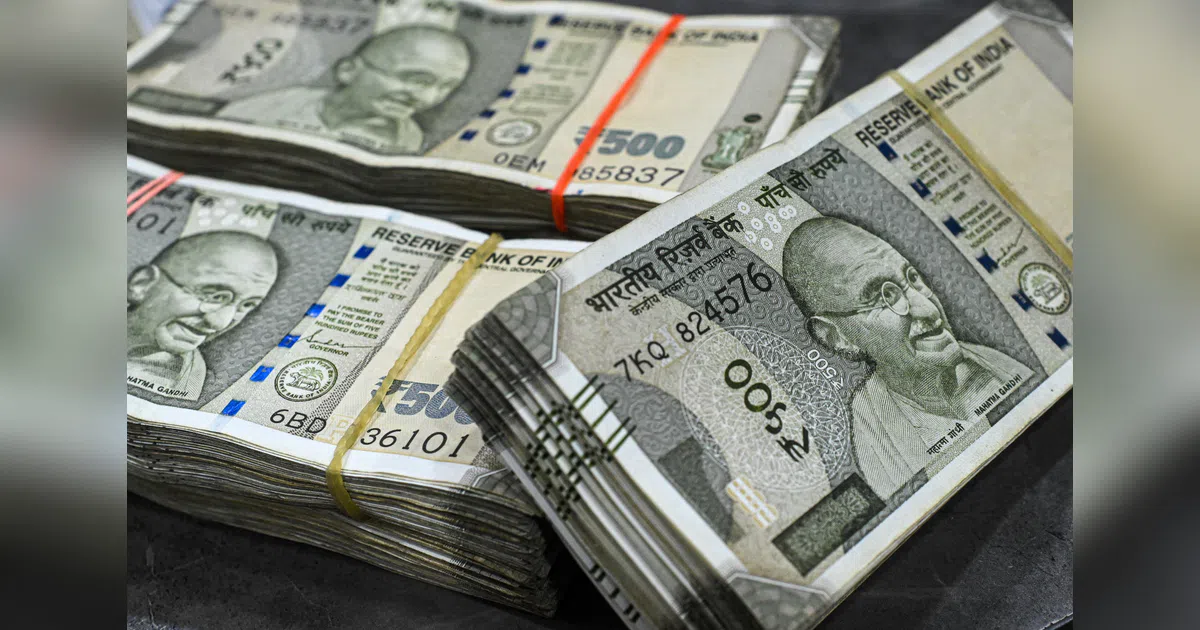
The Indian rupee fell past the psychologically crucial 93 mark against the US dollar on Friday, extending its decline as one of Asia’s worst-performing currencies this year amid tensions in West Asia.
The domestic currency fell as much as 64 paise, or 0.69 per cent, to a record low of 93.28 against the US dollar on Friday, according to Bloomberg data. It had closed at 92.63 in the previous session. The rupee is down 3.64 per cent so far this year, making it one of the worst-performing currencies among its Asian peers.
“The rupee looks very vulnerable, and unless oil prices fall significantly towards $80 per barrel, outflows could remain higher than what the government has budgeted, impacting both the current account deficit and the fiscal deficit,” said Anil Kumar Bhansali, Head of Treasury and Executive Director at Finrex Treasury Advisors LLP.
“We await the Reserve Bank of India’s (RBI’s) action this morning. Until then, any dips are likely to be bought into, while exporters may hold off on selling until a correction in oil prices is seen,” he added.
On Thursday, Brent crude oil rose as much as 10.9 per cent to $119.1 per barrel and pared gains to trade at $107.2 on Friday morning. The recent rally in oil prices comes as Israel struck Iran’s South Pars gas field.
Iran later warned Gulf nations that several energy facilities are now “legitimate targets” after Israel struck its South Pars gas field. Later, Prime Minister Benjamin Netanyahu on Thursday said Israel would avoid future attacks on Iran’s energy infrastructure. Also. US President Donald Trump suggested he was not looking at deploying soldiers to West Asia.
Meanwhile, a 10 per cent gain in global crude prices leads to a 15 basis- point drop in economic growth and a 30 basis-point rise in inflation, Bloomberg reported, quoting the central bank.
Meanwhile, the dollar index was up 0.2 per cent as oil prices retreated from Thursday’s highs after the US and Israel efforts to ease concerns over the Iran war.
“USD/INR is trading above the 92.8 level, reflecting continued pressure on the Indian rupee amid elevated crude prices and global risk aversion. The structure remains bullish, supported by a pattern of higher highs and higher lows,” said Ponmudi R, chief executive officer at Enrich Money. “A sustained move above 93.00 would strengthen the upside bias, with resistance seen in the 93.20-93.40 range. On the downside, support is placed at 92.70, followed by 92.50–92.40,” he added.
==========
(Disclaimer: The views and investment tips expressed by the analysts in this article are their own and not those of the website or its management. Business Standard advises users to check with certified experts before taking any investment decisions.)