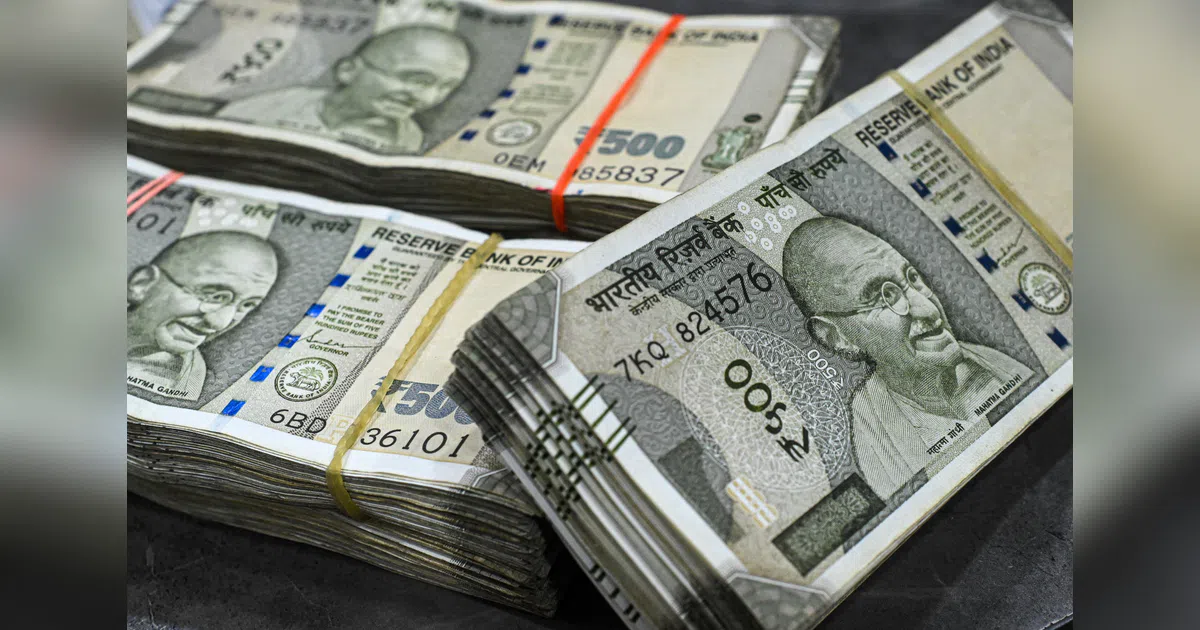
Indian Rupee falls past 93/$ on crude volatility amid West Asia tensions

Indian Rupee falls past 93/$ on crude volatility amid West Asia tensions


The Indian rupee fell past the psychologically crucial 93 mark against the US dollar on Friday, extending its decline as one of Asia’s worst-performing currencies this year amid tensions in West Asia.


The domestic currency fell as much as 64 paise, or 0.69 per cent, to a record low of 93.28 against the US dollar on Friday, according to Bloomberg data. It had closed at 92.63 in the previous session. The rupee is down 3.64 per cent so far this year, making it one of the worst-performing currencies among its Asian peers.


“The rupee looks very vulnerable, and unless oil prices fall significantly towards $80 per barrel, outflows could remain higher than what the government has budgeted, impacting both the current account deficit and the fiscal deficit,” said Anil Kumar Bhansali, Head of Treasury and Executive Director at Finrex Treasury Advisors LLP.


“We await the Reserve Bank of India’s (RBI’s) action this morning. Until then, any dips are likely to be bought into, while exporters may hold off on selling until a correction in oil prices is seen,” he added.


On Thursday, Brent crude oil rose as much as 10.9 per cent to $119.1 per barrel and pared gains to trade at $107.2 on Friday morning. The recent rally in oil prices comes as Israel struck Iran’s South Pars gas field. 


Iran later warned Gulf nations that several energy facilities are now “legitimate targets” after Israel struck its South Pars gas field. Later, Prime Minister Benjamin Netanyahu on Thursday said Israel would avoid future attacks on Iran’s energy infrastructure. Also. US President Donald Trump suggested he was not looking at deploying soldiers to West Asia. 


Meanwhile, a 10 per cent gain in global crude prices leads to a 15 basis- point drop in economic growth and a 30 basis-point rise in inflation, Bloomberg reported, quoting the central bank. 


Meanwhile, the dollar index was up 0.2 per cent as oil prices retreated from Thursday’s highs after the US and Israel efforts to ease concerns over the Iran war.


“USD/INR is trading above the 92.8 level, reflecting continued pressure on the Indian rupee amid elevated crude prices and global risk aversion. The structure remains bullish, supported by a pattern of higher highs and higher lows,” said Ponmudi R, chief executive officer at Enrich Money. “A sustained move above 93.00 would strengthen the upside bias, with resistance seen in the 93.20-93.40 range. On the downside, support is placed at 92.70, followed by 92.50–92.40,” he added.


==========


(Disclaimer: The views and investment tips expressed by the analysts in this article are their own and not those of the website or its management. Business Standard advises users to check with certified experts before taking any investment decisions.)


Source link

Organic Recycling Systems signs MoU with ITEL, Chennai

Organic Recycling Systems signs MoU with ITEL, Chennai


Organic Recycling Systems (ORSL) has entered into a strategic Memorandum of Understanding (MoU) with the Immersive Technology and Entrepreneurship Labs Foundation (ITEL), Chennai, to jointly drive research, innovation, and capacity-building initiatives in bio-energy, waste management, and green technologies.

The MoU establishes a collaborative framework for joint R&D programs, consultancy projects, training initiatives, and funding proposals, with a focus on developing scalable and commercially viable solutions in the bioenergy and environmental sustainability domains.

Powered by Capital Market – Live News


Disclaimer: No Business Standard Journalist was involved in creation of this content

First Published: Mar 20 2026 | 9:31 AM IST


Source link

Organic Recycling Systems signs MoU with ITEL, Chennai

Lemon Tree Hotels signs deal for new resort in Lonavala


Lemon Tree Hotels has announced the signing of a license agreement for a new property, Lemon Tree Resort, Lonavala, as part of its strategy to strengthen its presence in Maharashtra.

The resort will be managed by Carnation Hotels, a wholly owned subsidiary of the company. This upcoming property will feature 50 well-appointed rooms, along with a restaurant, banquet hall, meeting room, swimming pool, spa and fitness centre, catering to both leisure and corporate travellers.

The resort is conveniently located approximately 69 km from Navi Mumbai International Airport (around 1 hour 17 minutes by road) and about 5.8 km from Lonavala Railway Station (approximately 15 minutes), providing easy connectivity for travellers from major cities across India.


Vilas Pawar, CEO managed & franchise business, Lemon Tree Hotels, said: Lonavala remains a high-demand leisure destination with strong potential across weekend travel, weddings and corporate retreats. This signing aligns with our focus on expanding our resort portfolio in key getaway destinations, while continuing to build scale in Maharashtra. We look forward to offering guests a refreshing stay experience in this scenic location

Lemon Tree Hotels (LTHL) is one of the largest hotel chains in India and owns/leases/operates/franchises hotels across the upscale, upper-midscale, midscale, and economy segments. The group offers seven brands to meet guests needs across all levels, viz., Aurika Hotels & Resorts, Lemon Tree Premier, Lemon Tree Hotels, Red Fox Hotels by Lemon Tree Hotels, Keys Prima by Lemon Tree Hotels, Keys Select by Lemon Tree Hotels, and Keys Lite by Lemon Tree Hotels.

The company reported a 16.73% jump in consolidated net profit to Rs 34.60 crore, while revenue from operations rose 7.7% to Rs 306.28 crore in Q2 FY26 over Q2 FY25.

The counter declined 1.12% to Rs 106.35 on the BSE.

Powered by Capital Market – Live News


Source link

US, global central banks hold rates, warn of war-led inflation risks

US, global central banks hold rates, warn of war-led inflation risks


Top central banks said on Thursday they stood ready to tackle any surge in inflation with tighter policy as the latest escalation in the Iran war put the Middle East’s vital energy infrastructure in the line of fire, pushing fuel prices higher.


In a rare coincidence of the monetary policy diary, central banks of the United States, Japan, Britain, Canada and the euro zone – effectively the Group of Seven (G7) nations – convened this week, as have counterparts from several emerging economies.


After facing criticism they acted too late to tame a post-COVID jump in inflation exacerbated by the Russian invasion of Ukraine in 2022, policymakers are determined to rein in prices without derailing still-patchy economic growth – and above all to avoid a “stagflation” mix of recession and price surges.


The US Federal Reserve and the Bank of Canada on Wednesday both opted to hold interest rates steady, as did the Bank of Japan, Bank of England, European Central Bank and the central banks of Switzerland and Sweden on Thursday.


Yet they made clear they are on alert, wary that rising energy prices could spark a wave of inflation across the wider economy if, for example, it starts to prompt higher wage demands by households ​fearful of losing purchasing power.


“The war in the Middle East has made the outlook significantly more uncertain, creating upside risks for inflation and downside risks for economic growth,” the ECB said.


In her press conference after the decision, ECB President Christine Lagarde said the euro zone was resilient and that low inflation meant it was “well positioned” to deal with what she called “a major shock that is unfolding”.


The central bank raised its forecast for inflation this year to 2.6 per cent – above its 2 per cent target – and released scenarios under which inflation could fall back down again if the shock proved temporary but rise to 4.8 per cent next year if disruption continued.


Commenting on the unanimous decision by the Bank of England’s policy-making committee to keep rates on hold, BoE Governor Andrew Bailey said the bank would have to respond to a persistent impact on UK inflation.


But he played down expectations on markets for a sharp tightening in policy as traders priced in two 25-basis-point rate hikes by year-end, up from just one prior to the meeting.


“I would caution against reaching any strong conclusions about us raising interest rates,” Bailey said in an interview pooled for British broadcasters. “Today we’ve given a very clear message. The right place to be is on hold.”


US RATE HIKE STARTS TO GET PRICED IN


Marking an escalation in the war that began on February 28, Iranian strikes since Wednesday have caused extensive damage to the world’s largest gas plant in Qatar and hit other Gulf infrastructure following Israeli attacks on its own gas facilities.


Such strikes already start to make it more likely that the global economy will have to grapple with longer-term damage to energy supplies. But Federal Reserve Chairman Jerome Powell noted that quantifying that hit was still impossible.


“In the near term, higher energy prices will push up overall inflation, but it is too soon to know the scope and duration of the potential effects on the economy,” Powell said after the Fed’s 11-1 decision to hold rates in the 3.50 per cent -3.75 per cent range.


His reluctance to say that risks of a weakening job market posed a greater risk to the Fed’s objectives than inflation helped push market rate-cut expectations into 2027 and even raised odds of a hike at the next meeting to 12 per cent .


In Tokyo, Bank of Japan Governor Kazuo Ueda said the BOJ would not rule out a near-term rate hike if the expected hit to growth from surging oil costs proves temporary, and does not derail progress in durably hitting the bank’s price target.


“We need to be mindful that recent developments come at a time when companies are already actively pushing up prices and wages, which suggests they could pass on costs more aggressively than after the war in Ukraine,” Ueda told a news conference.


Bank of Canada Governor Tiff Macklem struck a similar note: “If energy prices stay high, we will not let their effects broaden and become persistent inflation,” he said.


GROWING ‘STAGFLATION’ RISK?


Earlier this week the Reserve Bank of Australia hiked rates to a 10-month high and warned of a “material” risk to inflation from the oil price spike.


Even Brazil’s central bank, with one of the highest rates of all major economies, opted for a cautious 25-basis-point cut to a benchmark 14.75 per cent rate – a smaller cut than initially expected.


On Thursday both the Swiss National Bank and Sweden’s Riksbank kept policy rates on hold, flagging the uncertainty of how the war will end up impacting the economy.


European markets fell sharply on Thursday and US stock futures dipped as the attacks on energy infrastructure pushed benchmark Brent oil prices above $119 a barrel.


“This latest escalation feels like a turning point for markets because the conflict is no longer just about military headlines or Strait of Hormuz closure,” Charu Chanana, chief investment strategist at Saxo in Singapore, said.


“It is now hitting the plumbing of the global energy system. What is unsettling markets now is the growing stagflation risk.”


Source link

SBI Funds Management files for IPO; SBI, Amundi to sell 203.7 mn shares

SBI Funds Management files for IPO; SBI, Amundi to sell 203.7 mn shares


India’s ​SBI Funds Management ​filed for ‌an initial public offering on Thursday, its draft prospectus showed.


Existing ‌investors State Bank of India and Amundi will sell ​203.7 million shares through ‌the “offer ​for ‌sale” route. SBI Funds ‌will not ‌issue new ​shares ​in the IPO.


(Only the headline and picture of this report may have been reworked by the Business Standard staff; the rest of the content is auto-generated from a syndicated feed.)

First Published: Mar 19 2026 | 9:12 PM IST


Source link

Organic Recycling Systems signs MoU with ITEL, Chennai

Board of IREDA approves enhancement of borrowing plan for FY 2026


Also approves market borrowing programme for FY 2027

The board of Indian Renewable Energy Development Agency at its meeting held on 19 March 2026 has approved the following:

1. Enhancement of Borrowing Plan for FY 2025-26 from up to Rs. 30,800 crore to up to Rs. 35,800 crore. The Borrowing includes fund raising through Taxable Bonds/ Sub-ordinated Tier-II Bonds/Perpetual Debt Instruments (PDI) /Term loan from Banks and FI’s /Lines of credit from international agencies (multilateral and bilateral agencies) /Short term loans & WCDL from Bank/ External Commercial Borrowings (ECB).

2. Raising of Resource i.e. Market Borrowing programme upto Rs 40,000 crore for the FY 2026-27 excluding funds raised under Extra Budgetary Resource (EBR). The Borrowing includes fund raising through Taxable Bonds/Green Taxable Bonds/Sub-ordinated Tier-II Bonds/Perpetual Debt Instruments (PDI)/ Green Masala Bonds/ Green Foreign currency bonds (USD/EUR/JPY) / Foreign currency bonds (USD/EUR/JPY)/ Bond ETF/ Other Bond / any other instrument in the nature of Bond/debentures/debt securities/Term loan from Banks and FI’s from domestic market/Lines of credit from international agencies/Public & private placement of Tax-free bonds, if allocated by the GoI/Capital Gains Bonds/Commercial Papers/Short term loans/CC/WCDL from Banks/Foreign Currency Non-Resident (FCNR -B) Loans from banks/External Commercial Borrowings (TL & Bonds)/ Foreign currency Borrowings such as term loans, syndicated loans, subordinated loans/Foreign currency Bonds/ Notes such as unsecured/ secured Bonds, perpetual bonds, subordinated bonds/any other instrument for raising foreign currency borrowings / Rupee denominated foreign currency borrowings/any other instrument for mobilization of funds from domestic sources in one or more tranches/series at an appropriate time, depending on market conditions and its funding requirements.


Powered by Capital Market – Live News

Disclaimer: No Business Standard Journalist was involved in creation of this content

First Published: Mar 19 2026 | 9:04 PM IST


Source link

YouTube
Instagram
WhatsApp