YouTube introduces @ Handle feature: Know what is it, how it works and more

YouTube introduces @ Handle feature: Know what is it, how it works and more


is set to introduce the @ Handle feature on its streaming platform . This feature would enable new ways for users to find and connect with creators. says it is gradually rolling out the ability to choose a handle for all channels over the coming weeks, and creators will receive another email and a notification in Studio when they are able to create a handle. YouTube will automatically assign a handle to the channel, which the creator can change in YouTube Studio, starting on November 14 – if the creator has not selected a handle for the channel.


What is a YouTube Handle?

It is a new way for viewers and creators to find and connect with each other on YouTube. While multiple YouTube channels can have the same channel name, handles are unique and start with the “@” symbol. For example, @youtubecreators. They are short channel identifiers separate from the channel name. The handle will automatically become a part of the channel’s URL. For example, youtube.com/@youtubecreators.


When can a user choose a handle?

YouTube is currently rolling out handles to all channels. Once you can choose a handle, you will be notified in YouTube Studio and via email. You will then have until November 14 to choose a handle. If you do not choose by then, YouTube will automatically assign you one.


If you have a personalised URL, the unique part of the URL will become your handle. But, if you do not have a personalised URL, or you want to choose something different, you can select a new handle or use the automatically generated handle. Note, in certain cases your preferred handle may not be available but you will be able to select another option.


How to choose or change a handle?

Step 1: Go to youtube.com/handle on your device with the YouTube app

Step 2: Select account and click on choose handle or change handle

Step 3: You can choose one of the suggested handles or type in the handle field to check the availability of your preferred handle

Step 4: Once you have found an available handle, click Confirm selection.


How is it useful?

As the handles are unique identifiers, it is easy to confirm whether you are engaging with the right person/channel/creator or not. It lets people find the right channel on YouTube and tag accounts in videos. You can also use handle to direct people to your channel even when they are not on YouTube. With the help of URL, you can promote your channel on different social media platforms and websites.


YouTube has provided handles’ open access to everyone and removed the 100-subscriber threshold. It will appear in the shorts tab, search results, comments and mentions. On the channel page, it will appear alongside the channel name.

Source link

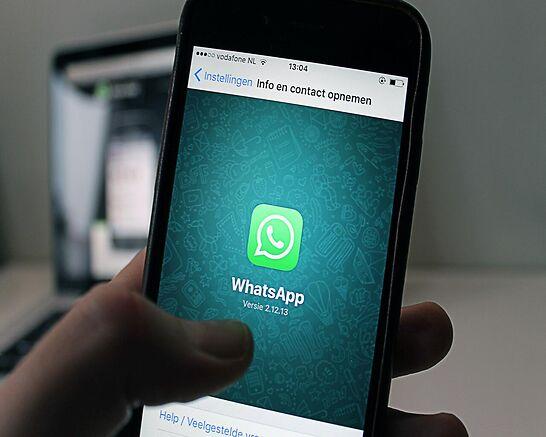
Is it time to think of WhatsApp as a public service?

Is it time to think of WhatsApp as a public service?


Journey of in a nutshell


The journey of started much before it was launched in 2009. One of its founders, Jan Koum, grew up in communist Ukraine where phone tapping was not unusual. He immigrated to the US at 16 with his mother and joined Yahoo later.


So when Koum and his bright colleague Brian Acton quit Yahoo and later started work on a messaging app, one of the main themes was democratizing phone-based communication.


And they did it. 13 years on, has become an integral part of the daily routine of almost 2 billion across the globe. And with over 550 million users, India is one of the biggest markets for WhatsApp.


The outage


For the lack of a popular alternative, a glitch in WhatsApp leaves a void which is difficult to fill. Telegram has 55.2 million daily active users, against WhatsApp’s 2 billion.


Tuesday’s outage was the longest-ever, as services were down for almost two hours. And in India it came just a day after Diwali as online traffic was high. People were sharing photos, making group calls to family members and merchants were doing brisk business.


Response from WhatsApp: “We know people had trouble sending messages on WhatsApp today. We have fixed the issue and apologise for any inconvenience.”


In its response, Whatsapp said that the outage was a result of a technical error on its part. But it didn’t come out with a detailed explanation on the exact reason behind the outage.


The Indian government asked WhatsApp for a report on the outage. The Centre wants to know whether the outage was due to internal reasons or external cyberattack. According to reports, whenever there is an outage, the government seeks a report from the company involved.


In October last year, when parent suffered an outage, WhatsApp and Instagram too were down for a few hours. Similar outages were reported in March 2021 affecting WhatsApp and Instagram and in June 2020 when WhatsApp was down for millions of users in India and elsewhere. According to a report in the Verge, the outage in October 2021 happened due to Facebook’s internal infrastructure.


Effect on businesses


The business world has been gradually moving away from an email-based communication system to instant messaging. Apart from regular communication uses, small businesses are increasingly relying on the platform for running daily operations, especially after the pandemic.


As of 2020, about 15 million in India use the WhatsApp business app and it is one of the top 30 most-downloaded apps in the country.


Organisations and businesses that use WhatsApp for communication have also been hit. Similarly, when WhatsApp had an hours-long outage last October, it hit trading of assets from cryptocurrencies to oil, before traders switched to alternative platforms such as Telegram.


How well-ingrained WhatsApp has become in our lives can be gauged from a report which pointed out that on an average, Indians spent about 19.8 hours every month on the messaging app last year.


Is WhatsApp a public utility?


So can we call it a public utility? In a Supreme Court case related to WhatsApp’s privacy, Senior advocate Harish Salve argued that with such a huge user base and the massive number of calls and data sharing, WhatsApp had become a public utility, much like telecom or internet service providers and must be viewed with the same lens as them.


While other experts and executives say the nature of technology is such that, even with effective redundancies in place, some outages are inevitable. As long as they are not frequent, it shouldn’t be much of a problem.


Alok Prasanna Kumar, Co-founder, Vidhi Centre for Legal Policy says, just because a lot of people use a product or service, it doesn’t mean it should be a public service. We can use WhatsApp services as consumers, but cannot demand something as citizens, he says.


Salman Waris, Managing Partner, TechLegis Advocates & Solicitors says, it could be too far a call to deem WhatsApp as public service. Government can regulate to ensure continuity in cases where WhatsApp is integrated to provide essential services.


The first step towards considering any product or service a public utility is regulation. Experts say, the Indian government is still some distance away from regulating Big Tech companies like WhatsApp in terms of data protection. Despite the messaging company’s scale and the enormous influence it has on its consumers’ day-to-day life, experts say it cannot be considered a public service. Or maybe is it time to rethink what a public service is? Irrespective of what may be the case, WhatsApp would do well to be more transparent when things go wrong.


Source link

WhatsApp submits report to IT Ministry on Tuesday’s service outage

WhatsApp submits report to IT Ministry on Tuesday’s service outage


Messaging platform has submitted its report to the IT ministry on the service outage that happened on Tuesday, according to government sources.


The ministry had asked the Meta-owned messaging platform to share reasons for the service disruption.


services snag on Tuesday had left users complaining about not being able to send or receive text and video messages, and services had resumed after nearly two hours.


The sources said that has submitted its report on the service outage.


Details about the submissions could not be immediately ascertained.


An e-mail sent to WhatsApp on the issue did not elicit a response.


In a late night statement on Tuesday, WhatsApp said a “technical error” caused the outage.


“The brief outage was a result of a technical error on our part and has now been resolved,” a Meta company spokesperson had said.


According to Downdetector, which tracks outage reports, the messaging app was not working for many users across multiple regions on Tuesday afternoon. At one point during the outage on Tuesday, over 29,000 reports were flagged by users on Downdetector.


Downdetector’s heatmap had showed that WhatsApp users in major cities, including Delhi, Mumbai, Bengaluru, Chennai and Kolkata, were impacted by the snag.

(Only the headline and picture of this report may have been reworked by the Business Standard staff; the rest of the content is auto-generated from a syndicated feed.)


Source link

Passkeys becoming a safe alternative to passwords: Google vice president

Passkeys becoming a safe alternative to passwords: Google vice president


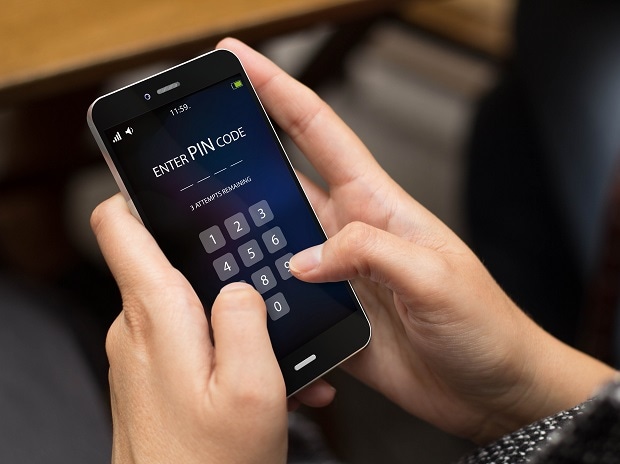
Passkeys will replace passwords as they are safer and provide better protection against phishing attacks, said Google’s vice president Parisa Tabriz on Thursday.


The technology giant recently introduced passkeys for its Android operating system and web browser Chrome. The functionality was launched for members of Play Services Beta and Chrome Canary, while it will be available for general users later this year, the company said on October 12.


Android device users can create and use passkeys that are securely synced through the Manager. Developers can build passkey support on their websites for Chrome users via the WebAuthn API, a web standard published by the Consortium, on Android and other supported platforms.


Tabriz, who heads engineering, product, and design at Chrome, said passkeys are safer as they cannot be reused, do not leak in server breaches, and protect users from phishing attacks.


She said that nearly half of workers spend the majority of their day working on browser-based software applications, making it crucial to protect the browsers.


Passkeys are built on industry standards and work across different operating systems and browser ecosystems, and can be used for both websites and apps. Tabriz said the auto-fill along with existing device screen locks such as the fingerprint to confirm log-in may take down the number of phishing incidents significantly.


“Some of what we are building in chrome is auto-fill the . We still have ways to grow, but we have improved auto filled features. We have also recently launched virtual credit numbers, which replace the physical card number with a unique virtual card number for protecting online payments,” Tabriz said.


She said cybersecurity threats had increased since the beginning of the Russia-Ukraine conflict in February. “Google has also introduced a free defence program called Project Shield, under which over 200 Ukrainian websites have been protected from Denial of service attacks. Global ransomware damages are expected to exceed $30 billion by 2023. Asia is one of the worst impacted regions with 26 per cent of global attacks directed towards Asia.”


Google has also introduced the Chrome vulnerability reward program to find out security bugs present in its system. More than 500 security-related bugs have been reported as of now, while 696 researchers have received rewards worth $8.7 million for finding out vulnerabilities. “We cannot completely eliminate bugs from our systems, but we continuously reduce them as we launch the newer version of Chrome,” Tabriz said.


Source link

NothingOS 1.1.6 for Phone (1) brings camera improvements, bug fixes & more

NothingOS 1.1.6 for Phone (1) brings camera improvements, bug fixes & more


UK-based consumer electronics brand has released a new software update, NothingOS 1.1.6, for the Phone (1). The update brings bug fixes, improvements, and new features. The software update is rolled out in a phased manner, and it is expected to be available for all by the end of October.


According to news reports, the NothingOS update improves camera performance with sharper video recording and enhanced stability. The update enables always-on for the video recording light indicator by default. It also brings improvements to the launcher, and adds support for Google’s AR Core support.


Besides, the update increases the maximum brightness while displaying HDR content, shows more accurate battery status and syncs glyph charging light to sound effect. The update includes general bug fixes and updated NFC sound effects. Check below the process to download and install the update:

Step 1: Go to Settings

Step 2: Click on About Phone, then on Software Info

Step 3: Inside Software Info, click on System update

Step 4: If the update is available for your smartphone, click on Download and Install

Recently, had rolled out the NothingOS 1.1.5 software update to enable 5G support for Reliance Jio True 5G in the Nothing Phone (1). With the update, Nothing Phone (1) ranked among the smartphones to work with Reliance Jio’s standalone 5G network.


Launched in July, the Nothing Phone (1) is priced at Rs 32,999 for the base model in 8GB RAM and 128GB internal storage configuration. It is currently available on Flipkart at a discounted price of Rs 29,999. Powered by the Qualcomm Snapdragon 778G+ 5G processor, the sports a 6.55-inch HDR10+ screen of 120Hz refresh rate.


It is powered by a 4,500 mAh battery, supported by 33W fast charging and 15W wireless charging. The is IP53 rated for water and dust resistance. It supports 5G, Wi-Fi, and Bluetooth 5.2 for wireless connectivity. It comes in white and black colours.


Source link

Facebook selects 15 Indian online communities for accelerator programme

Facebook selects 15 Indian online communities for accelerator programme


on Thursday announced 15 participants from India for its Community Accelerator Programme that will help select community leaders with training, mentorship and funding for an initiative that extends their community’s impact.


This year, the looks forward to award up to $40,000 per community through its implementation partner T-hub in India.


Selected communities from India are UNIMO Universe of Moms, Genshin Impact Asia, Indian Birds, Balcony Gardening Tips, Telugu Moms Network, The Order of Pen, Office Memes For Working Teens (OMFWT), WeWomen, Nishamadhulika Recipe Group (Official), Parent Tribe by SuperBottoms, Battlegrounds Mobile India, Depression and Anxiety support, Dog Lover, Delhi Foodiez and Backpackers & Travelers India (BATI).


“The programme will help community leaders learn how to create an engaging community using various content formats. A key experience this year will be for participants to identify an initiative that will help deepen their community’s impact by mobilizing members around a goal and creating a development plan around it to be executed in 2023,” said the company.


These community leaders will also get an opportunity to collaborate with advocates and other leaders in the community-building ecosystem to bring their ideas to life.


Community leaders will learn from experts through a customized curriculum and personalized coaching, so they can organise and strengthen their communities, said .


–IANS


na/

(Only the headline and picture of this report may have been reworked by the Business Standard staff; the rest of the content is auto-generated from a syndicated feed.)


Source link

YouTube
Instagram
WhatsApp




