Supported iPhones to get 5G-related software update by December: Apple

Supported iPhones to get 5G-related software update by December: Apple


Apple will start rolling out the software update needed to enable services in in December. The announcement came ahead of the meeting, scheduled for Wednesday, between the officials of the Department of Telecommunications (DoT) and smartphone makers to speed up the rollout of in India.


“We are working with our carrier partners in India to bring the best experience to iPhone users as soon as network validation and testing for quality and performance is completed,” Apple said in a statement.


“5G will be enabled via a software update and will start rolling out to iPhone users in December.”

In the meeting, the DoT officials will reportedly discuss the intervention of handset manufacturers and telecom operators to release software updates for all 5G handsets and prioritise the software upgrade for the adoption of .


Currently, iPhone 14, iPhone 13, and iPhone 12 series phones as well as the iPhone SE (3rd generation) are compatible with 5G but users are unable to access it because these are awaiting 5G-related software update from Apple.

Most of the 5G in the premium segment, including Apple, Samsung, and OnePlus, currently lack software support for the network. Apple is testing iPhone with Airtel and Jio 5G network to finalise the software update that will enable 5G services. Likewise, Samsung and other smartphone makers would roll out the software update for supported to enable the 5G services.


All mobile phone makers conduct extensive testing of their smartphones, including joint testing with the carrier partners, before enabling network related services through software update. Apple is likely in the process and, thus, it is believed that iPhone will get the software update in December.


While India launched the 5G services on October 1, the smartphone makers will still have to monitor the bugs and incorporate fixes before rolling out 5G-related software updates.


Source link

Meta wants you to work in virtual reality – here’s what that’s like

Meta wants you to work in virtual reality – here’s what that’s like


Meta Platforms Inc. has made it clear that it wants to infiltrate the business world with . So I tested the premise on Tuesday morning, joining the company’s Connect developer conference via an Oculus Quest 2 headset.


The conference was hosted in the company’s Horizon Worlds app, which the company said will soon be stuffed with basic corporate productivity offerings from Microsoft, Adobe, Accenture and Zoom. Digital avatars that look like cartoon versions of us, except legless (more on that later), will have access to PDFs, Word documents, breakout rooms and whiteboard meetings.


It’s going to be an adjustment, and take more than a few familiar tools to win me over.


Joining the event wasn’t as simple as pulling up a video link. I had to enter the company’s Horizon Worlds app, the virtual universe where people can build and join their own mini experiences, and fire up the Connect conference from my events queue. A bright blue loading screen with a flashing “warning” sign dropped my avatar into a hallway leading to an expansive virtual courtyard, with some multi-story buildings, greenery and a water feature with a slowly rotating Meta logo.


For those with some video game familiarity, I’d put the world closer to a Roblox or the Sims. Basic, unfussy designs made it easy to navigate. I could tell when my avatar was climbing — er, floating — up stairs. Nature sounds, bubbling water and the dim conversations of a handful of other users around me gave me a sense of being there. But the dark sky gave no indication of time or weather; the smell of my real-world coffee was my only reminder the work day was starting.


A sign directed me across the courtyard for Chief Executive Officer Mark Zuckerberg’s keynote, so I thumbed two joysticks — thankful for my experience as a casual gamer — to maneuver around the fountain, up some stairs and into the Horizon version of a amphitheater. Not expecting to have to “walk” to the event, I was about a minute late, but I did spot a sign saying 1,200 people were already there.


I didn’t expect to have to walk around to tune in to various parts of the presentation. I began to imagine how the average business attendee wearing a headset might feel, fumbling to find their hand controller after setting it down to type mid-meeting.


Then I began to panic that I couldn’t have the headset on and type at the same time. Apparently, there’s a way to set up the headset to “see” the world around you via small cameras on the device. I didn’t know to enable this, and was left squinting through the nose hole to clack at my keyboard, retrieve my controller, and pull up my Slack or Twitter on my real-world laptop.


At first, watching the presentation in this medium felt unnecessary. The Meta execs appeared via pre-recorded video, announcing various products in their real skin; I moved my avatar downstairs to a landing to get a better look at them. Some quirky touches were exclusively available in VR, like video game characters floating outside the screen or millennial-aesthetic architecture.


Event etiquette in VR is still under development too, it seems. I had to move to avoid overhearing some of the dozen people in my room talking during the presentations, and one poor soul with a stuffy nose relentlessly sniffling and blowing it.


Then, the brand new Zuckerberg avatar appeared on stage, donning the gray sweater, skinny blue jeans and tech-bro sneakers that he has in real life. He told his virtual audience what they wanted to hear: soon, they would be getting legs. The announcement was a hit. All the avatars floated to the stage to celebrate, stopped by a virtual banister like in a Sims concert (even in the metaverse, Zuckerberg gets security). Some threw confetti or thumbs-up emoji into the air.


Then, it was over. For a reporter like me, the end of an “in-person” event isn’t the end of our job, and I had planned on interviewing some attendees. But I wasn’t fast enough for those power-off switches as people went back to their real lives or other virtual worlds. The courtyard was empty. And my face hurt.


PC Mag puts the Quest 2 headset at 17.7 ounces (1.1 lbs). Even after adjusting and readjusting the straps, that weight was dragging on my face, messing up my makeup and breaking the anti-aging rule of never tugging on the skin. After writing this, I pulled out my cosmetics bag for a touch-up, and wondered how many people working on at Meta wear makeup every day. On Tuesday, the company said more photorealistic avatars are coming, but I still want to present an un-smudged version of myself in the real world when the headset comes off.


Meta itself has struggled to get its own employees to use Horizons at least once a week, according to two internal Meta memos reported by the Verge. The swath of tools coming to its today, some of the most popular in the corporate world, are clearly an attempt to give people a reason to be there. But for me, I’ll be putting my headset away from 9 to 5.


Source link

Google to introduce world’s first laptops built for cloud gaming

Google to introduce world’s first laptops built for cloud gaming


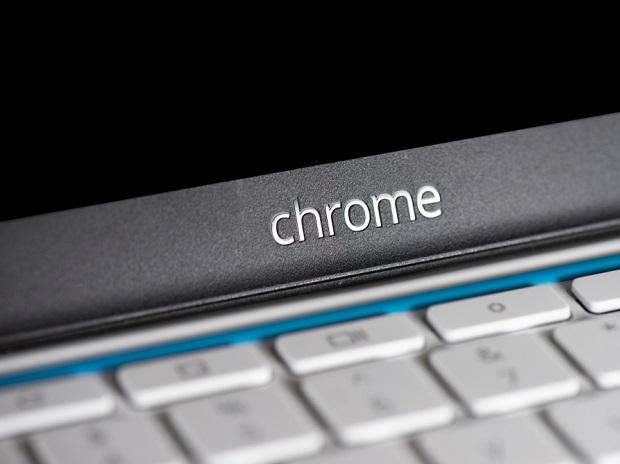
Tech giant has announced that it is introducing the world’s first Chromebooks built for cloud gaming made by manufacturers, including Acer, ASUS and Lenovo.


These new Chromebooks bring together gaming hardware features, access to the latest games with cutting-edge graphics through the cloud, and software designed to make gaming fast and easy.


“Chromebooks have always been known for being fast, secure, and easy-to-use devices. Since their launch more than a decade ago, we have improved their capabilities and expanded the variety of devices for people to choose from,” the company said in a blogpost.


“Today, we are taking that effort a step further by introducing the world’s first built for cloud gaming along with our partners Acer, ASUS and Lenovo,” it added.


The company announced three new Chromebooks — Acer Chromebook 516 GE, ASUS Chromebook Vibe CX55 Flip and Ideapad Gaming Chromebook from Lenovo.


These come loaded with features that are great for gaming, including 120Hz+ high-resolution screens for crystal clear visuals, RGB gaming keyboards (on select models) with anti-ghosting capabilities for added speed and excitement, and WiFi 6 or 6E.


said that all cloud gaming Chromebooks had been independently tested and verified by the leading game performance measurement platform, GameBench.


“We have teamed up with NVIDIA to bring support for GeForce NOW’s highest performance RTX 3080 tier to cloud gaming Chromebooks so that you can stream titles like Fortnite, Cyberpunk 2077, Crysis 3 Remastered and more at up to 1600p resolution and 120 frames per second,” the company said.


The RTX 3080 membership also boosts your gameplay with features like ray tracing, which simulates how light behaves in the real world to make visuals hyper-realistic.


–IANS


vc/ksk/

(Only the headline and picture of this report may have been reworked by the Business Standard staff; the rest of the content is auto-generated from a syndicated feed.)


Source link

5G transition: Telecom dept to meet smartphone makers, service providers

5G transition: Telecom dept to meet smartphone makers, service providers


With 5G services having been launched in the country earlier this month, the government has convened a meeting of handset manufacturers and telecom service providers on Wednesday to ensure a smooth transition towards the new technology.


Though 5G has been unveiled, mobile handsets in India are not yet compatible with the new technology and their softwares need to be upgraded, sources said.


During Wednesday’s meeting, which has been convened jointly by Secretaries of telecom and IT departments, mobile handset companies like Apple, Samsung and others are likely to be asked to push for over the air (OTA) upgrades for 5G handsets, sources aware of the development said.


Prioritising software upgrade would enable early adoption of 5G in India, sources added further.


Enabling mobile handsets to be 5G ready for 5G services launched in the country is an important agenda for the October 12 meeting.


–IANS


ans/pgh

(Only the headline and picture of this report may have been reworked by the Business Standard staff; the rest of the content is auto-generated from a syndicated feed.)


Source link

SpaceX to seek permit from DoT for Starlink services in India: Report

SpaceX to seek permit from DoT for Starlink services in India: Report


Billionaire entrepreneur Elon Musk’s is set to seek a permit to launch satellite internet services in India under its Starlink brand, becoming the third company to apply for such a permit, the Economic Times reported on Wednesday.


will also seek statutory approvals from the government for landing rights and market access, the report said, adding that it is likely to seek approvals from Department of Telecommunications (DoT) to set up local gateways.


and DoT did not immediately respond to Reuters requests for comment after regular hours.


Earlier this year, the Indian government asked Starlink to refund all its pre-orders until it received licences to operate in the country.


SpaceX will “very shortly” apply for a Global Mobile Personal Communications By Satellite (GMPCS) services licence to Indian authorities, the report said, without giving further details. Bharti Group-backed OneWeb and Reliance Jio’s satellite arm have already applied for the permit.


(Reporting by Maria Ponnezhath in Bengaluru; Editing by Richard Pullin)

(Only the headline and picture of this report may have been reworked by the Business Standard staff; the rest of the content is auto-generated from a syndicated feed.)


Source link

Google to introduce reward point system in India for Play Store users

Google to introduce reward point system in India for Play Store users


Internet major will roll out it’s reward point system in India, which can be redeemed for making purchases at Play Store, the company said on Tuesday.


The facility, Play Points, is available in 28 countries globally.


Play Points helps users earn points and rewards for the many ways they use the platform. Over the past years, Google Play Points has been expanded to 28 countries and has more than 100 million people finding value in the programme. The programme will be rolled out to users in India in the coming week,” the company said in a statement.


With Play Points, users will be able to earn points when they make purchases with Google Play, including in-app items, apps, games, and subscriptions.


Google Play has also partnered with developers of popular apps and games across the world, which will enable users to redeem their points for special in-app items.


In India, it is partnering with over 30 participating titles that include games from global studios such as Miniclip (8 Ball Pool), TG INC (Evony: The King’s return), games from local studios such as Gametion (Ludo King), Playsimple Games (Word Trip), Gameberry Labs (Ludo Star), and popular apps such as Truecaller and Wysa.


Google said that it will look at expanding the programme to more global and local developers in the future.


“Google Play Points will also provide local developers a new avenue to build a local and global user base; helping them engage their users, drive discovery, and acquire users across markets that have Google Play Points,” the statement said.

(Only the headline and picture of this report may have been reworked by the Business Standard staff; the rest of the content is auto-generated from a syndicated feed.)


Source link

YouTube
Instagram
WhatsApp




