Lava Blaze Pro review: Made in India smartphone good for basic everyday use

Lava Blaze Pro review: Made in India smartphone good for basic everyday use


Home-grown electronics brand Lava recently launched its second in the Blaze-series, the Lava Blaze Pro. Powered by the MediaTek Helio G37 processor, the is priced at Rs 9,999 – at par with rival smartphones powered by the same chip such as Motorola Moto G22 and Techno Spark 9. The brings a few upgrades to justify the ‘Pro’ moniker, but are they good enough? Let us find out


Design


The Lava Blaze Pro looks identical to its predecessor, the Lava Blaze, except it has a frosted glass back design. The phone’s frame is made of plastic with a smooth finish, which gets easily smudged with fingerprint marks. On the frame, there is a power button on the right, which doubles as a fingerprint scanner, and a volume button just above it. The button placement is appropriate, making one-handed operation comfortable.


Display and audio


The Lava Blaze Pro sports a 6.5-inch IPS HD+ screen of 90Hz refresh rate. The screen is bright, vivid and responsive. Considering the phone’s price, the screen quality and performance is acceptable. It is set to standard colour profile by default, but can be tuned for vivid and cool colours from display settings.


As for the audio, the phone has a mono speaker on the bottom side of the frame. It is loud and clear, but lacks clarity. The speaker delivers modest experience while watching videos, listening to music, and playing games. Besides the mono speaker, the Lava Blaze Pro has a 3.5mm audio out port for wired connectivity.


Camera


Imaging is covered by a triple-camera system on the back, featuring a 50-megapixel primary sensor, 2MP ultra-wide-angle sensor, and a 2MP mono lens. From a price-performance ratio, the rear camera system is good. However, do not expect quality output. The camera struggles with zoom. The zoomed shots show lack of details and there is visible noise across the frame. Moreover, the camera tends to artificially smoothen the frame in the post processing, resulting in loss of details. On the front, the phone has an 8MP camera sensor. It is good for selfies and video calls, but struggles in low-light conditions.


Performance and battery


The Lava Blaze Pro is powered by MediaTek Helio G37 system-on-chip, paired with up to 4GB RAM and 64GB on-board storage. The phone has a microSD card slot for storage expansion (up to 256GB). It boots Android 12 operating system with stock user interface free from bloatware and advertisements. From a price-performance perspective, the Lava Blaze Pro works well. It handles regular operation with ease and does not slow down even with 15 apps opened in the background.


As for the on-battery time, the smartphone survives a day of moderate usage with the screen set at 90Hz refresh rate. For battery saving, the refresh rate can be reduced to 60Hz from settings. The Lava Blaze Pro discharges quickly and gets warm when used for power-intensive tasks. The phone comes with a 10W charger, which takes about an hour to recharge a completely drained battery.


Verdict


The Lava Blaze Pro is not perfect, but it can do all things to an extent. The smartphone has a good display and clean user interface. Aside to these, there is barely anything to make it outshine its peers in its price segment Rs 9,999.


Source link

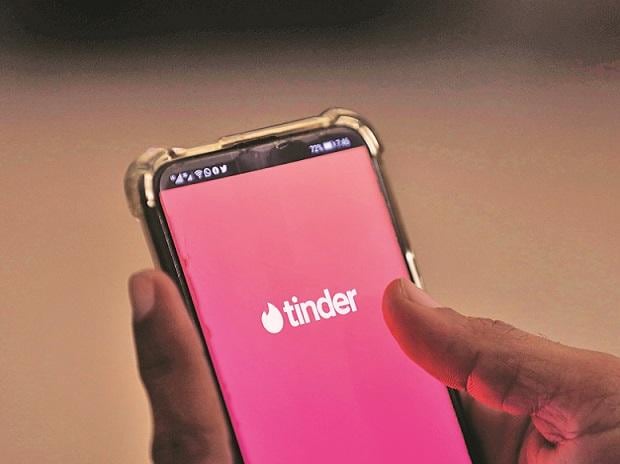
Small towns see surge in dating app users; video calls take front seat

Small towns see surge in dating app users; video calls take front seat


The concept of online digital, before the Covid-19 pandemic, was mostly confined to metropolitan cities. However, the course of has changed now. Young Indians from small towns are now relying on dating apps to find love and companionships as more and more people have started to choose video calls over in-person dating, a report by Livemint stated on Wednesday.


According to company executives, users on dating apps, such as Tinder, Bumble, and TrulyMadly, from outside of metro cities now account for 70 per cent, reported Livemint.


Catching up with major metro cities of India, Ahmedabad, Surat, Lucknow, Jaipur, Chandigarh, and Patna are witnessing a significant surge in users of dating apps. With the surge, more women are now becoming vocal on dating platforms, reported Livemint.

Also Read: Dating changed during the Covid pandemic; apps are following suit


About 72 per cent of users believe finding love online without meeting them in person is possible, the executives at dating apps told Livemint.


“The distinction between our online and offline world is blurring. As a result, the time spent online is on the rise,” Andwemet’s founder Shalini Singh told Livemint.


Andwemet, an platform for single urban Indians, has witnessed its user-base triple annually in the past two years.


Indians find more platforms more trustworthy in the post-Covid era, as people are willing to pay for the convenience of online dating, Singh told Livemint.


The surge in users in these cities has also been fuelled by many youths moving back to their hometowns from the metros during the pandemic, the Andwemet founder told Livemint. She added that dating apps are attracting affluent users even in small-town India.


Video dates


For single people, video dates have become a first-date staple as mentions of ‘video call’ in bios of users grew 52 per cent globally, stated Tinder’s Year in Swipe 2021.


While many Indians preferred video dating on Tinder, Hyderabad was the chattiest city, followed closely by Chennai and Bengaluru, the Livemint report stated.


Most first dates are still on video, and if things work out, users plan an offline date, Snehil Khanor, co-founder and CEO of TrulyMadly, told Livemint.


Aisle’s founder and CEO, Able Joseph, while agreeing that video calls now become a part of the screening process before an in-person date, said that causal hookups may be on a slow decline.


“Loneliness — coupled with a few years of uncertainty — led to a certain sense of collective fatigue that’s developed in the Indian dating landscape. Singles are found moving away from the endless loop of swiping across dating platforms and are now looking for more substance in a relationship,” Joseph further told Livemint.


India’s communications director, Samarpita Samaddar told Livemint that Covid has made ‘more than half of us (62 per cent)’ realise that it’s okay to be alone for a while.


“People are consciously deciding to be single, with the majority of single people (54 per cent) being more mindful and intentional in how and when they date,” she told the newspaper.


After the second wave of Covid in India, emotional connection (60 per cent) and kindness (55 per cent) top the charts as being the most important to single Indians in dating, Samaddar said, quoting a nationwide survey conducted in 2021.


“Social good in terms of volunteering, donating to social causes (48 per cent) especially rank high in preferences for millennials in India,” she further told Livemint.


Source link

WhatsApp rolls out links for calls; testing group call for up to 32 people

WhatsApp rolls out links for calls; testing group call for up to 32 people


Instant messaging and calling app will roll out call links for people to join on video and voice calls on the app, its parent firm Meta’s CEO Mark Zuckerberg said on Monday.


The company has also started testing group video calls for up to 32 people on .


“We’re rolling out call links on starting this week so you can share a link to start a call with a single tap. We are also testing secure encrypted for up to 32 people. More coming soon,” Zuckerberg said in a post on social media platform Facebook.


India is the biggest market for WhatsApp with 487.5 million users as of June 2022.


Users will be able to create a call link from the call section and share it with their family and friends. WhatsApp users will need the latest version of the app to use Call Links and the rollout begins this week.


The new feature is expected to increase the competition among the and conferencing apps.

(Only the headline and picture of this report may have been reworked by the Business Standard staff; the rest of the content is auto-generated from a syndicated feed.)


Source link

Apple abandons plans to increase iPhone production after demand falters

Apple abandons plans to increase iPhone production after demand falters


. is backing off plans to increase production of its new this year after an anticipated surge in demand failed to materialize, according to people familiar with the matter.


The Cupertino, California-based electronics maker has told suppliers to pull back from efforts to increase assembly of the iPhone 14 product family by as many as 6 million units in the second half of this year, said the people, asking not to be named as the plans are not public. Instead, the company will aim to produce 90 million handsets for the period, roughly the same level as the prior year and in line with Apple’s original forecast this summer, the people said.


Demand for higher-priced iPhone 14 Pro models is stronger than for the entry-level versions, according to some of the people. In at least one case, an Apple supplier is shifting production capacity from lower-priced to premium models, they added.


US stock-index futures turned lower after the news, with contracts on the Nasdaq 100 falling as much as 1.3%. Key chipmaker Taiwan Manufacturing Co. fell as much as 1.8%, Apple’s biggest iPhone assembler Hon Hai Precision Industry Co. was down as much as 2.4% and specialized producers Largan Precision Co. and LG Innotek Co. both slumped by more than 7%.


Apple Suppliers Drop as Company Said to Ditch iPhone Production Lift


Apple had upgraded its sales projections in the weeks leading up to the iPhone 14 release and some of its suppliers had started making preparations for a 7% boost in orders.


An Apple spokesperson declined to comment.


China, the world’s biggest smartphone market, is in an economic slump that’s hit its domestic mobile device makers and also affected the iPhone’s sales. Purchases of the iPhone 14 series over its first three days of availability in China were 11% down on its predecessor the previous year, according to a Jefferies note on Monday.


Global demand for personal electronics has also been suppressed by surging inflation, recession fears and disruption from the war in Ukraine. The smartphone market is expected to shrink by 6.5% this year to 1.27 billion units, according to data from market tracker IDC.


“The supply constraints pulling down on the market since last year have eased and the industry has shifted to a demand-constrained market,” said Nabila Popal, research director at IDC. “High inventory in channels and low demand with no signs of immediate recovery has OEMs panicking and cutting their orders drastically for 2022.”


Source link

Pixel 7 Pro spec leaks suggest it will be powered by Tensor G2 chipset

Pixel 7 Pro spec leaks suggest it will be powered by Tensor G2 chipset


Latest leaks for the upcoming Pixel 7 Pro smartphone are painting a picture of mild upgrades compared to its predecessor, which is nearly a year old at this point.


According to GSM Arena, among the changes, a switch to the Tensor G2 is expected; the new chip is allegedly bringing in GPU, NPU and modem improvements. Based on unconfirmed info from Yogesh Brar, the Pro model will be available in 12/128GB and 12/256GB configurations.


There is no word on a 12/512GB model like the current phones, maybe axed it based on sales data or maybe the rumoured info is incomplete.


Either way, the Pro phone is expected to have a similar 50MP main, 12MP ultra-wide and 48MP telephoto setup as its predecessor, though the tele camera will allegedly use a new sensor, a Samsung GM1 stepping in to replace the Sony IMX586.


The selfie camera will have a subtle change as well – resolution will remain at 11MP, though the new module is expected to have autofocus. The display will be the same as before, a 6.7″ LTPO OLED panel with QHD+ resolution and 120Hz refresh rate. That will remain a major selling point over the FHD+ 90Hz display of the vanilla Pixel 7.


Its battery will basically be the same with a 5,000mAh capacity and support for 30W fast charging. Wireless charging will be supported on both Pixel 7 models.


As per GSM Arena, it seems that a lot is riding on the Tensor G2 chip as it is the only major upgrade and that too is debatable because some might point out that it has basically the same CPU as the G1.

(Only the headline and picture of this report may have been reworked by the Business Standard staff; the rest of the content is auto-generated from a syndicated feed.)


Source link

Pixel 7 Pro spec leaks suggest smartphone will have Tensor G2 chipset

Pixel 7 Pro spec leaks suggest smartphone will have Tensor G2 chipset


Latest leaks for the upcoming 7 Pro smartphone are painting a picture of mild upgrades compared to its predecessor, which is nearly a year old at this point.


According to GSM Arena, among the changes, a switch to the Tensor G2 is expected; the new chip is allegedly bringing in GPU, NPU and modem improvements. Based on unconfirmed info from Yogesh Brar, the Pro model will be available in 12/128GB and 12/256GB configurations.


There is no word on a 12/512GB model like the current phones, maybe Google axed it based on sales data or maybe the rumoured info is incomplete.


Either way, the Pro phone is expected to have a similar 50MP main, 12MP ultra-wide and 48MP telephoto setup as its predecessor, though the tele camera will allegedly use a new sensor, a Samsung GM1 stepping in to replace the Sony IMX586.


The selfie camera will have a subtle change as well – resolution will remain at 11MP, though the new module is expected to have autofocus. The display will be the same as before, a 6.7″ LTPO OLED panel with QHD+ resolution and 120Hz refresh rate. That will remain a major selling point over the FHD+ 90Hz display of the vanilla Pixel 7.


Its battery will basically be the same with a 5,000mAh capacity and support for 30W fast charging. Wireless charging will be supported on both Pixel 7 models.


As per GSM Arena, it seems that a lot is riding on the Tensor G2 chip as it is the only major upgrade and that too is debatable because some might point out that it has basically the same CPU as the G1.

(Only the headline and picture of this report may have been reworked by the Business Standard staff; the rest of the content is auto-generated from a syndicated feed.)


Source link

YouTube
Instagram
WhatsApp




