Motorola Edge 70 Fusion unveiled, set to launch in India on March 6: Specs

Motorola Edge 70 Fusion unveiled, set to launch in India on March 6: Specs


Motorola Edge 70 Fusion has been unveiled ahead of the Mobile World Congress (MWC) 2026, scheduled to run from March 2 to March 5. The Motorola Edge 70 Fusion, powered by the Qualcomm Snapdragon 7s Gen 4 chipset and a 7,000mAh battery, will be launched in India on March 6 in three colour options. The Motorola Edge 70 Fusion was unveiled alongside the Motorola Razr Fold.


Motorola Edge 70 Fusion: Details


The Motorola Edge 70 Fusion will sport a 6.8-inch Extreme AMOLED display with Super HD resolution, a 144Hz refresh rate and up to 5,200 nits of peak brightness, along with HDR10+ support. It will offer dual stereo speakers with Dolby Atmos for audio. The device will be powered by the Qualcomm Snapdragon 7s Gen 4 processor, paired with 8GB or 12GB of RAM and 128GB or 256GB of storage, and will run on Android 16.


For photography, it will feature a 50MP Sony LYTIA 710 primary sensor alongside a 13MP ultra-wide-angle lens, while a 32MP camera will handle selfies. The Motorola Edge 70 Fusion will be powered by a 7,000mAh battery with 68W TurboPower charging support. It weighs 193g and is available in PANTONE Silhouette, PANTONE Country Air and PANTONE Blue Surf colour options.


Motorola Edge 70 Fusion: Specifications


  • Display: 6.8-inch Extreme AMOLED, Super HD resolution, 144Hz refresh rate, up to 5,200 nits peak brightness, HDR10+

  • Audio: Dual stereo speakers with Dolby Atmos

  • Processor: Qualcomm Snapdragon 7s Gen 4

  • RAM: 8GB, 12GB

  • Storage: 128GB, 256GB

  • OS: Android 16

  • Rear camera: 50MP Sony LYTIA 710 + 13MP ultra-wide-angle

  • Front camera: 32MP

  • Battery: 7,000mAh

  • Charging: 68W TurboPower

  • Weight: 193g

  • Durability: IP68 and IP69 rated, Corning Gorilla Glass 7i

  • Colour: PANTONE Silhouette, PANTONE Country Air, PANTONE Blue Surf


Motorola Razr Fold: Details

Ahead of MWC 2026, Motorola also unveiled the Razr Fold, marking its entry into the book-style foldable segment. The company confirmed that the device will sport a 6.6-inch outer display that unfolds into an 8.1-inch 2K LTPO main screen, measuring 4.6mm when open and 9.9mm when folded. It will feature a stainless steel teardrop hinge, titanium inner screen plate, ultra-thin glass and an anti-shock layer for added durability.


The Qualcomm Snapdragon 8 Gen 5 chipset will power the smartphone, paired with 16GB RAM and up to 1TB storage, supported by a 6,000mAh silicon-carbon battery with 80W wired and 50W wireless charging. Its camera setup will comprise a 50MP Sony LYTIA 828 primary sensor with 8K and Dolby Vision recording, a 50MP periscope telephoto lens (3x optical, up to 100x digital), a 50MP ultra-wide with macro, a 32MP internal selfie camera and a 20MP external camera. Motorola is also committing to seven years of Android OS and security updates.


The Motorola Razr Fold is compatible with the Moto Pen Ultra stylus, offering pressure sensitivity, tilt support, low latency and palm rejection for productivity tasks. It includes features such as hover mode, quick-access tools, AI-powered transcription and notification summaries. Thanks to its flexible hinge, the device supports laptop and tent modes for multitasking and hands-free use, effectively doubling as a built-in stand.


Source link

YouTube experiments with AI remix tools for Shorts: Here's what's new

YouTube experiments with AI remix tools for Shorts: Here's what's new


YouTube is testing new AI-powered tools for Shorts that will allow creators to remix videos in different ways. According to a Google support page, the company has introduced two new options: “Add object” and “Reimagine” within the Shorts Remix menu. These features are currently being tested with a small group of creators and are limited to English-language users for now. The tools use AI to help transform or enhance Shorts without requiring creators to film entirely new content.


YouTube Shorts: New AI options in theRemix menu

When a creator taps the Remix button on an eligible Short, they may see one of the two new options. The first feature, Add object, allows creators to insert items into a scene from the original Short. This works for clips of up to eight seconds. Users can either choose from suggested prompts or enter their own custom prompts to generate the object they want to add. YouTube said that the idea is to let creators modify a scene without re-shooting the entire video. 


The second feature, Reimagine, allows a creator to select a single frame from the original Short and transform it into an entirely new video using AI. Creators can use suggested prompts or write their own. They also have the option to upload up to two reference photos to guide the final output. The company said it may allow users to turn a single frame from a Short into a completely new visual idea. 


Original creators credit


YouTube said that, as with other remix tools, any Short created using Add object or Reimagine will link back to the original video in the Shorts player. This is said to ensure that the original creator receives attribution and visibility. Creators who do not want their videos to be used for these AI remixes can opt out through their settings. However, opting out will also prevent their content from being used in traditional remixes. YouTube said it will share more details about wider availability in the future as testing continues.


First Published: Mar 02 2026 | 2:30 PM IST


Source link

MWC 2026: Honor Robot Phone, Leitzphone, Motorola Razr Fold, more previewed

MWC 2026: Honor Robot Phone, Leitzphone, Motorola Razr Fold, more previewed


Mobile World Congress (MWC) 2026 is set to commence on March 2, and ahead of the event, several companies have previewed products that they will be showcasing in Barcelona this week. Some of the notable highlights include Honor’s Robot Phone, Lenovo Legion Go Fold concept, Leica’s Leitzphone by Xiaomi, Motorola Razr Fold and more. Here are the highlights of the products that companies have previewed before the commencement of MWC 2026:


Honor Robot Phone

Ahead of MWC 2026, Honor provided a closer look at its upcoming Robot Phone, a concept smartphone built around a motorised pop-up camera with a four-degrees-of-freedom gimbal system, reported Engadget. The module uses what the company claims is the industry’s smallest micro motor, 70 per cent smaller than existing units, enabling a compact camera head capable of tilting, rotating 360 degrees and performing programmed movements. The primary camera features a 200-megapixel sensor with three-axis stabilisation, alongside additional conventional rear cameras housed beneath a fold-away panel. The report added that Honor has added modes such as Super Steady Video, AI Object Tracking and AI SpinShot with 90- and 180-degree automated rotations, aiming to replicate dedicated handheld gimbal functions within a smartphone form factor. 


Honor also announced a partnership with ARRI to integrate elements of its image science into the device, targeting more cinematic colour tuning and highlight control. While full hardware specifications remain undisclosed, the Robot Phone is reportedly scheduled for launch later this year. Alongside the handset, Honor demonstrated a separate humanoid robot prototype designed for industrial and domestic AI applications, positioning both devices as part of its broader push into robotics and intelligent systems. 


Lenovo Legion Go Fold concept


Lenovo has revealed the Legion Go Fold concept, a foldable Windows-based gaming handheld featuring a POLED screen that unfolds from 7.7 inches to 11.6 inches. It is designed to operate in four configurations: a traditional handheld mode with removable controllers, a vertical split-screen layout for gaming alongside other content, a fully expanded horizontal display mode and a desktop-style arrangement supported by a bundled wireless keyboard with integrated touchpad. The right-side controller can additionally be used in an upright position as a mouse. 


Under the hood, the prototype runs on an Intel Core Ultra 7 258V chip, supported by 32GB of RAM and a 48Wh battery. The right controller also houses a small built-in display that functions as a touchpad, provides access to system information and performance data and allows users to assign custom shortcuts.


Xiaomi and Leica


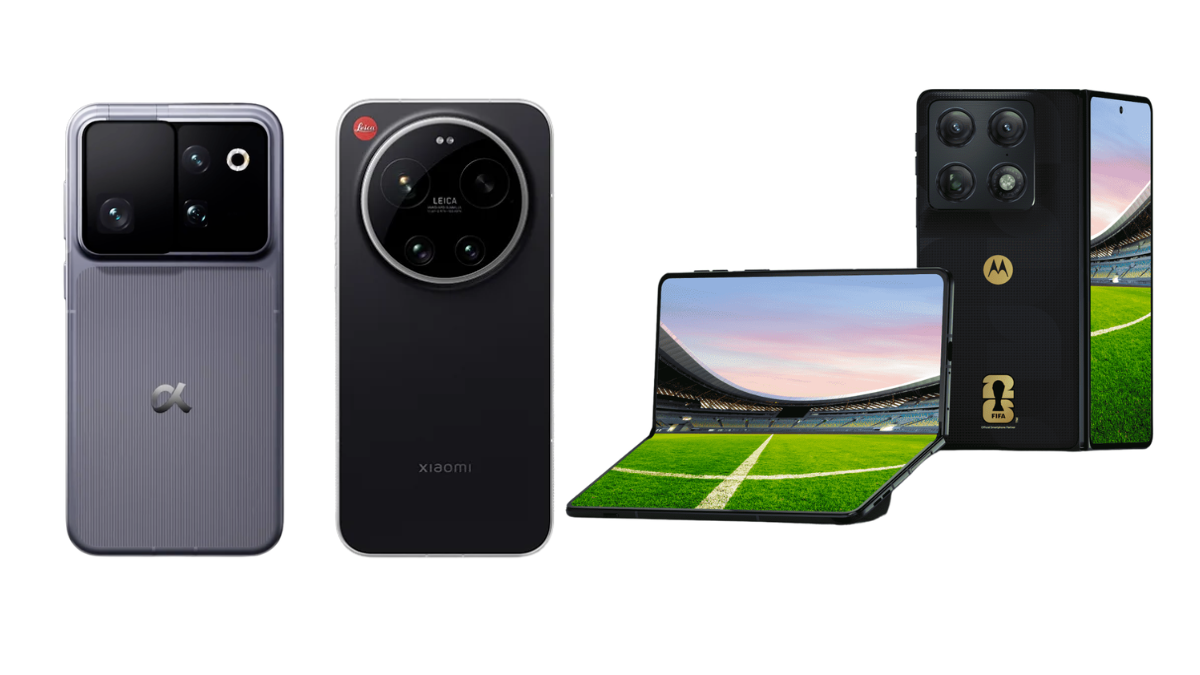
Xiaomi has announced the Xiaomi 17 Ultra ahead of MWC. Developed in partnership with Leica, the phone centres on photography, featuring a 1-inch 50MP primary sensor with an f/1.67 lens, a 200MP 1/1.4-inch telephoto camera and a 50MP ultrawide lens. It also includes a physical zoom ring integrated around the camera module. Beyond imaging, the device offers a 6.9-inch OLED display with a 120Hz refresh rate and peak brightness of 3,500 nits, powered by a 6,000mAh silicon-carbon battery. It runs on Qualcomm’s Snapdragon 8 Elite Gen 5 processor. 


Leica also introduced a co-branded Leitzphone by Xiaomi at the show, built on largely the same hardware platform as the 17 Ultra. It retains the 1-inch sensor and mechanical camera control ring but adds a Leica-designed interface with a simplified shooting layout, monochrome mode and custom Leica filters. The device carries Leica branding while maintaining core specifications, including the Snapdragon 8 Elite Gen 5 chip and a 6.9-inch 120Hz display, akin to the Xiaomi 17 Ultra.


Motorola Razr Fold


Motorola has unveiled the Razr Fold, its first book-style foldable smartphone, featuring a 6.6-inch external display that opens into an 8.1-inch 2K LTPO internal screen. The device measures 4.6mm when unfolded and 9.9mm when closed and uses a stainless steel teardrop hinge, titanium inner screen plate, ultra-thin glass and anti-shock film for durability. It is powered by the Snapdragon 8 Gen 5 Mobile Platform, paired with 16GB RAM and up to 1TB storage and backed by a 6,000mAh silicon-carbon battery with 80W wired and 50W wireless charging. The camera system includes a 50MP Sony LYTIA 828 main sensor with 8K and Dolby Vision recording, a 50MP periscope telephoto (3x optical, up to 100x digital), a 50MP ultrawide with macro support, a 32MP internal selfie camera and a 20MP external camera. Motorola is promising up to seven years of Android OS and security updates. 


The Razr Fold also supports the Moto Pen Ultra stylus, which offers pressure sensitivity, tilt detection, low latency and palm rejection for note-taking, sketching and document annotation. Software features include hover support, quick tool access, screenshot capture and AI-assisted tools such as real-time transcription and notification summaries. The phone can be positioned in laptop and tent modes for multitasking, hands-free video and content capture, with the hinge allowing it to function as a built-in stand. Motorola says the device carries top DXOMARK rankings for foldable cameras in North America and integrates AI features designed to enhance imaging, productivity and system performance. 


Honor Magic V6


Honor also introduced the Magic V6, which it claims is the thinnest foldable in its class, measuring 8.75mm when folded and 4.0mm when open in the white variant. The black, gold and red models are slightly thicker at 9mm folded and 4.1mm unfolded. The book-style foldable is powered by the Snapdragon 8 Elite Gen 5 processor, paired with 16GB of RAM and 512GB of storage. 


Camera hardware includes two 50MP sensors alongside a 64MP telephoto lens, plus 20MP f/2.2 selfie cameras on both the cover and inner displays. According to Engadget, the international model will pack a 6,660mAh battery with 25 per cent silicon content, while the China-exclusive version is rated at over 7,000mAh with 32 per cent silicon content. Pricing and release details have not been disclosed.


Lenovo’s other products unveiled


Lenovo showcased a broad mix of concept and commercial devices spanning foldables, gaming systems and creator-focused PCs:


  • The Yoga Book Pro 3D concept features dual PureSight Pro Tandem OLED displays, including a glasses-free 3D upper screen with AI-powered 2D-to-3D conversion and gesture controls, powered by an Intel Core Ultra 7 CPU and Nvidia GeForce RTX 5070 GPU.

  • Creator laptops include the Yoga 9i 2-in-1 Aura Edition with a 2.8K OLED display and stylus support, and the Yoga Pro 7a with AMD Ryzen AI Max+ chips, up to 128GB RAM and a 2.5K OLED panel.

  • The Idea Tab Pro Gen 2 runs on Snapdragon 8s Gen 4 with a 13-inch 3.5K display and 10,200mAh battery, while the IdeaPad Slim 5i Ultra offers Intel Core Ultra processors, up to a 120Hz display and a 65Wh battery in a 1.15kg chassis.

  • Lenovo also introduced gaming and accessory hardware, including the Legion Tab with an 8.8-inch 165Hz 3K display and Snapdragon 8 Elite Gen 5, and the Legion 7a gaming laptop powered by AMD Ryzen AI Max+ processors with integrated graphics and a 15.3-inch OLED screen.

  • The Yoga Creative Keyboard AngryMiao Edition features a 2.6kg aluminium build with per-key RGB and a large control knob.

  • The L16 Mobile Monitor offers a 16-inch FHD IPS panel with 65W USB-C passthrough.

  • On the commercial side, updates span the ThinkPad T-Series, ThinkPad X13 Detachable and ThinkBook 14 2-in-1 Gen 6, alongside the modular ThinkBook Modular AI PC concept with attachable displays expanding to 19 inches.

  • Lenovo also previewed AI-driven concepts such as the desk-based AI Work Companion for task management and the AI Workmate device supporting voice, gesture and spatial interaction, including projection onto nearby surfaces.


Honor Humanoid Robot


Ahead of MWC 2026, Honor also outlined its Augmented Human Intelligence (AHI) strategy and used the platform to preview a humanoid robot. The robot is positioned as an exploration of embodied intelligence, reflecting the company’s efforts to integrate motion, spatial awareness and AI-driven interaction into future devices. 


Presented as an extension of Honor’s human-centric AI vision, the humanoid robot is intended to demonstrate how intelligent systems could move beyond screen-based interfaces into physical, real-world environments. The company framed the concept as part of a longer-term push towards combining hardware innovation and advanced AI to create more adaptive and interactive machines.

Source link

Google scaling back Pixel Studio tools, redirecting users to Gemini: Report

Google scaling back Pixel Studio tools, redirecting users to Gemini: Report


Google is reportedly beginning to wind down the Pixel Studio app on its Pixel smartphones. According to a report by 9To5Google, the app is gradually losing its generative AI features as Google shifts its focus to other image-generation and editing tools within Gemini, Google Photos and Google Messages. Pixel Studio was introduced in 2024 alongside the Pixel 9 series as part of Google’s broader push into on-device AI experiences.


Pixel Studio update: What’s changing


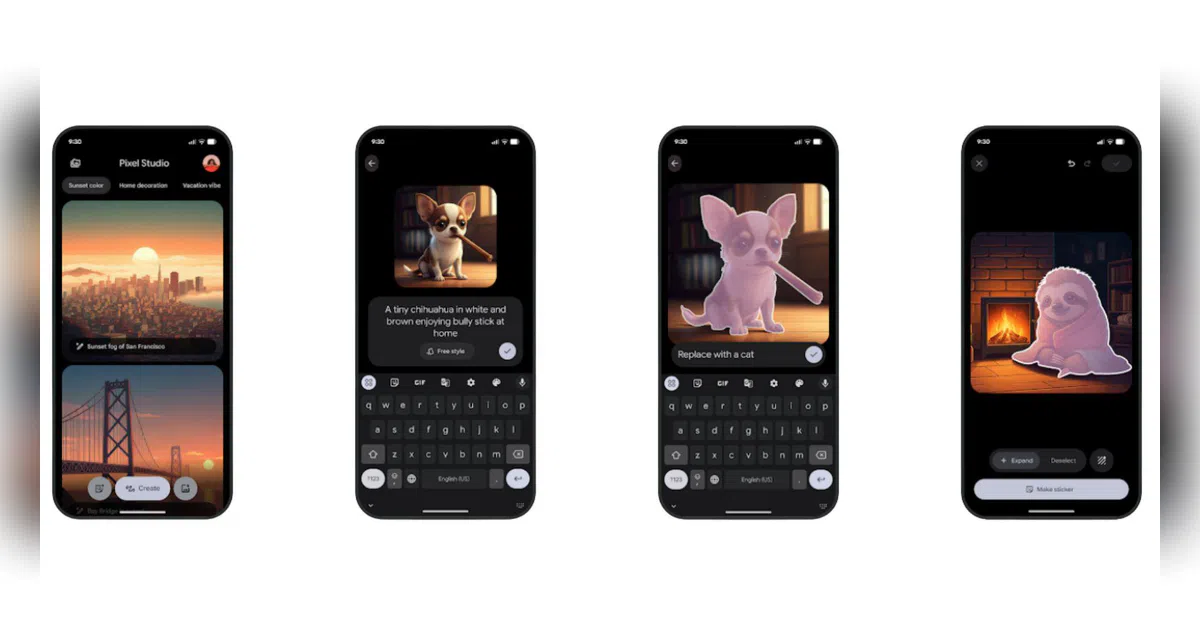
Pixel Studio debuted with the Pixel 9, along with other new apps like Screenshots and Weather. It replaced the older Markup tool and brought a Material 3 Expressive design along with AI-powered editing features. Users could generate images using text prompts, create stickers and remove parts of an image with generative AI. 


However, 9To5Google reported that a new update (version 2.2.001.864530193.00), currently rolling out to the Pixel 9 and Pixel 10 series, starts scaling back these capabilities. After installing the update, users will no longer see the prompt-based editing tools. The app now focuses only on basic editing functions such as cropping, drawing, highlighting and adding text. It continues to serve as a simple image editor, often used for editing screenshots, but without its earlier AI-powered tools. 


Generative features to shift to Gemini


While the basic editor will remain available, Google reportedly plans to remove the prompt-based image generation and sticker creation features entirely in the future. The report mentioned that “Google will redirect Pixel Studio users to Nano Banana in Gemini while offering an easy export tool for all your creations.” According to the report, Google also clarified that all Pixel Studio-powered integrations will continue to work as expected on existing devices during this period. 


Instead of continuing with Pixel Studio as a standalone AI image tool, Google appears to be consolidating its generative features. The company is reportedly focusing on tools like Remix in Google Messages and various AI-powered editing options in Google Photos. Meanwhile, Nano Banana 2 was introduced within the Gemini app, positioning it as the new hub for image generation features previously available in Pixel Studio.


Source link

RIL, Adani among others pledge 0 bn investment in India at AI Summit

RIL, Adani among others pledge $240 bn investment in India at AI Summit


Reliance Industries, Adani, Google, Lightspeed Ventures and Tata are among the top investors that cumulatively made commitment of $240 billion investment in India during the India AI Impact Summit 2026, an official statement said on Monday.


The number released by the government shows that the India AI Impact Summit 2026, held from Feb 16-21, was the biggest AI event held till date, with approximately 6 lakh attendees in person, delegations from more than 100 countries and 20 international organisations participated in the proceedings.


Over $200 billion in AI-related investments are expected across infrastructure, foundation models, hardware and applications.


The India AI Impact Summit Declaration was endorsed by 92 countries and international organisations. The New Delhi Frontier AI Impact Commitments were announced by 13 leading global and Indian frontier model developers to promote trustworthy and inclusive AI deployment.


According to the statement, Reliance Industries pledged $110 billion over seven years towards AI-focused infrastructure, Adani Enterprises announced plans to invest $100 billion by 2035, General Catalyst announced a $5 billion investment commitment over five years, while Lightspeed Venture Partners announced $10 billion in investments.


Google CEO Sundar Pichai announced investments including new India-US subsea cable routes and a $15 billion AI hub in Visakhapatnam.


Meanwhile, Tata Group announced a partnership with OpenAI to scale AI-ready data centres.


A key announcement at the Summit was the expansion of India’s sovereign compute capacity.


In addition to the over 38,000 GPUs already provisioned under the IndiaAI Mission, an additional 20,000 GPUs will be added in the coming weeks, further strengthening national AI infrastructure, the statement said.


The statement said that The AI Impact Expo emerged as one of the largest AI exhibitions globally, with over 850 exhibitors across 10 thematic pavilions.


Source link

US military used Claude for strikes in Iran despite Trump's criticism

US military used Claude for strikes in Iran despite Trump's criticism


Hours after United States (US) President Donald Trump criticised artificial intelligence (AI) firm Anthropic, the US military reportedly used its AI model Claude to assist in its strikes against Iran, according to The Wall Street Journal. 


The military deployed the AI system to analyse intelligence, identify potential targets, and run combat scenario simulations, the report added. The US military, along with the Israel Defence Forces (IDF), launched a coordinated strike on Iran in the early hours of Saturday. Hours later, Trump and Israel’s Prime Minister Benjamin Netanyahu claimed that the strikes killed Iran’s Supreme Leader Ayatollah Ali Khamenei, which was confirmed on Sunday by Iranian authorities. 


Why this matters


The strike began hours after Trump branded Anthropic a “radical left and woke company” and directed all federal agencies to cease using its AI tools. 


“I am directing every federal agency in the United States government to immediately cease all use of Anthropic’s technology. We don’t need it, we don’t want it, and will not do business with them again! There will be a six-month phase-out period for agencies like the Department of War who are using Anthropic’s products, at various levels. Anthropic better get their act together, and be helpful during this phase out period, or I will use the full power of the presidency to make them comply, with major civil and criminal consequences to follow,” Trump said in post on Truth Social on Friday. 


Adding to it, US Defence Secretary Pete Hegseth accused Anthropic of “arrogance and betrayal”, saying that “America’s warfighters will never be held hostage by the ideological whims of Big Tech”. “Anthropic will continue to provide the Department of War its services for a period of no more than six months to allow for a seamless transition,” he said. 


Claude was also deployed by the US military in its raid to capture Venezuelan President Nicolás Maduro in January. Its use came under scrutiny after Anthropic protested against employing the AI tool for violent ends, to develop weapons, or for mass surveillance. In an interview with CBS News, Anthropic chief executive officer (CEO) Dario Amodei said that the company remains open to collaborating with the US Department of Defence, provided any engagement adheres to its defined boundaries. 


OpenAI steps in


“Tonight, we reached an agreement with the Department of War (DoW) to deploy our models in their classified network. In all of our interactions, the DoW displayed a deep respect for safety and a desire to partner to achieve the best possible outcome. AI safety and wide distribution of benefits are the core of our mission,” OpenAI CEO Sam Altman said on Sunday. 


“Two of our most important safety principles are prohibitions on domestic mass surveillance and human responsibility for the use of force, including for autonomous weapon systems. The DoW agrees with these principles, reflects them in law and policy, and we put them into our agreement,” he added.


Source link

YouTube
Instagram
WhatsApp