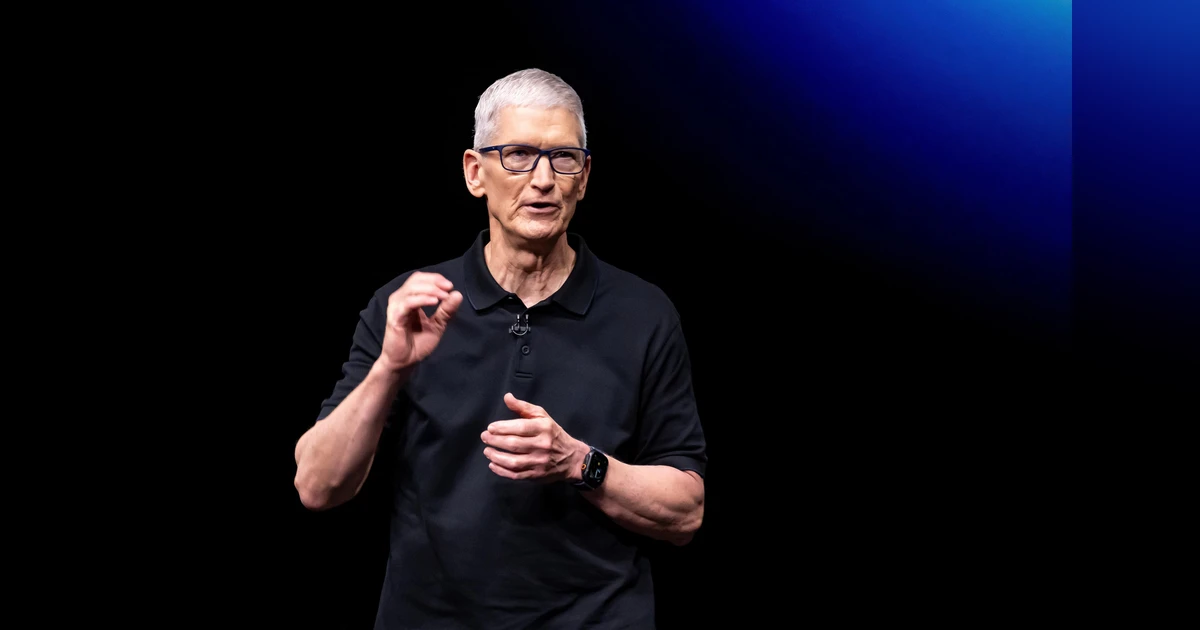
India seeks role in shaping AI with summit of world leaders, tech chiefs

India seeks role in shaping AI with summit of world leaders, tech chiefs


By Saritha Rai


India kicks off one of the world’s largest artificial intelligence summits Monday, with Prime Minister Narendra Modi seeking to clear a path for India in a heated race to develop frontier models.


World leaders, tech moguls, AI founders and investors are expected to arrive in New Delhi for the India AI Impact Summit, potentially the largest gathering of AI luminaries to date. Sundar Pichai of Alphabet Inc., Sam Altman of OpenAI Inc., Dario Amodei of Anthropic PBC and Meta Platforms Inc.’s Alexandr Wang are on the guest list, alongside researchers including Yann LeCun and Arthur Mensch. 


During the summit’s final two days — Feb. 19 and 20 — French President Emmanuel Macron will deliver the keynote, followed by Modi’s remarks. 


For Modi, the summit offers a chance to showcase India’s vast tech-savvy population and engineering talent as forces that could tilt the next phase of the global AI race in its favor. The country has digital infrastructure powered by data from over a billion citizens, identifiable through Aadhaar, a biometric ID system. It has a proven track record of scaling technology quickly despite late starts — missing the personal computer boom but becoming a software services powerhouse and leaping from limited landlines to nearly a billion smartphones in under two decades.


“By overlaying AI over existing digital identity, payment rails as well as health care, education and governance stacks, India is attempting to compress decades of development into years,” said Abhishek Singh, additional secretary at the Ministry of Electronics and IT. “And what gets built for India won’t stay only in India.” 


The country is already exporting its digital identity and payments blueprint. MOSIP, an open-source platform inspired by Aadhaar’s architecture, is now helping countries including the Philippines, Morocco and Uganda build national ID systems. Some countries are creating digital payment platforms atop the same scaffolding.


In AI competitiveness, India ranks third globally, trailing the US and China, according to Stanford University’s Institute for Human-Centered AI. 


Global tech firms are taking notice. OpenAI and Anthropic are setting up operations in India, courting enterprise customers, developers and government agencies. Google and Meta are expanding data centers to serve one of the fastest-growing markets for models such as ChatGPT, Gemini and Claude. Nvidia Corp., squeezed by US export curbs on high-end chips in China, sees India as a counterweight, though its chief pulled out of the summit at the last hour citing “unforeseen circumstances.”


Still, industry analysts caution that years of underinvestment in technology research and development may hamper India’s AI growth. Aakrit Vaish, founder of AI-focused fund Activate, said the country’s real breakthrough will come from strengthening its research ecosystem so “we aren’t just a testing lab for Silicon Valley’s algorithms.”


Efforts to build locally attuned models are already underway. Systems reflecting India’s linguistic diversity will be unveiled this week, with researchers developing voice-first systems for dozens of Indian languages.


At the summit, government-backed BharatGen, formed by combining the research muscle of India’s top engineering institutions, will debut Param2, a 17-billion parameter model supporting 22 Indian languages. Sarvam AI, backed by Lightspeed Venture Partners and Khosla Ventures, will unveil an even larger model with similar voice-first orientation. Both projects aim to introduce low-cost AI to a vast population and generate more data to help transform sectors from classrooms to clinics to crop fields.


For US companies, burgeoning competition from such local models may further delay profitability from AI enterprises in India, a conundrum for the ecosystem in China.


The focus on affordability is deliberate, and that could be game changing. “Our model is designed to accelerate adoption in critical areas across governance, education, health care and farming,” said Rishi Bal, chief executive officer of BharatGen. “In India and much of the developing world, cost is not an afterthought.”


Himanshu Tyagi, co-founder of San Francisco-based and Peter Thiel-backed Sentient AI, said India could make up lost ground if it focuses on areas like advanced reasoning for science and robotics, since “the next wave of intelligence will use data not on the internet.” 


Source link

India summit 'important moment' to unlock full benefits of AI: UK deputy PM

India summit 'important moment' to unlock full benefits of AI: UK deputy PM


The UK’s focus during the AI Impact Summit set to start in New Delhi on Monday will be on championing how artificial intelligence can supercharge growth, unlock new jobs, improve public services and deliver benefits for people around the globe, the British government has said.


The UK delegation, led by Deputy Prime Minister David Lammy and AI Minister Kanishka Narayan, is keen to highlight how AI can improve everyday life in every corner of the world and make the case for AI as an engine of renewal that can help doctors diagnose faster, teachers personalise learning, councils deliver services in minutes and businesses create the next generation of good jobs.


“This summit is an important moment in determining how we can work together with our international partners to unlock the full benefits and potential of AI, while baking in robust and fair safety standards that protect us all,” said Lammy, in a pre-summit statement.


The Department for Science, Innovation and Technology (DSIT) said India and Britain were “natural tech partners”, with software giants like Infosys, Tata Consultancy Services (TCS) and Wipro expanding their operations across the UK.


“AI is the defining technology of our generation, and we’re determined to make sure it delivers for everyone,” said Narayan, the first Indian-origin MP from Wales.


“It can cut waiting times, transform public services, create new jobs and give hard-working communities a fresh start and that’s exactly the message we’re taking to the summit. It is central to our plans for delivering national renewal, but its benefits can’t and shouldn’t be reserved by the few,” he said.


The AI minister said the UK is “leading from the front, pushing a global vision for AI that helps people everywhere to learn more, earn more, and shape the future on their terms”.


“We are totally aligned in making sure that the people of Britain and the people of India get to not just look at AI being built by others but build AI and benefit from AI directly,” he said.


Besides Delhi, Narayan will also travel to Bengaluru to explore how India and the UK are working together to reap the benefits of breakthrough tech.


Both countries are investing tens of millions in cutting-edge research — from better batteries and next-generation telecoms for rural communities, to genomic medicine that could tackle rare diseases, the DSIT said.


India is also a vitally important market for British businesses generally, with UK firms generating more than 47.5 billion pounds in revenue from their business in India, it stated.


During the AI Impact Summit this week, the UK is expected to announce new support for an African Language Hub, enabling AI to work in 40 African languages with the aim of making the technology more inclusive and accessible for millions.


This will be one of three new initiatives being announced as part of the more than 100 million pounds AI for Development (AI4D) programme, created to ensure that developing countries benefit fully from the AI revolution.


The Asian AI4D Observatory will be geared towards supporting responsible AI innovation and governance across South and Southeast Asia, and the AI4D Compute Hub at the University of Cape Town will give African innovators the compute power they need to turn ideas into impact.


The AI Impact Summit in New Delhi has been described as the first international artificial intelligence gathering of its kind to be held in the Global South, anchored around three Sutras of people, planet and progress as India’s approach to cooperation in the field.


Source link

India placed third in global AI vibrancy index after US, China: Report

India placed third in global AI vibrancy index after US, China: Report


India ranks third globally in the Stanford Institute for Human-Centred Artificial Intelligence (HAI) list when it comes to global AI vibrancy, just after the US and China, according to a report.


The report by Hung Tran, a senior fellow at the Policy Centre for the New South, gives a weighted index score based on research and development (R&D), responsible AI, economy, talent, policy and governance, public opinion and infrastructure.


India’s total weighted index score is 21.59, significantly below that of China (36.95) and the US (78.6), but higher than countries such as the United Kingdom, Germany and Israel. Asia’s third-largest economy excelled in AI R&D and stood out for its AI talent, where it came in second after Singapore.


“It (India) has leveraged its strength in the IT services sector, in which the major corporate players have supported R&D efforts and have built data centres to promote the use of indigenous data. In particular, India has implemented policies to secure its sovereignty throughout the AI supply chain, including R&D, design, software and hardware development, and especially data,” the report said.


The report noted that India has been active in promoting open, interoperable and comprehensive domestic datasets, which are valuable for specific applications when it comes to regulatory guardrails. For example, MeitY launched AIKosha last year, which is a national depository of curated datasets and foundation models for use by start-ups and researchers.


“In short, India is an example of a balanced approach in protecting data privacy and regulating cross-border transfers, while developing interoperable and comprehensive domestic datasets, supporting AI-powered applications in various areas.”


Source link

AI Impact Summit 2026: Zepto, Swiggy to manage food at Bharat Mandapam

AI Impact Summit 2026: Zepto, Swiggy to manage food at Bharat Mandapam


As India prepares to host the biggest artificial intelligence (AI) summit this week, the organisers are laying out detailed logistics plans to manage requirements for snacks and meals.


Quick commerce platform Zepto will set up a dedicated dark store within the summit venue, while Swiggy will work closely with on-ground food kiosks to ensure seamless meal distribution for thousands of attendees.


The summit will be held from February 16 to 20 at Bharat Mandapam in New Delhi.


Both platforms, Zepto and Swiggy, have set up dedicated delivery points at the venue where attendees can collect their ordered items. Orders can be placed on the mobile applications and picked up from designated drop-off zones. The platforms will have dedicated delivery partners at the venue.


For delivery, the nearest pickup points can be chosen from the app, for instance, Hall 1, Ground Floor, or Hall 4, First Floor.


With an estimated 2.5 lakh registrations and participants expected from nearly 100 countries, the upcoming summit is set to be one of the largest gatherings on AI in the Global South.


The agenda is expected to span discussions on sovereign AI infrastructure, access to compute, AI safety, responsible deployment, public digital infrastructure, multilingual AI, and sectoral use cases across healthcare, agriculture, financial services, manufacturing and governance.


Source link

Top Putin aide to lead Russian delegation for AI Impact Summit in New Delhi

Top Putin aide to lead Russian delegation for AI Impact Summit in New Delhi


Russian President Vladimir Putin’s senior aide Maxim Oreshkin will lead a large delegation for the AI Impact Summit being held in New Delhi from Monday.


India is set to host the AI Impact Summit 2026, a high-profile gathering of global leaders and industry heavyweights in Artificial Intelligence from February 16-20 at New Delhi’s ‘Bharat Mandapam,’ bringing together policymakers, industry leaders and technology innovators.


Oreshkin, who is deputy chief of the Kremlin staff and economic aide to President Putin, is set to lead the Russian delegation to the India AI Impact Summit 2026.


This (choice of sending Oreshkin) highlights a strategic push for AI collaboration between the two nations, a Kremlin source told PTI, adding, the delegation will focus on secure, trusted, and sovereign AI, with active engagement in discussions on AI governance, technology, and partnerships within BRICS and other platforms.


In an interview to BRICS TV Network on February 9, Russian Foreign Minister Segei Lavrov noted: “India also emphasises ICT security, which we actively support, contributing to the agenda. This is significant, as norms regulating AI use between states, and AI applications by individual states, are only now being established.” 
Lavrov said these norms will regulate behaviours that affect security. “Some countries are actively introducing AI into military applications. While each state has the right to determine its own approach, certain countries are already attempting to centralise control, subordinating what states can and may do with AI in the military sphere,” he said.


BRICS members will not accept infringements on their sovereignty, yet transparency remains crucial, the minister added.


In an article published by state-run news agency TASS on Friday, India’s Ambassador to Russia Vinay Kumar outlined the promising prospects for IndiaRussia cooperation in the field of Artificial Intelligence, highlighting the growing strategic and technological partnership between the two nations.


The synergy between Moscow and New Delhi in AI would act as a catalyst for shared growth and technological advancement of the two strategic partners, Ambassador Kumar said.


Source link

AI buzzwords decoded: What terms like LLMs, generative AI, guardrails mean

AI buzzwords decoded: What terms like LLMs, generative AI, guardrails mean


Artificial intelligence is rapidly reshaping industries, workplaces and the daily digital life, emerging as one of the most transformative technologies – and a focal point of global conversations.


As chatter around AI intensifies ahead of the mega summit that New Delhi is set to host, here is a straightforward guide to some frequently used terms making headlines, and what they mean.


From LLMs to guardrails, decoding AI vocabulary: 
— AI: First things, first. Artificial Intelligence, or AI, refers to the simulation of human intelligence by machines. Think of it as systems designed to perform tasks that typically require human intelligence – understanding language, recognising images, making decisions, solving problems, and increasingly, creating content such as text, music or videos.


At its core, AI is about enabling machines to learn from data. Instead of being programmed step-by-step for every scenario – as is the case with conventional software – AI systems are trained on large volumes of information to detect patterns, make predictions and improvise over time.


— Large Language Model (LLM): An LLM is a type of AI model trained on vast amounts of data (books, websites, articles) to understand and generate human-like language. LLMs power chatbots, writing assistants, coding tools and search summaries.


They work by predicting the next word in a sequence based on patterns learned from massive data sets. An LLM specialises in language.


Prominent examples include Grok, GPT-4o, Claude 4, Gemini 2.5, Llama 4 and DeepSeek-R1.


— Generative AI: AI that can create new content – text, images, music, code or video in response to prompts.


It includes text generators (often powered by LLMs), as well as image models, video models, voice synthesis tools and music generators.


These systems respond to prompts and generate outputs that resemble human-created work, from summarising reports and writing code to composing music, designing logos, creating marketing copy, generating product descriptions, producing social media posts, building presentations, creating synthetic voices, generating realistic images and videos, and even simulating customer service conversations.


— Use Cases: A ‘use case’ means how AI is applied in real-world scenarios, or simply, its practical impact. Common use cases could include fraud detection in banking, personalised recommendations on OTT platforms, AI tools in agriculture, analysing soil and weather data, healthcare diagnostics, and drug discovery.


— Algorithm: A set of defined rules or instructions that tells a computer how to process data and make decisions. Think of algorithms as the building blocks of AI systems.


— AI guardrails: Safeguards woven into AI systems to ensure they operate safely, ethically and within defined boundaries. They are designed to prevent harmful, biased, illegal or inappropriate outputs, and to align the system’s behaviour with laws, policies and human values.


Guardrails could be around content filters, safety policies, bias mitigation, among others.


— Bias (AI Bias): Systematic errors in AI outputs caused by skewed training data, flawed assumptions or design limitations.


— AI hallucination: When an AI system generates information that appears plausible and convincing but is factually incorrect or fabricated.


— Prompt: The input or instruction given to a generative AI system to produce a response.


— Token: A unit of text (word, sub-word, or character) that an AI model processes during training and inference.


Source link

YouTube
Instagram
WhatsApp