India joins US-led Pax Silica initiative to bolster AI, mineral security

India joins US-led Pax Silica initiative to bolster AI, mineral security


India on Friday joined the Pax Silica initiative, an effort by the United States on artificial intelligence (AI) and to build reliable supply chain security of critical minerals to reduce dependence on China, and to advance “a new economic security consensus among allies and trusted partners” of America.


At a special event held on the margins of the AI Impact Summit in the national capital, India became the 12th signatory to the Pax Silica Declaration, which, other than the US, includes Japan, Australia, the United Kingdom, South Korea, Israel and the Netherlands.


At the event, US Ambassador to India Sergio Gor said that US Secretary of State Marco Rubio will visit India in the next few months. He said the India-US trade deal is set to be inked soon. Gor also described the Quad coalition as an important grouping for cooperation among its member states.


Pax Silica was launched in December to build a secure, resilient and innovation-driven supply chain for critical minerals and AI. The Pax Silica Summit was held in Washington on December 12, where partner nations signed the declaration. India was not an original signatory.


India also signed a joint statement on the “India-US AI Opportunity Partnership” as a bilateral addendum to the declaration. It stated that India and the US recognise that “the 21st century is likely to be defined by the physical backbone for artificial intelligence — from critical minerals and energy to compute and semiconductor manufacturing” and they “share the view that the future of AI should be built on a foundation of trusted collaboration, economic security and free enterprise.”


The joint statement added that both sides “express their desire to move beyond the paralysis of fear in favour of the dynamism of AI opportunity to promote innovation and deploy it for human prosperity.” India and the US share the belief that a significant risk facing the free world is not the advancement of AI, but the failure to lead it, the statement said.


The two sides expressed their intent to pursue a global approach to AI that is “unapologetically friendly to entrepreneurship and innovation”. They identified the following shared priorities: promoting pro-innovation regulation; deepening cooperation under the Pax Silica framework to support supply chains of the future; and enabling the AI revolution to be driven by the creative power of the private sector.


The documents were signed by S Krishnan, Secretary, Ministry of Electronics and Information Technology (MeitY); US Ambassador Sergio Gor; and US Under Secretary of State for Economic Growth, Energy and the Environment, Jacob Helberg.


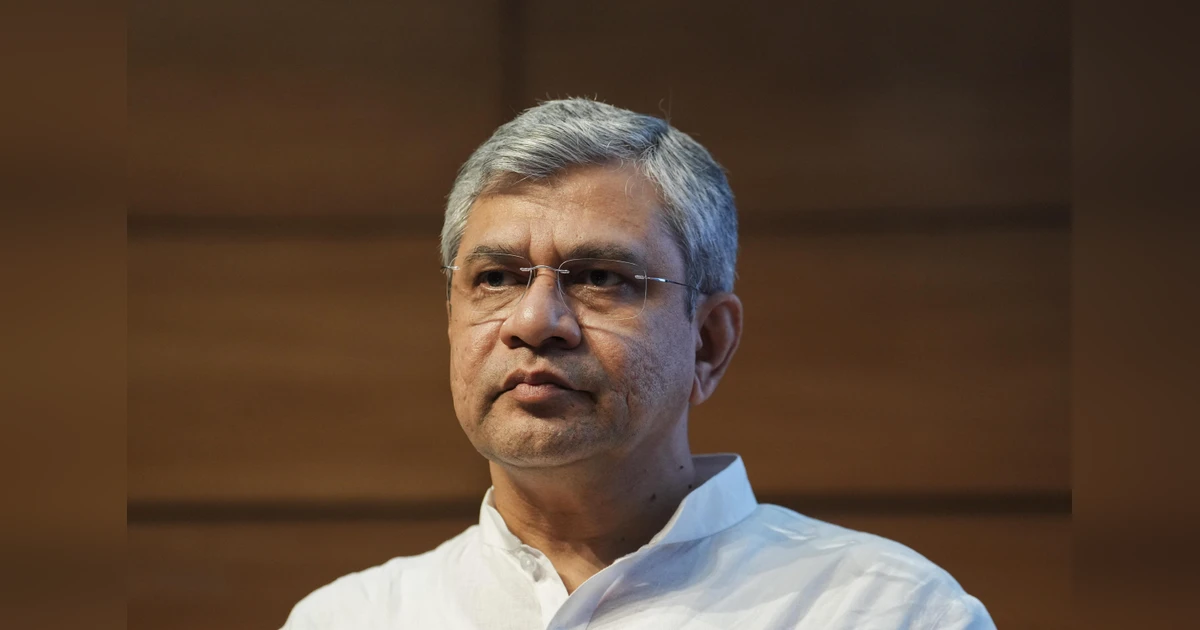
Union MeitY Minister Ashwini Vaishnaw, who was present at the signing, spoke of the strong potential for India and the US to collaborate on supply chain security and emphasised that cooperation under Pax Silica would further deepen engagement on critical technologies and supply chain resilience under the India-US Comprehensive Global Strategic Partnership. India’s joining Pax Silica comes on the heels of improving bilateral relations, with the two countries working towards finalising their trade deal.


US Ambassador Gor said that India’s entry into Pax Silica is both strategic and essential, noting that India brings deep engineering and manufacturing capabilities, expanding capacity in critical mineral processing and a strong trust factor. Helberg said Pax Silica partners are building a new architecture that diffuses intelligence, placing the transformative power of AI in people’s hands and unlocking unprecedented possibilities.


India’s Ministry of External Affairs said Pax Silica seeks to build secure, resilient and innovation-driven supply chains for technologies foundational to the AI era, particularly silicon and critical minerals that underpin semiconductors, advanced computing and other high-technology systems.


Under Pax Silica, India and the US aim to promote pro-innovation regulatory approaches, strengthen the physical AI stack and advance free enterprise. The partnership envisions empowering AI developers, start-ups and ecosystem enablers; exploring joint R&D; facilitating industry partnerships and investments in next-generation data centres; enhancing cooperation on access to compute and advanced processors; and accelerating innovation in AI models and applications.


The MEA said technology cooperation remains one of the central pillars of the India-US Comprehensive Global Strategic Partnership. India’s joining the Pax Silica initiative marks a significant step forward in deepening bilateral collaboration in critical and emerging technologies and reinforces the shared commitment of both countries to resilient, trusted and future-ready supply chains.


Alluding to China’s export controls on rare earth minerals and related products, but without naming it, Helberg flagged challenges arising out of “massively over-concentrated” supply chains for critical minerals and “threats of economic coercion and blackmail”. Over the past year, India, like other countries, faced constraints in importing critical minerals from China, which dominates the sector. Rare earth minerals have wide applications including in electronics, clean energy, aerospace, automotive and defence sectors.


Gor said India brings strength to Pax Silica. “Peace doesn’t come from hoping adversaries will play fair. We all know they won’t. Peace comes through strength. India understands this. India understands strong borders,” he said. “That strength, that sovereignty is exactly what Pax Silica amplifies. Because here’s the truth: strength multiplies when it’s connected.”


Helberg said that for too long “we have allowed the foundations of our economic security to drift. We find ourselves grappling with a global supply chain that is massively over-concentrated.” “We watch as our friends and allies face daily threats of economic coercion and blackmail, forced to choose between their sovereignty and their prosperity,” he said, adding that as India and the US come together on the issue, “we say no to weaponised dependency, and we say no to blackmail. And together, we say that economic security is national security.”


“But we must be precise about what that word means. There are some who use words like global governance and sovereignty in the same breath, just like Orwell used,” he said.


Gor said India’s entry into Pax Silica is not just symbolic but strategic. “It’s essential. India is a nation with deep talent, deep enough to rival challengers,” he said. “From the trade deal to Pax Silica to defence cooperation, the potential for our two nations to work together is truly limitless. And I aim to fulfil that over the next three years that I’m here,” he said, adding that the two countries concluded the interim trade agreement — a deal that shapes the economic contours of the Indo-Pacific — earlier this month. “We overcame friction points that had held us back for far too long,” he said.


“That agreement wasn’t just about trade flows or tariff schedules. It was about two great democracies saying we will build together, not just buy from one another. And now today, we take the next step,” Gor said. He described Pax Silica as a “coalition of capabilities” that replaces “coercive dependencies with a positive-sum alliance of trusted industrial bases”.


“Pax Silica is about whether free societies will control the commanding heights of the global economy,” Gor said. “It’s about whether innovation happens in Bengaluru and Silicon Valley or in surveillance states that use technology to monitor and control their people. We choose freedom. We choose partnership. We choose strength. And today, with India’s entry into Pax Silica, we choose to win,” he said.


 (With PTI inputs)


Source link

Samsung releases revamped Bixby beta version in One UI 8.5: What's new

Samsung releases revamped Bixby beta version in One UI 8.5: What's new


Samsung is giving its Bixby assistant another shot at relevance. The company has announced a beta rollout of a redesigned version of its voice assistant alongside One UI 8.5, positioning it as a more conversational “device agent” that can understand natural language and handle phone settings with less back-and-forth. In simple terms, Samsung wants Galaxy users to stop digging through menus.


As per Samsung, the goal of this upgraded Bixby assistant is to reduce friction in everyday tasks — whether that’s adjusting a setting you can’t find or quickly pulling up information without interrupting what you’re doing.


Bixby in One UI 8.5: What’s new


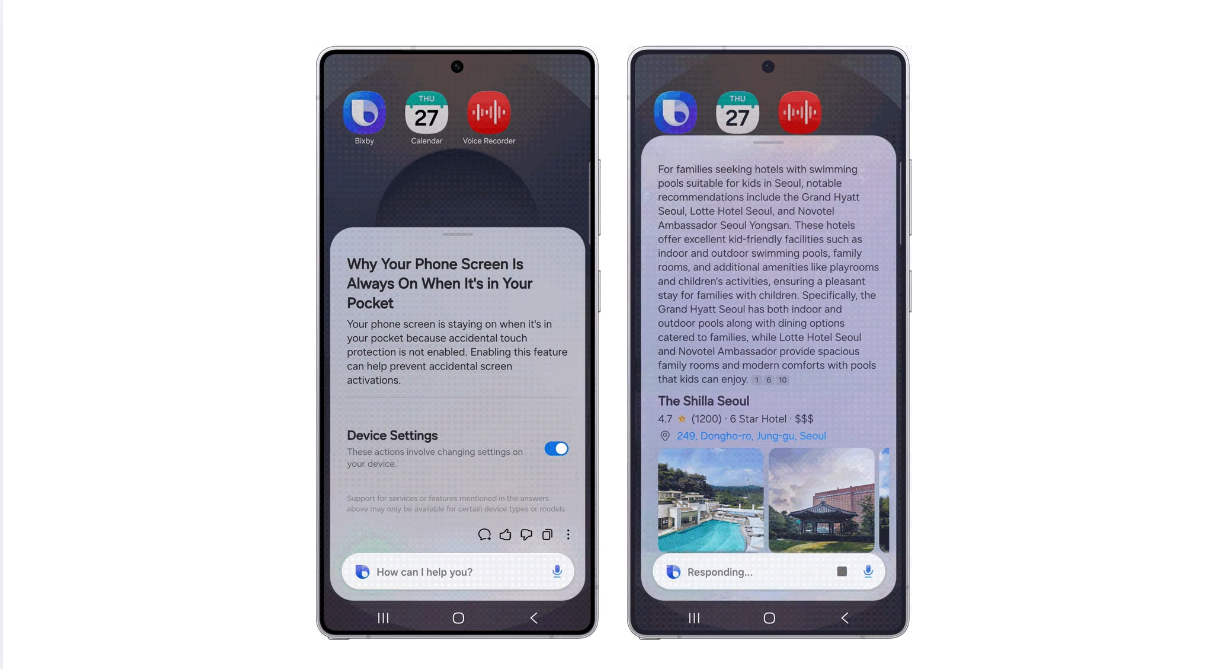
According to Samsung, the updated Bixby is built to understand what you mean — even if you don’t use the exact name of a setting. Instead of memorising how features are labelled inside the Settings app, users can describe what they want in plain language. Samsung gave an example to explain this further. The company said that if a user says something like “I don’t want the screen to time out while I’m still looking at it,” Bixby understands the request and immediately turns on the ‘Keep Screen on While Viewing’ setting. The press release added that this won’t require the user to navigate through settings or know the feature’s exact name.


That shift may sound subtle, but it addresses a long-standing frustration with voice assistants: they often require precise phrasing. Samsung says the new version is designed to interpret intent rather than keywords, and it can also check how the phone is currently configured before suggesting changes. So if your screen keeps waking up in your pocket, asking why it happens could lead Bixby to surface features such as accidental touch protection and let you toggle them on immediately.


Beyond device controls, Samsung is also expanding Bixby’s reach to the open web. The assistant can now fetch live information directly inside its own interface, instead of pushing users into a browser. Samsung said that if a user asks for family-friendly hotels with pools in Seoul, for example, the results appear within Bixby itself. The idea is to keep the interaction contained in one place rather than forcing users to jump between apps.


Revamped Bixby’s availability


The new Bixby is part of One UI 8.5 and is rolling out in beta in select markets, including India, Germany, South Korea, Poland, the UK and US. A wider expansion is expected later.


Samsung is also set to host its next Galaxy Unpacked event in San Francisco on February 25, where it is likely to detail how AI features, including the revamped Bixby, fit into its broader Galaxy strategy.


For Galaxy users, the real test will be whether this version of Bixby feels less rigid and more genuinely helpful than before. If it works as promised, it could make everyday phone interactions a little less tedious — and a lot more natural.


Source link

Social media firms face legal reckoning over mental health harms to kids

Social media firms face legal reckoning over mental health harms to kids


For years, social media companies have disputed allegations that they harm children’s mental health through deliberate design choices that addict kids to their platforms and fail to protect them from sexual predators and dangerous content.


Now, these tech giants are getting a chance to make their case in courtrooms around the country, including before a jury for the first time.


Some of the biggest players from Meta to TikTok are facing federal and state trials that seek to hold them responsible for harming children’s mental health. The lawsuits have come from school districts, local, state and the federal government as well as thousands of families.


Two trials are now underway in Los Angeles and in New Mexico, with more to come. The courtroom showdowns are the culmination of years of scrutiny of the platforms over child safety, and whether deliberate design choices make them addictive and serve up content that leads to depression, eating disorders or suicide.


Experts see the reckoning as reminiscent of cases against tobacco and opioid markets, and the plaintiffs hope that social media platforms will see similar outcomes as cigarette makers and drug companies, pharmacies and distributors.


The outcomes could challenge the companies’ First Amendment shield and Section 230 of the 1996 Communications Decency Act, which protects tech companies from liability for material posted on their platforms. They could also be costly in the form of legal fees and settlements. And they could force the companies to change how they operate, potentially losing users and advertising dollars.


Here’s a look at the major social media harms cases in the United States.


The Los Angeles case centres on addiction 
Jurors in a landmark social media case that seeks to hold tech companies responsible for harms to children got their first glimpse into what will be a lengthy trial characterised by duelling narratives from the plaintiffs and the two remaining defendants, Meta and YouTube.


At the core of the Los Angeles case is a 20-year-old identified only by the initials “KGM,” whose case could determine how thousands of similar lawsuits will play out. KGM and the cases of two other plaintiffs have been selected to be bellwether trials – essentially test cases for both sides to see how their arguments play out before a jury.


“This is a monumental inflection point in social media,” said Matthew Bergman of the Seattle-based Social Media Victims Law Centre, which represents more than 1,000 plaintiffs in lawsuits against social media companies. “When we started doing this four years ago no one said we’d ever get to trial. And here we are trying our case in front of a fair and impartial jury.” 
On Wednesday Meta CEO Mark Zuckerberg testified, mostly sticking to past talking points, including a lengthy back-and-forth about age verification where he said, “I don’t see why this is so complicated,” reiterating that the company’s policy restricts users under the age of 13 and that it works to detect users who have lied about their ages to bypass restrictions..


At one point, the plaintiff’s attorney, Mark Lanier, asked Zuckerberg if people tend to use something more if it’s addictive.


“I’m not sure what to say to that,” Zuckerberg said. “I don’t think that applies here.” 
New Mexico goes after Meta over sexual exploitation 
A team led by New Mexico Attorney General Raul Torrez, who sued Meta in 2023, built their case by posing as children on social media, then documenting sexual solicitations they received as well as Meta’s response.


Torrez wants Meta to implement more effective age verification and do more to remove bad actors from its platform.


He also is seeking changes to algorithms that can serve up harmful material, and has criticised the end-to-end encryption that can prevent the monitoring of communications with children for safety.


Meta has noted that encrypted messaging is encouraged in general as a privacy and security measure by some state and federal authorities.


The trial kicked off in early February. In his opening statement, prosecuting attorney Donald Migliori said Meta has misrepresented the safety of its platforms, choosing to engineer its algorithms to keep young people online while knowing that children are at risk of sexual exploitation.


“Meta clearly knew that youth safety was not its corporate priority… that youth safety was less important than growth and engagement,” Migliori told the jury.


Meta attorney Kevin Huff pushed back on those assertions in his opening statement, highlighting an array of efforts by the company to weed out harmful content from its platforms while warning users that some dangerous content still gets past its safety net.


School districts head to trial 
A trial scheduled for this summer pits school districts against social media companies before US District Judge Yvonne Gonzalez Rogers in Oakland, California. Called a multidistrict litigation, it names six public school districts from around the country as the bellwethers.


Jayne Conroy, a lawyer on plaintiffs’ trial team, was also an attorney for plaintiffs seeking to hold pharmaceutical companies responsible for the opioid epidemic. She said the cornerstone of both cases is the same: addiction.


“With the social media case, we’re focused primarily on children and their developing brains and how addiction is such a threat to their wellbeing and… the harms that are caused to children – how much they’re watching and what kind of targeting is being done,” she said.


The medical science, she added, “is not really all that different, surprisingly, from an opioid or a heroin addiction. We are all talking about the dopamine reaction.” 
Both the social media and the opioid cases claim negligence on the part of the defendants.


“What we were able to prove in the opioid cases is the manufacturers, the distributors, the pharmacies, they knew about the risks, they downplayed them, they oversupplied, and people died,” Conroy said. “Here, it is very much the same thing. These companies knew about the risks, they have disregarded the risks, they doubled down to get profits from advertisers over the safety of kids. And kids were harmed and kids died.” 
Resolution could take years amid duelling narratives 
Social media companies have disputed that their products are addictive. During questioning Wednesday by the plaintiff’s lawyer during the Los Angeles trial, Zuckerberg said he still agrees with a previous statement he made that the existing body of scientific work has not proven that social media causes mental health harms.


Some researchers do indeed question whether addiction is the appropriate term to describe heavy use of social media. Social media addiction is not recognised as an official disorder in the Diagnostic and Statistical Manual of Mental Disorders, the authority within the psychiatric community.


But the companies face increasing pushback on the issue of social media’s effects on children’s mental health, not only among academics but also parents, schools and lawmakers.


“While Meta has doubled down in this area to address mounting concerns by rolling out safety features, several recent reports suggest that the company continues to aggressively prioritise teens as a user base and doesn’t always adhere to its own rules,” said Emarketer analyst Minda Smiley.


With appeals and any settlement discussions, the cases against social media companies could take years to resolve. And unlike in Europe and Australia, tech regulation in the US is moving at a glacial pace.


“Parents, education, and other stakeholders are increasingly hoping lawmakers will do more,” Smiley said. “While there is momentum at the state and federal level, Big Tech lobbying, enforcement challenges, and lawmaker disagreements over how to best regular social media have slowed meaningful progress.


Source link

Brazilian Prez hails AI Summit, says digital world returned to its homeland

Brazilian Prez hails AI Summit, says digital world returned to its homeland


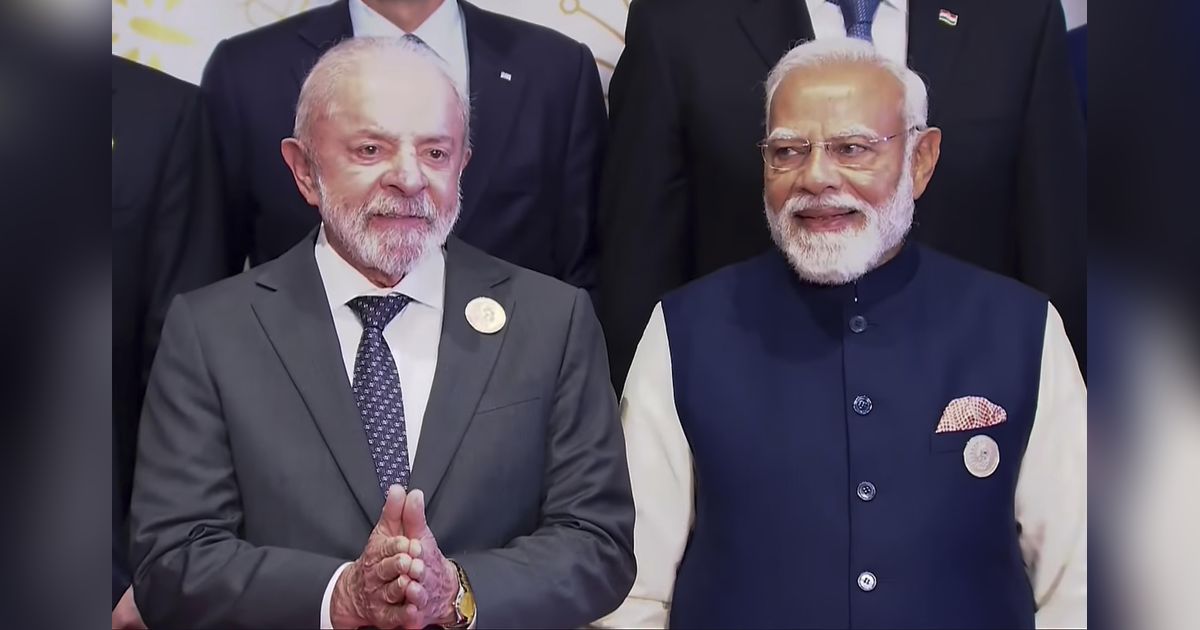
Brazilian President Luiz Inacio Lula da Silva on Thursday said his country advocates governance which ensures that artificial intelligence (AI) strengthens democracy, social cohesion and sovereignty of nations.


In his address at the Leaders’ Plenary Session at the AI Impact Summit here, he also asserted that putting human beings at the “centre of our decisions is an urgent task”.


Earlier, Prime Minister Narendra Modi inaugurated the summit and unveiled the ‘MANAV’ vision for a human-centric approach and use of AI with a strong accent on sovereignty and inclusivity.


The inaugural ceremony saw the presence of several heads of state, including President Lula, French President Emmanuel Macron, many global AI leaders, academicians and researchers, heads of many tech giants and philanthropists, among others.


At the Leaders’ Plenary Session, the Brazilian president delivered an address in Portuguese.


He also posted excerpts from his speech in a series of posts in Portuguese on X along with photos of his meeting with many political and tech leaders.


“For Brazil, it is a pleasure to participate in the Artificial Intelligence Impact Summit organised by the Indian government, this being the first time it has been held in the Global South,” Lula said.


Here in Delhi, the digital world “returns to its homeland”. It was Indian mathematicians who bequeathed to the world, thousands of years ago, the binary system that would come to structure modern computing, he said.


“We are making our way back to discuss one of the greatest dilemmas of our time,” the Brazilian leader underlined.


In his address, Lula underscored that putting the human being at the “centre of our decisions is an urgent task”.


The Brazilian National Congress is discussing a policy and a regulatory framework for AI, he said, adding Brazil has launched the Brazilian Artificial Intelligence Plan.


This plan expresses “our commitment to improving people’s quality of life through more agile public services and greater stimulus to job and income generation”, he said.


The Brazilian Artificial Intelligence Plan (2024-2028) is a strategic initiative designed to develop Brazil’s AI capabilities.


Lula further said this was the paradigm of the declaration on AI that was approved at the BRICS Summit in Rio de Janeiro last year. This is the stance that Brazil adopts in dialogue with other partners and forums, he said.


He said “we are in dialogue” with the Global Partnership on Artificial Intelligence, which originated within the G7.


But none of these forums replaces the universality of the United Nations for international governance of artificial intelligence, which is “multilateral, inclusive, and development-oriented”, he said.


The UN General Assembly has established the Independent International Scientific Panel on Artificial Intelligence, following intergovernmental negotiations and broad consultations with diverse stakeholders.


The Independent International Scientific Panel on Artificial Intelligence is the first global scientific body on the subject and brings together experts, facts and evidence in its pronouncements, Lula said.


The president said Brazil advocates governance that “recognises the diversity of national trajectories and ensures that artificial intelligence strengthens democracy, social cohesion, and the sovereignty of nations”.


Lula said throughout its history, India has bequeathed to humanity fruitful and extraordinary contributions in diverse fields of knowledge — arts, science, and philosophy.


“This legacy brings to light profound ethical dilemmas concerning justice, diversity, inclusion, and resilience. This heritage is a powerful reference point in the search for answers to the challenges that artificial intelligence poses to contemporary societies,” he said.


The Ministry of External Affairs had earlier announced that President Lula will be paying a state visit to India from February 18-22.


Prime Minister Modi and President Lula are scheduled to have a bilateral meeting on February 21. 


Source link

AI is the biggest opportunity for tech sector, IT industry: Chandrasekaran

AI is the biggest opportunity for tech sector, IT industry: Chandrasekaran


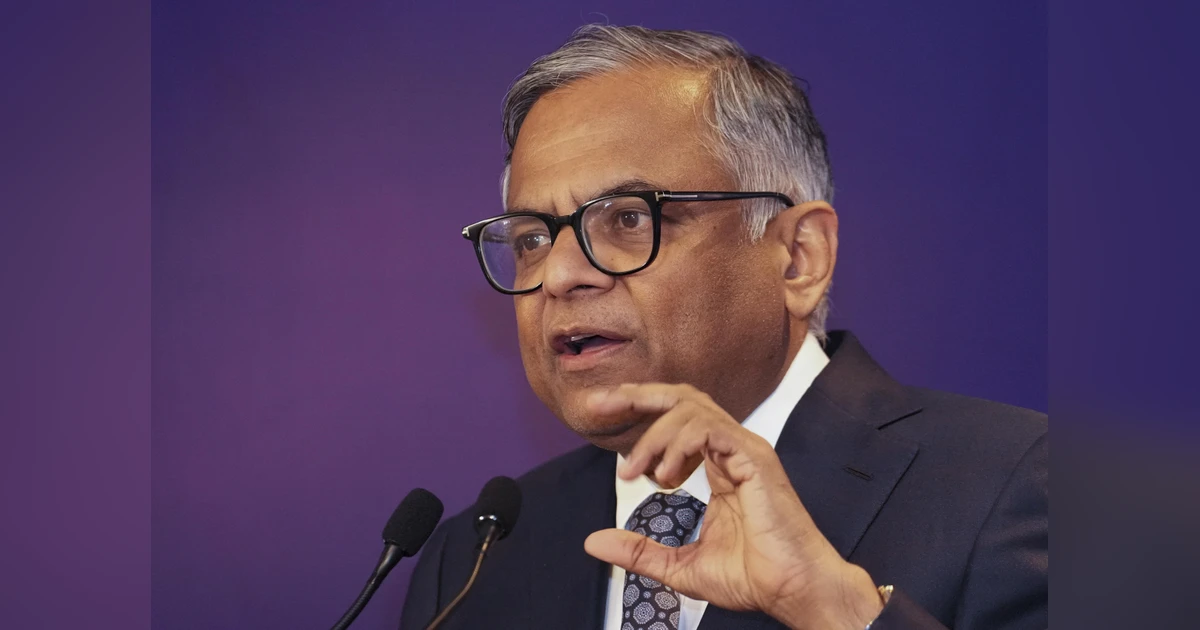
Highlighting that AI is the next big infrastructure — an infrastructure of intelligence — N Chandrasekaran, chairman, Tata Sons, said it will have a very profound impact, exactly the same way earlier infrastructure changes did — steam engines, electricity or the internet.


Underscoring the transformative impact of artificial intelligence (AI), Chandrasekaran said the group is adopting AI across the stack — from silicon to systems to AI-ready data centres to applications and AI agents.


Announcing major plans for the company, Chandrasekaran said the Tata Group will establish the country’s first large-scale AI-optimised data centre, purpose-built for next-generation AI training and inference. “I’m very happy to announce that we have partnered with OpenAI to build the first 100-megawatt capacity, which will scale to 1 gigawatt.”


Mentioning the need for global and local partnerships, he added that the company has also announced a collaboration with AMD to create high-density AI capacity in India.


As for other initiatives, he said, “We are already building an AI data insights platform. What we are building is totally based on diverse Indian data sets on top of the foundational models. So, intelligence becomes available across the diversity of Indian contexts.”


Chandrasekaran mentioned TCS and Tata Communications together are also building an AI operating system for industries.


“What we will do is build agentic industry solutions for every industry. We are already well on that journey and we will work with partners to launch it and take it to all enterprises around the globe.”


In addition, the firm also has plans to build domain-centric, AI-optimised chips for every industry. “We will first launch or work towards getting it ready for the automotive sector,” he added.


For the IT sector, he said this is the biggest opportunity for the industry. “Because the IT industry’s real value is the context: an understanding of every enterprise’s business and technology landscape and making the right technology work inside the processes and the ecosystem — the supplier, customer and all the other connections an enterprise has,” he added.


He concluded by saying, “I just want to say that we are standing here at a very defining moment. It is the age of abundant intelligence, where the scarce resources are trust, stewardship and human capability.”


Source link

India unveils 'New Delhi Frontier AI Commitments' at AI Summit: Details

India unveils 'New Delhi Frontier AI Commitments' at AI Summit: Details


Union IT Minister Ashwini Vaishnaw on Thursday announced a key outcome of the India AI Impact Summit, unveiling the ‘New Delhi Frontier AI Commitments’ — a voluntary framework adopted by leading global and Indian artificial intelligence firms.


Calling it a “significant outcome” of the summit, the minister said, “Today, leading frontier AI companies along with our own AI companies have come together to make a set of voluntary commitments – a shared commitment for inclusive and shared AI.”


He said the initiative reflects a common vision among global AI leaders and Indian innovators to ensure that AI development remains responsible, inclusive and beneficial for society.


Two frontier AI commitments


Vaishnaw outlined two central commitments under the initiative. “The first is advancing real-world AI usage through anonymised and aggregated insights,” Vaishnaw said, adding that this would “support evidence-based policymaking on jobs, skills and policy making”.


According to him, the effort is expected to help governments and institutions better track employment trends and evolving skill requirements while maintaining privacy safeguards.


“The second is strengthening multilingual and use-case evaluations,” he said, stressing the importance of ensuring AI systems work effectively across languages and social contexts.


“This is especially important for the Global South, to ensure that AI works effectively across languages and cultures,” he added.   


Focus on inclusive, responsible AI


Announcing the commitments, Vaishnaw said leading frontier AI companies, along with India’s own innovators such as Sarvam, Bharatjan, Yani, and Soket, “have come together to make a set of voluntary commitments that reflect a shared vision for inclusive and responsible AI”.


He added that the initiative positions India as a leading voice in shaping AI governance from a Global South perspective. “This initiative positions India at the forefront of building a Global South-led perspective on AI governance, one that balances innovation with equity and real-world impact,” the minister said.


Source link

YouTube
Instagram
WhatsApp