Google Play to add more games, free trials, AI tips and more: What's coming

Google Play to add more games, free trials, AI tips and more: What's coming


Google has announced several updates to the Play Store that improve how users discover and play paid games across devices. Google said that it plans to expand the availability of paid titles, introduce game trials and roll out a new pricing model that allows players to purchase a game once and play it on both mobile and PC. Google said these changes come as more users are gaming across multiple devices through Google Play. Additionally, Google said more updates related to gaming on Google Play are expected throughout 2026.


Google Play update: What’s coming


More paid games


Google said it is expanding its catalogue of paid games to offer more variety beyond free-to-play titles. Over the coming months, several indie games will be added to the platform, including Moonlight Peaks, Sledding Game and Low-Budget Repairs. These games will be playable across mobile devices and PCs through Google Play Games, with player progress synced through the Gamer Profile feature. This means users can continue their progress on different devices without losing game data.


PC Games tab


Google is adding a dedicated PC section in the Games tab of the Play Store. This section will feature games that are optimised to run on Windows PCs through Google Play Games. Users can browse these titles and add games they are interested in to their wishlist, which will notify them if the game goes on sale later. Google said it makes it easier for users to discover games on the Play Store.


Game trials


Google is introducing Game Trials to help users decide before buying a game. This feature allows players to try the full version of certain paid games at no additional cost for a limited time. If players decide to purchase the game after trying it, their progress will carry over, allowing them to continue from where they stopped. Google said Game Trials will first roll out to select paid games on mobile, with support for PC coming later through Google Play Games.


‘Buy once, play anywhere’ pricing


Google is also launching a “buy once, play anywhere” pricing model for select paid games. With this system, users can purchase a game once and access both the mobile and PC versions without paying again. The company said the feature is initially available for selected games such as the Reigns series, OTTTD and Dungeon Clawler. 


Community help and AI-powered tips


Google is also adding features to help players improve their gameplay. A new Community Posts feature allows players to ask questions, share tips and discuss games directly within Google Play.


In addition, Google is expanding the Play Games Sidekick feature. This in-game overlay provides AI-generated tips and relevant information while players are playing certain games. According to the company, the tool will initially support select paid games downloaded through Google Play.



Source link

India plans to launch  billion fund to support domestic chipmaking

India plans to launch $11 billion fund to support domestic chipmaking


By Sankalp Phartiyal


India plans to unveil a more than ₹1 trillion ($10.8 billion) fund aimed at bolstering domestic chipmaking, advancing its ambitious bid to become a global manufacturing hub. 


The fund, which will provide subsidies for chip design projects, manufacturing equipment and supply chain development, may be launched in two to three months, people familiar with the matter said, asking not to be named as the plan isn’t yet public. The plan is still under discussion and may change.


Prime Minister Narendra Modi is trying to accelerate India’s chip campaign, which is in early stages with just a handful of major projects under way. Governments around the world are ramping up support for their chip industries to become more self-sustaining and fulfill rising demand from developers of everything from AI and smartphones to cars and appliances.


India’s push, though smaller in scale, is similar to the $52 billion US Chips and Science Act that funds local chipmaking capacity. In China, authorities provide funding for chip firms in part through giant investment vehicles that invest in key companies across the ecosystem.


India is hoping to woo major chipmakers to the world’s most populous country with its engineering, design talent as well as subsidies in much the same way it’s helped Apple Inc. expand in the region. The US giant now assembles 25 per cent of iPhones in the South Asian nation.


The new semiconductor incentives will tie in with other smartphone and component subsidies that the federal government offers to boost domestic manufacturing and exports, the people said.


India’s tech ministry, in charge of the fund, didn’t respond to a request for comment.


The initiative would build on India’s $10 billion incentive program from 2021, which offered to bear half the cost of setting up chip projects. That effort helped kickstart India’s chip journey, drawing companies like US memory maker Micron Technology Inc., which is establishing an assembly facility in western Gujarat state.


Indian salt-to-software conglomerate Tata Group is also building a semiconductor fabrication plant in Modi’s home state of Gujarat, along with a separate chip packaging unit. Several other ventures tied to chip manufacturing and packaging, including Foxconn Technology Group’s test and assembly facility, have also been announced as part of the government incentive program.


While India’s early projects are focusing on less-sophisticated chips, it has ambitions to move up the value chain to more advanced semiconductors. And New Delhi has set its sights on catching up with leading producers such as Taiwan, South Korea and the US: India aims to develop chipmaking capabilities comparable with major global leaders by 2032, Ashwini Vaishnaw, the federal technology minister, said in November.


Source link

iPhone 18 Pro Max could get bigger battery, heavier build: What to expect

iPhone 18 Pro Max could get bigger battery, heavier build: What to expect


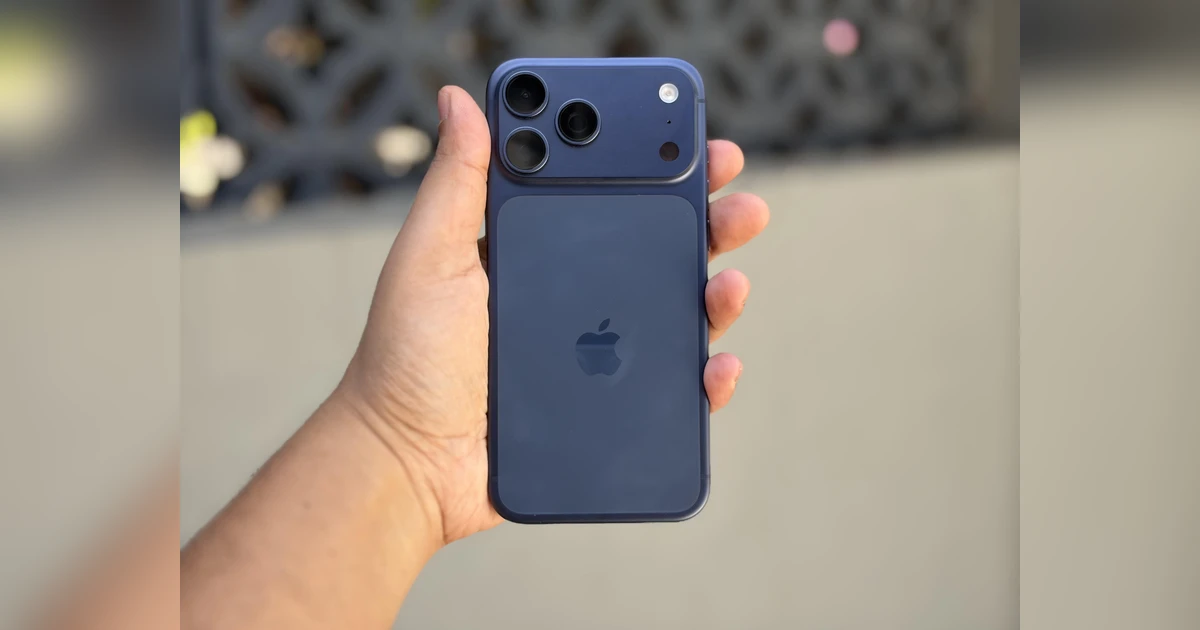
Apple is reportedly preparing to make the upcoming iPhone 18 Pro Max slightly thicker and heavier than the current model, potentially to accommodate a larger battery. According to a report by MacRumors, the battery capacity on the iPhone 18 Pro Max could range between 5,100mAh and 5,200mAh. For comparison, Apple lists the iPhone 17 Pro Max with a 5,088mAh battery on its product information page for the European Union (EU).


The increase in battery capacity could result in a marginal change in the device’s dimensions and weight compared to the previous generation. The report suggested that the iPhone 18 Pro Max may measure around 8.8mm in thickness, slightly higher than the 8.75mm thickness of the iPhone 17 Pro Max. In addition, the device could weigh more than 240g, which would make it the heaviest iPhone to date. The iPhone 17 Pro Max, by comparison, weighs 231g. 


iPhone 18 Pro/Pro Max: What to expect


Beside bigger batteries, the next generation iPhone 18 Pro models are expected to bring notable improvements this year. This may include: 


Camera improvements


The iPhone 18 Pro and Pro Max may receive updates to the telephoto camera. The current iPhone 17 Pro models use an f/2.8 telephoto lens that has remained unchanged across recent generations. Apple could introduce a wider aperture for the telephoto sensor in the iPhone 18 Pro series.


In addition, reports suggest that Apple is exploring a variable aperture system for the main camera sensor, particularly on the iPhone 18 Pro Max. Such a system would allow the camera lens to physically adjust the aperture size. This could enable the lens to open wider in low-light conditions to capture more light, while narrowing in bright environments to control exposure. The feature may also help achieve more natural depth-of-field effects and reduce reliance on software-based portrait processing.


Apple may also revise the camera control button on the upcoming Pro models by removing gesture-based controls and relying solely on pressure-sensitive input.


Smaller Dynamic Island


Apple introduced the Dynamic Island cutout with the iPhone 14 Pro series in 2022 and has largely retained the same design since then. With the iPhone 18 Pro lineup, however, the cutout could become slightly smaller. Reports suggest that Apple is working to move some Face ID components underneath the display, which could reduce the visible size of the Dynamic Island.


Apple modem


The iPhone 18 lineup is also expected to adopt Apple’s next-generation C2 modem. According to a report by 9To5Mac, this modem may be used across the entire iPhone 18 range. The C2 modem is said to offer improved power efficiency, which could contribute to better battery performance.


Some reports also indicate that the modem could support satellite-based 5G data connectivity, potentially enabling data services beyond emergency messaging in areas without traditional cellular coverage.


A20 Pro chip


Apple is also expected to introduce a new generation of its custom silicon with the iPhone 18 Pro models. The devices may be powered by the A20 Pro chip, which could be manufactured using a 2nm process. This transition could bring improvements in performance and power efficiency compared to the current generation.


New colour options


Bloomberg’s Mark Gurman has previously reported that Apple is considering introducing a new “Deep Red” finish for the iPhone 18 Pro models. Apple’s move from aluminium to titanium in recent Pro models may allow the company to experiment with additional colour options.


According to 9To5Mac, Apple is also evaluating other colour variants, including shades of brown and purple, for the upcoming devices.


Source link

YouTube rolls out 30-second non-skippable ads for TV viewers: What's new

YouTube rolls out 30-second non-skippable ads for TV viewers: What's new


YouTube is rolling out a new 30-second non-skippable ad format. According to YouTube, the format, called VRC (Video Reach Campaign) Non-Skip, is designed specifically for connected TV viewing. Google said that it will use an AI-powered system that dynamically chooses between multiple ad lengths, including the new 30-second non-skippable ad format, depending on the device and content.


New ad format built for TV screens: Details


According to the official YouTube blog, the new format will allow ads to run as 30-second non-skippable videos. Since the ads are designed specifically for the big screen, users watching YouTube videos on their TV may see longer, non-skippable ads before their content begins.


Google also said that the system will rely on AI-powered optimisation to decide which type of ad is shown to a user. The company explained that the AI will dynamically choose between six-second bumper ads, 15-second standard ads and the new 30-second non-skippable TV ads. This means the ads users see on YouTube may vary depending on the device and the content they are watching. For example, a user watching on a phone may see a shorter ad, while someone watching the same content on a TV may see the full 30-second version. 


For viewers, the new ad format could change how YouTube feels on TV. This could make interruptions during videos more noticeable compared to shorter or skippable ads. Another factor is that ad-blocking options are limited on TVs. While many users rely on ad blockers on smartphones or computers, similar tools are much harder to use on smart TVs and streaming devices. 


YouTube has also been cracking down on ad blockers. Recently, the platform tightened its browser-based workaround that allowed free background play and began showing “content unavailable” errors to some users who were using ad blockers.


Additionally, the company has also been upgrading its low-cost premium subscription, Premium Lite, which allows users to watch most YouTube videos without ads. Last month, YouTube added background play and downloads to its Premium Lite subscription. This means users with this subscription can now download videos for offline viewing and continue listening to a video’s audio even when the screen is locked or while switching between apps on a smartphone. The plan is priced at Rs 89 per month and works across devices, including smartphones, laptops and smart TVs.


Source link

Microsoft to bring its console interface to Windows 11 PCs with 'Xbox Mode'

Microsoft to bring its console interface to Windows 11 PCs with 'Xbox Mode'


Microsoft has announced that its Xbox Full Screen Experience (FSE), now referred to as “Xbox mode,” will begin rolling out to Windows 11 PCs starting April. The feature will extend beyond handheld gaming devices to laptops, desktops and tablets, offering a console-style interface designed for controller-based gaming. The company revealed the update during the Game Developers Conference (GDC) 2026, saying the interface will first arrive in select markets before expanding more broadly. 


Alongside the software update, Microsoft also shared new details about its upcoming next-generation Xbox console, codenamed Project Helix, which is currently targeted for developer testing around 2027.


Xbox mode on Windows PCs: Details


The Xbox mode interface is designed to provide a full-screen, controller-optimised environment for launching and managing games on Windows 11. The feature essentially places a console-like layer on top of Windows, making it easier for users to navigate game libraries without relying on keyboard and mouse input.


Microsoft first introduced the Xbox Full Screen Experience in November 2025 through preview builds available to Windows Insider and Xbox Insider programme participants. The interface also debuted on the ROG Xbox Ally handheld gaming systems developed in partnership with Asus.


On those handheld devices, the system boots directly into the Xbox interface while still running Windows 11 underneath. The layout resembles the Xbox console UI and provides quick access to a user’s profile, Game Pass library, installed titles and the Xbox Store. Games from other platforms such as Steam, Epic Games Store and EA Play can also appear in the library.


In practice, the system still retains the ability to switch back to the standard Windows desktop, meaning users can move between productivity tasks and gaming modes. Microsoft said Xbox mode will allow players to “seamlessly switch between productivity and play” while maintaining compatibility with the broader Windows ecosystem.


The interface is also designed to prioritise controller navigation, allowing users to manage games, settings and downloads through a console-like layout rather than traditional Windows menus.


Microsoft also announced that it is expanding its Xbox Play Anywhere initiative, which allows users to purchase a game once and play it across both Xbox consoles and Windows PCs. According to the company, the programme now includes more than 1,500 games.


Next-generation Xbox: Details


Alongside the Windows update, Microsoft shared new information about its next-generation Xbox hardware, internally known as Project Helix.


According to Jason Ronald, Vice President of Next Generation at Xbox, early versions of the console will be made available to game developers around 2027. The new platform will use custom AMD system-on-chip (SoC) to support the next generation of DirectX and FSR, offering improvements in graphics performance.


Microsoft said the upcoming hardware is expected to bring a major increase in ray-tracing performance and will integrate new forms of machine intelligence directly into the graphics and compute pipeline to improve efficiency and visual performance.


Microsoft has been signalling that the next generation of Xbox hardware will increasingly blur the line between a traditional console and a PC.


Microsoft Gaming CEO Asha Sharma recently confirmed that Project Helix will be capable of running both Xbox and PC games, indicating a shift toward a more unified ecosystem across devices.


Source link

OpenAI may bring Sora's video generation capabilities to ChatGPT: Report

OpenAI may bring Sora's video generation capabilities to ChatGPT: Report


OpenAI’s video generation tool Sora is expected to be integrated directly into ChatGPT, according to a report by The Verge, citing The Information. The move is expected to allow users to create AI-generated videos inside ChatGPT instead of accessing the tool separately. The integration could make Sora more widely accessible, as several users already generate text and images through ChatGPT. However, the integration may also raise concerns about the spread of deepfakes and other forms of misleading AI-generated content.


What does Sora app do

According to OpenAI, Sora allows users to generate new videos based on text prompts, remix existing content and discover creations through a personalised feed. One of the key features is Cameos, which lets users insert themselves or friends into AI-generated scenes. Cameos require a one-time video and audio recording to capture likeness and voice. Users maintain full control over their Cameos, including revoking access or removing videos that include their image. The app was launched as a competitor to Meta’s Vibes, which allows users to create, remix and explore AI-generated video and audio content. 


OpenAI’s Sora could become part of ChatGPT


Sora is currently available through its own website or a standalone application. However, the report mentioned that the tool has not reached the same level of popularity as ChatGPT. Integrating Sora directly into ChatGPT could help bring the video generator to a much larger audience.


The reported move would follow a similar approach taken by OpenAI last year, when it added image generation features to ChatGPT. By embedding these tools inside the chatbot, users can generate content without leaving the main platform. If the integration goes ahead, ChatGPT users would be able to generate videos using text prompts within the chat interface itself. This could make AI video creation easier and more accessible for everyday users. 


Concerns around deepfakes and misuse


While the integration could expand access to AI video tools, it may also increase concerns about misuse. According to the report cited by The Verge, making Sora available within ChatGPT could lead to a larger number of deepfake videos being created.


OpenAI launched Sora in October last year. According to the report, some users created highly realistic but misleading videos using the tool, including deepfakes of historical figures such as Martin Luther King Jr. The report also noted instances where the generated videos included copyrighted material.


Greater accessibility through ChatGPT could make it easier for users to create similar content. The report mentioned that some experts also worry that users may attempt to bypass the safety restrictions built into the system.


Source link

YouTube
Instagram
WhatsApp




