Reliance to invest ₹10 trillion in AI over next 7 years: Mukesh Ambani

Reliance to invest ₹10 trillion in AI over next 7 years: Mukesh Ambani


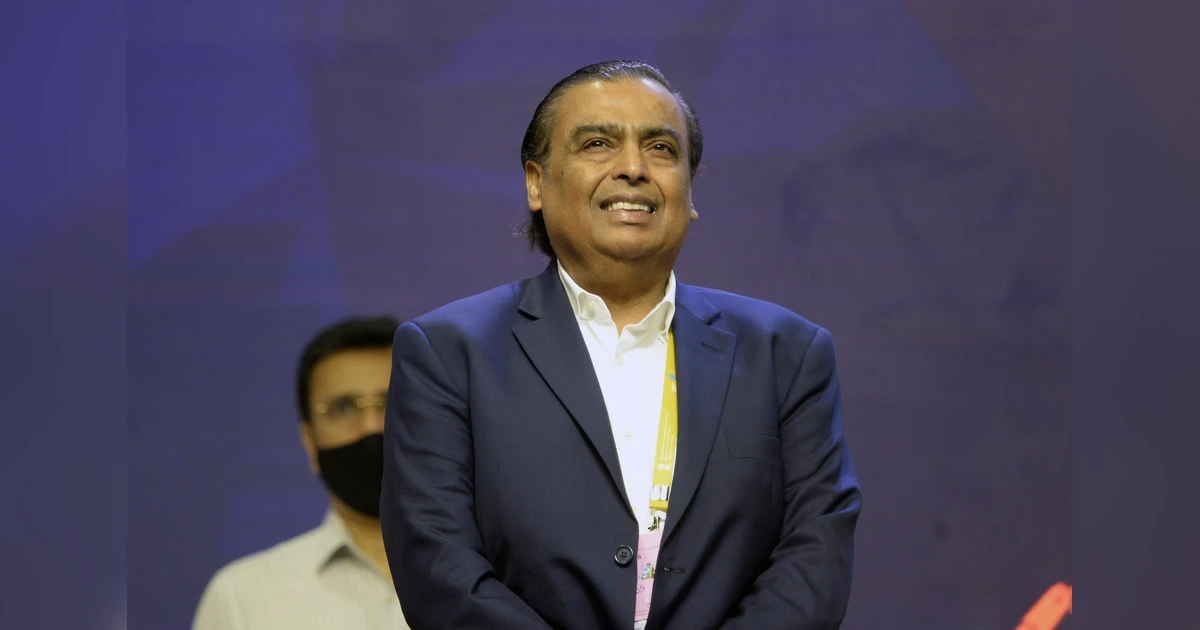
Reliance Industries Chairman Mukesh Ambani| Image: Bloomberg


Reliance Industries Chairman Mukesh Ambani on Thursday announced an investment of ₹10 trillion over the next seven years to build artificial intelligence (AI) infrastructure and services in India.


“Jio will now connect India with the intelligence era. We will deliver intelligence to every citizen, every sector of the economy and every facet of social development and every service of government,” Ambani said during the keynote address at AI Impact Summit in New Delhi.


He said the investment, to be made by Jio together with Reliance, will begin this year. “This is not a speculative investment… This is patient discipline, nation building and strategic resilience for decades to come,” he said.


Ambani further added that India cannot afford to “rent intelligence”, adding that Jio will reduce the cost of intelligence as dramatically as it did the cost of data.


Outlining Jio’s plans, he said the company will build India’s sovereign compute infrastructure through gigawatt scale data centre. “Construction has already begun on a multi-gigawatt AI infrastructure in Jamnagar. Over 120 megawatts will come online in the second half of 2026, with a clear path to gigawatt-scale capacity for training,” he said. 


First Published: Feb 19 2026 | 12:27 PM IST


Source link

India unveils 3 sovereign AI models at Delhi Summit: Key features, details

India unveils 3 sovereign AI models at Delhi Summit: Key features, details


India unveiled three major sovereign artificial intelligence (AI) models at the India AI Impact Summit 2026 in New Delhi on Wednesday, marking a strong push for homegrown AI systems.


The launches signal India’s shift from using global AI tools to creating its own infrastructure powered by local data, languages and computing.


Below is a closer look at what each model offers and their key specifications


Sarvam AI launches two large language models


Homegrown startup Sarvam AI introduced two indigenous large language models (LLMs) trained specifically for Indian languages — a 30-billion-parameter model and a larger 105-billion-parameter model.


The smaller model is designed for real-time conversations with a 32,000-token context window, which helps keep inference costs low. The larger model supports up to 128,000 tokens, allowing it to handle more complex reasoning and long-form tasks.


According to the company, the models performed competitively against global systems such as Gemma-27B, Mistral-32-24B and Qwen-30B, measuring mathematical reasoning, coding accuracy and problem-solving.


Sarvam Co-founder Pratyush Kumar said the company’s 105-billion-parameter model performs well on most benchmarks. He explained that although it is only about one-sixth the size of the 600-billion-parameter DeepSeek R1 model released last year, it was trained from scratch and delivers similar competitive intelligence.


He added that the model is also cheaper than Google’s Gemini Flash while outperforming it on several benchmarks.


At the event, Sarvam also showcased its chatbot Vikram, which demonstrated conversations in multiple Indian languages. The name honours Indian physicist Vikram Sarabhai.


The models support all 22 scheduled Indian languages and are optimised for voice-first interactions. The 30B model is pre-trained on 16 trillion tokens and is aimed at long conversations and agentic workflows, while the larger model uses a mixture-of-experts architecture to reduce costs. 


Gnani.ai unveils voice cloning AI system


Bengaluru-based startup Gnani.ai launched Vachana TTS, a text-to-speech system capable of cloning voices and generating speech in 12 Indian languages.


The system can recreate a person’s voice using less than 10 seconds of recorded audio while preserving tone, pitch and speaking style. It also allows the same voice to speak across multiple languages without losing identity.


The company said the model achieves a Mean Opinion Score of 4.23 and a character error rate below 0.6 per cent. Built for low-bandwidth environments, the model is targeted at government services, customer support systems and large-scale enterprise deployments, with all data hosted within India. 


BharatGen launches 17B multilingual foundation model


India’s sovereign AI initiative BharatGen announced the launch of Param2, a 17-billion-parameter multilingual mixture-of-experts foundational model.


The system is designed to support multiple Indic languages and reflects India’s linguistic and cultural diversity. It is intended for use in governance, education, healthcare, agriculture and enterprise applications.


The model was built in collaboration with Nvidia using its AI software stack and infrastructure to ensure scalability and performance.


India AI Summit: Why these launches matter


The unveiling of these models signals a major shift in India’s AI strategy. The focus is shifting toward AI sovereignty, with an emphasis on local control over data computing power, and core AI capabilities.


The launches signal a strong push for an India-first design approach, with models being trained for Indian languages and real-world local conditions. Efforts are also being made to ensure mass accessibility, as voice-first AI could help expand usage among non-English speakers.


Source link

AI Summit: PM Modi bats for democratisation of AI, making it human-centric

AI Summit: PM Modi bats for democratisation of AI, making it human-centric


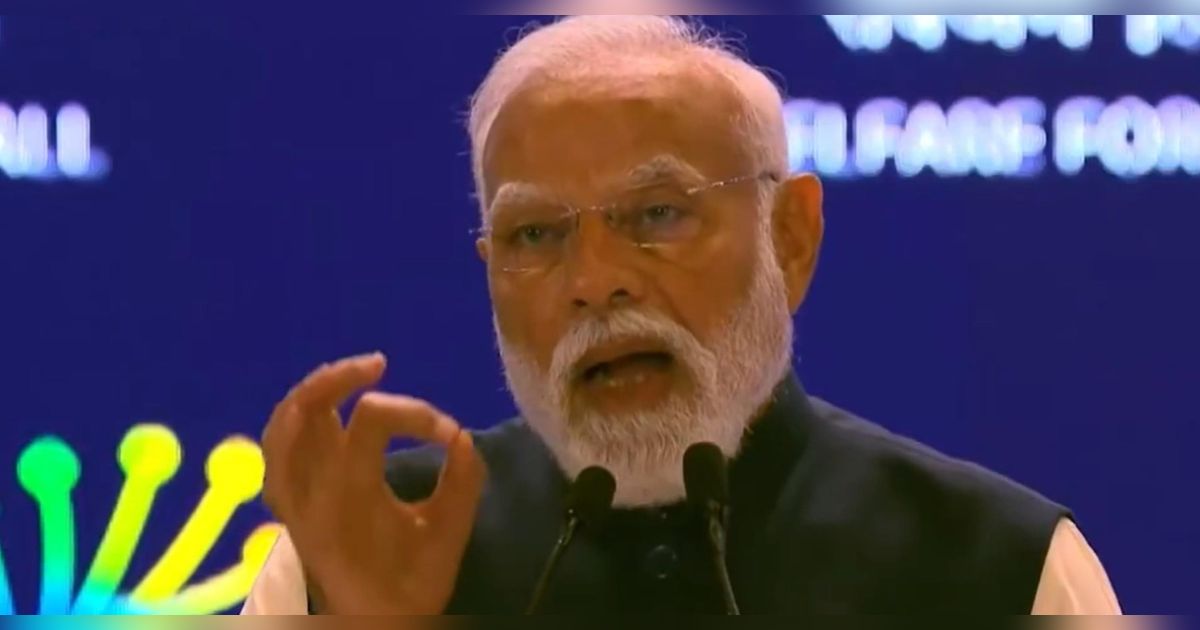
Prime Minister Narendra Modi on Thursday called for the democratisation of artificial intelligence (AI), urging that the technology be made human-centric and aligned with the welfare of all, particularly for the Global South.


Delivering his keynote address at the India AI Impact Summit in New Delhi, PM Modi said, “Some countries believe that AI should be developed in a confidential and closed manner. But India is different. We believe AI will truly serve the good of the world when it is shared and its codes are open. Only then will millions of young minds be able to improve it further.” 


PM Modi said that to ensure humans are not reduced to mere raw material for AI models, the technology must be democratised. “We must give AI an open sky and also keep the command in our hands, like GPS. GPS shows us the way, but the final call on which direction we should go is ours. The direction in which we take AI today will determine our future,” he said.


AI as a transformative force


Describing AI as a transformative power in human history, PM Modi said its scale and speed are unprecedented. “AI is making machines intelligent, but more than that, it is increasing human capabilities manyfold. There is only one difference: this time the speed is unprecedented and the scale is also unexpected,” he said. 


“When signals were first transmitted wirelessly, no one imagined that the entire world would one day be connected in real time. Artificial intelligence is such a transformation of human history. What we are seeing today, what we are predicting, is just the beginning of its impact,” he added.


PM Modi cautions against AI’s misuse


The Prime Minister said that AI is a transformative power, but if directionless, it may become disruptive. “In AI, the scope for unethical behaviour is limitless. Therefore, we must expand the framework of ethical behaviour and norms for AI. AI companies carry a very significant responsibility,” he said. 


PM Modi warned against deepfakes and fabricated content, saying they bring instability to open societies. 
He also made three suggestions for the ethical use of AI. “First, while respecting data sovereignty, we should create a clear data framework for AI training. Second, AI platforms must keep their safety rules very clear and transparent. Third, AI requires clear human values. Technology may be powerful, but direction will always be determined by human beings,” he said.


India leading, shaping AI revolution: PM


The Prime Minister said that India is not just a part of the AI revolution, but is leading and shaping it. “India not only builds technology but also adopts it at an unprecedented pace,” he said.


“Some people have doubts about new technology. But the way the younger generation is embracing AI is unprecedented. There has also been tremendous enthusiasm here regarding the AI Summit exhibition,” he added.


PM unveils ‘MANAV Vision’


PM Modi also unveiled India’s ‘MANAV Vision’ for AI, a human-centric framework to ensure technology advances with ethics and public trust. He said ‘MANAV’ represents five pillars: moral and ethical systems, accountable governance, national sovereignty, accessible and inclusive technology, and valid, legitimate systems guiding India’s AI future.

  (With inputs from agencies)


Source link

By 2050 people may not need jobs as AI advances, predicts Vinod Khosla

By 2050 people may not need jobs as AI advances, predicts Vinod Khosla


Indian-American entrepreneur and venture capitalist Vinod Khosla today made a bold prediction that by 2050, people may not need jobs as artificial intelligence makes rapid gains.


“By 2050 it will be much clearer that no one will need jobs,” he said on Tuesday at the AI Impact Summit. “Artificial intelligence could eliminate large parts of white-collar employment,” he said in a fireside chat with Peak XV’s Mohit Bhatnagar.


He reiterated that the outsourcing industry will be gone by 2030 — a point he has highlighted for a few years.


Khosla also added that AI can be a game changer for a country like India, especially in bringing healthcare and education within reach of every Indian.


“It is possible today in India, within the next year or two, to provide a near-free AI doctor to every Indian. It’s also possible for every Indian child to have an AI personal tutor that would be far better than they could pay for a human tutor, because it can judge a person’s knowledge and teach at a very personalised level,” he said.


Such innovations and solutions, he said, can take care of the bottom half of the population in India.


Khosla praised India’s efforts in AI and said that the AI Impact Summit was a huge success. “The summit is highly successful and the large participation — more than 3 lakh people had registered for the event,” he said.


Source link

Defence, jobs and investment lead talks on Day 2 of India-AI Impact Summit

Defence, jobs and investment lead talks on Day 2 of India-AI Impact Summit


The second day of the India-AI Impact Summit on Tuesday saw government officials, industry leaders, defence experts, and global organisations outline how artificial intelligence (AI) is moving from experimentation to deployment across sectors. Discussions ranged from India’s $200 billion AI investment target and indigenous defence systems to agriculture advisory tools and village governance platforms. Speakers also flagged adoption gaps, workforce transition, and the need for trusted and locally built AI systems.


India targeting $200 billion in AI investments across technology stack


Union Electronics and IT Minister Ashwini Vaishnaw said India is aiming to attract up to $200 billion in AI investments across compute, data and application layers over the next two years, according to ANI. He said global technology firms including Microsoft, Google and Amazon have already announced major investments in AI infrastructure, reflecting India’s growing role as a global technology and data centre hub.


Vaishnaw said investments are coming across all parts of the AI ecosystem, from infrastructure to energy. “We are also seeing huge investment interests in the infra layer and the energy layer.”


Amitabh Kant urges Global South countries to build own AI models 


“The challenge is whether we can ensure that AI reaches the population which is below the poverty line, whether it can be used to transform the lives of citizens in the Global South and whether it can be used to improve learning, health outcomes, and nutritional standards,” he added.


Why did experts say AI adoption, not innovation, is India’s biggest gap? 


“The biggest gap is adoption, although I don’t know if I would frame it solely as a lack of capacity. I think for philanthropy, one of the goals is always to make adoption easier. There are two pathways for that. One pathway is building shared infrastructure so that markets can work better to serve vulnerable people. It involves streamlining market entry to make it easier for low-cost suppliers to enter and compete,” said Janet Zhou, director at the Gates Foundation.


How did the Army use AI in Arunachal Pradesh operations? 


“We could see through some AI systems that something was building up. Finally, we were able to predict the timing of their move,” he said.


DRDO DG emphasises indigenous AI for defence systems 

DRDO Director General Chandrika Kaushik said India must develop domestic AI systems to reduce dependence on foreign technologies. She said indigenous AI capabilities are critical for national security and defence preparedness.


“”AI has started going to the edge. It is going to the battlefield itself. So, over time, we have to quickly gear up towards incorporating the AI solutions into the defence domain,” she noted.


Sridhar Vembu calls for early involvement of edu institutions 

Zoho founder Sridhar Vembu said educational institutions must play a central role in AI development, stressing early integration of universities into research and workforce training. He said building domestic capability requires aligning academic research with industry needs to ensure a steady pipeline of engineers and AI specialists.


Vembu said India currently has strong momentum in adopting artificial intelligence, highlighting its growing practical impact. “Today AI can write code really well,” he said, adding that such capabilities have the potential to drive major productivity gains across sectors. He emphasised that Indian IT firms maintain close working relationships with global clients, giving them an advantage in rapidly embedding AI into existing workflows.


What is Gnani.ai’s newly launched 5-billion-parameter voice AI model? 

Meanwhile, Voice AI startup Gnani.ai unveiled a 5-billion-parameter voice-to-voice model designed to process spoken input and generate spoken output directly. The company said the model supports multilingual use cases and conversational applications, particularly relevant for India’s diverse language environment.


Gnani.ai said the model is designed for applications where real-time voice interaction is essential, rather than systems built primarily around text. The company said that in government deployments, this could support conversational AI across helplines, grievance redressal platforms and emergency response networks, where handling multilingual, natural speech inputs is critical.


How is AI being used in healthcare, from telemedicine to diagnostics? 


Speaking at the session, Union Health Secretary Punya Salila Srivastava said India’s AI journey in healthcare began with the shift from simple digitisation of records to the creation of a nationwide interoperable digital health framework. She explained that while digital platforms collect and share data, artificial intelligence enables systems to analyse that information and generate actionable insights.


What is ‘Sabhasaar’ and how is it improving village governance? 

The Panchayati Raj Ministry showcased ‘Sabhasaar’, an AI platform that converts Gram Sabha meeting recordings into written records in local languages. “Gram Sabha is the most important platform in the Panchayati Raj system where the problems of the village are discussed, solutions are agreed upon, and financial matters such as budget allocations and schemes are reviewed,” said Sushil Kumar Lohani, Additional Secretary, Ministry of Panchayati Raj. He further reflected on how AI-powered solutions are improving the functioning of Gram Sabhas, the foundational decision-making bodies in villages.


Can AI reduce port cargo handling costs in India? 


“There is an approximate saving by use of AI of ₹20,000 crore in our handling.. And every year we can save Rs 15,000 crore as far as the logistic cost is concerned,” he said.


AI can help farmers access timely agricultural information 


“As farmers, they always look for advice, which is timely. And many people say that the old extension network has broken down. …Across many agriculture departments and state governments, the far greater focus is on how inputs get channelised. There is less attention to the kind of advice that farmers really want,” Krishnan pointed out.


UN calls for more female participation in AI development 


“When women are missing from design tables, the test labs, the term sheets — bias doesn’t emerge by accident. It becomes the default,” said Christine Arab, UN Women Regional Director for Asia Pacific.


She added that gender diversity in AI teams can help improve fairness and reduce bias in AI systems.


Media leaders say AI will not replace journalism 

Speaking at a panel session titled ‘AI and Media: Opportunity, Responsibility, and the Road Ahead’, media leaders said AI will support journalism but not replace editorial judgment. They discussed how AI is affecting newsrooms, revenue models and public discourse, adding that trust, accountability, and verification remain core responsibilities of journalists.


“India is a vibrant country and in such an environment, editorial discretion, verification and institutional memory is not optional. It is foundational, and the press is not just something which produces information. It curates trust, it provides context and it accepts the moral and the legal responsibility for what it publishes. And that layer of accountability is the differentiator. And when AI begins to commoditise information, trust will become scarce, and that scarcity will create value,” noted Mohit Jain, Chief Operating Officer and Executive Director of Bennett Coleman Group.


Mastercard demonstrates breakthrough in AI-driven commerce 


“India is entering a defining phase in its AI journey—one where intelligent, in-flow commerce becomes the norm. AI has long solved discovery well, but payments pulled users out of the experience, creating friction and drop-offs. By completing a fully authenticated agentic commerce transaction on our network within a Large Language Model, we have shown what the future looks like: seamless, secure, end-to-end commerce powered by trusted AI,” said Gautam Aggarwal, President, India & South Asia, Mastercard.

Source link

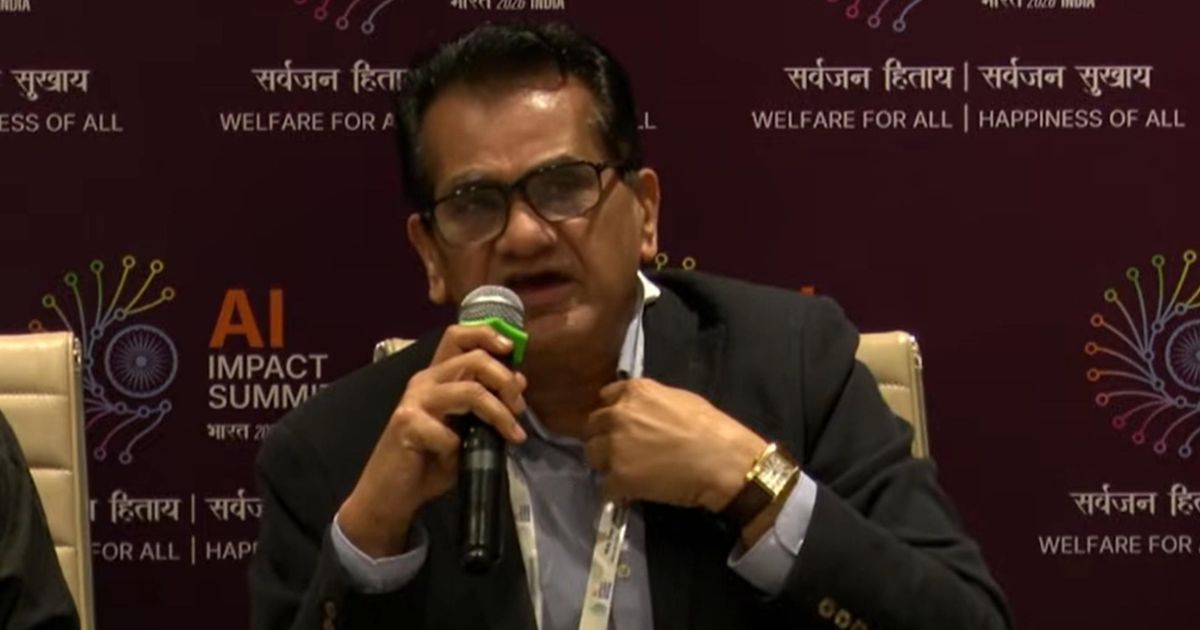
Make AI multilingual, use it to empower Global South, says Amitabh Kant

Make AI multilingual, use it to empower Global South, says Amitabh Kant


Amitabh Kant, former chief executive officer of Niti Aayog, on Tuesday said artificial intelligence (AI) must be multilingual so that it can be used to transform the lives of citizens in the Global South and not end up deepening inequality.


Speaking during a panel discussion titled ‘AI for India’s Next Billion: Intergenerational Insights for Inclusive and Future-Ready Growth’ at the ongoing India AI Impact Summit 2026 in New Delhi, Kant stressed that AI must be accessible, affordable, and accountable.


AI and the risk of inequality


According to Kant, the rapid pace of AI development and the scale of investments being made could lead to significant disruption and potentially create a highly unequal society.


“The challenge is whether we can ensure that AI reaches the population which is below the poverty line, whether it can be used to transform the lives of citizens in the Global South and whether it can be used to improve learning, health outcomes, and nutritional standards,” he said.


Kant cautioned that if AI is not designed to benefit those below the poverty line, existing disparities could widen further. He added that the technology must be leveraged to improve education and learning outcomes, noting that what was not physically possible earlier is now achievable because of AI.


Global South should build its own LLMs


Kant underlined that AI systems must reflect linguistic diversity. “If AI is not multilingual, it will cut out a large section of the population,” he said.


He also pointed to the growing contribution of data from India and other countries in the Global South to train large language models (LLMs). According to him, India today provides 33 per cent more data than the United States.


Kant said that LLMs are improving based on data from the Global South and warned that big tech firms could build business models on such data and later sell products at high costs. He argued that India and other developing countries should build their own models based on their own data to ensure equitable benefits.


Lessons from digital public infrastructure


Drawing from India’s experience with digital public infrastructure (DPI), Kant said the country was able to leapfrog decades of progress through open and interoperable systems.


He noted that open application programming interfaces (APIs) and global interoperability enabled innovations in fast payments, stock market transactions, insurance and last-mile credit delivery. On that foundation, the private sector was allowed to innovate and compete.


Kant suggested that a similar approach be adopted for AI, with a layer of digital public identity on top of which the private sector can build and compete.


As AI adoption accelerates, he said, it is crucial that the technology be deployed to improve the lives of people in the Global South, ensuring that growth is inclusive rather than exclusionary.


Source link

YouTube
Instagram
WhatsApp