OPPO Find X9 series to get Quick Share compatibility with Apple AirDrop

OPPO Find X9 series to get Quick Share compatibility with Apple AirDrop


Chinese smartphone maker OPPO is set to roll out Android’s Quick Share interoperability with Apple’s AirDrop to the OPPO Find X9 series later this month. The company said that the feature will allow users to wirelessly share files between OPPO smartphones and Apple devices without installing additional apps. This comes after Google expanded Quick Share interoperability with AirDrop to its Pixel 9 series smartphones, following its initial roll-out last year on Pixel 10 series smartphones.


OPPO is also set to expand the Find X9 lineup with the OPPO Find X9 Ultra and Find X9s models. The company has confirmed that the Find X9s will launch in India, while the Ultra model will be getting a global launch. The OPPO Find X9 Ultra may also arrive in India; however, it has not been confirmed yet. Currently, the OPPO Find X9 series in India includes the OPPO Find X9 and Find X9 Pro.


Google’s Quick Share compatibility with AirDrop


According to OPPO, the feature will arrive on its OPPO Find X9 series through a software update in March. The company said the functionality has been developed in collaboration with MediaTek and Google. Once enabled, users will be able to transfer files between OPPO phones and devices running AirDrop on iOS, iPadOS and macOS. OPPO said the system will allow secure file sharing without requiring third-party applications.


Support for cross-platform sharing between Android and Apple devices was first launched last year with the Google Pixel 10 series. The feature later expanded to the Google Pixel 9 series models, including the Pixel 9, 9 Pro, 9 Pro XL and 9 Pro Fold.


Google had previously confirmed that Quick Share compatibility with AirDrop support will expand to more Android smartphones, and OPPO is among the first few brands to offer a roll-out schedule.


Apart from OPPO, UK-based smartphone brand Nothing had earlier confirmed that it is working on adding similar functionality to its devices. Chipmaker Qualcomm had also said that Android phones powered by its Snapdragon processors will gain support for cross-platform file sharing with Apple devices in the future. According to a report by 9To5Google, there are also indications that Samsung may bring AirDrop–Quick Share support to the Galaxy S26 series, although this has not been officially confirmed yet. 


OPPO’s upcoming Find X9 devices


OPPO is set to launch multiple new devices in its flagship Find X9 series. The company previously stated that it would be launching a Find X9s model in India, powered by the MediaTek Dimensity 9500s processor. It could be accompanied by the Find X9 Ultra, which is now confirmed to get a global launch this year. The Ultra model has previously been limited to China.


According to OPPO, the Find X9 Ultra will feature what the company describes as its most advanced smartphone imaging system yet. The device is expected to combine upgraded optical engineering with camera technologies while continuing the partnership with Hasselblad, as seen on previous Find X9 models. 


OPPO said the smartphone is being designed as a camera-focused flagship aimed at delivering professional-level photography in a mobile form factor. The company added that the “Ultra” branding should represent meaningful hardware improvements, with the Find X9 Ultra intended to push the limits of mobile imaging.


This also suggests that the upcoming flagship may bring upgrades over the OPPO Find X9 Pro. The Pro model currently features a triple rear camera setup consisting of a 50MP Sony LYT-828 wide-angle sensor, a 50MP Samsung 5KJN5 ultra-wide camera and a 200MP Samsung S5KHP5 telephoto lens. On the front, the OPPO Find X9 Pro includes a 50MP Samsung 5KJN5 camera for selfies and video calls.



Source link

South Korean chip industry worried Iran crisis to disrupt material supply

South Korean chip industry worried Iran crisis to disrupt material supply


South Korea’s chip industry is concerned that a prolonged Iranian crisis will disrupt supplies of key materials from the Middle East and increase chip prices due to a spike in energy costs, a ruling party lawmaker said on Thursday.


The chip industry also warned the crisis could deal a setback to plans by big tech firms to build AI data centres in the Middle East for the longer term, thus weighing on strong chip demand, Kim Young-bae said.


Kim made the comment after meeting with executives from companies such as Samsung Electronics, the world’s top memory chipmaker, and business and trade groups.


“We say the semiconductor supercycle has arrived, but data centre plans are highly likely to be disrupted, potentially creating problems with chip demand,” he said at a briefing with reporters.


“Officials raised a possibility that semiconductor production could be disrupted if some of these key materials cannot be sourced from the Middle East,” he said.


The chip industry is worried that the Iran crisis could disrupt supplies of some key chip-making materials like helium from the Middle East, Kim said.


Helium is essential for heat management during semiconductor production and it has no viable alternatives currently.


South Korean chipmaker SK Hynix said in a statement that it had sufficient ​helium inventory and did not expect disruption to its procurement.


Samsung Electronics declined to comment.


Industry officials said chipmakers have diversified their material sourcing as geopolitical tensions in the Middle East have persisted for years, and many have secured supplies in advance as a precaution.


Data Centres


Samsung Electronics and SK Hynix have benefited from surging prices of memory chips, driven by a global race among tech firms to build AI data centres.


Amazon said on Monday some of its data centres in the United Arab Emirates and Bahrain were damaged by drone strikes in the Middle East conflict, sparking questions around Big Tech’s pace of expansion in the region.


U.S. tech giants like Microsoft and Nvidia have been positioning the UAE as a regional hub for artificial intelligence computing needed to power services such as ChatGPT.


Iran fired a barrage of drones and missiles at Gulf states in retaliation for U.S. and Israeli strikes that killed Supreme Leader Ayatollah Ali Khamenei on Saturday. 
(Only the headline and picture of this report may have been reworked by the Business Standard staff; the rest of the content is auto-generated from a syndicated feed.)


Source link

Nvidia CEO Jensen Huang hints at end of investments in OpenAI, Anthropic

Nvidia CEO Jensen Huang hints at end of investments in OpenAI, Anthropic


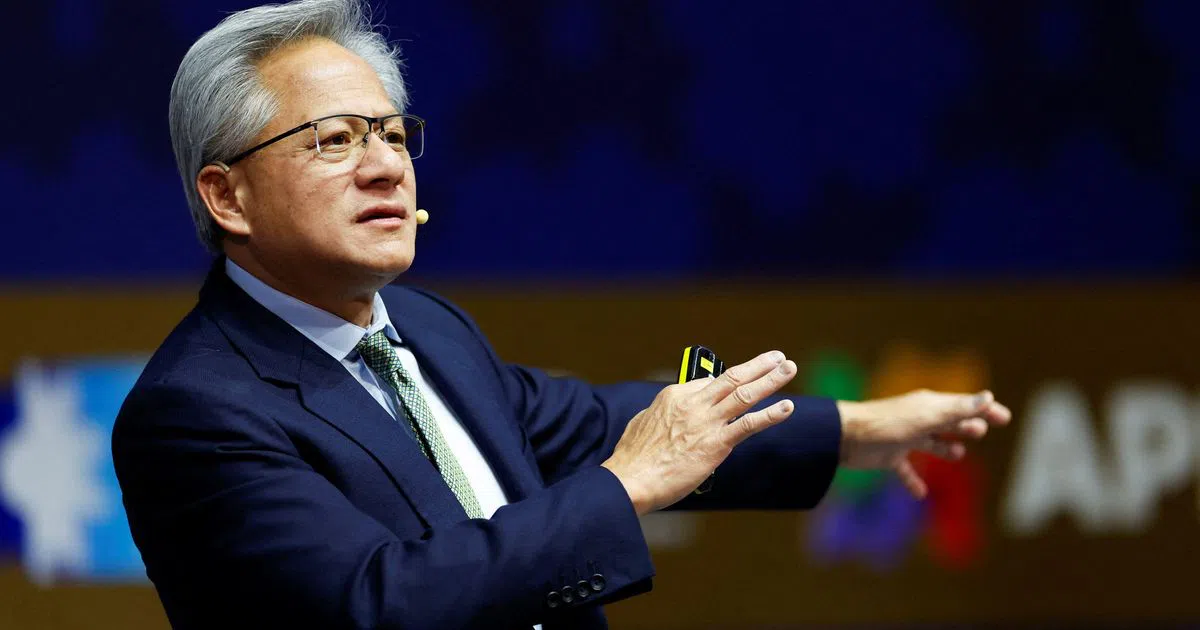
Nvidia CEO Jensen Huang said the latest investments in OpenAI and Anthropic might be the chipmaker’s last in those companies, as the AI companies prepare to go public this year.


The opportunity to invest $100 billion in OpenAI is probably not in the cards as the ChatGPT creator is set to go public later this year, Huang said at the Morgan Stanley Technology, Media and Telecom conference on Wednesday.


Nvidia and OpenAI had announced a $100 billion deal in September last year. Nvidia has instead finalized a $30 billion investment in OpenAI, which might be the last time it has the opportunity to “invest in a consequential company like this,” Huang said.


OpenAI is laying the groundwork for an IPO that could value the company at up to $1 trillion, Reuters exclusively reported last year.


Nvidia’s $10 billion investment in Anthropic probably will be the last as well, Huang added. The startup is reportedly looking ​to go public this year.


Anthropic, which is embroiled in a dispute with the Pentagon, has said it has not finalized an IPO decision.


OpenAI and Anthropic did not immediately respond to Reuters requests for comment.


The Financial Times reported in February that Nvidia and OpenAI had abandoned their $100 billion deal amid doubts about the health of the AI sector.


Some analysts had raised concerns about the circular arrangement, as the large investment in Anthropic would have made Nvidia a major investor in one of its biggest customers and the money it would pour into the startup was likely to be spent on its own AI processors.


(Only the headline and picture of this report may have been reworked by the Business Standard staff; the rest of the content is auto-generated from a syndicated feed.)


Source link

Google settles with Epic Games with offer to cut app store commissions

Google settles with Epic Games with offer to cut app store commissions


Google will lower the lucrative fees imposed on its Android app store and offer a way for rival options to gain its stamp of approval, ending a bruising legal battle that led to one of several rulings condemning its tactics as an illegal monopoly.


The proposed changes filed on Wednesday with a federal court in San Francisco mark the latest twist in a case that began in August 2020 when video game maker Epic Games filed an antitrust case seeking make it easier for alternative payment options to compete against Google’s Play Store system, which charges 15 per cent to 30 per cent commissions on a wide variety of in-app transactions.


Google’s concessions come five months after the US Supreme Court refused to hear an appeal of the company’s attempt to overturn a federal judge’s order requiring a far more extensive overhaul of the Play Store following a 2023 trial that culminated in a jury declaring the setup an illegal monopoly.


Backed into a legal corner, Google is now prepared to decrease its baseline commissions for subscriptions and e-commerce transactions into the 10 per cent to 20 per cent range while creating a new option that would charge 5 per cent for payment processing.


App developers could still choose to rely on another payment processing system besides Google’s, and consumers will be able to download apps from alternative stores that go through a certification process. Although not required, alternative app stores that go through Google’s registration process are less likely to provoke warnings about security risks.


US James Donato still must approve the proposed changes as an alternative to a more dramatic shakeup that he ordered in October 2024. Google is seeking an April 9 hearing before the judge to answer any questions about the revisions, which are being backed by Epic Games CEO Tim Sweeney, whose North Carolina company is best known for making the Fortnite video game.


“Epic has been advocating for open platforms for a long time, and this really brings Android up to the status of a truly open platform,” Sweeney told The Associated Press during an interview that also included Sameer Samat, the Google executive in charge of Android.


“We think it’s really great to focus more energy and time on building than on quarrelling,” Samat said about Google’s decision to finally strike a truce with Epic after years of acrimony.


Google is planning to extend this new Play Store template to the rest of the world, contingent on regulatory approval in other countries. The Mountain View, California, company intends to begin the rollout in the United States, the United Kingdom and the European Union, Samat said.


The lower fees are likely to dent the profits of Google’s corporate parent, Alphabet Inc., which is in a better position to weather the blow now that its market value stands at $3.7 trillion – four times more than when Epic filed its lawsuit.


Alphabet also faces other possible setbacks with Google’s search engine being ordered to share more of its collected data after being declared an illegal monopoly in a different case brought by the US Justice Department. Parts of the technology powering Google’s digital ad network were also deemed an abusive monopoly last year in yet another federal lawsuit. A federal judge in Virginia is weighing whether to order a breakup in order to restore competition in that case.


Epic’s 2020 attack against Google’s Play Store coincided with a similar crusade against Apple’s iPhone app store that still remains entangled in some legal disputes about how alternative payment systems can be managed.


Sweeney isn’t optimistic about reaching a deal with Apple that mirrors the Google concessions because the cases played out differently. In the Apple lawsuit, a federal judge concluded that the iPhone app store isn’t a monopoly but still ordered changes designed to make it easier for consumers to navigate to alternative payment options – a shift that Epic argues still hasn’t occurred.


For now, Sweeney intends to savour the outcome of the Play Store case set to the soundtrack of a classic tune by the Rolling Stones.


“As the song says, you can’t always get what you want, but if you try, you can often get what you need,’ ” Sweeney said. “And what we need is competition.


Source link

VSCO launches standalone Galleries app to organise shared photos: What's it

VSCO launches standalone Galleries app to organise shared photos: What's it


Visual Supply Co. (VSCO) has launched a new standalone app called VSCO Galleries to make it easier for photographers to share photos with clients and collaborators. The app is currently available on the App Store for iPhone, and a desktop version is expected to launch later. According to a report by 9To5Google, the app aims to address a common issue photographers face when using traditional shared folders. In projects like weddings, events or portrait shoots, multiple photographers often upload images, which can make shared folders messy and harder to manage.


VSCO Galleries app: How it works


As reported, VSCO Galleries attempts to address this by creating a single space where images from multiple contributors can be collected and organised. Instead of sending files through different links or folders, photographers and collaborators can upload images to a unified gallery designed specifically for photo sharing.


The report noted that the app aims to make collaboration easier while also improving the way photographers deliver their work. VSCO described the platform as one that “simplifies the delivery process while promoting collaboration, enabling photographers, guests, event organisers and content creators to gather and share photos in one, photo-first experience.” 


The app also allows organisers to generate a QR code that contributors can scan to upload photos directly to the gallery. Guests or collaborators can upload images using a desktop or mobile browser, meaning they do not need to install the app themselves to contribute.


VSCO Pro subscribers will get additional features, including unlimited storage and password-protected galleries for sharing images with clients or event participants. These controls are intended to help photographers manage access and keep projects organised.


The core functionality of VSCO Galleries is available for free, while additional features are included in the VSCO Pro subscription, which costs $60 per year.


Source link

Alibaba Group's AI wizard who warned of US-China tech gap steps down

Alibaba Group's AI wizard who warned of US-China tech gap steps down


The architect of Alibaba Group Holding Ltd.’s chief AI model has quit his post, a surprise departure that’s rattled the developer community and raised questions about the Chinese online leader’s pivot to artificial intelligence. 


Junyang Lin, who also goes by Justin, announced on X he was stepping down as the tech lead for Qwen, Alibaba’s main AI platform. That early morning post triggered a surge of support from the open-source community. Alibaba’s shares slid as much as 5.3 per cent in Hong Kong — their biggest intraday loss since October — in part because investors are unwinding AI-related trades given global uncertainty.


Lin is one of the most influential figures behind Alibaba’s transition to AI, an endeavor intended to drive its next phase of growth beyond online commerce. During his tenure, the Qwen series of models became the foundation for Alibaba’s marquee AI app and services, and consistently ranked among the world’s top-performing platforms. 


That placed the online company among the frontrunners of a broader effort by Chinese firms to compete with the likes of OpenAI and Anthropic PBC. Qwen’s advances this week drew the attention of Elon Musk, who commented on its “impressive” density.


“me stepping down. bye my beloved qwen,” Lin wrote on X, without elaborating. 


The reasons behind Lin’s exit remain unclear. The AI engineer, who last year set up a new robotics team, had been posting updates about Qwen on X just a day before. And Alibaba last month unveiled a major upgrade to that marquee platform, designed to support AI agentic tasks as well as handle text, photo and video inputs. 


Lin and Alibaba representatives didn’t respond to messages seeking comment.   


Lin’s revelation — which spurred more than a thousand replies including well-wishes and questions within hours — casts a cloud over Alibaba’s AI ambitions. At least one other Alibaba engineer announced he was departing in the wake of Lin’s post. MiniMax Group Inc. — an Alibaba investee and AI pioneer — thanked Lin for his contributions to the open-source community.


Alibaba has been among the most aggressive investors in and advocates for AI since DeepSeek fired up the local tech industry.


In 2025, the company better known for creating China’s biggest online marketplace declared it was going all-in on AI and the pursuit of super-intelligence, while building a suite of AI services and products centered on Qwen technology. Chief Executive Officer Eddie Wu pledged more than $53 billion toward infrastructure and AI development — an outlay he’s said the company could surpass over time.


Lin had been working on building generalist models at Alibaba since 2022 and oversaw its open-source initiatives, according to his LinkedIn profile. He holds a master’s degree from Peking University.


In one of his last public appearances as Qwen head, Lin told a forum in Beijing in January that Chinese companies were unlikely to leapfrog the likes of OpenAI and Anthropic with fundamental breakthroughs in AI over the next three to five years.


“A massive amount of OpenAI’s compute is dedicated to next-generation research, whereas we are stretched thin — just meeting delivery demands consumes most of our resources,” Lin said at the time. 


What Bloomberg Intelligence Says 


The departure of Junyang Lin, tech lead for Alibaba’s Qwen open-source model, is unlikely to impact the tech giant’s AI development. Monetizing AI remains the key challenge for Alibaba, Baidu and Tencent, in a commoditized sector that’s awash with largely undifferentiated, free-to-access AI apps. The rising, though minor, profit contribution from Alibaba’s cloud-intelligence division won’t offset pressure in its core e-commerce and food-delivery business – Robert Lea and Jasmine Lyu, analysts


His departure follows a recent flurry of activity.


Alibaba, which also operates a Netflix Inc.-like streaming service and one of China’s biggest meal delivery platforms, revamped its mobile app Qwen in November as a major step into consumer-facing AI services. 


It plans to build the app into an all-around personal assistant by gradually integrating individual services under the Alibaba umbrella. 


In January, it linked its flagship online shopping and travel services to Qwen, taking its biggest step yet to build the app into a one-stop artificial intelligence platform for consumers. 


Source link

YouTube
Instagram
WhatsApp