Apple iPad Air M4 vs M3: Check performance gains, connectivity improvements

Apple iPad Air M4 vs M3: Check performance gains, connectivity improvements


Apple has introduced a new version of the iPad Air powered by its M4 chip, replacing the last-generation model with the M3 processor. The M4 iPad Air is available in 11-inch and 13-inch sizes, similar to its predecessor, while both models have similar displays and an overall similar look. However, the main difference lies in the internal hardware. The newer M4 model brings improved processing power, memory capacity, and Apple’s in-house modem and networking chip for connectivity. Here is a closer look at how the M4-powered iPad Air compares to the previous M3 version.


Performance: Chip and memory upgrade


The new iPad Air runs on Apple’s M4 chip, while the last-generation model uses the M3 chip. According to Apple, the M4 chip brings faster CPU and GPU performance compared to its predecessor. Together, this results in the M4 iPad Air being up to 30 per cent faster than the last generation, as per the company. 


The M4 chip upgrade also brings a minor change in chip configuration. Both the M4 and M3 chips powering the iPad Air feature an eight-core CPU. However, the M4 model gets three performance cores and five efficiency cores, while the M3 model gets four performance cores and four efficiency cores. Both chips feature a nine-core GPU and a 16-core NPU. 


Both chips support hardware-accelerated ray tracing for improved lighting and reflections in supported games and apps. The M4 also supports mesh shading, which can further enhance graphics performance in compatible titles. 


Another major upgrade in the M4 model is memory. The new iPad Air with the M4 chip comes with 12GB of unified memory, which is 50 per cent more than the previous generation. For reference, the M3 version features 8GB of unified memory. 


Connectivity


Connectivity has also improved in the M4 iPad Air. The new model introduces Apple’s N1 networking chip and the latest in-house modem, C1X, designed to improve wireless and mobile network performance. This enables the iPad Air with M4 to support Wi-Fi 7 (via the N1 chip) and Bluetooth 6, while the M3-powered model is limited to Wi-Fi 6E and Bluetooth 5.3.


Design and display


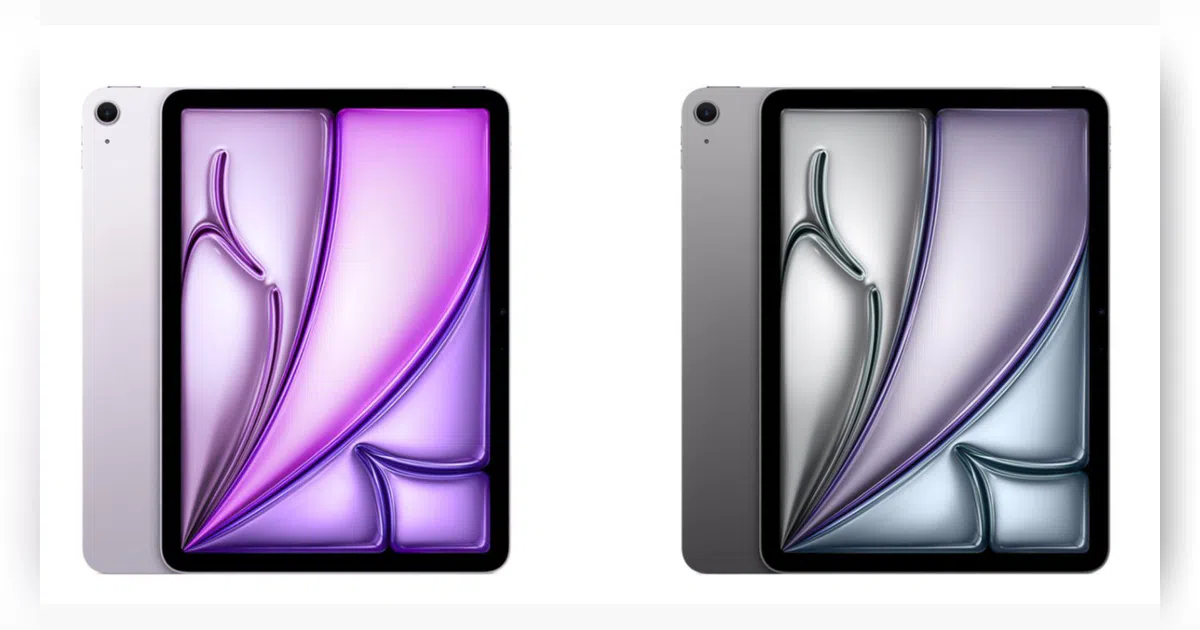
In terms of design, both the M3 and M4 models are available with 11-inch and 13-inch Liquid Retina display options. The overall look, build quality and accessory compatibility remain largely the same across both generations.


Software and battery


Both tablets run iPadOS, with the latest M4 iPad Air getting support for iPadOS 26 out of the box. It should also be noted that the last-generation iPad Air is eligible for the iPadOS 26 software update. 

Both the Apple iPad Air with M4 and the Apple iPad Air with M3 offer similar battery life, with Apple rating them for up to 10 hours of web browsing or video playback on Wi-Fi and up to nine hours of web browsing using a cellular data network. 


Price Difference


The iPad Air with M3 launched in India last year, starting at Rs 59,900 for the 11-inch Wi-Fi model. The newer M4-powered iPad Air starts higher at Rs 64,900, reflecting the hardware upgrades and improved performance.


The Wi-Fi + Cellular variant of the M4 iPad Air also costs more, starting at Rs 79,900 for the 11-inch variant. For reference, the M3 model started at Rs 74,900.


Source link

Apple could debut entry-level MacBook on March 3, iPad likely to tag along

Apple could debut entry-level MacBook on March 3, iPad likely to tag along


Apple began its week-long product rollout with the launch of the iPhone 17e and a refreshed iPad Air powered by the M4 chip. The company is expected to continue announcements, leading to its March 4 event. During this period, Apple could introduce a new entry-level MacBook and refresh its base iPad model. Updates to the MacBook Air with the M5 chip and higher-end MacBook Pro models with M5 Pro and M5 Max processors are also anticipated.


What has Apple launched so far


Apple on Monday introduced the iPhone 17e as the most affordable model in its iPhone 17 line-up. The device starts at Rs 64,900 for the 256GB variant in India, with pre-orders beginning March 4 and sales from March 11. 


The iPhone 17e runs on the A19 chip and features Apple’s C1X modem. It includes a 48MP rear camera, MagSafe support and satellite-based services in supported regions. The device ships with iOS 26 and supports Apple Intelligence features. 

Alongside it, Apple unveiled a new iPad Air powered by the M4 chip. The tablet is available in 11-inch and 13-inch variants, starting at Rs 64,900 for the Wi-Fi model. It comes with 12GB unified memory, Apple’s N1 wireless chip with Wi-Fi 7 support, and the C1X modem on cellular models. Sales begin March 11. 


Entry-level MacBook expected


One of the key products yet to surface is a lower-cost MacBook. Reports have suggested that Apple could introduce a MacBook powered by an A-series chip instead of its M-series processors. 


The device is expected to use a variant of the A18 Pro chip. While it may not match the performance of current M-series machines in sustained workloads, it could narrow the gap with earlier M1-based MacBooks in everyday tasks. 

The anticipated model may feature a 12.9-inch display and an aluminium chassis. It could also be offered in a broader range of colours than Apple’s traditional MacBook finishes. If launched, the device would mark a shift in Apple’s Mac strategy by extending the A-series architecture beyond iPads and iPhones into entry-level MacBooks. 


iPad (12th generation) likely


Apple is also expected to update its entry-level iPad, which currently sits below the iPad Air in the portfolio. The 12th-generation model is tipped to receive the A18 chip, potentially enabling Apple Intelligence features.


Design changes are unlikely, based on recent update cycles. However, the new iPad could adopt Apple’s in-house modem for Wi-Fi and 5G connectivity, similar to the iPad Air with M4.


Other devices in the pipeline


Beyond the entry-level MacBook and iPad, Apple is also expected to complete its MacBook Pro range with models powered by M5 Pro and M5 Max chips. A refreshed MacBook Air with the standard M5 chip and an updated Mac Studio are also anticipated. 


In addition, reports have pointed to updates for the Apple TV 4K, a second-generation HomePod mini and new Studio Display models.


Source link

Apple launches iPad Air with M4 chip, 12GB memory: Price, availability

Apple launches iPad Air with M4 chip, 12GB memory: Price, availability


Alongside the iPhone 17e, Apple has launched iPad Air with the M4 chip. The new iPad Air is available in 11-inch and 13-inch sizes and adds Apple’s N1 wireless chip and C1X cellular modem for improved connectivity. Apple has also increased the unified memory, which is now 12GB on the new iPad Air. Apple said the new iPad Air will be available for pre-order starting March 4, with sales beginning March 11 in select markets, including India.


iPad Air (M4): India pricing and availability


  • Price: Starts at Rs 64,900 onwards (11-inch, Wi-Fi model)

  • Sizes: 11-inch, 13-inch

  • Storage options: 128GB, 256GB, 512GB, 1TB

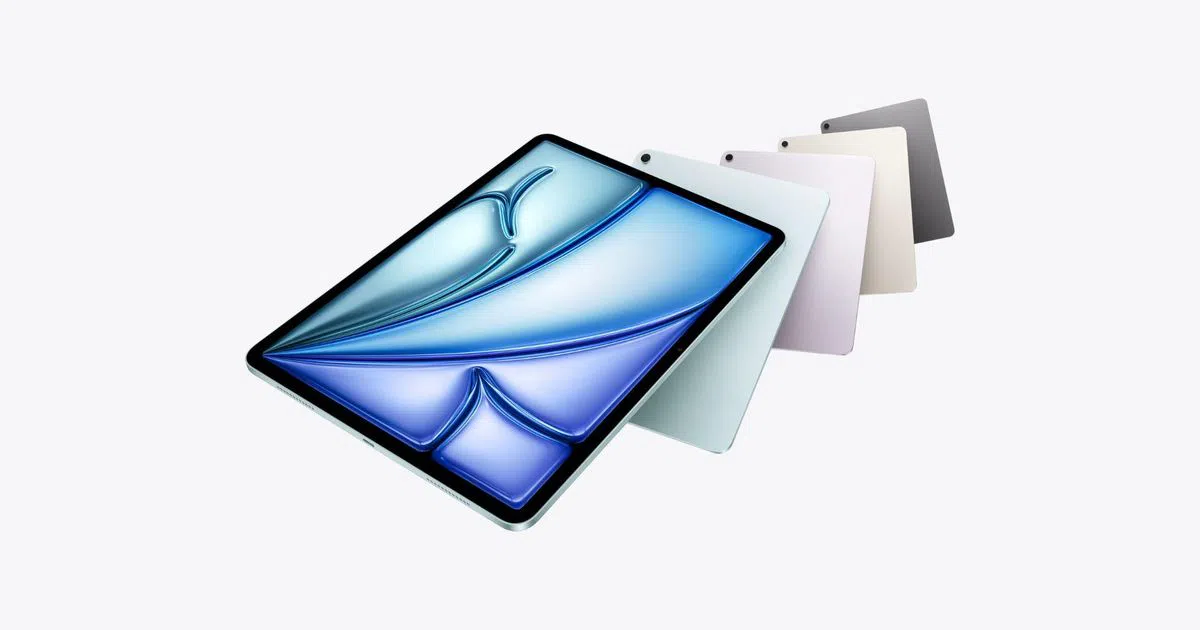
  • Colours: Blue, Purple, Starlight, Space Grey

  • Pre-order starts: March 4

  • Sale starts: March 11


iPad Air (M4): What’s new


The new iPad Air is powered by Apple’s M4 chip, featuring an eight-core CPU and a nine-core GPU. Apple said the device is up to 30 per cent faster than the previous M3-based iPad Air and up to 2.3 times faster than the M1 version. The GPU supports hardware-accelerated ray tracing and mesh shading, aimed at improving graphics performance in supported apps and games.


The device now comes with 12GB of unified memory, which is 50 per cent more than the previous generation, and offers memory bandwidth of up to 120GB/s. Apple said the 16-core Neural Engine in the M4 chip is up to three times faster than that of M1, helping run on-device AI features more efficiently.


On the connectivity front, the iPad Air gets Apple’s N1 wireless networking chip, enabling Wi-Fi 7, Bluetooth 6 and Thread support. Cellular models feature the C1X modem, which Apple claims delivers up to 50 per cent faster cellular data performance while using less power compared to the previous generation. The device supports 5G and eSIM.


The iPad Air continues to offer a 12MP front camera with Center Stage placed along the landscape edge. Apple also highlighted improvements in stereo speakers, particularly on the 13-inch model.


The device runs iPadOS 26, which introduces a redesigned interface, a new windowing system, updated Files app, Preview app for PDFs and images, and support for background tasks. The update also brings Apple Intelligence features, including on-device AI capabilities integrated into apps.


The iPad Air supports Apple Pencil Pro, Apple Pencil (USB-C) and Magic Keyboard, with the keyboard attaching magnetically and featuring a built-in trackpad and function row.


iPad Air (M4): Specifications at a glance


  • Display: 11-inch or 13-inch Liquid Retina display

  • Processor: Apple M4 chip (8-core CPU, 9-core GPU, 16-core Neural Engine)

  • Memory: 12GB unified memory

  • Storage: 128GB, 256GB, 512GB, 1TB

  • Connectivity: Wi-Fi 7 (N1 chip), Bluetooth 6, Thread, 5G (cellular models with C1X modem), eSIM support

  • Cameras: 12MP rear camera, 12MP front camera with Center Stage (landscape orientation)

  • Battery: All-day battery life (as per Apple)

  • Operating system: iPadOS 26

  • Accessories support: Apple Pencil Pro, Apple Pencil (USB-C), Magic Keyboard


Source link

Motorola Edge 70 Fusion unveiled, set to launch in India on March 6: Specs

Motorola Edge 70 Fusion unveiled, set to launch in India on March 6: Specs


Motorola Edge 70 Fusion has been unveiled ahead of the Mobile World Congress (MWC) 2026, scheduled to run from March 2 to March 5. The Motorola Edge 70 Fusion, powered by the Qualcomm Snapdragon 7s Gen 4 chipset and a 7,000mAh battery, will be launched in India on March 6 in three colour options. The Motorola Edge 70 Fusion was unveiled alongside the Motorola Razr Fold.


Motorola Edge 70 Fusion: Details


The Motorola Edge 70 Fusion will sport a 6.8-inch Extreme AMOLED display with Super HD resolution, a 144Hz refresh rate and up to 5,200 nits of peak brightness, along with HDR10+ support. It will offer dual stereo speakers with Dolby Atmos for audio. The device will be powered by the Qualcomm Snapdragon 7s Gen 4 processor, paired with 8GB or 12GB of RAM and 128GB or 256GB of storage, and will run on Android 16.


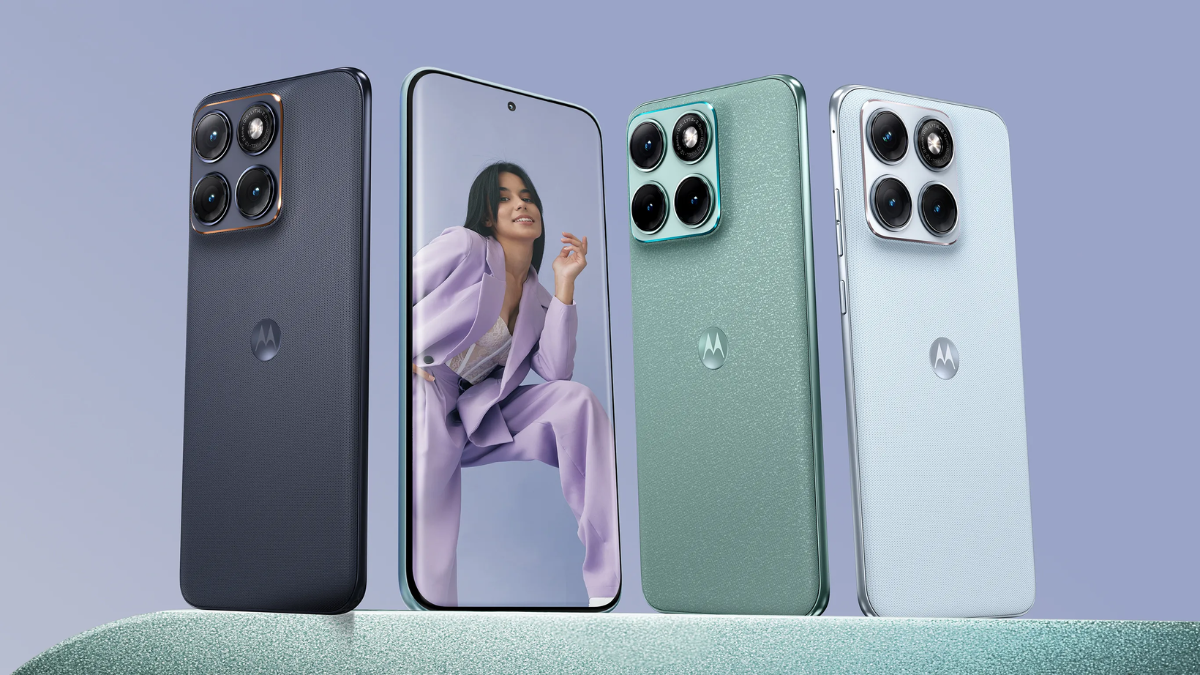
For photography, it will feature a 50MP Sony LYTIA 710 primary sensor alongside a 13MP ultra-wide-angle lens, while a 32MP camera will handle selfies. The Motorola Edge 70 Fusion will be powered by a 7,000mAh battery with 68W TurboPower charging support. It weighs 193g and is available in PANTONE Silhouette, PANTONE Country Air and PANTONE Blue Surf colour options.


Motorola Edge 70 Fusion: Specifications


  • Display: 6.8-inch Extreme AMOLED, Super HD resolution, 144Hz refresh rate, up to 5,200 nits peak brightness, HDR10+

  • Audio: Dual stereo speakers with Dolby Atmos

  • Processor: Qualcomm Snapdragon 7s Gen 4

  • RAM: 8GB, 12GB

  • Storage: 128GB, 256GB

  • OS: Android 16

  • Rear camera: 50MP Sony LYTIA 710 + 13MP ultra-wide-angle

  • Front camera: 32MP

  • Battery: 7,000mAh

  • Charging: 68W TurboPower

  • Weight: 193g

  • Durability: IP68 and IP69 rated, Corning Gorilla Glass 7i

  • Colour: PANTONE Silhouette, PANTONE Country Air, PANTONE Blue Surf


Motorola Razr Fold: Details

Ahead of MWC 2026, Motorola also unveiled the Razr Fold, marking its entry into the book-style foldable segment. The company confirmed that the device will sport a 6.6-inch outer display that unfolds into an 8.1-inch 2K LTPO main screen, measuring 4.6mm when open and 9.9mm when folded. It will feature a stainless steel teardrop hinge, titanium inner screen plate, ultra-thin glass and an anti-shock layer for added durability.


The Qualcomm Snapdragon 8 Gen 5 chipset will power the smartphone, paired with 16GB RAM and up to 1TB storage, supported by a 6,000mAh silicon-carbon battery with 80W wired and 50W wireless charging. Its camera setup will comprise a 50MP Sony LYTIA 828 primary sensor with 8K and Dolby Vision recording, a 50MP periscope telephoto lens (3x optical, up to 100x digital), a 50MP ultra-wide with macro, a 32MP internal selfie camera and a 20MP external camera. Motorola is also committing to seven years of Android OS and security updates.


The Motorola Razr Fold is compatible with the Moto Pen Ultra stylus, offering pressure sensitivity, tilt support, low latency and palm rejection for productivity tasks. It includes features such as hover mode, quick-access tools, AI-powered transcription and notification summaries. Thanks to its flexible hinge, the device supports laptop and tent modes for multitasking and hands-free use, effectively doubling as a built-in stand.


Source link

YouTube experiments with AI remix tools for Shorts: Here's what's new

YouTube experiments with AI remix tools for Shorts: Here's what's new


YouTube is testing new AI-powered tools for Shorts that will allow creators to remix videos in different ways. According to a Google support page, the company has introduced two new options: “Add object” and “Reimagine” within the Shorts Remix menu. These features are currently being tested with a small group of creators and are limited to English-language users for now. The tools use AI to help transform or enhance Shorts without requiring creators to film entirely new content.


YouTube Shorts: New AI options in theRemix menu

When a creator taps the Remix button on an eligible Short, they may see one of the two new options. The first feature, Add object, allows creators to insert items into a scene from the original Short. This works for clips of up to eight seconds. Users can either choose from suggested prompts or enter their own custom prompts to generate the object they want to add. YouTube said that the idea is to let creators modify a scene without re-shooting the entire video. 


The second feature, Reimagine, allows a creator to select a single frame from the original Short and transform it into an entirely new video using AI. Creators can use suggested prompts or write their own. They also have the option to upload up to two reference photos to guide the final output. The company said it may allow users to turn a single frame from a Short into a completely new visual idea. 


Original creators credit


YouTube said that, as with other remix tools, any Short created using Add object or Reimagine will link back to the original video in the Shorts player. This is said to ensure that the original creator receives attribution and visibility. Creators who do not want their videos to be used for these AI remixes can opt out through their settings. However, opting out will also prevent their content from being used in traditional remixes. YouTube said it will share more details about wider availability in the future as testing continues.


First Published: Mar 02 2026 | 2:30 PM IST


Source link

MWC 2026: Honor Robot Phone, Leitzphone, Motorola Razr Fold, more previewed

MWC 2026: Honor Robot Phone, Leitzphone, Motorola Razr Fold, more previewed


Mobile World Congress (MWC) 2026 is set to commence on March 2, and ahead of the event, several companies have previewed products that they will be showcasing in Barcelona this week. Some of the notable highlights include Honor’s Robot Phone, Lenovo Legion Go Fold concept, Leica’s Leitzphone by Xiaomi, Motorola Razr Fold and more. Here are the highlights of the products that companies have previewed before the commencement of MWC 2026:


Honor Robot Phone

Ahead of MWC 2026, Honor provided a closer look at its upcoming Robot Phone, a concept smartphone built around a motorised pop-up camera with a four-degrees-of-freedom gimbal system, reported Engadget. The module uses what the company claims is the industry’s smallest micro motor, 70 per cent smaller than existing units, enabling a compact camera head capable of tilting, rotating 360 degrees and performing programmed movements. The primary camera features a 200-megapixel sensor with three-axis stabilisation, alongside additional conventional rear cameras housed beneath a fold-away panel. The report added that Honor has added modes such as Super Steady Video, AI Object Tracking and AI SpinShot with 90- and 180-degree automated rotations, aiming to replicate dedicated handheld gimbal functions within a smartphone form factor. 


Honor also announced a partnership with ARRI to integrate elements of its image science into the device, targeting more cinematic colour tuning and highlight control. While full hardware specifications remain undisclosed, the Robot Phone is reportedly scheduled for launch later this year. Alongside the handset, Honor demonstrated a separate humanoid robot prototype designed for industrial and domestic AI applications, positioning both devices as part of its broader push into robotics and intelligent systems. 


Lenovo Legion Go Fold concept


Lenovo has revealed the Legion Go Fold concept, a foldable Windows-based gaming handheld featuring a POLED screen that unfolds from 7.7 inches to 11.6 inches. It is designed to operate in four configurations: a traditional handheld mode with removable controllers, a vertical split-screen layout for gaming alongside other content, a fully expanded horizontal display mode and a desktop-style arrangement supported by a bundled wireless keyboard with integrated touchpad. The right-side controller can additionally be used in an upright position as a mouse. 


Under the hood, the prototype runs on an Intel Core Ultra 7 258V chip, supported by 32GB of RAM and a 48Wh battery. The right controller also houses a small built-in display that functions as a touchpad, provides access to system information and performance data and allows users to assign custom shortcuts.


Xiaomi and Leica


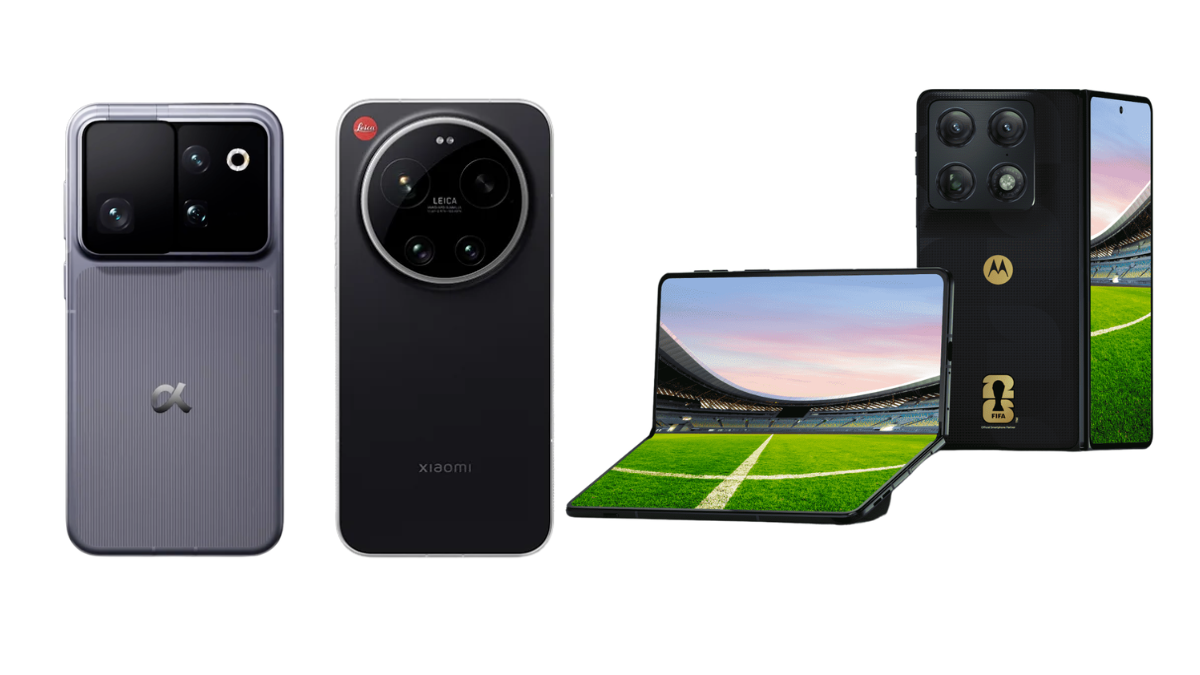
Xiaomi has announced the Xiaomi 17 Ultra ahead of MWC. Developed in partnership with Leica, the phone centres on photography, featuring a 1-inch 50MP primary sensor with an f/1.67 lens, a 200MP 1/1.4-inch telephoto camera and a 50MP ultrawide lens. It also includes a physical zoom ring integrated around the camera module. Beyond imaging, the device offers a 6.9-inch OLED display with a 120Hz refresh rate and peak brightness of 3,500 nits, powered by a 6,000mAh silicon-carbon battery. It runs on Qualcomm’s Snapdragon 8 Elite Gen 5 processor. 


Leica also introduced a co-branded Leitzphone by Xiaomi at the show, built on largely the same hardware platform as the 17 Ultra. It retains the 1-inch sensor and mechanical camera control ring but adds a Leica-designed interface with a simplified shooting layout, monochrome mode and custom Leica filters. The device carries Leica branding while maintaining core specifications, including the Snapdragon 8 Elite Gen 5 chip and a 6.9-inch 120Hz display, akin to the Xiaomi 17 Ultra.


Motorola Razr Fold


Motorola has unveiled the Razr Fold, its first book-style foldable smartphone, featuring a 6.6-inch external display that opens into an 8.1-inch 2K LTPO internal screen. The device measures 4.6mm when unfolded and 9.9mm when closed and uses a stainless steel teardrop hinge, titanium inner screen plate, ultra-thin glass and anti-shock film for durability. It is powered by the Snapdragon 8 Gen 5 Mobile Platform, paired with 16GB RAM and up to 1TB storage and backed by a 6,000mAh silicon-carbon battery with 80W wired and 50W wireless charging. The camera system includes a 50MP Sony LYTIA 828 main sensor with 8K and Dolby Vision recording, a 50MP periscope telephoto (3x optical, up to 100x digital), a 50MP ultrawide with macro support, a 32MP internal selfie camera and a 20MP external camera. Motorola is promising up to seven years of Android OS and security updates. 


The Razr Fold also supports the Moto Pen Ultra stylus, which offers pressure sensitivity, tilt detection, low latency and palm rejection for note-taking, sketching and document annotation. Software features include hover support, quick tool access, screenshot capture and AI-assisted tools such as real-time transcription and notification summaries. The phone can be positioned in laptop and tent modes for multitasking, hands-free video and content capture, with the hinge allowing it to function as a built-in stand. Motorola says the device carries top DXOMARK rankings for foldable cameras in North America and integrates AI features designed to enhance imaging, productivity and system performance. 


Honor Magic V6


Honor also introduced the Magic V6, which it claims is the thinnest foldable in its class, measuring 8.75mm when folded and 4.0mm when open in the white variant. The black, gold and red models are slightly thicker at 9mm folded and 4.1mm unfolded. The book-style foldable is powered by the Snapdragon 8 Elite Gen 5 processor, paired with 16GB of RAM and 512GB of storage. 


Camera hardware includes two 50MP sensors alongside a 64MP telephoto lens, plus 20MP f/2.2 selfie cameras on both the cover and inner displays. According to Engadget, the international model will pack a 6,660mAh battery with 25 per cent silicon content, while the China-exclusive version is rated at over 7,000mAh with 32 per cent silicon content. Pricing and release details have not been disclosed.


Lenovo’s other products unveiled


Lenovo showcased a broad mix of concept and commercial devices spanning foldables, gaming systems and creator-focused PCs:


  • The Yoga Book Pro 3D concept features dual PureSight Pro Tandem OLED displays, including a glasses-free 3D upper screen with AI-powered 2D-to-3D conversion and gesture controls, powered by an Intel Core Ultra 7 CPU and Nvidia GeForce RTX 5070 GPU.

  • Creator laptops include the Yoga 9i 2-in-1 Aura Edition with a 2.8K OLED display and stylus support, and the Yoga Pro 7a with AMD Ryzen AI Max+ chips, up to 128GB RAM and a 2.5K OLED panel.

  • The Idea Tab Pro Gen 2 runs on Snapdragon 8s Gen 4 with a 13-inch 3.5K display and 10,200mAh battery, while the IdeaPad Slim 5i Ultra offers Intel Core Ultra processors, up to a 120Hz display and a 65Wh battery in a 1.15kg chassis.

  • Lenovo also introduced gaming and accessory hardware, including the Legion Tab with an 8.8-inch 165Hz 3K display and Snapdragon 8 Elite Gen 5, and the Legion 7a gaming laptop powered by AMD Ryzen AI Max+ processors with integrated graphics and a 15.3-inch OLED screen.

  • The Yoga Creative Keyboard AngryMiao Edition features a 2.6kg aluminium build with per-key RGB and a large control knob.

  • The L16 Mobile Monitor offers a 16-inch FHD IPS panel with 65W USB-C passthrough.

  • On the commercial side, updates span the ThinkPad T-Series, ThinkPad X13 Detachable and ThinkBook 14 2-in-1 Gen 6, alongside the modular ThinkBook Modular AI PC concept with attachable displays expanding to 19 inches.

  • Lenovo also previewed AI-driven concepts such as the desk-based AI Work Companion for task management and the AI Workmate device supporting voice, gesture and spatial interaction, including projection onto nearby surfaces.


Honor Humanoid Robot


Ahead of MWC 2026, Honor also outlined its Augmented Human Intelligence (AHI) strategy and used the platform to preview a humanoid robot. The robot is positioned as an exploration of embodied intelligence, reflecting the company’s efforts to integrate motion, spatial awareness and AI-driven interaction into future devices. 


Presented as an extension of Honor’s human-centric AI vision, the humanoid robot is intended to demonstrate how intelligent systems could move beyond screen-based interfaces into physical, real-world environments. The company framed the concept as part of a longer-term push towards combining hardware innovation and advanced AI to create more adaptive and interactive machines.

Source link

YouTube
Instagram
WhatsApp