iOS bug crashes iPhones with simple character input: What you need to know

iOS bug crashes iPhones with simple character input: What you need to know


A recently discovered bug can crash a user’s iPhone when a specific set of characters is typed. A security researcher has found that typing “”:: can cause the Apple mobile user interface, known as Springboard, to crash, reports TechCrunch. The device either reloads the lock screen or the screen briefly goes blank. According to 9to5Mac, the issue affects typing in Spotlight Search from the iPhone Home Screen or App Library search bar.


Typing these characters into Spotlight Search from the Home Screen or App Library search bar will crash the phone. The bug cannot be triggered by anyone except the iOS device owner typing the characters and is reportedly not a security issue. 9to5Mac tested the bug on iOS 17, iOS 18, and iOS 18.1. On iOS 17, typing these characters causes Springboard to crash and the device to soft reboot. On iOS 18 and iOS 18.1, it causes Spotlight Search to freeze briefly, but Springboard does not crash entirely. The bug appears to affect the iOS process for certain text strings within Spotlight Search and App Library.


There has been no official comment from Apple. In 2015, a similar bug caused Messages to crash and iPhones to reboot when a specific text was received.


In related news, the Indian Computer Emergency Response Team (CERT-In) recently issued a “severe” warning to Apple users, highlighting several vulnerabilities in products such as iPhones, iPads, Macs, and more. These vulnerabilities pose risks including data breaches, service disruptions, and spoofing attacks. CERT-In has given these vulnerabilities a severity rating of “High.”

First Published: Aug 22 2024 | 12:39 PM IST


Source link

Assembled in India: Alleged Apple iPhone 16 Pro box label appears on web

Assembled in India: Alleged Apple iPhone 16 Pro box label appears on web


Representative image: Apple iPhone 15 Pro Max

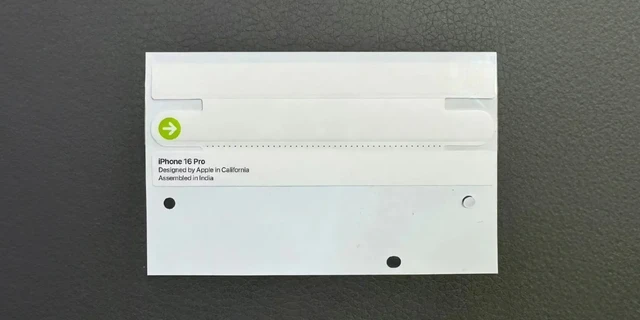
Apple is reportedly producing Pro models of its upcoming iPhone 16 series in India. While there have been multiple reports about Apple potentially starting assembly of the iPhone 16 Pro line in India, images of the box for an India-made iPhone 16 Pro have recently surfaced online, according to 9To5Mac. An image shared on the Chinese social media platform Weibo shows the label on the seal of an iPhone 16 Pro box stating “Assembled in India.”

Made in India iPhone 16 Pro


“Assembled in India” label for iPhone 16 Pro (Image: 9To5Mac)


Earlier, Money Control reported that Apple, through its partner Foxconn, aims to diversify iPhone production beyond China and enhance its manufacturing presence in India. Bloomberg reported similarly but added that while Foxconn could start assembling iPhone 16 Pro models “within weeks of their launch,” Apple’s other partners in India, such as Pegatron and Tata Group, would follow shortly after.


Despite local assembly, it is expected that the majority of iPhone 16 Pro and Pro Max units produced in India will be exported to markets such as Europe, West Asia, and the United States. This is due to the relatively lower domestic demand for high-end iPhone models in India.


Apple introduced India-made iPhone 15 models at last year’s launch, expanding to include the iPhone 15 Plus model. However, the iPhone 16 series will be the first to include India-made Pro and Pro Max models. This expansion in manufacturing is expected to increase India’s share of global iPhone production from 14 to 25 per cent by next year.

First Published: Aug 22 2024 | 11:50 AM IST


Source link

Microsoft Copilot Plus PCs' headline Recall feature is launching in October: Technology News

Microsoft Copilot Plus PCs' headline Recall feature is launching in October: Technology News


Microsoft has announced that the AI-powered Recall feature for Windows on ARM will launch in October, exclusively for Windows Insiders. Initially announced in May, the feature was intended to debut with the new line of Copilot+ PCs in June. However, its rollout was delayed due to security and privacy concerns. Microsoft had previously stated that the Recall feature would not be included with its new computers and would instead be previewed with a smaller group at a later date.


What is Recall


Recall is a new AI-powered feature exclusive to Windows on ARM. It functions like a photographic memory, allowing users to revisit what they have previously seen or done on their PC. Recall provides a timeline of events but also allows users to describe what they are looking for. The feature generates options on a timeline that spans across any application, website, document, or other areas to locate specific items. This timeline consists of snapshots, each depicting the screen’s content at various points in time.


Microsoft is reportedly working on significant updates to Recall, including encrypting the database, using Windows Hello for authentication, and making the AI-powered feature opt-in rather than enabled by default. While there has been no definitive confirmation of a broader launch, Microsoft’s blog update has confirmed that Recall will be available to Windows 11 Insiders starting in October. A wider release is expected to follow after testing with the Insider program.


“In our commitment to delivering a trustworthy and secure Recall (preview) experience on Copilot+ PCs for customers, we’re updating that Recall will be available to Windows Insiders starting in October. As shared on June 13, we have adjusted our release approach to leverage the valuable expertise of our Windows Insider community before making Recall available to all Copilot+ PCs. Security remains our top priority, and when Recall becomes available for Windows Insiders in October, we will publish a blog with more details,” the blog post stated.

First Published: Aug 22 2024 | 11:27 AM IST


Source link

Google Pixel 9, Pixel 9 Pro XL go on sale in India: Check price and offers

Google Pixel 9, Pixel 9 Pro XL go on sale in India: Check price and offers


Google’s latest Pixel 9 and Pixel 9 Pro XL smartphones are now available for purchase in India. Launched earlier this month at the Made By Google event, the smartphones have been available for pre-order in the country since. Customers can purchase either model through the e-commerce platform Flipkart or offline at Croma and Reliance Digital stores.


Pixel 9 and Pixel 9 Pro XL: Offers


On Reliance Digital, customers can avail themselves of a discount of up to Rs 5,000 on the Pixel 9 with an SBI credit card. Those purchasing the Pixel 9 Pro XL can receive a discount of up to Rs 10,000 using an SBI credit card.


On Flipkart, introductory offers are available. Customers purchasing either smartphone can bundle Google’s 30W power adapter or the CMF by Nothing Charger at a discounted price of Rs 1,999. Additionally, an instant discount of Rs 4,000 on the Pixel 9 and Rs 10,000 on the Pixel 9 Pro XL is offered on ICICI Bank credit cards and EMI transactions. Flipkart is also offering Pixel Buds Pro wireless earbuds at a discounted price of Rs 7,999 with either pre-order. No-cost EMI options are available for up to 12 months.


Pixel 9: Details


The Pixel 9 features a 6.3-inch OLED display with a refresh rate ranging from 60Hz to 120Hz. The device is protected by Corning Gorilla Glass Victus 2 on the front and back. It boasts a dual rear camera system, comprising a 50MP main camera and a 48MP ultrawide camera with Macro Focus. The front camera is a 10.5MP autofocus sensor. Powered by the Google Tensor G4 processor, the Pixel 9 comes with 12GB RAM and 256GB storage. It includes a 4,700 mAh battery that supports both wired and wireless charging.


Pixel 9: Pricing


12GB RAM + 256GB storage: Rs 79,999


Colours: Wintergreen, Peony, Obsidian, Porcelain


Pixel 9: Specifications


  • Display: 6.3-inch Super Actua Display, 60-120Hz refresh rate, 1080×2424 resolution, 2700 nits peak brightness, Corning Gorilla Glass Victus 2

  • Processor: Tensor G4

  • RAM: 12GB

  • Storage: 256GB

  • Rear camera: 50MP primary (OIS) + 48MP ultra-wide

  • Front camera: 10.5MP

  • OS: Android 14

  • Battery: 4700mAh


Pixel 9 Pro XL: Details


The Pixel 9 Pro XL is the largest model in the Pixel 9 series, featuring a 6.8-inch Super Actua LTPO OLED display with a resolution of 1,344 x 2,992 pixels and a refresh rate from 1Hz to 120Hz. Like its counterparts, it is protected by Corning Gorilla Glass Victus 2. The Pixel 9 Pro XL includes the same triple rear camera system as the Pixel 9 Pro and is distinguished by a larger 5,060 mAh battery that supports wired and wireless charging.


Pixel 9 Pro XL: Pricing


16GB RAM + 256GB storage: Rs 124,999


16GB RAM + 512GB storage: Rs 139,999


Colours: Hazel, Obsidian, Porcelain, Rose Quartz


Pixel 9 Pro XL: Specifications


  • Display: 6.8-inch Super Actua Display, 1-120Hz refresh rate, 1344×2992 resolution, 3000 nits peak brightness, Corning Gorilla Glass Victus 2

  • Processor: Tensor G4

  • RAM: 16GB

  • Storage: 256GB and 512GB

  • Rear Camera: 50MP primary (OIS) + 48MP ultra-wide + 48MP telephoto (OIS)

  • Front Camera: 42MP

  • OS: Android 14

  • Battery: 5060mAh

First Published: Aug 22 2024 | 11:12 AM IST


Source link

Why does Big Tech oppose California AI bill if it wants it to be regulated?

Why does Big Tech oppose California AI bill if it wants it to be regulated?


Developers of AI software operating in the state would also need to outline methods for turning off the AI models if they go awry, effectively a kill switch | Image: Wikimedia commons


California legislators are set to vote on a bill as soon as this week that would broadly regulate how artificial intelligence is developed and deployed in California even as a number of tech giants have voiced broad opposition.


Here is background on the bill, known as SB 1047, and why it has faced backlash from Silicon Valley technologists and some lawmakers:


What does the bill do? 


Advanced by State Senator Scott Wiener, a Democrat, the proposal would mandate safety testing for many of the most advanced AI models that cost more than $100 million to develop or those that require a defined amount of computing power.


Developers of AI software operating in the state would also need to outline methods for turning off the AI models if they go awry, effectively a kill switch.


The bill would also give the state attorney general the power to sue if developers are not compliant, particularly in the event of an ongoing threat, such as the AI taking over government systems like the power grid.


As well, the bill would require developers to hire third-party auditors to assess their safety practices and provide additional protections to whistleblowers speaking out against AI abuses.


What have lawmakers said? 


SB 1047 has already passed the state Senate by a 32-1 vote.


Last week it passed the state Assembly appropriations committee, setting up a vote by the full Assembly. If it passes by the end of the legislative session on Aug. 31, it would advance to Governor Gavin Newsom to sign or veto by Sept. 30.


Wiener, who represents San Francisco, home to OpenAI and many of the startups developing the powerful software, has said legislation is necessary to protect the public before advances in AI become either unwieldy or uncontrollable.


However, a group of California Congressional Democrats oppose the bill, including San Francisco’s Nancy Pelosi; Ro Khanna, whose congressional district encompasses much of Silicon Valley; and Zoe Lofgren, from San Jose.


Pelosi this week called SB 1047 ill-informed and said it may cause more harm than good. In an open letter last week, the Democrats said the bill could drive developers from the state and threaten so-called open-source AI models, which rely on code that is freely available for anyone to use or modify.


What do tech leaders say? 


Tech companies developing AI – which can respond to prompts with fully formed text, images or audio as well as run repetitive tasks with minimal intervention ‘have called for stronger guardrails for AI’s deployment. They have cited risks that the software could one day evade human intervention and cause cyberattacks, among other concerns. But they also largely balked at SB 1047.


Wiener revised the bill to appease tech companies, relying in part on input from AI startup Anthropic – backed by Amazon and Alphabet. Among other changes, he eliminated the creation of a government AI oversight committee.


Wiener also took out criminal penalties for perjury, though civil suits may still be brought.


Alphabet’s Google and Meta have expressed concerns in letters to Wiener. Meta said the bill threatens to make the state unfavorable to AI development and deployment. The Facebook parent’s chief scientist, Yann LeCun, in a July X post called the bill potentially harmful to research efforts.


OpenAI, whose ChatGPT is credited with accelerating the frenzy over AI since its broad release in late 2022, has said AI should be regulated by the federal government and that SB 1047 creates an uncertain legal environment.


In a letter to Wiener, OpenAI said it opposes SB 1047 because it is a threat to AI’s growth and could cause entrepreneurs and engineers to leave the state.


Of particular concern is the potential for the bill to apply to open-source AI models. Many technologists believe open-source models are important for creating less risky AI applications more quickly, but Meta and others have fretted that they could be held responsible for policing open-source models if the bill passes. Wiener has said he supports open-source models and one of the recent amendments to the bill raised the standard for which open-sourced models are covered under its provisions.


The bill also has its backers in the technology sector.


Geoffrey Hinton, widely credited as a ‘godfather of AI’, former OpenAI employee Daniel Kokotajlo and researcher Yoshua Bengio have said they support the bill.


(Only the headline and picture of this report may have been reworked by the Business Standard staff; the rest of the content is auto-generated from a syndicated feed.)

First Published: Aug 22 2024 | 9:45 AM IST


Source link

Google to help build cyber protection software for Australian infra

Google to help build cyber protection software for Australian infra


Google said the plan was part of a five-year commitment it made in 2021 to spend $1 billion ($675 million) in Australia. Photo: Bloomberg


Google and Australia’s national science agency said they will work together to develop software that automatically detects and fixes network vulnerabilities for operators of critical infrastructure, seeking to contend with a surge in cyberattacks.


The software for organisations such as hospitals, defence bodies and energy suppliers will be customised to be in line with Australia’s regulatory environment.


“Software supply chain vulnerabilities are a global issue, and Australia has led the way in legislative measures to control and combat the risks,” said Stefan Avgoustakis, head of security practice for Google Cloud in Australia and New Zealand.


The Australian government has been imposing tougher requirements on critical infrastructure operators to report and prevent cyberattacks after a spate of breaches in the past two years left the personal information of half the country’s 26 million population exposed.


The research partnership will pair up Google’s existing open source vulnerability database and storage cloud with the Commonwealth Scientific and Industrial Research Organisation’s (CSIRO) research methods, the parties said in a statement.


Google said the plan was part of a five-year commitment it made in 2021 to spend $1 billion ($675 million) in Australia at a time when the country’s push for tougher regulation of global tech firms had cooled relations with the US firm.


Google also supplies cybersecurity services to the US as part of a $9 billion contract between the US Department of Defense and a number of large tech firms.


CSIRO’s project lead Ejaz Ahmed said locally developed cybersecurity software would “be better aligned with local regulations, promoting greater compliance and trustworthiness.” The project’s findings will be made public to provide operators of critical infrastructure easy access to the information.

(Only the headline and picture of this report may have been reworked by the Business Standard staff; the rest of the content is auto-generated from a syndicated feed.)
 

First Published: Aug 22 2024 | 8:11 AM IST


Source link

YouTube
Instagram
WhatsApp




