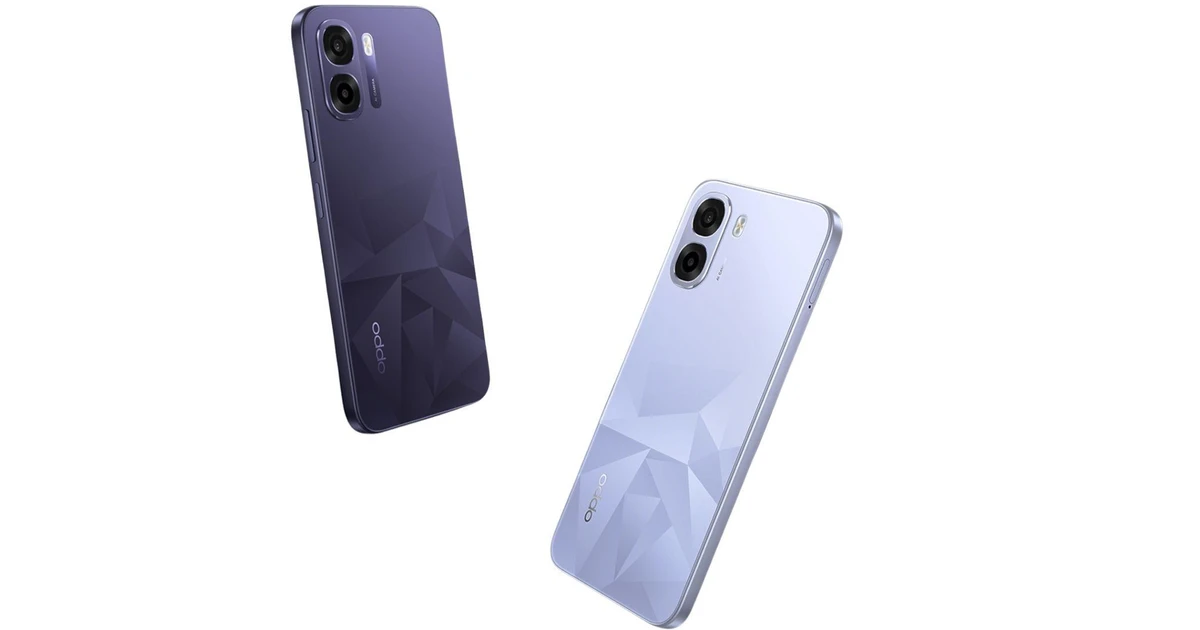
Samsung launches budget Galaxy F05 smartphone with leather finish: Details: Gadget News

Samsung launches budget Galaxy F05 smartphone with leather finish: Details: Gadget News


Samsung has expanded its Galaxy F-series portfolio in India with the launch of the Galaxy F05, a budget smartphone powered by the MediaTek Helio G85 processor. The device features a leather-pattern finish on the back and sports a 50-megapixel dual rear camera setup.


Samsung Galaxy F05: Price and Availability


The Galaxy F05 comes in a single variant with 4GB RAM and 64GB internal storage. It is available in Twilight Blue and is priced at Rs 7,999. Sales will begin on September 20 through Samsung’s official website, e-commerce platform Flipkart, and select retail stores.


Samsung Galaxy F05: Features


The Galaxy F05 sports a 6.7-inch LCD display with HD+ resolution and a 60Hz refresh rate. It is powered by the MediaTek Helio G85 chipset, and the 4GB RAM can be expanded to 8GB using the RAM Plus feature, which converts free storage into virtual RAM. The device offers 64GB of internal storage, which can be expanded up to 1TB with a microSD card.

The smartphone is equipped with a 50MP primary camera, supported by a 2MP depth sensor. On the front, it has an 8MP camera for selfies.

It packs a 5000mAh battery with 25W wired charging support. Running on Android 14, the Galaxy F05 will receive two major operating system updates and up to four years of security updates.


Samsung Galaxy F05: Specifications


  • Display: 6.7-inch LCD, HD+ resolution, 60Hz refresh rate

  • Processor: MediaTek Helio G85

  • RAM: 4GB

  • Storage: 64GB (expandable up to 1TB)

  • Rear Cameras: 50MP primary, 2MP depth sensor

  • Front Camera: 8MP

  • Battery: 5000mAh

  • Charging: 25W wired

  • OS: Android 14

First Published: Sep 18 2024 | 11:57 AM IST


Source link

Snapchat gets simplified interface and new AI features: Check what's new

Snapchat gets simplified interface and new AI features: Check what's new


New Snapchat app layout (Image: Snapchat)


Social media platform Snapchat is undergoing a significant redesign, featuring a simplified user interface, new AI-powered tools, and more lenses. At its sixth annual Snap Partner Summit on September 17, Snapchat announced these updates along with the fifth generation of Spectacles—standalone augmented reality glasses powered by SnapOS, the company’s new operating system.


Here’s a breakdown of what was announced at the summit:


Snapchat App: What’s New


Snapchat is currently testing a streamlined version of its app with select users. The updated version reduces the number of tabs at the bottom from five to three: Messaging, Camera, and a new “For You” discovery feed, which showcases curated content from other creators.


In addition to the redesign, Snapchat is rolling out AI-powered features. A new Lens will allow users to see an AI-generated version of their “elderly selves”. For Snapchat Plus subscribers, AI will be integrated into Memories, generating captions and applying lenses. Other notable additions include new accessories for Bitmoji avatars.


For creators, the app now features a simplified profile that lets users switch between personal and public accounts. Snapchat has also added the ability to pin Snaps to the top of Public Profile pages.


Snapchat Spectacles and SnapOS: What’s New


Snapchat has introduced the fifth generation of its standalone AR glasses, Spectacles. These see-through glasses run on the new SnapOS, enabling users to interact naturally with their surroundings. The new system supports navigation through hand gestures and voice commands. The company said that the SnapOS uses Liquid Crystal on Silicon (LCoS) micro-projectors and waveguides, offering optimal visuals for both indoor and outdoor environments.


Additionally, Snapchat is partnering with OpenAI to bring more advanced AI models to developers, allowing them to create Lenses that can identify real-world objects.


The new Spectacles feature a dual system-on-a-chip architecture with two Qualcomm chips, splitting the workload to deliver an immersive experience while reducing power consumption. Snapchat said that Spectacles offer up to 45 minutes of continuous standalone use.

First Published: Sep 18 2024 | 11:14 AM IST


Source link

Samsung planning to launch its first rollable smartphone next year: Report

Samsung planning to launch its first rollable smartphone next year: Report


Samsung is reportedly planning to launch its rollable smartphone in second half of the next year. The device is expected to feature a 12.4-inch screen and an under-display camera that conceals the front camera for selfies and video calls, according to 9to5Google. Samsung unveiled a rollable display of similar size at the SID Display Week 2024 event, and it seems the company may be incorporating that screen technology into the rollable smartphone.


Samsung already has a rollable OLED screen called Rollable Flex, designed for smartphones, tablets, and various other mobile devices.


In recent months, the foldable market has seen new products such as the upgraded Google Pixel 9 Pro Fold and OnePlus Open. Huawei rolled out the first tri-fold smartphone, the Mate XT, earlier this month. The competition appears to be pushing Samsung to release its rollable smartphone in 2025. If launched, it will be the first rollable smartphone available for purchase. South Korean company LG was reportedly close to launching a rollable device but shut down its mobile division in 2021 before it could be released. OPPO showcased a rollable prototype in 2021, and Motorola presented the concept Rizr rollable in 2023. TECNO unveiled the Phantom Ultimate with a rollable display last year. However, none of these devices have become commercially available.


In recent news, Samsung has started the pre-reservation process for its upcoming flagship Galaxy Tab S10 series. Customers can secure their device by paying a token fee of Rs 1,000 and can receive benefits of up to Rs 3,499 on the new Galaxy Tab S10 tablets.

First Published: Sep 18 2024 | 11:09 AM IST


Source link

Elon Musk's Neuralink gains FDA breakthrough tag for vision implant

Elon Musk's Neuralink gains FDA breakthrough tag for vision implant


Neuralink (Photo: Bloomberg)

Elon Musk’s brain-chip company, Neuralink, announced on Tuesday that its experimental implant designed to restore vision has received the US Food and Drug Administration’s (FDA) ‘breakthrough device’ designation. This significant milestone marks a crucial step forward in the development of Neuralink’s cutting-edge technology aimed at treating severe medical conditions.


The FDA awards the breakthrough device designation to medical innovations that provide diagnosis or treatment for life-threatening or irreversibly debilitating conditions. The goal is to accelerate the development and review process of these devices, offering hope for patients facing limited treatment options.


Neuralink’s vision-restoring device, named Blindsight, is designed to allow individuals who have lost both eyes and their optic nerves to regain sight. Musk, in a post on social platform X (formerly Twitter), said Blindsight “will enable even those who have lost both eyes and their optic nerve to see.”


However, the company has yet to disclose when Blindsight will enter human trials, and the FDA has not provided further comment.


Founded by Musk and a team of engineers in 2016, Neuralink is developing a brain-chip interface that can be implanted within the skull. The company claims this technology has the potential to help patients with disabilities move, communicate, and now, restore their vision. The chip processes and transmits neural signals, which can be sent to external devices like computers or smartphones.


Mind control tech advances


In parallel, Neuralink is testing another implant aimed at giving paralysed patients the ability to control digital devices using their thoughts. This innovative technology could be transformative for those with spinal cord injuries. A trial is set to evaluate the device’s effectiveness with three patients over several years, according to the US government’s clinical trials database.


Earlier this year, Neuralink successfully implanted its brain-chip in a second patient, who is now using it to play video games and learn 3D design — offering a glimpse into the future of brain-computer interfaces.


[With agency inputs]

First Published: Sep 18 2024 | 10:40 AM IST


Source link

Blackrock, Microsoft join hands to raise  billion for AI investments

Blackrock, Microsoft join hands to raise $30 billion for AI investments


The firms have already discussed the plans with US lawmakers and regulators, Smith said | (Photo: Reuetrs)


By Silla Brush and Dina Bass


BlackRock Inc. and Microsoft Corp. are teaming up on one of the largest efforts to date to bankroll the build-out of data warehouses and energy infrastructure behind the boom in artificial intelligence.


The companies, along with the United Arab Emirates’ MGX investment vehicle, will seek $30 billion of private equity capital over time for the strategy, which will then leverage the money to as much as $100 billion in potential investments, the companies announced Tuesday. 


“The need to build out data centers globally is multi-trillions of dollars to finance,” BlackRock Chief Executive Officer Larry Fink said in an interview, adding that the Global AI Infrastructure Investment Partnership has been months in the making. “This is just a great example of the capital markets building out infrastructure and building out the opportunities and new technologies.”


The infrastructure investments — including energy projects — will be mostly in the US, with a portion of the funds to be deployed in US partner countries, the companies said in a statement. The plan includes bringing on additional investors, and pensions and insurers are eager for such long-term infrastructure investments, Fink said. 


“We don’t believe it will be a difficult task,” he said of raising the money.


The group includes Bayo Ogunlesi’s Global Infrastructure Partners, the money manager BlackRock is acquiring for about $12.5 billion, Abu Dhabi’s MGX, which was created this year specifically to invest in AI, and Nvidia Corp., the chipmaker that will support the coalition with its expertise in AI data centers and factories. Nvidia has poured money into creating software, networking and other pieces of technology that it says are essential to quickly putting together complete AI-systems.


“The investment opportunity is real and the investment need is even greater,” Brad Smith, vice chairman and president of Microsoft, said in the interview. AI “is the next general purpose technology that will fuel growth across every sector of the economy both in the United States and abroad.” 


The firms have already discussed the plans with US lawmakers and regulators, Smith said.


Microsoft has invested $13 billion in AI research lab OpenAI and is overhauling its entire product line around AI features. The software company is dramatically expanding its own spending on data centers and computing infrastructure to deliver these services and has said its ability to serve AI customers is being constrained by not having enough chips and data center capacity.


Electricity usage


Energy producers across the US are racing to meet a surge in demand from power-hungry AI data centers, with electricity usage by the facilities poised to surge as much as 10 times current levels by 2030, according to Bloomberg Intelligence. 


To meet that demand, energy companies are delaying the retirement of coal and gas plants, planning the construction of new gas plants and building out clean energy like solar and wind farms. The competition for electricity has even led to increases in how long it takes to connect new data centers to the power grid, with the time period in Virginia’s Data Center Alley stretching to as much as seven years.


“It’s clear today that the availability of power is one of the constraints on building not just data centers but electrification in general,” Ogunlesi said in the interview. “Power generation in the US has not been growing dramatically, so we will have to significantly increase the pace at which we develop new renewable power plants.”


Microsoft has also been talking with OpenAI co-founder and CEO Sam Altman, who’s developing his own plans for groups of investors and tech companies to collaborate on ways to dramatically expand computing infrastructure for AI products.


The Financial Times reported on the partnership earlier.

First Published: Sep 18 2024 | 8:51 AM IST


Source link

Tech wrap Sep 17: iOS 18, Samsung Galaxy Tab S10 series pre-reserve, more

Tech wrap Sep 17: iOS 18, Samsung Galaxy Tab S10 series pre-reserve, more


Apple has started rolling-out the iOS 18 operating system to compatible iPhone models. First showcased at the Worldwide Developers Conference (WWDC) earlier this year, iOS 18 brings various updates to the user interface along with a range of new tools and features to enhance user experience.


Samsung has started the pre-reservation for its upcoming flagship Galaxy Tab S10 series. Customers can secure their device by paying a token amount of Rs 1,000 and receive benefits of up to Rs 3,499 on their next Galaxy Tab S10 series purchase.


China’s Honor has released the Pad X8a in India. This tablet features a Qualcomm Snapdragon 680 processor and an 8,300 mAh battery. Additionally, Honor has launched a Nadal Kids Edition tailored for younger users, featuring a child-safe, food-grade silicone design with a shockproof body. The Pad X8a also comes with dual TUV Rheinland certifications and includes eye protection features such as Ambient Light Care and an E-ink mode to improve the reading experience.


China’s OnePlus has introduced the Nord Buds 3 wireless earbuds in India. These budget-friendly wireless earphones feature active noise cancellation (ANC) technology and the company’s BassWave 2.0 technology to improve bass performance.


Finnish mobile phone brand Human Mobile Devices (HMD) has introduced the Skyline smartphone in India. Revealed in July, the phone boasts a design reminiscent of the Nokia Lumia series and highlights ease of repair. HMD claims that the Skyline smartphone allows for straightforward at-home repairs by facilitating the quick and easy disassembly of key replaceable parts.


Samsung is said to be expanding the rollout of One UI 6.1.1 to additional Galaxy devices. Initially introduced for its new foldable devices earlier this year, the update began reaching older models earlier this month.


Belkin, the American consumer electronics company, has introduced the Auto-Tracking Stand Pro in India. This Apple-certified accessory is compatible with DockKit and is engineered to track subjects on camera as they move, providing 360 degrees of panning and 90 degrees of tilting.


Apple has started distributing watchOS 11 to compatible Apple Watches, coinciding with the release of iOS 18 for iPhones. This new operating system introduces several enhancements, with Sleep Apnea detection being a key feature. While the Apple Watch Series 10 will come with watchOS 11 pre-installed, the update also brings Sleep Apnea detection to certain older models, including the Apple Watch Series 9 and Apple Watch Ultra 2.


Android apps generally display notifications individually on each device they are installed on, which means they don’t recognize when a notification has been seen on one device. As a result, notifications that a user has viewed on one device may reappear as unread on another, due to the lack of synchronization of notification status across devices.


Lenovo Group Ltd. has begun manufacturing AI servers in southeastern India, marking a significant step in the country’s ambition to become a tech leader. On Tuesday, the company announced that it is producing these advanced computers in Pondicherry and plans to expand its operations in the Bangalore area, including establishing a research lab dedicated to artificial intelligence. This move represents Lenovo’s shift from its traditional focus on laptops and smartphones to high-tech innovations.


On Monday, Meta, the parent company of Facebook, announced that it is banning RT, Rossiya Segodnya, and other Russian state media networks from its platforms. The company cited these outlets’ use of misleading tactics to conduct covert influence operations online.


On Monday, Microsoft-backed OpenAI announced that its safety committee will independently manage the security and safety protocols for the development and deployment of its artificial intelligence models.


Australia’s government aims to prohibit children up to age 16 from using social media and is investing millions to determine how to implement this ban. However, it’s likely that tech-savvy teenagers, who are familiar with platforms like Instagram, TikTok, and YouTube, will quickly find ways to bypass the restrictions.


At a trial on Monday, antitrust enforcers argued that Google acquired the advertising technology provider AdMeld in 2011 because the search giant perceived the startup as a “threat” to its online display advertising strategy.


Microsoft Corp. announced that Vodafone Group Plc has entered into a major agreement to utilize artificial intelligence assistants for Office. Additionally, Microsoft revealed a suite of new AI tools aimed at helping users create Excel charts, manage emails, and enhance collaboration.

First Published: Sep 17 2024 | 8:03 PM IST


Source link

YouTube
Instagram
WhatsApp