Vivo X Fold 3 Pro: Made in India foldable goes on sale with launch offers

Vivo X Fold 3 Pro: Made in India foldable goes on sale with launch offers


The Vivo X Fold 3 Pro is now available for purchase in India. The Chinese smartphone maker has confirmed that its maiden foldable smartphone in India is manufactured at its facility in Noida, Uttar Pradesh. Priced at Rs 159,999, the foldable device is offered in 16GB RAM and 512GB on-board storage configuration. It boasts a thin and lightweight design with an “Armour Back Cover” for impact resistance. The X Fold 3 Pro, similar to other flagship X-series smartphones from Vivo, gets a rear camera system that has been co-created with the German optics brand Zeiss.


Vivo X Fold 3 Pro: Price and variant


16GB RAM + 512GB storage: Rs 159,999


Colours: Celestial Black


Vivo X Fold 3 Pro: Availability and introductory offers


The Vivo X Fold 3 Pro smartphone is now available for purchase on Vivo India’s website, e-commerce platform Flipkart and Amazon India, and at select retail outlets including Reliance Digital, Croma and Vijay Sales.


As for the introductory offer, customers can avail a 10 per cent cashback from HDFC, SBI, ICICI, AMEX and HSBC bank cards. Additionally, the company is offering an exchange bonus of Rs 10,000 on trade-in deal. There is also an option for no-interest equated monthly instalment (no-cost EMI) plan of up to 24 months.


Vivo X Fold 3 Pro: Specification


The camera system on the X Fold 3 Pro has been co-created with the German optics brand Zeiss. The smartphone features a 50MP primary camera with optical image stabilisation (OIS), a 50MP ultra-wide angle camera, and a 64MP Zeiss telephoto camera. The Zeiss telephoto camera also comes with OIS support and offers 3x optical zoom at sensor level and up to 100x zoom through software optimisation.


The smartphone also gets Google’s Gemini AI powered features integrated into its operating system. The smartphone offers “AI Note Assist” tool for text summarisation, “AI Transcript Assist” for voice notes transcriptions, and “AI Screen Translation” for translating the text on the display to another preferred language. Vivo has also incorporated AI to power features such as air gestures, which will allow users to take screenshots using hand gestures.


  • Main display: 8.03-inch AMOLED (4:3.55 aspect ratio), 2480 × 2200 resolution, 120Hz refresh rate, 4500 nits peak brightness, Dolby Vision

  • Cover display: 6.53-inch AMOLED (21.1:9 aspect ratio), 2748 × 1172 resolution, 120Hz refresh rate, in-display fingerprint sensor

  • Processor: Qualcomm Snapdragon 8 Gen 3

  • RAM: 16GB LPDDR5X

  • Storage: 512GB UFS4.0

  • Rear camera: 50MP primary (OIS) + 64MP telephoto (OIS) (3x optical zoom) + 50MP ultra-wide-angle

  • Front camera (main screen): 32MP

  • Front camera (cover screen): 32MP

  • Battery: 5700mAh (dual 2850mAh)

  • Charging: 100W wired, 50W wireless

  • OS: Funtouch OS 14 based on Android 14

  • Protection: IPX8

  • Weight: 236g

  • Thickness: 5.2mm (unfolded), 11.2mm (folded)

First Published: Jun 13 2024 | 11:28 AM IST


Source link

OPPO F27 Pro Plus with IP69 water, dust protection launching today: Details

OPPO F27 Pro Plus with IP69 water, dust protection launching today: Details


OPPO F27 Pro Plus is set to debut in India on June 12 at 12 pm. Touted by the Chinese smartphone maker as India’s first “super-rugged, monsoon-ready smartphone”, the smartphone will be IP69-rated for ingress protection against water and dust. Additionally, the OPPO F27 Pro Plus smartphone will boast Swiss SGS five-star rating for drop resistance and US military standard certification for build quality – confirmed the company ahead of the launch.


OPPO F27 Pro Plus: What to expect

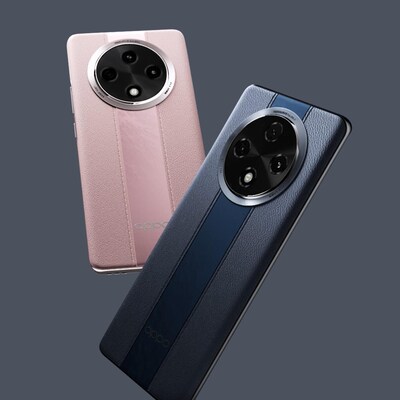
OPPO on its official website stated that the F27 Pro Plus will be offered in two colours: Dust Pink and Midnight Navy. Both these colour variants will feature a leather texture on the back that the company said has stain-resistance capabilities. On the front, the F27 Pro Plus will sport a 3D curved AMOLED display with Corning Gorilla Glass Victus 2 protection.


The OPPO F27 Pro Plus smartphone will sport a circular camera module with a triple-camera setup on the rear together with a flashlight that will be placed symmetrically within a ring shaped metallic ring that OPPO calls “Cosmos Ring Design”.


As for the highlight feature, OPPO has confirmed the Swiss SGS five-star rating for drop resistance and US military standard (MIL-STD-810H method 516.8) certification for build quality. Moreover, OPPO confirmed, the F27 Pro Plus will boast waterproof microphone, speaker openings, SIM card slot pinhole and USB port. OPPO said the smartphone’s microphone openings and earpiece speaker will be covered by a film that will allow audio to pass through but keeps the water out, and the USB unit will be secured with a silicone ring. With these protections in place, the OPPO F27 Pro Plus is said to clear the following three ingress protection (IP) certifications:


  • IP66 for protection against dust and regular water jets

  • IP68 for protection against dust and water immersion up to 1.5m for 30 mins

  • IP69 for protection against dust and high-pressure water jets at temperatures up to 80-degree celcius

First Published: Jun 13 2024 | 11:18 AM IST


Source link

With watchOS 11, Apple Watch can track sleep without sleep focus mode

With watchOS 11, Apple Watch can track sleep without sleep focus mode


With watchOS 11, Apple Watch can track sleep even if the watch is not in Sleep Focus Mode. Earlier, it was necessary to activate Sleep Focus Mode or set a sleep schedule to track sleep. A user on X (formerly Twitter), named Max Weinbach, has tweeted about this change and also informed that overnight rest and naps will also be recorded. Even if you do not activate any mode on the Watch, your sleep data will continue to be collected. Although if you want to use do-not-disturb features and stop constant notifications, you will need to turn on the Sleep Focus mode.

Watch OS 11 is set to bring several upgrades that were announced at WWDC 2024. Vitals app will also be introduced that will take into account heart rate, respiratory rate, wrist temperature, sleep duration, and blood oxygen during Sleep to offer you insights.  If the metrics exceed the usual range, it will also show a warning to the user.


Moreover, Apple will also launch a Training load metric to Apple Watches that is specifically tailored for athletes and fitness enthusiasts. Training load helps users understand the strain on their body from workouts over the last seven days compared to the last 28 days which can help users make better decisions about their training plan. It also offers a new “Effort Rating” that shows how difficult the training was on a scale from 1 to 10. Another major health feature is the new Cycle Tracking app that offers additional support for pregnant users to help them better understand changes in their physical and mental health during this period. The app shows their gestational age and allows them to log symptoms for things frequently experienced during pregnancy.


The new update is expected to be officially launched in September but the beta version is available now. 

First Published: Jun 13 2024 | 10:51 AM IST


Source link

Apple with AI beats Microsoft to become world's most valuable company

Apple with AI beats Microsoft to become world's most valuable company


Representative image: Apple CEO Tim Cook


Apple once again became the world’s most valuable company on Wednesday, dethroning Microsoft from the top spot, as the iPhone maker pushed ahead in a race to dominate artificial intelligence technology.


Its shares jumped nearly 4% to a record $215.04, giving it a market valuation of $3.29 trillion. Microsoft’s market capitalization stood at $3.24 trillion, falling behind Apple for the first time in five months.


The stock surge comes as the tech-heavy Nasdaq hit a record high on fresh signs of cooling inflation.


Apple shares had added more than 7% in the previous session, a day after it unveiled a range of AI-enabled features and software enhancements for its devices, a move that several analysts said would power iPhone sales.


At Apple’s annual developer conference on Monday, executives, including CEO Tim Cook, touted how voice assistant Siri would be able to interact with messages, emails, calendar as well as third-party apps.


“All those questions about Apple lagging from an AI technology standpoint were answered at the Worldwide Developers Conference,” said Michael James, managing director of equity trading at Wedbush Securities in Los Angeles.


“Some of the specifics about AI capabilities that are going to be integrated into the upcoming iPhones made it very apparent that there will clearly be demand for a significant upgrade cycle.”


The tech giant has trailed rivals such as Microsoft and Google-owner Alphabet in the red-hot field of AI, a reason why its shares underperformed this year compared to its peers.


Some of the concerns over its weak share performance, however, eased after Apple beat market expectations for quarterly results and forecast in May, and unveiled a record $110 billion buyback plan.


Apple’s shares have risen about 12% so far in 2024, while Microsoft has added about 16% and Alphabet nearly 28%.


AI chip leader Nvidia, which briefly overtook Apple’s market value last week, is up a whopping 154% this year.


Nvidia last had a market value of $3.11 trillion.


Tesla is the only other ‘Magnificent Seven’ stock that has fared worse than Apple this year, with an about 30% slide.

First Published: Jun 13 2024 | 10:03 AM IST


Source link

Samsung unveils technology road map to lure AI chip makers to its mfg biz

Samsung unveils technology road map to lure AI chip makers to its mfg biz


Samsung also argues its ability to offer logic, memory and advanced packaging will help it make rapid progress in winning outsourced semiconductor manufacturing orders for AI-related chips | Photo: Bloomberg


By Ian King and Yoolim Lee


Samsung Electronics Co. unveiled a number of forthcoming advancements to its technology aimed at luring makers of AI chips to its manufacturing business. 


Though Samsung is the world’s No. 1 memory-chip maker, it has been trying to catch up with rival Taiwan Semiconductor Manufacturing Co. in the foundry market, where companies manufacture customer-designed chips. Samsung laid out its chipmaking road map and outlined its vision for the artificial intelligence era at its annual foundry forum Wednesday at its US chip headquarters in San Jose, California. 


Samsung’s share in the foundry market slid to 11 per cent in the first quarter of this year from 11.3 per cent in the previous quarter, while TSMC’s share climbed to 61.7 per cent from 61.2 per cent during the same period, according to TrendForce. 


The South Korean chipmaker’s earnings are recovering, helped by demand for components used in AI computing systems. That’s bolstering its main memory chip division and also providing opportunities to win outsourcing orders. 


But Samsung has to prove its production is advanced and reliable enough to attract bigger commitments from demanding customers such as Nvidia Corp., which produces AI accelerators that are a must-have for all large technology companies. Samsung also faces a nascent challenge from Intel Corp., which is opening its plants in an attempt to win orders from former rivals. 


Advances in production technology, usually signified by smaller and smaller transistor dimensions, helps improve the performance of the electronic components. The race to smaller dimensions is key to winning orders for AI processors, some of the highest performing and most expensive chips in use. 


The advanced process introduced by Samsung uses so-called backside power delivery network technology, which places power rails on the backside of a silicon wafer. Such technology enhances power, performance and area while significantly reducing the drop in voltage, compared with its first-generation 2-nanometer process, the company said. 


Samsung also argues its ability to offer logic, memory and advanced packaging will help it make rapid progress in winning outsourced semiconductor manufacturing orders for AI-related chips.


The company predicted on Wednesday that its AI-related customer list will expand fivefold and revenue will increase by nine times over current levels by 2028. The company announced several new types of production technology and a layout for future AI-related chips that it said will help it win customers. 


Samsung executives declined to comment on the status of its attempts to supply the latest advanced memory chips to Nvidia or respond to reports that it hasn’t yet been able to achieve qualification of such chips at the US company.


Samsung also touted its gate-all-around — or GAA — technology, which is key for AI products. The company plans to mass produce its second-generation 3-nanometer process in the second half of this year and deliver GAA on its upcoming 2-nanometer process. In 2022, Samsung became the first in the industry to begin GAA-based 3-nanometer mass production. 


The chipmaker affirmed that its preparations for 1.4-nanometer are progressing smoothly, with performance and yield targets on track for mass production in 2027. 

First Published: Jun 13 2024 | 7:06 AM IST


Source link

Apple with AI beats Microsoft to become world's most valuable company

Apple likely to 'pay' OpenAI for ChatGPT through distribution, not cash


ChatGPT will be offered for free on Apple’s products, but OpenAI and Apple could still make money by converting free users to paid accounts | Photo: Bloomberg


By Mark Gurman


When Apple Inc. Chief Executive Officer Tim Cook and his top deputies this week unveiled a landmark arrangement with OpenAI to integrate ChatGPT into the iPhone, iPad and Mac, they were mum on the financial terms.


Left unanswered on Monday: which company is paying the other as part of a tight collaboration that has potentially lasting monetary benefits for both. But, according to people briefed on the matter, the partnership isn’t expected to generate meaningful revenue for either party — at least at the outset.


The arrangement includes weaving ChatGPT, a digital assistant that responds in plain terms to information requests, into Apple’s Siri and new writing tools. Apple isn’t paying OpenAI as part of the partnership, said the people, who asked not to be identified because the deal terms are private. Instead, Apple believes pushing OpenAI’s brand and technology to hundreds of millions of its devices is of equal or greater value than monetary payments, these people said.


Meanwhile, Apple, thanks to OpenAI, gets the benefit of offering an advanced chatbot to consumers — potentially enticing users to spend more time on devices or even splash out on upgrades.


Representatives of Apple and OpenAI declined to comment.


The pact with OpenAI is part of a broader push by Apple into AI. The iPhone maker laid out the plans during a keynote address at its annual Worldwide Developers Conference, showing off AI features for the iPhone, iPad and Mac. The non-ChatGPT capabilities — branded as Apple Intelligence — were designed by the company in-house. 


But even if money wasn’t a major factor in the Apple-OpenAI deal, remuneration could come into play later. 


Under the current structure, the partnership could become costly for OpenAI, which needs to pay Microsoft Corp. to host ChatGPT on that company’s Azure cloud-computing systems. The more people use ChatGPT, the more OpenAI’s expenses rise. And the integration into Apple devices — while optional for users and limited to the company’s recent products — threatens to add significantly to the computing budget.


ChatGPT will be offered for free on Apple’s products, but OpenAI and Apple could still make money by converting free users to paid accounts. OpenAI’s subscription plans start at $20 a month — a fee that covers extra features like the ability to analyse data and generate more types of images. 


Today, if a user subscribes to OpenAI on an Apple device via the ChatGPT app, the process uses Apple’s payment platform, which traditionally gives the iPhone maker a cut.


Apple’s deal with OpenAI isn’t exclusive, and the iPhone maker is already discussing offering Google’s Gemini chatbot as an additional option. That agreement should be in place later this year.


Apple has also held talks with Anthropic as a potential chatbot partner, people familiar with the matter told Bloomberg earlier this year. The idea is to ultimately offer a range of AI services to users — similar to the way Apple has different search engine options in its Safari browser.


Eventually, Apple aims to make money from AI by striking revenue-sharing agreements whereby it gets a cut from AI partners that monetise results in chatbots on Apple platforms, according to the people. The company believes that AI could chip away at the billions of dollars it gets from its Google search deal because users will favor chatbots and other tools over search engines. Apple will need to craft new arrangements that make up for the shortfall.


Apple’s own AI services won’t be as costly to deliver because most of them are handled on the devices themselves, rather than through cloud computing. Still, the company is ramping up its data center operations to support new online AI services that handle more advanced tasks.


To make Apple Intelligence a success, the company will need to expand it to other languages and countries. That may be a challenge in China, one of Apple’s biggest overseas markets, where services like ChatGPT and Gemini are barred. 


The company has yet to reach a deal with a local Chinese provider to handle chatbot features, but has been considering an arrangement with companies such as Baidu Inc. and Alibaba Group Holding Ltd., according to the people. For now, Apple Intelligence is only available in American English, but the company is aiming to support more languages next year.

First Published: Jun 13 2024 | 6:57 AM IST


Source link

YouTube
Instagram
WhatsApp




