OPPO launches K14X 5G in India with 6500mAh battery: Check price, specs

OPPO launches K14X 5G in India with 6500mAh battery: Check price, specs


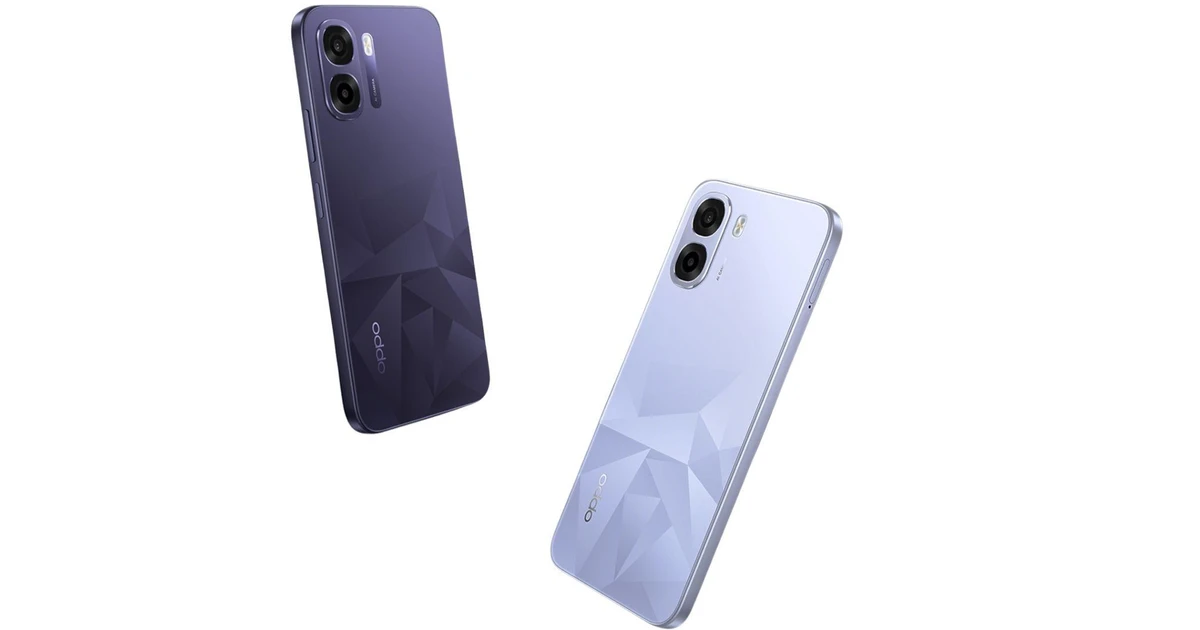
OPPO has launched the OPPO K14X smartphone in India. Powered by the MediaTek Dimensity 6300 chip, the smartphone sports a 6.75-inch HD+ display with a 120Hz refresh rate. The smartphone also includes AI-powered features, including AI Eraser, AI Reflection Remover, AI Best Shot, and AI Unblur. The company said the smartphone comes with improved thermal management to keep performance stable and visuals smooth during long usage.


OPPO K14X 5G: Price and variants


  • 4GB RAM +128GB storage: Rs 14,999

  • 6GB RAM +128GB storage: Rs 16,999

  • Colours: Icy Blue and Prism Violet


OPPO K14X 5G: Availability and offers


The company said that pre-bookings for the OPPO K14X 5G begin on February 10. The smartphone will be available from February 16 through the OPPO e-store and the e-commerce platform Flipkart.


As for the introductory offer, customers purchasing the smartphone can avail a Rs 1,500 discount on the sale day with select bank cards. Additionally, they can also get up to three-month no-interest equated monthly instalment option.


OPPO K14X 5G: Details


The OPPO K14X 5G features a 6.75-inch HD+ display with a 120Hz refresh rate and up to 1,125 nits of peak brightness. The OPPO K14X has an 8.61mm profile and weighs around 209–212 grams. The smartphone is powered by the MediaTek Dimensity 6300 chip, coupled with up to 6GB RAM and 128GB internal storage.


For photography, the company said that the OPPO K14X comes with a 50MP rear camera paired with a 2MP depth sensor. The OPPO K14X 5G adds a Dual-View Video feature that lets users record using both the front and rear cameras at the same time, combining the footage into a single frame. In terms of durability, the company said that the smartphone carries an IP64 rating, offering protection against dust and water splashes.


The device runs on ColorOS 15, based on Android 15. The smartphone packs a 6,500mAh battery with support for 45W charging. It also includes support for reverse wired charging.


The company also highlighted its AI-powered features on the K14X, including AI Eraser, AI Reflection Remover, AI Best Shot, and AI Unblur. Additionally, OPPO said that the phone will include AI LinkBoost 3.0 and Outdoor Mode 2.0, along with improved thermal management to maintain stable performance and visual smoothness during extended usage or in high-temperature conditions. 


OPPO K14X 5G: Specifications


  • Display: 6.75-inch HD+, 120Hz refresh rate, up to 1125 nits peak brightness

  • Processor: MediaTek Dimensity 6300 

  • RAM: up to 6GB 

  • Storage: 128GB 

  • Rear camera: 50MP main + 2MP depth sensor

  • Front camera: 5MP

  • Durability: IP64 

  • OS: ColorOS 15 based on Android 15

  • Battery: 6,500mAh

  • Charging: 45W wired and reverse charging support

  • Weight: 209-212 gm


Source link

G-SHOCK launches GST-B1000 series watch in India at Rs 29,995: Details

G-SHOCK launches GST-B1000 series watch in India at Rs 29,995: Details


G-SHOCK has expanded its G-STEEL lineup with the launch of the GST-B1000 series. According to the company, the new model draws inspiration from G-SHOCK’s early designs while adopting a more modern, all-metal look. The GST-B1000 builds on the design philosophy of the original DW-5000C, reworked into a metal body. Priced at Rs 29,995, the watch is available in black, blue, and green colour options. G-SHOCK also said that the GST-B1000 is slimmer and lighter than previous G-STEEL models, making it more suitable for everyday wear.


G-SHOCK GST-B1000: Price and availability


  • Price: Rs 29,995

  • Colours: Black, Blue, and Green


The G-STEEL GST-B1000 series is available on the company’s official website and at select Casio and G-SHOCK stores.


G-SHOCK GST-B1000: Details


The GST-B1000 uses a brick-pattern dial and an octagonal bezel inspired by the original design, while keeping G-SHOCK’s standard focus on durability, shock resistance, and water resistance. The company said that compared to earlier G-STEEL models, the GST-B1000 is slimmer and lighter. The case measures under 44.2mm in diameter with a thickness of 11.6mm, and the watch weighs 118 grams.


According to the company, the case uses carbon fibre-reinforced resin, with urethane buffering parts added to absorb impact where the band connects to the case and to strengthen the metal band joints. It also uses an adhesive glass attachment and a compact module to better absorb external shocks. 


The metal surfaces are finished with a mix of straight and circular hairline brushing, along with mirror polishing. The company said this combination gives the watch a subtle shift in appearance depending on how the light hits it. The bezel is free of logos. 


The company said that the stainless-steel bracelet has been developed specifically for this model and uses the same mix of brushed and polished finishes as the case. A new tri-fold clasp provides a secure fit while maintaining a simple, balanced appearance on the wrist. The GST-B1000 also includes Tough Solar charging and Bluetooth connectivity, allowing basic smartphone linking.


Source link

What India wants from its 'impact-first' global AI summit in Delhi

What India wants from its 'impact-first' global AI summit in Delhi


When New Delhi hosts the India-AI Impact Summit 2026 from February 16 to 20, the government is not pitching it as another global talking shop on artificial intelligence. Instead, India is trying to reposition the global AI debate away from fear-driven regulation and more towards deployment, delivery and development outcomes, particularly for the Global South, as announced by the Ministry of Electronics and Information Technology (MeitY).


The summit, to be held at Bharat Mandapam, is being touted as the first global AI summit hosted in the Global South. Beyond symbolism, it reflects what India wants AI governance to prioritise in terms of access, scale and measurable public value.


Why is India calling this an ‘impact’ summit?


Unlike earlier global AI gatherings, India has been explicit that the focus of this summit will not be on drafting binding rules or emergency safety frameworks. Instead, the stated aim is to generate actionable recommendations that can inform long-term AI governance rather than immediate regulation.


Officials have described the summit as “impact-focused”, meaning the emphasis is on how AI is already being used or can be used in governance, public service delivery, industry and sustainable development. This framing aligns with India’s broader pitch that AI should function as a strategic national tool to democratise technology and extend its benefits beyond advanced economies.


How is this different from earlier global AI summits?


The India-AI Impact Summit comes at the end of a three-stage evolution in global AI diplomacy. The AI Safety Summit at Bletchley Park in November 2023 was dominated by concerns over catastrophic risks and produced the Bletchley Declaration. The Seoul summit in May 2024 expanded the scope to include innovation and inclusivity, while the Paris AI Action Summit in February 2025 pushed the conversation towards implementation and economic opportunity.


India’s intervention builds on this trajectory but shifts the centre of gravity. Rather than foregrounding existential risk or regulatory architecture, New Delhi is centring the discussion on outcomes such as what Electronics and IT Secretary S Krishnan has described as “People, Planet and Progress”.


What does ‘People, Planet and Progress’ actually mean?


These three “sutras”, as the government has termed them, are the organising principles of the summit. “People” refers to human-centric AI systems that can improve access to services, protect rights and build trust, particularly in large, diverse societies. “Planet” focuses on sustainability, acknowledging rising concerns about AI’s energy and resource footprint. “Progress” centres on productivity, innovation and economic growth, especially for countries still building digital capacity.


Together, these frameworks signal India’s intent to align AI development with welfare, inclusion and environmental limits rather than treating it as a purely commercial or strategic arms race.


Who is attending, and why does it matter?


The scale of participation is central to India’s ambition. The government expects delegates from over 100 countries, including 15 to 20 heads of government, more than 50 ministers and over 40 global and Indian chief executives. Prime Minister Narendra Modi is expected to inaugurate the summit and host closed-door engagements with industry leaders.


Among the anticipated attendees are global technology figures such as Sundar Pichai and Dario Amodei, with Sam Altman also reportedly expected in New Delhi for side meetings. India has also invited China, which has participated in all previous AI summits, signalling New Delhi’s attempt to keep the forum broadly inclusive rather than bloc-driven.


What role do startups, research and language models play?


Beyond high-level diplomacy, India is using the summit to showcase domestic capability. The event will host a startup showcase featuring more than 500 AI startups and around 500 sessions, making it one of the largest AI convenings so far.


The government is also expected to launch indigenous AI language models, both foundational and small language models, aligning with the Rs 10,370 crore IndiaAI Mission. A dedicated Research Symposium on February 18 will bring researchers, policymakers and practitioners together, with a strong focus on Global South research that is often under-represented in global AI discourse.


What are India’s constraints behind the ambition?


The summit also comes amid structural challenges at home. India remains dependent on imported GPUs and advanced computing hardware, limiting self-reliance in AI infrastructure. Energy is another constraint facing India’s AI ambitions. As India courts global data centres backed by long tax holidays, it is also signalling openness to nuclear power as a future energy source for AI-driven data infrastructure, as highlighted by Union IT Minister Ashwini Vaishnaw.


Hotel demand in Delhi reflects the summit’s scale


The summit’s reach is already visible in Delhi’s hospitality market. Five-star hotel room rates in central Delhi have surged sharply ahead of the event, with standard luxury rooms typically priced between Rs 20,000 and Rs 40,000 per night now selling at significantly higher peak-season tariffs.


Reports show peak prices touching Rs 4–5 lakh per night in some luxury categories, with travel portals indicating rates in excess of Rs 1 lakh per night across multiple properties. High demand and near-full occupancy, driven by tens of thousands of international registrations, are pushing prices beyond normal levels for the February travel window.

Source link

WhatsApp now supports voice and video calls from web browsers: Report

WhatsApp now supports voice and video calls from web browsers: Report


WhatsApp is reportedly rolling out calling options for web users that will allow them to make voice and video calls from WhatsApp Web. According to a report from WABetaInfo, the update allows users to make calls directly from a web browser, removing the need to install the desktop app. The feature is being introduced gradually and is currently available to select users. Currently, WhatsApp does not allow users to place direct calls (voice or video) on the web client. Instead, users have to rely on WhatsApp’s Windows or Mac app to make calls.


WhatsApp voice and video call support on the web: Details

According to the report, WhatsApp is releasing the first phase of calling support on the web. In this initial stage, users can make voice and video calls from individual chats on WhatsApp Web. To start a call, users will need to open a chat and click the call button, similar to how calling works on desktop and mobile apps. 


The report stated that calls made through WhatsApp Web are end-to-end encrypted, just like calls on Android, iOS, and desktop apps. This ensures that only the participants on the call can hear or see the conversation, and neither WhatsApp nor its parent company, Meta, can access the call content. The encryption is powered by the Signal Protocol, which WhatsApp has used for messages, calls, and status updates for years. Users do not need to turn on any extra settings, as encryption is enabled by default. 

WhatsApp Web calling also supports screen sharing during video calls. This allows users to share their screen in real time for document sharing or collaboration. Screen sharing works only during video calls, not voice-only calls. 


Group calling


The report noted that group calls on the web are also in development, but they are not available yet. Group calls on WhatsApp Web are expected to support up to 32 participants. Other features, such as call links and scheduled calls, are also planned as part of the wider calling experience. According to the report, WhatsApp is still testing group calling to ensure stability and avoid bugs before releasing it more broadly.


Source link

OpenAI tests ads for ChatGPT users on Free and Go plans: How it works

OpenAI tests ads for ChatGPT users on Free and Go plans: How it works


OpenAI has begun testing ads for ChatGPT users on its Free and Go subscription tiers in the US. In a post on X (formerly Twitter), the company said that ads do not influence ChatGPT’s answers and are clearly labelled as sponsored, with visual separation from responses. OpenAI said the goal of introducing ads is to keep ChatGPT free for a wider audience with fewer usage limits. The change applies only to lower-cost plans, while paid tiers such as Plus, Pro, Business, Enterprise, and Education will remain ad-free.


ChatGPT ads: How it works

According to OpenAI, the company chooses which ad to show based on the topic of the conversation, along with a user’s past chats and earlier interactions. For instance, a user searching for recipes may see ads for meal kits or grocery delivery services. If more than one advertiser fits, the most relevant ad is shown first.


In a previous statement, OpenAI mentioned that users can turn off ad personalisation and clear the data used for ad personalisation at any time.


OpenAI has also tried to address concerns about whether ads could influence ChatGPT’s responses. In a blog post, the company explained that ads do not affect the answers users receive. The company said that responses are generated based on what is most helpful to the user, while ads are clearly labelled as sponsored and visually separated from organic answers. 


Privacy


The company has emphasised privacy safeguards as well. According to OpenAI, advertisers do not get access to chats, chat history, memories, or personal details. Instead, they only receive aggregated performance data, such as how many times an ad was viewed or clicked. OpenAI also said ads will not appear in accounts where the user has said they are under 18, or where the system predicts the user may be under 18. Ads will also be blocked from appearing in conversations that involve sensitive or regulated topics such as health, mental health, or politics.


OpenAI said that as its advertising programme develops, user privacy and safety will remain a priority. The company added that it will put safeguards in place to limit narrow ad targeting and be selective about which advertisers are allowed on the platform. The company will also introduce protections to reduce the risk of scams and misleading ads.


Other AI platforms


In a recent blog post, Anthropic said it has decided to keep its AI chatbot, Claude, completely ad-free. The company stated that users will not see sponsored links next to their conversations, and Claude’s responses will not be influenced by advertisers.


Similarly, according to a report by 9To5Google, Google DeepMind CEO Demis Hassabis said the company has no plans to add ads to Gemini. He made the comment during a discussion at the World Economic Forum in Davos, Switzerland, saying that advertising is not part of Gemini’s current plans.


Source link

YouTube
Instagram
WhatsApp