
Tech Wrap Feb 9: Galaxy F70e 5G launched, Gemini in Chrome, Apple CarPlay

Tech Wrap Feb 9: Galaxy F70e 5G launched, Gemini in Chrome, Apple CarPlay


Samsung has introduced the Galaxy F70e 5G in India, marking the first smartphone under its newly launched Galaxy F70 series. The device is powered by the MediaTek Dimensity 6300 chipset and features a 6.7-inch HD+ display with a 120Hz refresh rate. The company said the smartphone targets Gen Z consumers, placing emphasis on camera capabilities for daily content creation and sharing.


Google has confirmed that Gemini-powered features within the Chrome browser are now being rolled out to Chromebooks, beginning with Chromebook Plus models. The company said the rollout has started in the US, integrating AI tools directly into Chrome on ChromeOS after weeks of restricted availability. Previously, Gemini in Chrome was largely limited to desktop platforms such as Windows and macOS, leaving ChromeOS unsupported despite being Google’s own operating system.


Apple is reportedly planning to open up its CarPlay platform to third-party voice-controlled AI apps. According to Bloomberg, the update would allow drivers to use alternative AI chatbots within CarPlay instead of relying solely on Siri. So far, Apple has limited voice interactions in CarPlay to Siri. The reported move would signal a shift in strategy, enabling AI companies such as OpenAI, Anthropic and Google to offer voice-enabled apps on the platform.


Sony has shared a teaser video for its upcoming wireless earbuds, confirming that it will unveil its “next generation of earbuds” on February 12. While the product name was not revealed, a 9To5Google report suggested the launch is likely to introduce Sony’s next flagship true wireless earbuds, expected to be the WF-1000XM6. The model would succeed the WF-1000XM5, which was released in 2023.


Qualcomm has announced the successful tape-out of a 2nm chip design, marking a significant milestone in advanced semiconductor development led from India. The company said the design work was carried out across its engineering centres in Bengaluru, Chennai and Hyderabad, highlighting India’s expanding role in global chip innovation as the government pushes semiconductor growth under the India Semiconductor Mission 2.0.


Google has reportedly confirmed plans to extend Android’s Quick Share interoperability with Apple’s AirDrop beyond the Pixel 10 series to additional Android devices later this year. According to Android Authority, the company said it is collaborating with other smartphone brands to bring the feature across the broader Android ecosystem.


OpenAI is reportedly planning to enter the consumer hardware segment with the launch of AI-powered earbuds. According to a Mint report, the company’s first device is expected to be relatively simple rather than a fully independent AI gadget. An announcement is said to be planned for later this year, with shipments expected in early 2027. Meanwhile, a more advanced smartphone-like AI device is reportedly facing delays due to component shortages and rising costs, leading OpenAI to prioritise a simpler product.


Telegram is reportedly rolling out a major redesign for its Android app, introducing a visual style inspired by Apple’s Liquid Glass design language. According to 9To5Google, the update brings changes to navigation, layout and overall appearance, including a new bottom navigation bar, transparent UI elements and refreshed menus. The update represents one of Telegram’s largest interface overhauls on Android and is said to be arriving with version 12.4.0, which is currently being rolled out via the Play Store.


Xiaomi is reportedly preparing to launch one of its Xiaomi 17 series smartphones in global markets in the coming weeks. A PhoneArena report said the global variant could feature a battery that is roughly 10 per cent smaller than the Chinese version. The device is also expected to launch in India alongside the global rollout. The Xiaomi 17 series debuted in China in September, and aside from changes to battery and storage options, the global model is expected to retain most of the same specifications.


After refreshing AirTags in January, Apple is expected to have an active February, with two major product launches likely across its iPhone and Mac lineups. The company may introduce the iPhone 17e as the next update to its affordable iPhone range, while also preparing to launch new high-end MacBook Pro models powered by the M5 Pro and M5 Max chips.


The Redmi Note 15 Pro Plus sticks closely to the core identity of the Note series, and that approach works in its favour. The smartphone offers a comfortable design, a bright and engaging display, reliable everyday performance, and battery life that comfortably lasts a full day. Its new 200MP main camera marks a noticeable upgrade and performs confidently across most shooting scenarios.


India’s smartphone market saw a structural shift in calendar year 2025, driven by surging demand for affordable 5G devices and sustained interest in premium models, even as overall shipments declined by 1 per cent year-on-year. This was noted by CyberMedia Research (CMR) India in its Mobile Handset Market Review for CY2025.


Recent market volatility highlighted how quickly investor sentiment can shift. One moment, markets were bracing for an artificial intelligence bubble to burst, and the next, AI-driven disruption was seen across industries. The latter view contributed to a $1 trillion market rout following the release of new legal and financial tools from AI firm Anthropic PBC. While Anthropic’s open-source legal plugin for Claude Cowork is less capable than offerings from legal AI specialists such as Harvey and Legora, many investors interpreted it as a reason to exit already-uncertain positions.


Memory components, which historically became cheaper over time, are now moving in the opposite direction. Prices of DRAM and NAND are rising sharply, supply is tightening, and the effects are beginning to surface across smartphones, PCs, televisions and even vehicles. The immediate cause is the global push to build AI infrastructure, which is diverting memory supply away from consumer electronics and reshaping how manufacturers allocate production capacity.


Amazon.com Inc.’s cloud division, AWS, is strengthening its partnership with Franco-Italian chipmaker STMicroelectronics NV to secure key semiconductor technologies for its data centres. STMicro said it will supply a range of chips to AWS, including components designed for high-bandwidth connectivity and energy-efficient power management needed for hyperscale data centre operations.

Source link

Xiaomi 17 global rollout may see smaller battery than China variant: Report

Xiaomi 17 global rollout may see smaller battery than China variant: Report


Xiaomi is reportedly gearing up to launch one of its Xiaomi 17 series smartphones in global markets in the coming weeks. According to a PhoneArena report, the global variant could feature a battery that is around 10 per cent smaller than the Chinese variant. The smartphone is also expected to debut in India alongside the global rollout. The Xiaomi 17 series was introduced in China in September. Apart from the battery and storage change, the global version is likely to retain most of the same specifications. Here’s what we can expect:


Xiaomi 17 global variant battery and charging details

According to the report, the global variant of the Xiaomi 17 could come with a 6,330mAh battery, roughly 10 per cent smaller than the 7,000mAh unit offered on the China model. Despite the reduced capacity, Xiaomi is expected to retain the same charging speeds. The smartphone may support 100W wired and 50W wireless charging, powered by the company’s proprietary HyperCharge technology. 


Colour options and storage variants for global markets

As per the report, Xiaomi is expected to offer the Xiaomi 17 in four colour options. The black, light blue and pink variants are said to match the China models, while the white option may be dropped for international markets. In its place, Xiaomi is likely to introduce a dark green colour variant.


The Xiaomi 17 is expected to be powered by Qualcomm’s Snapdragon 8 Elite Gen 5 chipset. For global markets, Xiaomi is likely to keep the lineup simple, offering two memory configurations — both with 12GB of RAM, paired with either 256GB or 512GB of storage. Higher-end options are available in China, including 16GB RAM variants and a 1TB storage model, which may not be introduced globally.


Xiaomi 17 launch timeline and availability

Xiaomi has not shared any official details about the launch date of the phone, but the report noted that the premiere is expected to happen in the coming weeks. According to the report, both the Xiaomi 17 and Xiaomi 17 Ultra will be launched in Europe before the beginning of the Mobile World Congress (MWC) 2026 on March 2. 


Xiaomi 17 specifications based on China model


The Xiaomi 17 in China sports a 6.3-inch OLED display with a resolution of 2,656 × 1,220 pixels and supports a 120Hz refresh rate. For photography, the smartphone includes a Leica-supported triple rear camera setup, including a 50MP primary Light Fusion 950 sensor, a 50MP telephoto lens and a 50MP ultra-wide sensor. At the front, it features a 50MP selfie camera. The Xiaomi 17 ships with Android 16 based on Xiaomi’s HyperOS 3.0 interface.


Xiaomi 17: Expected specifications


  • Display: 6.3-inch LTPO OLED, 1.5K, 1–120Hz, 12-bit, 3,500 nits

  • Processor: Qualcomm Snapdragon 8 Elite Gen 5

  • RAM: 12GB LPDDR5X

  • Storage: Up to 512GB

  • Rear camera: 50MP primary + 50MP ultra-wide + 50MP telephoto (2.6x)

  • Front camera: 50MP

  • Battery: 6,330mAh; 100W wired, 50W wireless, 22.5W reverse

  • OS: HyperOS 3

  • Protection: IP68

  • Colours: Black, light blue, pink and dark green


Source link

Redmi Note 15 Pro Plus review: A familiar formula, refined where it matters

Redmi Note 15 Pro Plus review: A familiar formula, refined where it matters


Chinese smartphone maker Xiaomi continues to expand its Redmi Note 15 series in India with the Redmi Note 15 Pro Plus being the latest entrant in the lineup. The smartphone promises a more polished design and a higher-resolution 200-megapixel camera, but how much of a difference does it make in daily use? Let’s find out:


Design


The Redmi Note 15 Pro Plus sticks to the design language it introduced with the Redmi Note 15, but there are a few differences that make it feel more refined in daily use. The back panel curves slightly along the edges, making it easier to grip. In fact, after using it for a while, I found the Note 15 Pro Plus more comfortable to hold than the vanilla Note 15, which my colleague reviewed earlier this year.


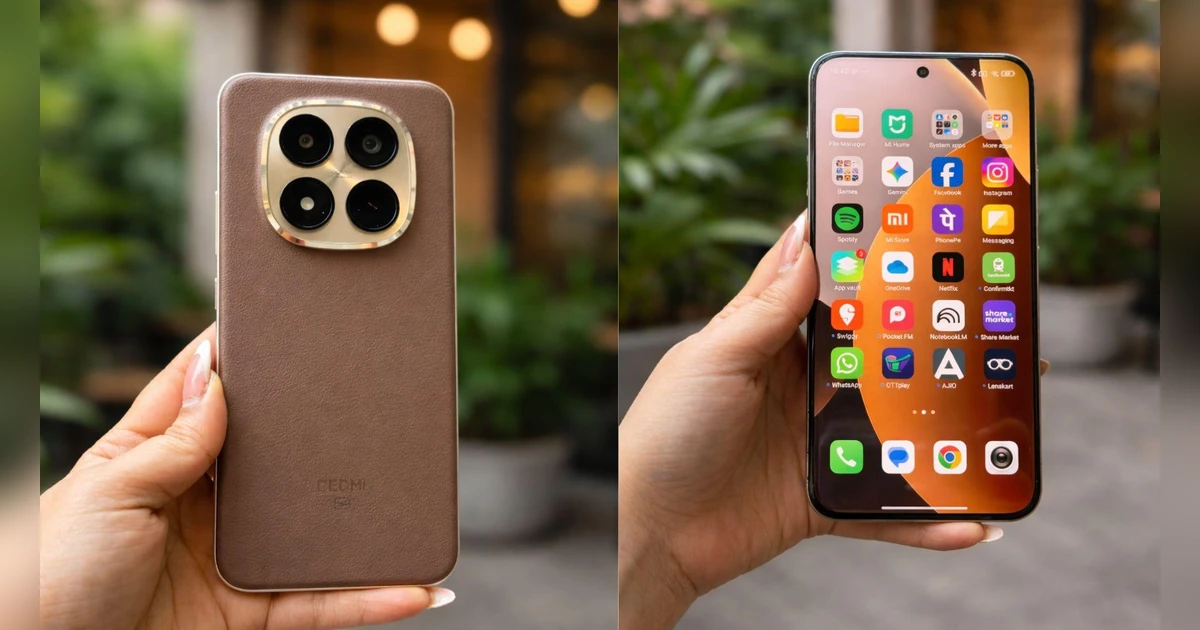
At the back, the phone features a squircle-shaped camera module with four large cutouts. One of these is a dummy lens, though that doesn’t immediately take away from the overall look. The chrome strip outlining the camera island adds a premium touch, and the “200MP OIS” branding placed at the centre of the module makes it clear where the phone’s focus lies.


The Mocha Brown unit I reviewed comes with a vegan leather coating on the back, paired with a gold-coloured frame. It’s a tasteful combination and one I genuinely like — the shade feels understated and classic, and it doesn’t look out of place in formal or casual settings. The in-hand feel is reassuring, and the leather back gives the phone a slightly heavier, more substantial feel. That said, the finishing didn’t entirely convince me. Right after unboxing, I noticed rubber lashings along one side of the display, which was hard to ignore at this price point.


Weighing around 211g, the Redmi Note 15 Pro Plus isn’t a lightweight phone, but it doesn’t feel unwieldy in everyday use either. I generally prefer using lighter phones, and while this one is noticeable in the hand, it never felt uncomfortable during extended use.


Xiaomi has also focused on durability this time around, with IP66, IP68, IP69, and IP69K ratings, along with Corning Gorilla Glass Victus 2 protection on the front, which should help the phone handle regular wear and the occasional drop.


Display


On the front, the Redmi Note 15 Pro Plus features a 6.83-inch FHD+ AMOLED display of a 120Hz refresh rate. It is a quad-curved panel, with mild curves along all four edges. The curvature isn’t as pronounced as on fully curved screens, but it’s also not completely flat. In regular use, this makes the phone look slightly more compact from the front, with slimmer-looking bezels, without causing accidental touches or glare issues that are often associated with curved displays.


In everyday use, the screen delivers punchy colours and remains easy to read outdoors. With a claimed peak brightness of 3,200 nits, the display gets sufficiently bright under direct sunlight, and I rarely found myself struggling with visibility. The in-display fingerprint scanner is placed well and works reliably, unlocking the phone quickly without repeated attempts.


The display is set to vivid colour mode by default, which makes colours pop a bit more than necessary. If that’s not to your liking, Xiaomi does offer enough options in the settings to fine-tune colour temperature and profiles. 


For video streaming, the experience is largely solid. HDR10 and Dolby Vision formats are supported on platforms like Netflix, and paired with Dolby Atmos, the phone does a decent job as a media device. The stereo speakers can get very loud, especially with the dedicated 400 per cent audio mode enabled, to the point where I rarely felt the need to switch to earphones while watching content at home. That said, at maximum volume, the sound does get a bit sharp, which can feel slightly fatiguing over longer viewing sessions.


Cameras


The Redmi Note 15 Pro Plus brings a noticeable change to its camera setup this year. It now uses a 200MP Samsung HPE sensor as the primary camera, replacing last year’s 50MP unit. Alongside it is an 8MP ultrawide camera, while the telephoto lens has been dropped entirely. For selfies, the phone relies on a 32MP front camera.


In everyday use, the main camera leaves a largely positive impression. Photos come out sharp with pleasing colours, and the overall shooting experience feels dependable. Using the 200MP Ultra HD mode, you can capture a good amount of detail, especially in well-lit scenes.


Portrait shots are handled well for the most part. Edge detection is fairly accurate, and the background blur looks acceptable, though it can sometimes feel a bit artificial when compared to phones that prioritise a more natural bokeh effect. Low-light performance is also decent, with the main camera managing to retain enough detail and colour in night shots without falling apart.


The ultrawide camera is serviceable but clearly not the highlight. Images are usable during the day, though fine details are often lost. In low light, photos tend to look grainy, which is fairly typical for ultrawide sensors in this segment.


Selfies taken with the 32MP front camera turn out well. The camera does apply some skin smoothing by default, but this can be disabled if you prefer a more natural look. Skin tones are generally accurate, and portrait selfies benefit from decent edge detection, making them suitable for sharing on social media.


When it comes to video, the main camera supports 4K recording at 30fps and features optical image stabilisation, resulting in stable footage during handheld shooting. The ultrawide and front cameras are limited to 1080p at 60fps. While this feels restrictive on paper, the video quality from both is acceptable for casual recording.


Performance


The Redmi Note 15 Pro Plus is powered by Qualcomm Snapdragon 7s Gen 4, an upgrade over the Snapdragon 7s Gen 3 used in last year’s model. In regular use, the chip performs as expected and handles day-to-day tasks without much trouble.


In day-to-day use, the Redmi Note 15 Pro Plus feels responsive. App launches, social media scrolling, and general browsing happen without much delay. The phone also holds up reasonably well when handling multiple tasks at once, such as navigation running in the background alongside Bluetooth and video playback. However, during extended periods of use, there are brief moments where the interface isn’t as fluid, especially when moving quickly between demanding apps, though these slowdowns are minor overall.


Battery, better endurance


Battery life is a fairly strong aspect of the Redmi Note 15 Pro Plus. The phone packs a 6,500mAh battery, which, in everyday use, is enough to get through a full day without needing frequent top-ups. During my time with the phone, it comfortably lasted a full day, even with heavy use. On days filled with streaming, long video calls, switching between mobile data and Wi-Fi, and general browsing, I usually ended the day with around 20 per cent battery remaining.


For most users, I feel this should be more than enough to get through a full day without any stress. The real advantage here is the battery endurance, which remains steady and predictable. In fact, the overall battery performance reminded me of phones like the Realme GT 7, which I reviewed earlier, which offered a similar sense of reliability at a comparable price point. When you do need to charge it, the 100W fast charging support helps refill the battery quickly. That said, charging speed feels like a useful addition rather than the main highlight. 


While smartphone batteries are starting to cross the 7,000mAh mark in this price segment, the 6,500mAh capacity here still holds up well. The phone doesn’t top the charts on sheer numbers, but in real-world usage, it performs reliably and consistently.


Verdict


The Redmi Note 15 Pro Plus doesn’t try to change what the Note series stands for, and that works in its favour. It delivers a comfortable design, a bright and immersive display, dependable day-to-day performance, and battery life that easily lasts through a full day. The new 200MP main camera is an improvement and handles most shooting situations with confidence.


At the same time, a few compromises hold it back from feeling fully rounded. The lack of a telephoto camera, occasional performance stutters, and minor finishing issues mean it isn’t the most polished phone in its segment. That said, if you value a big screen, steady battery life, and a main camera you can rely on daily, I feel the Redmi Note 15 Pro Plus fits the bill without trying to do too much.


  • Price: Rs 43,999

  • Colour: Coffee Mocha


Redmi Note 15 Pro Plus: Unboxing


Source link

Qualcomm's 2nm tape-out adds momentum to India's semiconductor mission

Qualcomm's 2nm tape-out adds momentum to India's semiconductor mission


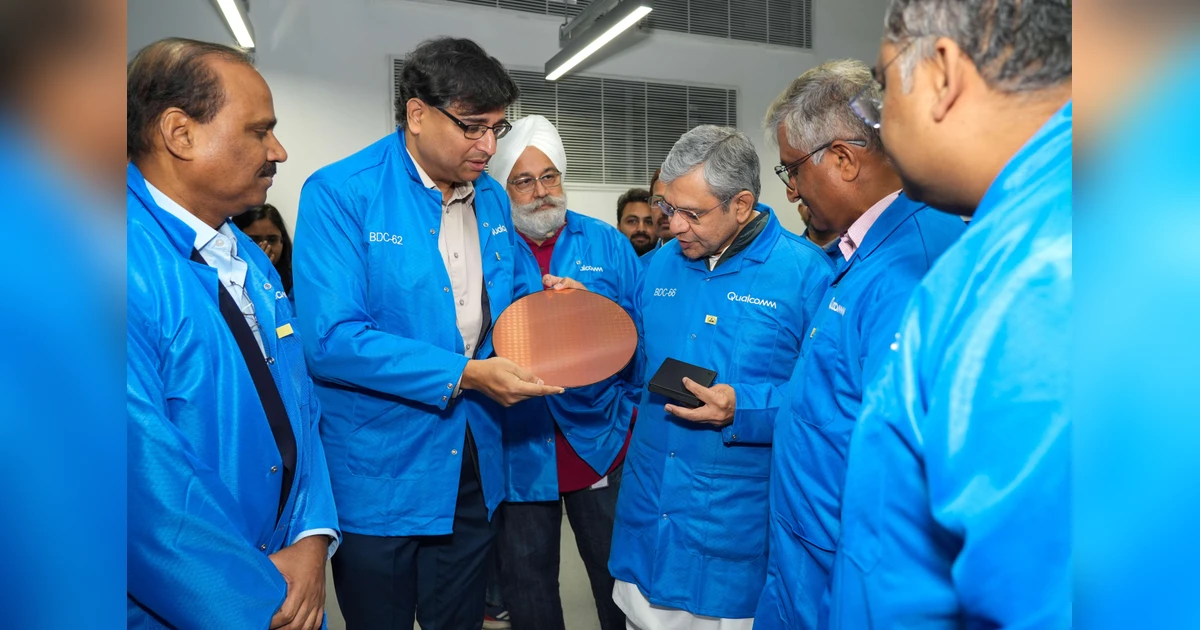
Qualcomm has completed the tape-out of a 2nm chip design, marking a new milestone for advanced semiconductor work being carried out from India. The company said the design work was done across its engineering centres in Bengaluru, Chennai and Hyderabad, underlining the growing role of India in global chip development at a time when the government is pushing to expand the country’s semiconductor ecosystem under the India Semiconductor Mission 2.0.


The announcement comes as India is trying to build deeper capabilities in chip design, packaging, testing and, eventually, manufacturing. While the 2nm chip will not be manufactured in India, the tape-out signals that Indian engineering teams are now involved in some of the most advanced stages of chip design work.


What Qualcomm announced and what ‘tape-out’ means


In semiconductor development, “tape-out” refers to the stage at which a chip’s design is finalised and sent to a foundry for manufacturing. It marks the end of the design phase and the point at which the layout data is prepared for fabrication. After tape-out, the chip moves into production, followed by testing and validation before it can be used in products.


Qualcomm said it has successfully taped out a 2nm chip design, which places the work at the cutting edge of current semiconductor technology. The “2nm” label refers to an advanced manufacturing node, used as a shorthand for higher transistor density, improved power efficiency and better performance compared to older nodes. Chips at this level are also significantly more complex and expensive to design, requiring advanced tools, large engineering teams and long development cycles.


It is important to note that a tape-out is a design milestone, not the start of manufacturing in India. The actual fabrication of such advanced chips is still handled by a small number of global foundries. The significance, in this case, lies in the fact that the design work is being carried out from India.


In a statement, Union minister of Railways, Information & Broadcasting, and Electronics & IT, Ashwini Vaishnaw said India is increasingly becoming a centre for advanced semiconductor design work. He said, “Seeing Qualcomm’s work here, its engineering strength, deep design capabilities, and long-standing commitment to India, is truly impressive. Milestones like this demonstrate how far India’s design ecosystem has come and align strongly with our vision of building a globally competitive semiconductor industry”.


Qualcomm, for its part, said the tape-out reflects the role its engineering teams in India play across design, validation and system-level development as part of its global chip programmes.


“Qualcomm’s R&D centres in India are contributing across multiple layers of system design, from architecture to implementation, software platforms, and use-case optimisation,” said Shashi Reddy, Senior Vice President, Engineering, Qualcomm India Private Limited.


How this fits into India’s semiconductor push


The announcement also comes against the backdrop of the government’s semiconductor programme, which has been expanded under India Semiconductor Mission (ISM) 2.0 in the Union Budget 2026–27. Under ISM 1.0, approved in 2021, the government put in place an incentive framework of Rs 76,000 crore to support silicon fabs, compound semiconductor units, assembly and testing facilities, and chip design companies.


As of December 2025, the government has approved 10 projects across six states with a total investment of about Rs 1.60 lakh crore. These include a Micron assembly and test facility in Gujarat, Tata Electronics’ fabrication and packaging projects in Gujarat and Assam, a joint venture involving CG Power, Renesas and STARS Microelectronics, as well as projects from companies such as Kaynes Technology, SiCSem and others focused on packaging, testing and specialised manufacturing.


Alongside manufacturing and packaging, the Design Linked Incentive (DLI) scheme has focused on strengthening India’s chip design base. According to government data, the programme supports two dozen design startups, has enabled multiple tape-outs from both startups and academic institutions, and has facilitated access to advanced design tools through a national EDA platform.


ISM 2.0 builds on this by shifting more focus towards equipment, materials, full-stack design capabilities and a longer-term roadmap that includes advanced nodes such as 3nm and 2nm. For 2026–27, the modified semiconductor programme has an outlay of Rs 8,000 crore, with targets spanning new fab investments, packaging and testing units, and additional support for design companies. As part of it, India also plans to achieve the capability to design and manufacture chips required for nearly 70–75 per cent of domestic applications by 2029.


Why this matters for India


Semiconductors are now central to sectors ranging from consumer electronics and telecom to automobiles, industrial systems and defence. Recent global supply disruptions have highlighted how dependent economies are on a small number of electronics component producing regions. For India, the stated goal has been to reduce reliance on imports over time and build a more resilient domestic ecosystem across design, manufacturing and packaging.


In the near term, design remains India’s strongest link in the semiconductor value chain. Large global chip companies already run substantial engineering operations in the country, and Indian teams are involved in architecture, verification, software and system-level work for products that are eventually manufactured elsewhere. A 2nm tape-out adds to that picture by showing that work from India is not limited to mature nodes, but also extends to advanced designs that sit at the top end of the industry’s technology roadmap.


Interest from other chipmakers


Qualcomm is not the only company looking at India more closely as part of its semiconductor strategy. According to a report by The Times of India, Taiwanese chipmaker MediaTek has said it is open to getting chips manufactured in India, as the country builds out its semiconductor infrastructure and offers incentives under the government’s programme.


While large-scale manufacturing at advanced nodes remains a longer-term objective, such statements point to growing interest from global chip companies in engaging with India not just as a design base, but also as a potential part of the manufacturing and supply chain ecosystem over time.


Source link

Google expands Gemini in Chrome to Chromebook Plus devices: Details here

Google expands Gemini in Chrome to Chromebook Plus devices: Details here


Google has confirmed that Gemini features within the Chrome browser are now rolling out to Chromebooks, starting with Chromebook Plus models. The company said the rollout has started in the US, bringing AI-powered tools directly into Chrome on ChromeOS after a period of limited access. Until now, Gemini in Chrome was mainly available on desktop platforms such as Windows and macOS, with ChromeOS left out despite being Google’s own operating system. 


Gemini in Chrome comes to Chromebook Plus

Google said that Gemini in Chrome is rolling out to Chromebook Plus devices running ChromeOS. The feature is currently limited to the US and is not yet available on standard Chromebooks. 


That restriction doesn’t come as a major surprise, as Google has positioned Chromebook Plus as a more capable category with better hardware and added features, many of which focus on artificial intelligence. Although there is no confirmation yet on whether Gemini in Chrome will expand to other Chromebook models in the future.


Gemini in Chrome appears as a sidebar inside the browser and can pull information from open tabs. According to Google, the tools are designed to fit into everyday browsing and work tasks without requiring users to switch apps.


What Gemini in Chrome can do


With Gemini in Chrome, users can ask questions based on the content of their open tabs, get summaries of articles, or clarify complex information. The tool can also help generate content such as emails, social media posts or simple images directly within the browser.


Another feature is Gemini Live, which allows users to have two-way voice conversations with the AI. This can be used for brainstorming ideas, preparing for meetings or working through tasks using voice input.


Google said that the Chromebook version works the same way as Gemini in Chrome on Windows and macOS. The company noted that the rollout began on January 28, 2026, but it may take a couple of weeks before the feature becomes visible to all eligible users. 


Availability and rollout 


Gemini in Chrome is available to US-based Google Workspace customers, Workspace Individual subscribers and users with personal Google accounts who are signed into the Gemini app and are 18 or older. For organisations, Google noted that the feature is enabled by default and Workspace admins will need to turn it off manually if they do not want it active.


Source link

Amazon deepens ties with STMicro to secure semiconductors for data centres

Amazon deepens ties with STMicro to secure semiconductors for data centres


By Christina Kyriasoglou


Amazon.com Inc.’s cloud service AWS is deepening its ties with Franco-Italian chipmaker STMicroelectronics NV to secure semiconductor technologies for its data centres. 


STMicro will supply various semiconductors to AWS, including chips to support high-bandwidth connectivity and for energy-efficient power management required for hyperscale data centre operations, STMicro said in a statement on Monday.


Under the agreement, AWS received warrants to acquire as many as 24.8 million ordinary STMicro shares. The warrants will vest in tranches over time, tied to payments for STMicro’s products. AWS can chose to exercise the warrants in one or more transactions over a seven-year period at an initial exercise price of $28.38. For AWS, it is at least its second investment in a chip company.


STMicro shares rose 6.5 per cent at market open to $26.51.


The global build-out of data centres to support artificial intelligence technologies is driving new business for semiconductor companies. Designers and manufacturers of advanced AI chips — including Nvidia Corp., Advanced Micro Devices Inc. and Taiwan Semiconductor Manufacturing Co. Ltd. — have been at the forefront of the boom. Makers of more mature analog chips have also seen rising demand for applications in AI data centres, including power management, sensors and cooling. German Infineon Technologies AG predicted 2.5 billion euros ($3 billion) in AI-related revenue in its 2027 fiscal year, it said last week – a tenfold increase in AI sales within three years.


STMicro, which is also a supplier for Tesla Inc. and Apple Inc., forecast first-quarter revenue two weeks ago that beat analysts’ estimates. Demand from consumer electronics customers showed signs of recovery at the end of last year after a prolonged demand slump. However, the company’s shares fell after the chipmaker’s report showed uneven recovery across different end markets. STMicro Chief Executive Officer Jean-Marc Chery said the automotive market is “not yet stable” in a call with analysts.


Source link

YouTube
Instagram
WhatsApp