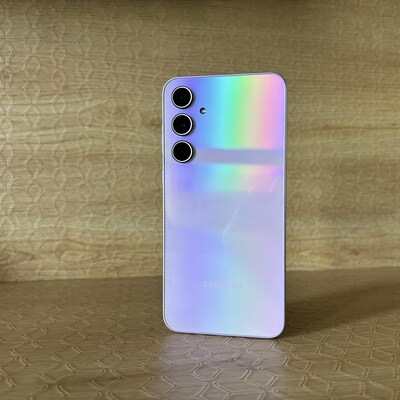
POCO X6 Neo with 108MP camera, 120Hz AMOLED display launched: Price, specs

POCO X6 Neo with 108MP camera, 120Hz AMOLED display launched: Price, specs


Chinese smartphone brand POCO on March 13 launched in India the POCO X6 Neo. Starting at Rs 15,999, the smartphone is offered in up to 12GB RAM and up to 256GB storage configuration. The POCO X6 Neo is offered in Martian Orange, Horizon Blue, and Astral Black colours. It will be available on Flipkart, starting March 18.  Below are the details


POCO X6 Neo: Variants and pricing


  • 8GB RAM + 128GB storage: Rs 15,999

  • 12GB RAM + 256GB storage: Rs 17,999


POCO X6 Neo: Introductory offers


POCO is offering Rs 1,000 bank discount on ICICI Bank cards and equated-monthly instalments. Alternatively, customers can avail Rs 1,000 in exchange bonus in trade-in deals.The smartphone will be available for purchase in limited quantities during the exclusive early access sale on Flipkart, starting at 7:00 PM on March 13. Additionally, the Rs 1,000 bank discount and exchange bonus offers will also be valid during this limited-time sale. Furthermore, POCO has announced that fortunate customers will have the opportunity to win a Hero Bike valued at Rs 140,000 for only Rs 1 when they buy the POCO X6 Neo during Flipkart’s special early access sale.


POCO X6 Pro 5G: Specification


  • Display: 6.67-inch AMOLED FHD+, 120Hz refresh rate, 1920Hz PWM Dimming

  • Brightness: 1000 nits peak

  • Processor: MediaTek Dimensity 6080

  • RAM: 8GB and 12GB

  • Storage: 128GB and 256GB 

  • Rear camera: 108MP

  • Front camera: 16MP

  • Battery: 5,000 mAh, 33W fast charging

  • OS: MIUI 14 based on Android 13

  • Weight: 175g

  • Protection: Corning Gorilla Glass5, IP54

First Published: Mar 13 2024 | 2:05 PM IST


Source link

Apple MacBook Air with M1 available at Rs 69,990 on Amazon India, Flipkart

Apple MacBook Air with M1 available at Rs 69,990 on Amazon India, Flipkart


Apple MacBook Air with M1

The first-generation MacBook Air with Apple silicon, now discontinued by Apple, it available on select e-commerce platforms in India at all time low price. The Apple MacBook Air with M1 is available on Amazon India and Flipkart at Rs 69,990 onwards.


On Amazon India, the laptop is listed at Rs 74,990 with bank cashback of Rs 5,000 available on HDFC Bank card, which brings down the net effective price to Rs 69,990.

Screenshot


Screenshot: Apple MacBook Air with M1 on Amazon


On Flipkart, the Apple MacBook Air with M1 is retailing at Rs 69,990 with several offers running in parallel that could bring down the net effective price.

Screenshot


Screenshot: Apple MacBook Air with M1 on Flipkart


Launched in 2020, the MacBook Air with M1 is Apple’s first-generation laptop powered by its in-house silicon with unified memory system. It is offered in a 13-inch display option and Space Grey, Silver and Gold colours. 


Though the laptop is offered in multiple configurations, the above-mentioned price is for 8GB RAM and 256GB on-board storage option.


Apple MacBook Air with M1: Specifications


The M1 chip powering the MacBook Air boasts a unified system architecture, featuring an 8-core CPU and up to 8-core GPU. The chip-in-system packs a dedicated neural processing unit, featuring a 16-core neural engine. The laptop sports a 13.3-inch display with support for Apple’s true tone technology. The Apple MacBook Air with M1 has a fan-less design and thin-and-light form factor. It is said to offers all-day battery life – up to 18 hours on a single charge. As for the ports, there are Thunderbolt/ USB4 with support for charging, up to 6K display out, and data transfer at up to 40Gbps speeds. Connectivity is covered by Wi-Fi 6.

First Published: Mar 13 2024 | 1:22 PM IST


Source link

Galaxy Watch series: Samsung to bring back squared cases in a redesign push

Galaxy Watch series: Samsung to bring back squared cases in a redesign push


Representative image: Samsung Galaxy Watch 6 series

Samsung is reportedly planning to go back to the squarish design for its Galaxy Watch series. According to a report by SamMobile, the South Korean technology giant is likely to bring back the squarish design for its future Galaxy Watch series smartwatches, which would resemble its early models such as the Galaxy Gear, Gear 2, and Gear Live.


The upcoming Galaxy Watch series 7 is reported to be the last in Samsung’s Watch series to go with circular design, as a major redesign is planned for future smartwatches. According to media reports, the major overhaul in design would not happen until 2025, with Samsung sticking to the circular design for the upcoming Galaxy Watch 7 series and its successor.


Samsung is also gearing up to launch its new wearable category this year, the Galaxy Ring, and does not wish to take away its appeal by bringing major changes to its other wearable devices.


Earlier, it was reported that the Samsung Galaxy Ring would likely work with all Android smartphones, but not with Apple iPhones. According to a report by 9To5Google, during the Galaxy Ring showcasing at the Mobile World Congress (MWC) in Barcelona, Samsung said that apart from Samsung Galaxy phones, they are “working on ensuring” that non-Galaxy Android phone users will be able to use the Galaxy Ring.


Although there is not much known about the specifications of the upcoming Galaxy Ring, Samsung in a press note, confirmed that the Galaxy Ring will be offered in black, gold and silver colours and in nine different sizes. In a statement to CNET, the company also revealed that the Galaxy Ring will have carrying battery capacity depending on the size. The smallest sized ring will reportedly feature a 14.5-mAh battery while the largest ring will have a battery capacity of 21.5 mAh.

First Published: Mar 13 2024 | 11:56 AM IST


Source link

Explained: Apple to allow apps download on iPhone from websites, but there is a catch

Explained: Apple to allow apps download on iPhone from websites, but there is a catch


In January, Apple released a long press note on how it plans to open up its gated ecosystem in the European Union to comply with the Digital Markets Act (DMA). One of the key changes announced by the American tech giant was alternative marketplaces for app distribution on Apple’s iPhone operating system – iOS. This essentially means that Apple will allow app developers to set up their own App Stores for initiating the downloading and installation process of their app.


Apple did face backlash from multiple app developers including Microsoft’s Xbox president, Sarah Bond. Spotify CEO and founder, Daniel Ek lashed out at Apple’s changes in the EU, calling it a “monopoly under a different mask.” Since then, Apple has announced more ways to open up its ecosystem in the region, including plans to make changes to its user data portability offerings for migrating to non-Apple smartphones.


More recently, Apple has issued another note detailing more options for app distribution on iPhone in the EU. In a press note, Apple said, “We’re providing more flexibility for developers who distribute apps in the European Union (EU), including introducing a new way to distribute apps directly from a developer’s website.”


But there is a catch.


While Apple is opening up to allow third-party app installations from developer’s websites, apps offered through this method still need to meet its notarization requirements. This essentially means that the apps will be required to go through the same security check that other iOS apps go through. Additionally, the developer will have to register their website domain to Apple’s App Store Connect, to offer apps directly from their website.


Apart from being registered in the EU, the developer also needs to be enrolled in Apple’s Developer Program. The developer is also required to have an app that had more than one million first annual installations on iOS in the EU in the prior calendar year.


On the consumer’s side, the users will have to approve the developer in the settings app on their iPhone to install apps from websites. Furthermore, Apple said, “When installing an app, a system sheet will display information that developers have submitted to Apple for review, like the app name, developer name, app description, screenshots, and system age rating.”


Takeaway


Apple’s decision to open its ecosystem is a step in the right direction, but the guarded approach may hinder the progression. The above changes, for example, are not going to be as open and free as some developers would have wanted. It also appears that Apple is limiting app distribution over websites to big developers through the requirement of more than one million first annual installations in the region.


Despite the limitations, the ability for developers to offer their apps directly to iOS devices in the EU without having to list it on the App store or any other third-party marketplace will be useful to some. It might also be beneficial for those developers who do not wish to create an entire app marketplace to offer their services to iPhones without having to go through Apple’s App store.

First Published: Mar 13 2024 | 11:23 AM IST


Source link

Ola plans to launch e-rickshaw by the end of this month and ahead of IPO

Ola plans to launch e-rickshaw by the end of this month and ahead of IPO


An electric autorickshaw is to be launched by Ola Electric that will be directly sold to consumers, The Economic Times reported. The vehicle will be known as Raahi, and it is expected to be released this month. 


Ola has been working on this product for years and it was their long-term plan to enter into the commercial vehicle business. The key competition for Ola Electric is Mahindra Treo, Piaggio Ape e-city and Bajaj RE in the three-wheeler segment


A person told the Economic Times that Ola Electric is about to make a slew of announcements in the coming months including on gigafactory, ahead of the listing. The e-autorickshaw is part of the same plan and the target is to do it in the next two weeks.


Ola Electric Price


Ola Electric’s Price is also expected to remain similar to its competitor’s electric three-wheeler price. Bajaj, Mahindra and Piaggio e-autorickshaws price ranges between Rs 2 lakh and goes up to Rs 3.5 lakh based on different models and add-ons. Last year, more than 5,80,000 electric three-wheelers were sold which is 66 per cent higher than in 2022, government transport website Vahan reported.


Ola Electric IPO


Ola Electric is planning to launch its Initial Public Offering (IPO) after launching Raahi, which means ‘traveller’ in Hindi. In December last year, The firm filed a draft red herring prospectus (DRHP) which is looking to raise up to Rs 5,500 crore through a fresh issue, apart from a sale offer of 95.2 million shares by existing investors. The company is planning to strengthen its position in the electric two-wheeler segment.


Set up 10,000 charging points


Last month, Ola extended the battery warranty for all its variants of scooters to eight years and also stated that the company is planning to set up 10,000 charging points by the end of next quarter, sell portable fast chargers, and expand its service centre network from the current 400 to 600 by April. It also listed four-wheeled vehicles as an “intangible asset under development” in its IPO papers draft.


The Economic Times also reported that Ola Electric is planning to open its gigafactory which the company will use to manufacture battery cells by the end of this quarter, Bhavish Aggarwal, founder and chief executive said in February. It is planning to allocate Rs 1,226 crore from the projected IPO proceeds for the gigafactory. 

First Published: Mar 13 2024 | 11:21 AM IST


Source link

Vivo V30 Pro review: Flagship-grade imaging system in a slender form factor

Vivo V30 Pro review: Flagship-grade imaging system in a slender form factor


The V30 Pro is Chinese smartphone brand Vivo’s maiden offering in the V-series with Zeiss optics. This midrange smartphone by pricing pledges to deliver flagship-grade imaging experience. On other fronts, however, the Vivo V30 Pro is not much different from the last generation model in the series. That said, is the Vivo V30 Pro worth spending Rs 41,999 on?  Let us find out:


Design


Vivo has meticulously blended the form factor of the Vivo V29 Pro with fresh design elements, resulting in a device that truly stands out. Like the predecessor, the Vivo V30 Pro boasts a sleek design characterised by a glossy glass back finish and a slender metallic frame that seamlessly connects the curved glass panels on both front and back. While the camera bump retains its rectangular shape, reminiscent of the predecessor, it has been notably downsized and now houses a triple camera setup beneath a square glass cover that bears the Zeiss logo. Mirroring the camera glass’s border shape is the Aura ring light, housing the primary flash in its top left corner, bearing a slight resemblance to the Instagram logo.


The Andaman Blue variant (review unit) shows wavy patterns in sparkling white toward the smartphone’s bottom, adding a distinctive touch to its aesthetics.


Vivo V30 Pro smartphone


On the front, the curved glass extends to the sides, accompanied by noticeable bezels encompassing all edges, particularly wider at the top and bottom. However, Vivo’s priority seems to be on functionality over aesthetics. Therefore, it has opted for pronounced side bezels, effectively preventing inadvertent touches despite the curved screen. Moreover, this design choice broadens the smartphone’s appeal to users who prefer a flatter display.


Overall, the Vivo V30 Pro offers a lightweight feel, tipping the scales at just 188g. Paired with its slim 7.45mm profile, this contributes to a premium sensation and enhances the device’s ergonomics. Despite sporting a glass back finish, the smartphone demonstrates remarkable resistance to dust and fingerprint smudges, further elevating its allure. However, the positioning of the camera module does result in slight instability when the device is placed on a flat surface. Additionally, the lack of a protective frame around the camera cover glass leaves it vulnerable to potential scratches when the smartphone is used without a cover.


Display and audio


The Vivo V30 Pro sports a 6.78-inch curved AMOLED display, delivering crisp visuals. The FHD+ display offers punchy and vibrant output, ensuring an immersive viewing experience. Notably, the display maintains impressive brightness levels even in direct sunlight, ensuring optimal visibility at all times.


While the visual output is impressive, Vivo has included additional enhancement features accessible via the display settings. Within the “Screen Colour” section, users can choose between Default, Pro, and Bright modes. The Pro mode introduces a subtle yellow tint and reduces blue light output, with similar options available in the eye protection menu. Conversely, the “Bright mode” enhances brightness levels, albeit at the expense of colour balance and accuracy. Another noteworthy feature is the “Visual enhancement mode”, which dynamically adjusts colours and contrast levels based on the content being viewed. Although this feature is compatible with platforms like YouTube and Netflix, it does not extend to others like Disney Plus Hotstar and Discovery Plus. Nevertheless, the display supports HDR10+, enhancing the overall content consumption experience.


In terms of audio, the Vivo V30 Pro has a mono speaker system located at the bottom side of the frame. Despite the mono configuration, the output remains clear, with the device boasting impressive volume levels without sacrificing audio clarity and crispness. Furthermore, the speaker delivers decent bass output, enhancing the overall audio experience. However, the mono speaker setup does present limitations, particularly during gaming or video playback, as the palm may inadvertently block the speaker, resulting in a muffled sound output.


Camera


Vivo has positioned the V30 Pro as a camera-centric smartphone, and true to its claim, the device excels in delivering quality images. Sporting a triple-camera setup at the rear, the 50-megapixel primary (Sony IMX920) sensor captures stunning shots with remarkable detail in various lighting conditions. Images taken in natural light exhibit crispness and colour accuracy, although occasional white balance issues may arise in artificial lighting scenarios.


Portrait photography is the smartphone’s forte. The camera adeptly adjusts depth levels to ensure clean outlines and borders, even in indoor lighting conditions. The inclusion of Aura ring lights proves beneficial in low-light settings, offering both illumination for subjects and customisable light temperature options. In collaboration with Zeiss, Vivo introduced Bokeh Flares such as cine-flare, Planar, and Biotar, enhancing the professional look of portrait shots.


The 50MP ultra-wide-angle camera delivers decent results, although it occasionally struggles with overexposure in bright sunlight. Similarly, under artificial lighting, images may lack the sharpness exhibited by the primary camera.


The addition of a 50MP telephoto lens, offering optical quality up to 2x zoom, enhances the device’s photography capabilities. Images remain sharp and detailed up to the 2x zoom level, akin to those captured by the primary lens. However, beyond 10x zoom, distortion becomes evident. With the smartphone’s software working overtime, the resulting images are generally softened and produce inaccurate colours. Despite supporting up to 20x zoom through cropping, optimal output is achieved up to the 5x mark in daytime conditions.


For videography, the Vivo V30 Pro allows recording up to 4K resolution at 60 fps with options for 1080p and 720p resolution, and 30fps option at all supported resolutions. Additionally, the Vivo V30 Pro offers dual stabilisation modes – Standard and Ultra. However, both these modes are limited to a maximum of 1080p recording at 60fps. While recording quality impresses at both 4K and 1080p resolutions, stabilisation deficiencies are noticeable in 4K recordings.


Performance and software


The Vivo V30 Pro retains MediaTek Dimensity 8200 chipset from its predecessor and Vivo has a compelling rationale for this decision. Paired with 12GB RAM and an additional 12GB virtual RAM, the processor ensures smooth performance for everyday tasks, facilitating swift app launches and seamless scrolling through social media platforms. Even during multitasking scenarios, such as concurrent video calls and app usage, the device maintains its speed and responsiveness without any noticeable slowdowns.


Casual gaming and high-resolution video recording pose no challenge for the smartphone. However, when tackling graphically demanding titles like Genshin Impact and Honkai: Star Rail, users may experience occasional frame rate drops on high settings and more frequently at the highest graphic settings. Moreover, extended gaming sessions can lead to the device warming up noticeably.


The Vivo V30 Pro boots the latest FunTouchOS 14, based on Android 14. This new iteration feels a lot more improved than the previous version on the Vivo V29 Pro, displaying various refinements and reduction in bloatware. There are also fewer intrusive ad notifications with the FunTouchOS 14. Additionally, Vivo has committed to provide three generations of OS updates and up to four years of security patches.


Battery


The Vivo V30 Pro is powered by a 5,000mAh battery and boasts 80W wired charging support. While not extraordinary, the smartphone effectively sustains a full day of moderate usage on a single charge. However, opting for higher refresh rate modes along with Visual enhancement options enabled may expedite battery drainage.


To counterbalance this, the device impresses with its rapid charging capabilities, reaching 50 per cent capacity in under half an hour and achieving a full charge in 45 minutes.


Verdict


The Vivo V30 Pro smartphone presents remarkable imaging capabilities alongside sleek and premium design. Despite its higher price point, it stands as a compelling choice for individuals in search of a camera-centric device boasting nearly flagship-level imaging features without surpassing the Rs 50,000 threshold. Moreover, its capacity to serve as a reliable daily driver, offering ample performance for everyday tasks, reinforces its appeal. However, customers prioritising a more balanced performance across various aspects may opt to explore alternative options within the segment.


Source link

YouTube
Instagram
WhatsApp