Google CEO Pichai blasts 'unacceptable' Gemini image generation failure | World News – Business Standard

Google CEO Pichai blasts 'unacceptable' Gemini image generation failure | World News – Business Standard


The boom in AI interest and use has brought with it a wave of closer scrutiny, with many critics pointing to the potential for AI-created content to mislead, either deliberately or accidentally | Photo: Bloomberg


By Julia Love


Alphabet Inc.’s Sundar Pichai emailed staff on Tuesday to address the problematic responses from Google’s Gemini AI engine, describing them as “completely unacceptable.”


Teams are now working around the clock to rectify the issues, Pichai wrote in his note, reviewed by Bloomberg News. Stressing the need for the company to deliver unbiased and accurate information, the chief executive officer of both Alphabet and Google said structural changes will be made to prevent similar incidents.


Gemini, formerly Bard, is Google’s flagship artificial intelligence product, but the company was criticised for its image generation that depicted historically inaccurate scenes when prompted to create images of people. The Mountain View, California-based company stopped accepting prompts for people in its image generator while it worked to address the concerns raised.


“We’ll be driving a clear set of actions, including structural changes, updated product guidelines, improved launch processes, robust evals and red-teaming, and technical recommendations,” Pichai wrote, urging a focus on “helpful products that are deserving of our users’ trust.”


The boom in AI interest and use has brought with it a wave of closer scrutiny, with many critics pointing to the potential for AI-created content to mislead, either deliberately or accidentally.


The full note from Pichai to Google employees, first reported by Semafor, is below.


I want to address the recent issues with problematic text and image responses in the Gemini app (formerly Bard). I know that some of its responses have offended our users and shown bias – to be clear, that’s completely unacceptable and we got it wrong.


Our teams have been working around the clock to address these issues. We’re already seeing a substantial improvement on a wide range of prompts. No AI is perfect, especially at this emerging stage of the industry’s development, but we know the bar is high for us and we will keep at it for however long it takes. And we’ll review what happened and make sure we fix it at scale.


Our mission to organize the world’s information and make it universally accessible and useful is sacrosanct. We’ve always sought to give users helpful, accurate, and unbiased information in our products. That’s why people trust them. This has to be our approach for all our products, including our emerging AI products.


We’ll be driving a clear set of actions, including structural changes, updated product guidelines, improved launch processes, robust evals and red-teaming, and technical recommendations. We are looking across all of this and will make the necessary changes.


Even as we learn from what went wrong here, we should also build on the product and technical announcements we’ve made in AI over the last several weeks. That includes some foundational advances in our underlying models e.g. our 1 million long-context window breakthrough and our open models, both of which have been well received.


We know what it takes to create great products that are used and beloved by billions of people and businesses, and with our infrastructure and research expertise we have an incredible springboard for the AI wave. Let’s focus on what matters most: building helpful products that are deserving of our users’ trust.

First Published: Feb 28 2024 | 12:44 PM IST


Source link

Try Galaxy app from Samsung lets you experience Galaxy AI on any smartphone | Apps – Business Standard

Try Galaxy app from Samsung lets you experience Galaxy AI on any smartphone | Apps – Business Standard


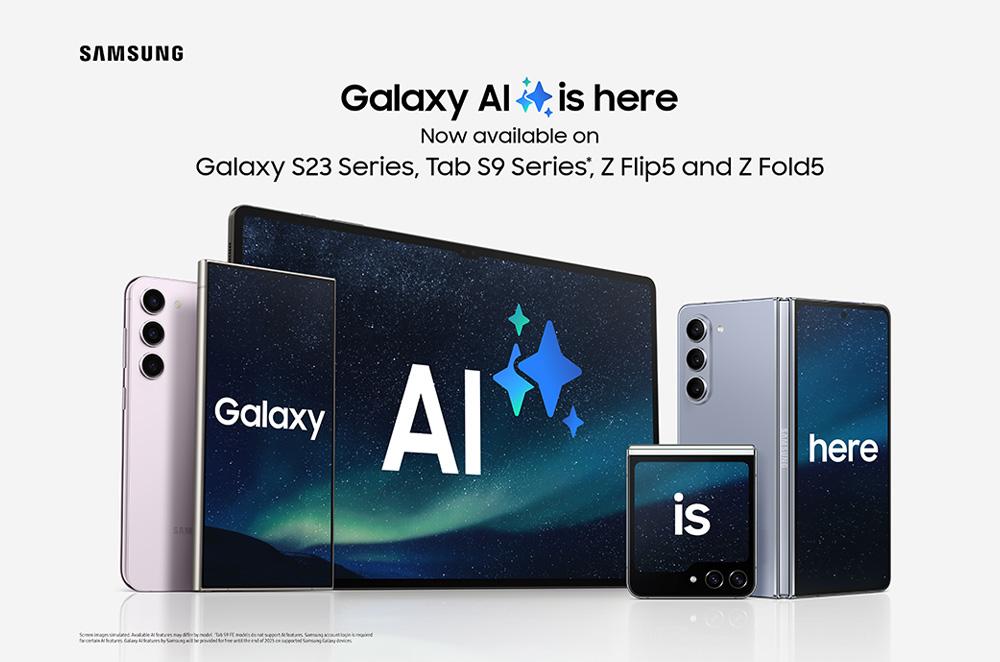
Samsung Try Galaxy App for Android

After the iPhone, Samsung allows Android smartphone users to experience Galaxy AI features with the Try Galaxy app. It is a progressive web application (PWA) that simulates Samsung OneUI 6.1 interface and provides users with tutorials and interactive features to experience in virtual space its AI-powered features such as Live Translate, Chat Assist, Note Assist, Photo Assist and Circle to Search.


Since it is a PWA, it is not available on the Google Play Store or Apple App Store. Samsung has published a dedicated page (trygalaxy.com) that lets you get the app by scanning a QR code.


On the page, Samsung noted, “Try Galaxy is available on supported Android OS smartphones with the latest version of Chrome browser, but may not be perfectly optimised depending on device models, settings, screen sizes, network connection, etc.”


The app supports 20 languages, including English, and is now available in over 120 regions.


Samsung said the Try Galaxy app simulates its OneUI 6.1 interface and provides users with tutorials and interactive features within the apps on the simulator. Swiping to the second page introduces a widget that shows various Galaxy AI features. Taping on either of the available features takes users to a new interface where they can try out the AI feature on preset contents.


For example, within the Circle to Search feature option, the user is directed to a video that resembles an Instagram reel. The user is then instructed on how to use the feature and allows them to experience it through a preset procedure.


Certain Galaxy AI features such as Nigtography and Live Translate are only showcased through a demonstration video. Apart from the AI tools, the app lets users download wallpapers and backgrounds. It also has a showcase for its flagship Galaxy devices such as the Galaxy S24 series smartphone and Galaxy Z series foldables.

First Published: Feb 28 2024 | 11:52 AM IST


Source link

Soon, you could set Microsoft Copilot as default assistant on Android phone | Tech News – Business Standard

Soon, you could set Microsoft Copilot as default assistant on Android phone | Tech News – Business Standard


Microsoft is reportedly planning to allow users to appoint its Copilot AI as default digital assistant on their Android smartphones. According to a report by 9To5Google, a new beta version of the Copilot AI app for Android, which is currently under testing, puts Microsoft’s Copilot on the list of available assistants that could be set to default on Android phones.


It essentially means that the users would soon have an option to use the Microsoft Copilot AI as default personal assistant, which can be invoked by long pressing the power button, or by using swipe up gesture from the bottom of the screen in some cases.

OpenAI’s GPT-4 model for text prompts and DALL-E 3 for text-to-image generation capability power Microsoft Copilot app. However, this will not be the first instance where smartphone users will be able to launch a GPT-powered AI assistant with a tap or gesture.


Last month, the British consumer technology brand Nothing rolled out a feature for those using ChatGPT Android app on Nothing’s smartphone. The feature lets users place a Quick Setting widget for the app on their home screen, which deploys the ChatGPT’s Voice Assistant feature onto the home screen without having to open the app.


Currently, Android smartphone users can select their default digital assistant among the likes of Google Assistant, Bixby on Samsung devices, and Amazon or DuckDuckGo. With Google rolling out a dedicated app for Gemini, previously called Bard, Android users also have the option to use Google’s AI assistant than the regular one.


Microsoft has not yet announced the public roll out plan for the Copilot default assistant feature. However, it is expected to be available to more users in the coming weeks.

First Published: Feb 28 2024 | 10:29 AM IST


Source link

Media firm Dailyhunt in advanced talks to acquire India's X alternative Koo | Start Ups – Business Standard

Media firm Dailyhunt in advanced talks to acquire India's X alternative Koo | Start Ups – Business Standard


Koo’s co-founder last year said they were looking for a strategic partner


Dailyhunt is in the advanced stages of talks to acquire social media platform Koo, according to a report by TechCrunch released on Wednesday. The deal could be finalised “within weeks” and involves a share-swap agreement.


Koo, launched in 2020, is owned by Bangalore-based Bombinate Technologies. It was co-founded by Aprameya Radhakrishna and Mayank Bidawatka and is considered by many as India’s alternative to Elon Musk’s X, formerly known as Twitter.


In September last year, Bidawatka said that the company was looking for a strategic partner. In a LinkedIn post, he wrote, “From growing rapidly to cutting down on growth and proving unit economics, within 6 months of revenue experimentation, we took a 180-degree turn and proved that this is a real business.”


Koo has raised over $60 million from investors like Tiger Global, Accel, Mirae Asset and Blume. It currently operates in India and Brazil.


In November 2022, Koo announced that it had become the second-largest microblogging site after X. However, in subsequent years, reports suggested that the platform continues to witness a fall in monthly active users.


According to market research firm Sensor Tower, Koo’s monthly active users fell from a peak of 4.5 million in January 2021 to 1.7 million in September 2023. In April 2023, it also fired about 30 per cent of its 260 employees. At the time, it said the business needed to “work towards proving its unit economics”.


The platform is betting on supporting local languages to get a wider user base. However, most global apps like WhatsApp and Facebook already offer local Indian languages for the users.


Bengalore-based Dailyhunt was launched in 2010 and is a news aggregator application. Founded by Virendra Gupta, it is available in 14 languages. Last, it was valued at $5 billion.


Business Standard could not independently verify the development. 

First Published: Feb 28 2024 | 9:36 AM IST


Source link

National Science Day 2024: All you need to know about Raman Effect | Tech News – Business Standard

National Science Day 2024: All you need to know about Raman Effect | Tech News – Business Standard


National Science Day 2024


Every year on February 28, the scientific community honours the discovery of the ‘Raman Effect’. In 1986, the Government of India assigned February 28 as National Science Day (NSD). On this day, Sir Chandrasekhara Venkata Raman, also called CV Raman, declared the discovery of the ‘Raman Effect’ for which he was granted the Nobel Prize in 1930.


MoS PMO, Personnel, Public Grievances, Pensions, Atomic Energy and Space, and Union Minister of State (Independent Charge) Science & Technology; Minister of State (Independent Charge) Earth Sciences; Dr Jitendra Singh said, “This is the best time to give a push to this integrative approach as all the ministries and departments have come together to work for the survival of humanity at the time of the pandemic crisis.”


National Science Day: History


Sir Chandrasekhara Venkata Raman FRS, born November 1888, was an Indian physicist, born in a Tamil Brahmin family, and was known for his work in the field of light scattering. Using a spectrograph that he developed, he and his student K. S. Krishnan discovered that when light traverses a transparent material, the deflected light changes its wavelength and frequency. This phenomenon, a hitherto unknown type of scattering of light, which they called “modified scattering” was then termed the Raman effect or Raman scattering. He then became the first Asian to be awarded the Nobel Prize in any branch of science.


In 1986, the National Council for Science and Technology Communication (NCSTC) requested the Government of India to assign February 28 as National Science Day. The government had acknowledged it and announced February 28 as National Science Day in 1986. The first National Science Day was celebrated on February 28, 1987.


National Science Day 2024: Theme


The National Science Day 2024 theme is ‘Indigenous Technologies For Viksit Bharat’. 


Scientific development has transformed the existence of people in numerous ways. Science has improved lives and is more straightforward for people. Robots, PCs, cell phones, and so on have been designed with the assistance of science alone. 


Subsequently, science holds extraordinary significance in our lives. India has likewise contributed a ton to the field of science. Numerous extraordinary researchers were born in India, perceived India in the area of science, and made a different spot as well.


National Science Day: Importance


The meaning of National Science Day celebration lies in showcasing India’s continuous journey to turning into a worldwide scientific superpower. 


By honouring the past, celebrating the present, and imagining the future, it plays a vital part in moulding India’s scientific advancement. A day reaffirms the country’s aggregate goal to investigate and develop for a superior tomorrow where science and innovation are tackled to make a more fair, sustainable, and prosperous world for all.


How to celebrate National Science Day?


The whole country celebrates it as a scientific achievement by putting together workshops, presentations of science films, a show in view of themes and ideas, quiz competitions, live projects, debates, seminars and so on. 

Celebrations were held at the Indian Department of Science and Technology, the Giant MetreWave Radio Telescope (GMRT), the Defence Research and Development Organisation (DRDO), the Councils of Science and Technology in each state, the CSIR-National Environmental Engineering Research Institute (CSIR-NEERI), and the Jawaharlal Nehru Planetarium.

First Published: Feb 28 2024 | 7:44 AM IST


Source link

Microsoft's GitHub offers companies souped-up premium AI coding tool | Tech News – Business Standard

Microsoft's GitHub offers companies souped-up premium AI coding tool | Tech News – Business Standard


In the coming months, GitHub also will let engineers use their employer’s own codebase to help autocomplete programs they’re working on, Dohmke said | Photo: Bloomberg


By Dina Bass and Jackie Davalos


Microsoft Corp.’s GitHub is releasing a pricier paid version of its artificial intelligence software development tool that can answer questions based on a company’s own programming code, a feature designed to help new engineers get up to speed and enable veteran coders to work faster.


GitHub, which lets programmers collaborate on coding projects, has been infusing AI into products and services in an effort to attract more subscribers. The new Copilot Enterprise will cost $39 per user per month and offer AI chat features that should make it easier for engineers to resolve issues, modernize programs and more.


“A lot of things when you join a big corporation are quite different to how you learned it in your previous job—you have to go there and read up on the practices,” GitHub Chief Executive Officer Thomas Dohmke said in an interview. “So you no longer have to do that. You can just ask questions and get the answers.”


In the coming months, GitHub also will let engineers use their employer’s own codebase to help autocomplete programs they’re working on, Dohmke said. That could be especially useful for financial services firms or other companies that use in-house programming languages that aren’t widely used elsewhere as well as customers with specific internal practices. Even Microsoft’s own Office desktop apps use the C and C++ language in ways that aren’t typically taught in coding school, he said.


Microsoft has been touting the successful adoption of GitHub Copilot, which relies on technology from partner OpenAI, in its quarterly earnings updates and has used the product as a template for overhauling most of its products, including Office and Windows, around similar technology and concepts. GitHub charges $19 a month per user for a more basic Copilot Business, which has 50,000 enterprise customers.

First Published: Feb 27 2024 | 10:50 PM IST


Source link

YouTube
Instagram
WhatsApp