Apple to allow developers to distribute apps directly from their websites

Apple to allow developers to distribute apps directly from their websites


Software developers who use Apple’s App Store will be able to distribute apps to EU users directly from their websites this spring, the company said on Tuesday, as part of changes required by new EU rules forcing Apple to open up its closed eco-system.


The European Union’s Digital Markets Act (DMA), which kicked in last week, requires Apple to offer alternative app stores on iPhones and to allow developers to opt out of using its in-app payment system, which charges fees of up to 30%.


“We’re providing more flexibility for developers who distribute apps in the European Union, including introducing a new way to distribute apps directly from a developer’s website,” Apple said in a blogpost.


“Apple will provide authorised developers access to APIs (application programming interfaces) that facilitate the distribution of their apps from the web, integrate with system functionality, back up and restore users’ apps, and more,” the company said.


Other changes include allowing developers who set up alternative app marketplaces to offer a catalogue solely made up of the marketplace developer’s own apps with immediate effect.


Developers can choose how to design in-app promotions, discounts and other deals when directing users to complete a transaction on their website instead of using Apple’s template.


Apple’s changes come amid continuing criticism from rivals that its compliance efforts are falling short. DMA violations can cost companies fines as much as 10% of their global turnover.

First Published: Mar 12 2024 | 10:38 PM IST


Source link

Explained: How the AI that drives ChatGPT will move into physical world

Explained: How the AI that drives ChatGPT will move into physical world


Cade Metz


Companies like OpenAI and Midjourney build chatbots, image generators and other artificial intelligence tools that operate in the digital world.


Now, a start-up founded by three former OpenAI researchers is using the technology development methods behind chatbots to build AI technology that can navigate the physical world.


Covariant, a robotics company headquartered in Emeryville, California, is creating ways for robots to pick up, move and sort items as they are shuttled through warehouses and distribution centres. Its goal is to help robots gain an understanding of what is going on around them and decide what they should do next. The technology also gives robots a broad understanding of the English language, letting people chat with them as if they were chatting with ChatGPT. The technology, still under development, is not perfect. But it is a clear sign that the artificial intelligence systems that drive online chatbots and image generators will also power machines in warehouses, on roadways and in homes.


Like chatbots and image generators, this robotics technology learns its skills by analysing enormous amounts of digital data. That means engineers can improve the technology by feeding it more and more data.


Covariant, backed by $222 million in funding, does not build robots. It builds the software that powers robots. The company aims to deploy its new technology with warehouse robots, providing a road map for others to do much the same in manufacturing plants and perhaps even on roadways with driverless cars.


The AI systems that drive chatbots and image generators are called neural networks, named for the web of neurons in the brain. By pinpointing patterns in vast amounts of data, these systems can learn to recognise words, sounds and images. This is how OpenAI built ChatGPT, giving it the power to instantly answer questions, write term papers and generate computer programs. It learned these skills from text culled from across the internet. (Several media outlets, including The New York Times, have sued OpenAI for copyright infringement.)


Companies are now building systems that can learn from different kinds of data at the same time. By analysing both a collection of photos and the captions that describe those photos, for example, a system can grasp the relationships between the two. It can learn that the word “banana” describes a curved yellow fruit.


OpenAI employed that system to build Sora, its new video generator. By analysing thousands of captioned videos, the system learned to generate videos when given a short description of a scene, like “a gorgeously rendered papercraft world of a coral reef, rife with colourful fish and sea creatures.”


Covariant, founded by Pieter Abbeel, a professor at the University of California, Berkeley, and three of his former students, Peter Chen, Rocky Duan and Tianhao Zhang, used similar techniques in building a system that drives warehouse robots.


The company helps operate sorting robots in warehouses across the globe. It has spent years gathering data — from cameras and other sensors — that shows how these robots operate.


“It ingests all kinds of data that matter to robots — that can help them understand the physical world and interact with it,” Chen said.


By combining that data with the huge amounts of text used to train chatbots like ChatGPT, the company has built AI technology that gives its robots a much broader understanding of the world around it. After identifying patterns in this stew of images, sensory data and text, the technology gives a robot the power to handle unexpected situations in the physical world. The robot knows how to pick up a banana, even if it has never seen a banana before.


It can also respond to plain English, much like a chatbot. If you tell it to “pick up a banana,” it knows what that means. If you tell it to “pick up a yellow fruit,” it understands that, too.


The technology, called RFM., for robotics foundational model, makes mistakes, much like chatbots do. Though it often understands what people ask of it, there is always a chance that it will not. It drops objects from time to time.


Gary Marcus, an AI entrepreneur and an emeritus professor of psychology and neural science at New York University, said the technology could be useful in warehouses and other situations where mistakes are acceptable. But he said it would be more difficult and riskier to deploy in manufacturing plants and other potentially dangerous situations.


“It comes down to the cost of error,” he said. “If you have a 150-pound robot that can do something harmful, that cost can be high.”


As companies train this kind of system on increasingly large and varied collections of data, researchers believe it will rapidly improve.

High-end plans


The firm aims to to help robots gain understanding of what is going on around them


The technology also gives robots broad understanding of the English language, letting people chat with them


The company plans to deploy its new technology with warehouse robots across the globe


It has spent years gathering data — from cameras and other sensors — that shows how these robots operate


By combining that data with the huge amounts of text used to train chatbots it has built AI technology that gives its robots a broader understanding of the world


©2024 The New York Times News Service

First Published: Mar 12 2024 | 10:24 PM IST


Source link

Google restricts Gemini's scope of response as India sets for election

Google restricts Gemini's scope of response as India sets for election


Any topic directly related to elections in India will not be answered by Google’s artificial intelligence (AI) platform, Gemini. This is part of the features rolled out by Google for internet users to access useful and relevant information as India prepares for elections.

Any queries related to candidates, political parties, election results, or information related to any specific office holder will not be answered by Gemini. Moreover, Gemini will prompt the user to use Google Search, which can then provide more relevant sources, said a spokesperson.


“Out of an abundance of caution on such an important topic, we have begun to roll out restrictions on the types of election-related queries for which Gemini will return responses. We take our responsibility for providing high-quality information for these types of queries seriously and are continuously working to improve our protections,” Google said in a blog post related to the India elections on Tuesday.


This feature has been rolled out in the US and now in India. It will be extended to all geographies that will have elections this year.

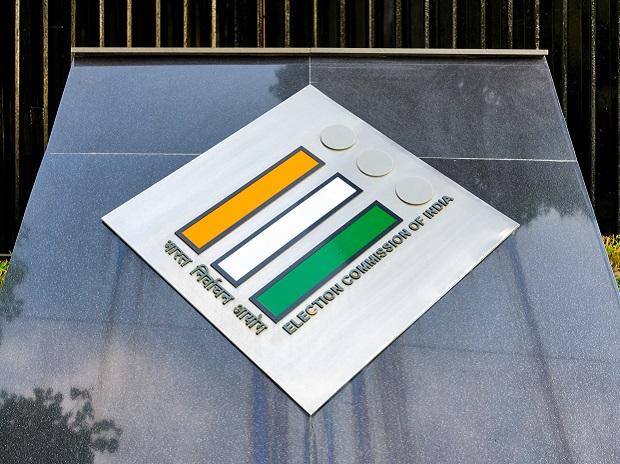
Besides restricting Gemini, Google is working with the Election Commission of India to enable people to easily discover critical voting information on Google Search – such as how to register and how to vote – in both English and Hindi.


Google is also strengthening its fact-checking ecosystem in India by supporting Shakti, the India Election Fact-Checking Collective – a consortium of news publishers and fact checkers – to aid the early detection of online misinformation, including deepfakes, and to create a common repository that news publishers can use to tackle the challenges of misinformation at scale.


To help users identify AI-generated content, Google has already rolled out tools and policies. “Last year, we were the first tech company to launch new disclosure requirements for election ads containing synthetic content… Our ads policies already prohibit the use of manipulated media to mislead people, like deepfakes or doctored content,” said the blog.


Moreover, when it comes to images, Google will ensure every image generated through its products has embedded watermarking with Google DeepMind’s SynthID.


Other than these, online advertising related to elections must undergo an identity verification process. “Provide a pre-certificate issued by the ECI or anyone authorized by the ECI for each election ad they want to run where necessary, and have in-ad disclosures that clearly show who paid for the ad,” said the blog.

First Published: Mar 12 2024 | 6:42 PM IST


Source link

Google partners with ECI to label AI-generated data, curb false information

Google partners with ECI to label AI-generated data, curb false information


The blog post further said the company has begun to roll out restrictions on the types of election-related queries for which Gemini will return responses (Photo: Shutterstock)


Alphabet Inc-owned Google has joined hands with Election Commission of India (ECI) to prevent spread of false information, promote authorised content and label AI-generated data during the upcoming general elections.


Google India in a blog post on Tuesday said its product features are designed to elevate authoritative information on various election-related topics.


We are collaborating with ECI to enable people to easily discover critical voting information on Google Search – such as how to register and how to vote – in both English and Hindi, Google said.


With more people using artificial intelligence to create content, Google said it is setting up processes to help audiences identify AI-generated content.


As more advertisers leverage the power and opportunity of AI, we want to make sure we continue to provide people with greater transparency and the information they need to make informed decisions. Our ads policies already prohibit the use of manipulated media to mislead people, like deepfakes or doctored content, it said.


Google has already started displaying labels for content created with YouTube generative AI features, like Dream Screen.


Soon, YouTube will begin to require creators to disclose when they’ve created realistic altered or synthetic content, and will display a label that indicates for people when they’re watching this content, it said.


The blog post further said the company has begun to roll out restrictions on the types of election-related queries for which Gemini will return responses.


It said that for news and information related to the election, YouTube’s recommendation system prominently surfaces content from authoritative sources on the YouTube homepage, in search results, and highlights high-quality content from authoritative news sources.


The popular search engine said they have set policies around demonstrably false claims in areas like manipulated content, incitement to violence, hate speech, and harassment, that could undermine democratic processes.


We rely on a combination of human reviewers and machine learning to identify and remove content that violates our policies. Our AI models are enhancing our abuse-fighting efforts, while a dedicated team of local experts across all major Indian languages are working 24X7 to provide relevant context, the blog post said.


Google has set strict policies and restrictions around who can run election-related advertising on its platforms. These include identity verification, certification and authorisation by the ECI, and financier disclosures.


“We take our responsibility for providing high-quality information for these types of queries seriously, and are continuously working to improve our protections,” the blog post said.


Google said it has recently joined the Coalition for Content Provenance and Authenticity (C2PA), and pledged to help prevent deceptive AI-generated imagery, audio or video content from interfering with this year’s global elections.


Earlier, Google had introduced the Google News Initiative Training Network and the Fact Check Explorer tool to enable newsrooms and journalists deliver reliable, fact-checked updates to debunk misinformation.


Additionally, Google is supporting Shakti, India Election Fact-Checking Collective, which is a consortium of news publishers and fact-checkers in India working together to aid the early detection of online misinformation, including deepfakes, and to create a common repository that news publishers can use to tackle the challenges of misinformation at scale.


Google is committed to working with government, industry, and civil society and surface and connect voters to authoritative and helpful information online, the blog post said.

First Published: Mar 12 2024 | 4:06 PM IST


Source link

Google restricts Gemini's scope of response as India sets for election

Google restricts Gemini's scope of response as India sets for election


Any topic directly related to elections in India will not be answered by Google’s artificial intelligence (AI) platform, Gemini. This is part of the features rolled out by Google for internet users to access useful and relevant information as India prepares for elections.

Any queries related to candidates, political parties, election results, or information related to any specific office holder will not be answered by Gemini. Moreover, Gemini will prompt the user to use Google Search, which can then provide more relevant sources, said a spokesperson.


“Out of an abundance of caution on such an important topic, we have begun to roll out restrictions on the types of election-related queries for which Gemini will return responses. We take our responsibility for providing high-quality information for these types of queries seriously and are continuously working to improve our protections,” Google said in a blog post related to the India elections on Tuesday.


This feature has been rolled out in the US and now in India. It will be extended to all geographies that will have elections this year.

Besides restricting Gemini, Google is working with the Election Commission of India to enable people to easily discover critical voting information on Google Search – such as how to register and how to vote – in both English and Hindi.


Google is also strengthening its fact-checking ecosystem in India by supporting Shakti, the India Election Fact-Checking Collective – a consortium of news publishers and fact checkers – to aid the early detection of online misinformation, including deepfakes, and to create a common repository that news publishers can use to tackle the challenges of misinformation at scale.


To help users identify AI-generated content, Google has already rolled out tools and policies. “Last year, we were the first tech company to launch new disclosure requirements for election ads containing synthetic content… Our ads policies already prohibit the use of manipulated media to mislead people, like deepfakes or doctored content,” said the blog.


Moreover, when it comes to images, Google will ensure every image generated through its products has embedded watermarking with Google DeepMind’s SynthID.


Other than these, online advertising related to elections must undergo an identity verification process. “Provide a pre-certificate issued by the ECI or anyone authorized by the ECI for each election ad they want to run where necessary, and have in-ad disclosures that clearly show who paid for the ad,” said the blog.

First Published: Mar 12 2024 | 6:42 PM IST


Source link

iQOO Z9 5G with 50MP camera, MediaTek Dimensity 7200 launched: Price, specs

iQOO Z9 5G with 50MP camera, MediaTek Dimensity 7200 launched: Price, specs


Chinese smartphone maker Vivo’s sub-brand iQOO on March 12 launched the iQOO Z9 5G smartphone in India. The smartphone is powered by the MediaTek Dimensity 7200 5G (4nm) processor. It sports a dual-camera set-up, featuring a 50MP (Sony IMX 882) main sensor with optical image stabilisation. The smartphone is offered in graphene blue and brushed green colours at Rs 19,999 onwards. Below are the details.


iQOO Z9 5G: Price


  • 8GB RAM + 128GB storage: Rs 19,999

  • 8GB RAM + 256GB storage: Rs 21,999


iQOO Z9 5G: Availability and introductory offers


Open sale for the smartphone starts from March 14 at 12PM onwards on iQOO e-store and e-commerce platform Amazon India. Amazon Prime subscription can purchase the smartphone starting March 13 at 12 noon onwards.


As for the introductory offer, the iQOO Z9 5G smartphone will be available with a bank discount of Rs 2,000 on ICICI and HDFC Bank cards. Customers can also opt for a no-interest equated monthly instalment plan of 3 months on select bank cards.

iQOO Z9 5G: Specifications


  • Display: 6.67-inch AMOLED display, 2400×1080 resolution, 120Hz refresh rate, 1800 nits peak brightness

  • Processor: MediaTek Dimensity 7200 5G

  • RAM: 8GB + 8GB virtual

  • Storage: 128GB / 256GB

  • Rear Camera: 50MP primary (Sony IMX882) with OIS + 2MP depth camera

  • Front camera: 16MP

  • Battery: 5000mAh

  • Charging: 44W wired

  • OS: Funtouch OS 14 based on Android 14

  • Weight: 188g

  • Thickness: 7.83mm

First Published: Mar 12 2024 | 1:43 PM IST


Source link

YouTube
Instagram
WhatsApp