Prime Minister Narendra Modi on Thursday hailed the government’s nod to the India AI Mission as a landmark for technology and innovation.
The Cabinet has approved the mission with an outlay of Rs 10,372 crore for five years to encourage the development of artificial intelligence in the country. The approved corpus will be used to build a high-end scalable AI ecosystem in public-private partnership mode.
“A landmark day for tech and innovation! The Cabinet’s approval for the IndiaAI Mission will empower AI startups and expand access to compute infrastructure, marking a giant leap in our journey towards becoming a global leader in AI innovation,” he said on X.
Reacting to other Cabinet decisions, Modi said the extension of Rs 300 per LPG cylinder subsidy to poor women under the Ujjwala Yojana for the next fiscal is an important step which will benefit women and ensure smoke-free kitchens.
The government on Thursday also raised the minimum support price (MSP) for raw jute by Rs 285 to Rs 5,335 per quintal for the 2024-25 season.
The decision to fix the MSP of raw jute (TDN-3 equivalent to earlier TD-5 grade) was taken at the meeting of the Cabinet Committee on Economic Affairs, Union Minister Piyush Goyal said.
Modi said his government is committed to the welfare of farmers and the decision will help them in many states, including West Bengal.
Reacting to the Rs 10,037-crore new industrial development scheme, UNNATI, for eight northeastern states, he said the Uttar Poorva Transformative Industrialisation Scheme will enhance the growth trajectory of the region and create many opportunities for the youth.
(Only the headline and picture of this report may have been reworked by the Business Standard staff; the rest of the content is auto-generated from a syndicated feed.)
The app offers seamless access to NPS to a wider subscriber base, the Pension Fund Regulatory and Development Authority (PFRDA) said in a statement (Photo: Shutterstock)
PFRDA Chairperson Deepak Mohanty on Thursday launched a web application developed by Zerodha Broking Limited to provide easy access to NPS for subscribers.
The app offers seamless access to NPS to a wider subscriber base, the Pension Fund Regulatory and Development Authority (PFRDA) said in a statement.
Mohanty said that there is merit in joining NPS at a young age to harness the benefit of compounding.
NPS provides continuity to retirement saving accounts irrespective of one’s employment status and is available for non-resident Indians (NRIs), it said.
As youngsters are tech savvy, the facilitation by Zerodha Broking Limited would expand access to NPS, it added.
(Only the headline and picture of this report may have been reworked by the Business Standard staff; the rest of the content is auto-generated from a syndicated feed.)
Startups, academia, researchers and industry will be given access to the AI supercomputing infrastructure established under the India AI Mission, Goyal said (Photo: Bloomberg)
The Cabinet approves India AI mission with an outlay of Rs 10,372 crore for five years, Union Minister Piyush Goyal said on Thursday.
The approved corpus will be used to to create a large computing infrastructure.
The minister, briefing reporters after the Cabinet meeting, said supercomputing capacity, comprising over 10,000 GPU, will be made available to various stakeholders for creating an AI ecosystem.
Startups, academia, researchers and industry will be given access to the AI supercomputing infrastructure established under the India AI Mission, Goyal said.
A National Data Management Officer will be set up under the mission that will coordinate with various government departments and ministries to improve the quality of data and make them available for AI development and deployment.
(Only the headline and picture of this report may have been reworked by the Business Standard staff; the rest of the content is auto-generated from a syndicated feed.)
After global unveiling at Mobile World Congress in Barcelona last month, Chinese electronic brand Xiaomi launched the Xiaomi 14 and Xiaomi 14 Ultra smartphones in India on March 7. Both the smartphones boast an imaging system co-engineered with German optics entity Leica. The Xiaomi 14 will be available for purchase from March 11, and the Xiaomi 14 Ultra from April 12. The latter will be available for pre-reserve at Rs 9,999 from March 11. Below are the details:
Meanwhile, the Xiaomi 14 smartphone comes with a glass back finish in three colourways: Jade Green, Matte Black and Classic White.
Xiaomi 14 Ultra: Price, availability, introductory offers, and more
The Xiaomi 14 Ultra will be available for pre-reserve in India from March 11. It will be available for purchase from April 12. On the pre-reserve orders, Xiaomi is bunding camera accessories and committing early deliveries to consumers from April 8.
As for the introductory offers, Xiaomi 14 Ultra will be available with a discount of Rs 5,000 on ICICI bank cards. Additionally, the company is offering an exchange bonus of Rs 5,000 on trade-in deals.
The Xiaomi 14 Ultra is offered in sole 16GB RAM and 512GB on-board storage configuration at Rs 99,999.
Xiaomi 14: Price, availability, introductory offers, and more
Offered in 12GB RAM + 512GB on-board storage configuration at Rs 69,999, the Xiaomi 14 will be available for purchase from March 11 on the company’s website, e-commerce platform Amazon India and Flipkart, and across Xiaomi’s retail channels.
Like the Ultra model, the Xiaomi 14 smartphone will be available with a bank discount of Rs 5,000 on ICICI bank cards. Additionally, customers can avail an exchange bonus of up to Rs 5,000 on trade-in deals.
Xiaomi is traditionally associated with value-for-money smartphones, but the Chinese electronics maker is now making strides to change that perception with premium smartphones targeted to aspirational consumers. This is part of the company’s three-pillar premiumisation strategy, which also covers developing a connected ecosystem, for the next three years in India. At the core of this strategy is its new HyperOS operating system, which, it said, is designed for “Human x Car x Home” smart ecosystem. Its first product based on the HyperOS in India is the Xiaomi 14.
Design
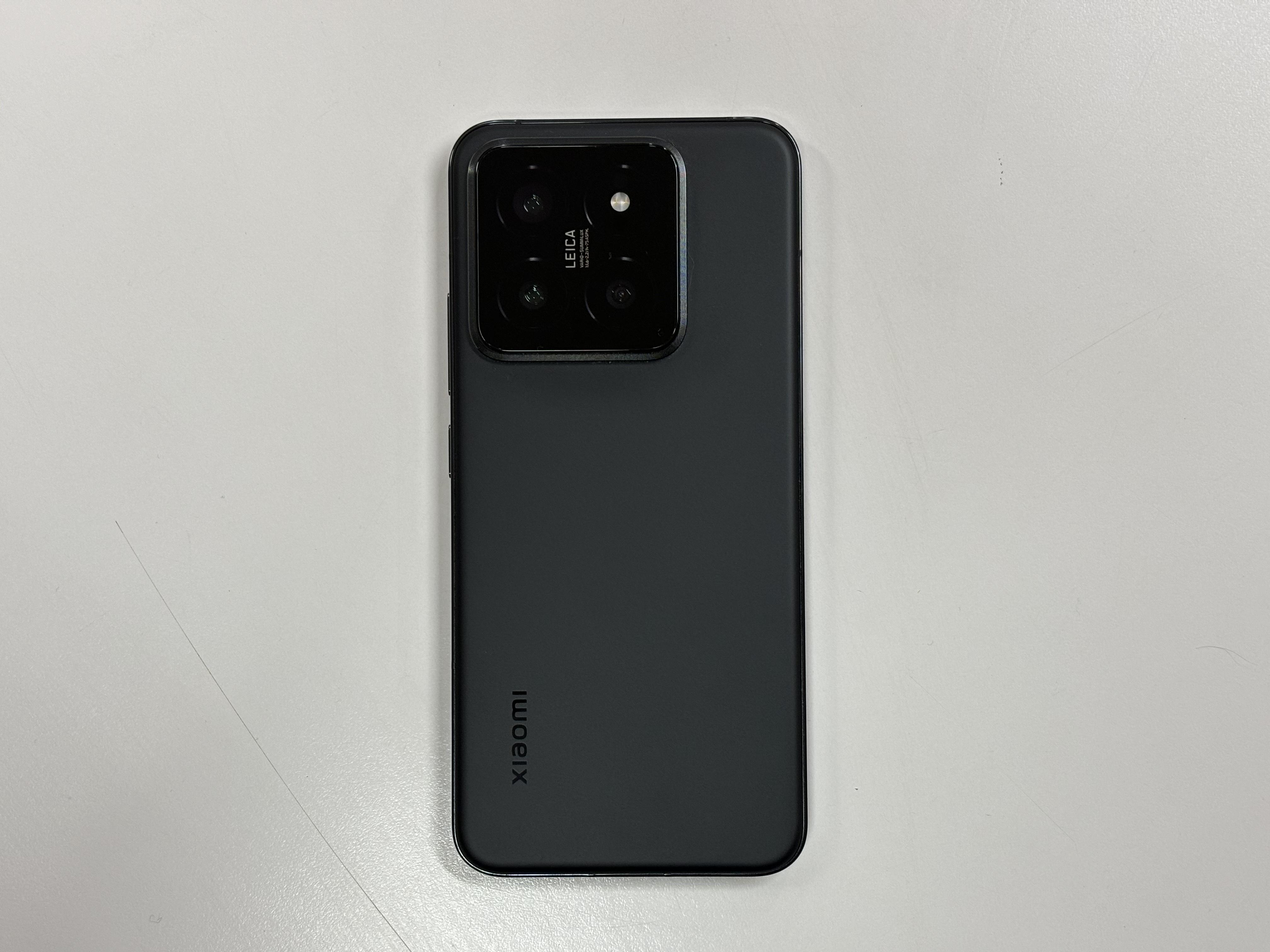
The Xiaomi 14 exudes sophistication with its compact design. Its sleek metallic frame and flat display bear a resemblance to the design language of the Apple iPhone 14, yet Xiaomi has meticulously crafted it for enhanced comfort and usability. Noteworthy design elements include tapered edges on the frame and curved borders on both the front and back glasses. The rear profile is devoid of distractions, drawing attention with its square camera island adorned with Leica branding at the center. Crafted from glass, the rear panel boasts a smooth matte finish that repels fingerprints and provides anti-slip properties. The front display extends seamlessly to the edges, flanked by thin and symmetrical borders. Furthermore, the device is IP68 certified for water and dust resistance.
Display and audio
The display of the Xiaomi 14 serves as the gateway to a captivating smartphone experience, leaving no room for compromise. Featuring a flat 6.36-inch AMOLED panel with a 120Hz adaptive refresh rate, it supports Dolby Vision, HDR10+, HDR10, and HLG. The display delivers vibrant visuals and fine responsiveness, ensuring comfortable viewing in various lighting conditions. Users have the flexibility to choose from multiple colour schemes, including an “original colour pro” option for natural colour reproduction. Additionally, the display dynamically adjusts colours based on ambient lighting for optimal viewing.
In more specific cases, such as streaming high dynamic range content, the display dazzles with good contrast and accurate colours. However, the display’s reflective nature hampers the HDR experience despite the panel being super bright. Moreover, none of the value-added features such as super resolution, image enhancement, HDR enhancement, and MEMC (frame interpolation) make visible improvements in visuals. These are not the shortcomings since the display delivers wholesome experience even without these visual aids, but it would have been interesting to see how these features lift the experience.
Complementing the visual experience is the audio experience delivered through stereo speakers, powered by Dolby Atmos. The speakers sound loud, full, and balanced. Moreover, there is a sense of spatial coverage that matches the likes of Apple iPhones. There is no 3.5mm audio jack here, but that is the case with most phones these days. As for the wired audio, there is support for Dolby Atmos and Xiaomi Sound. While the former is industry standard for object-based audio virtualisation, the latter is Xiaomi’s iteration that seems to be work in progress in its current form. Irrespective of which audio virtualisation option you pick, there is an option in sound settings menu to enable expansive audio and it works even if the connected wireless earphones do not natively support spatial sound. The quality, however, is best experienced with audio accessories that natively support Dolby Atmos.
Camera
Imaging is the headline feature of the Xiaomi 14, which is its third-generation smartphone with Leica optics. The smartphone has three 50-megapixel camera sensors on the back, each of independent utility. Together, the camera system covers imaging at three focal lengths – 14mm (ultra-wide), 23mm (wide), and 75mm (telephoto). On the front, the phone has a 32MP camera sensor.
Details aside, the Xiaomi 14 has a feature-packed camera system that is versatile and easy to use. The camera app opens with a pop-up that details the two available styles – Leica Authentic and Leica Vibrant. The pop-up appears just once, at first camera launch, but does the job of simplifying the future experience for the user.
The authentic style keeps the colours and other compositions closer to real for natural appeal. In the vibrant style, there are pronounced colours besides improved contrast and dynamic range in the images.
You can switch between the styles afterwards by tapping on the Leica option visible on the top-right side of the camera interface.
The two colour calibration styles are just the starting point of the Leica features-focused optics system. There are Leica film roles inspired by colour filters, which are available across photo modes and for videos too. Moreover, there are dedicated Leica-tuned portrait presets – Documentary (35mm), Swirly Bokeh (50mm), Portrait (75mm), and Soft Focus (90mm). Each of these deliver a novel experience, unmatched by any other smartphone – especially in terms of portrait experience.
From ultra-wide landscapes and cityscapes to half-body portraits, and zoomed close-up shots, the Xiaomi 14 covers most imaging aspects right. Moreover, it delivers consistent experience irrespective of lighting conditions.
Xiaomi has puts equal focus on videography capabilities for comprehensive imaging experience. Besides Dolby Vision recording in 4K resolution at 30fps, the smartphone supports videos in wide aspect ratio. Besides, there is a dedicated movie mode with an option to record in 2.39:1 aspect ratio. Like Apple’s Cinematic, the movie mode on Xiaomi 14 lets you record videos with a shallow depth of field and smooth focus transitions for a cinema-quality look. While it works fine in good light conditions, the experience is not as favourable in low-light conditions.
Software
Running on the Xiaomi HyperOS based on Android 14, the Xiaomi 14 introduces several enhancements to the user experience. These include improved transition effects, customisable lock screen styles, and AI-powered photo editing tools. While the initial iteration of HyperOS shows promise, minor imperfections such as pre-loaded apps and notification handling nuances persist. Moreover, some pre-loaded apps such as Themes and GetApps keep generating notifications.
Speaking of notifications, the notification drawer has been redesigned but no improvements have been made with regard to user experience – you cannot use swipe down gesture to expand notifications. Notifications expand only when you tap on the down arrow icon, which is visible towards the right side on notification tile. These may be minor issues, but are issues nonetheless.
Performance
Powered by the Qualcomm Snapdragon 8 Gen 3, paired with 12GB RAM (LPDDR5x) and 512GB (UFS 4.0) onboard storage, the Xiaomi 14 delivers swift performance. Importantly, the phone maintains performance even after prolonged use. Though a camera-focused smartphone, the Xiaomi 14 is equally good for gaming and multimedia editing. The phone handles power-and-graphic intensive tasks without breaking sweat. It warms up after prolonged use, but not to a point where handling it becomes uncomfortable.
Battery and charging
4,610 mAh capacity battery may seem a tad underpowered for the Xiaomi 14, which is maxed out on all fronts. Yet, the smartphone delivers a healthy on-battery time of about a full day on full charge, thanks to the optimised operating system, power efficient processor, and adaptive refresh rate display. Power intensive workloads naturally drains the battery quickly, yet the phone is capable of sailing through a day if used in moderation.
As for charging, the Xiaomi 14 supports 90W wired and 50W wireless charging speeds. With wired charging, the battery takes about 50 minutes to charge full. Rounding off the package is the reverse wireless charging, which lets you charge supported accessories such as wireless earbuds’ case by placing them on the back side of the smartphone. Important to note, reverse wireless charging is disabled by default and needs to be enabled from battery section in the settings.
Verdict
The Xiaomi 14 is a well-rounded smartphone with especial focus on imaging. It boasts premium design, compact form factor, dazzling display, rich audio, easy-to-use pro-grade camera system, flagship-grade performance, and an all-day battery life. While it may lack certain AI features found in rival devices, it presents a compelling option for consumers seeking a cost-effective flagship experience at Rs 69,999.
Meta has announced that it is opening its instant messaging platform WhatsApp and Messenger for interoperability with third-party apps to comply with the Digital Markets Act (DMA) in the EU. In a press note released by the company, Meta said that it will allow users of third-party providers who choose to enable interoperability to send and receive messages with opted-in users of either Messenger or WhatsApp.
In addition to users’ permission, the third-party providers will have to sign an agreement with Messenger and WhatsApp and work together with the company to enable cross-platform messaging between their app and Meta’s WhatsApp or Messenger.
Meta in the press note said that it will be soon releasing the WhatsApp Reference Offer for third-party providers that will outline what will be required to interoperate with the platform. The Reference Offer for its other platform Messenger will be released soon after.
Meta said that the company will work to enable interoperability with other services within three months of receiving a request, which is required under the DMA. However, the functionality might take a bit longer to be released for public use.
Additionally, the company said that for implementing end-to-end encrypted protocol with third-party platforms, it would prefer if the third-party provider uses the Signal Protocol as well.
WhatsApp and Messenger both use Signal Protocol, which the company said provides the “foundation piece for their encryption”. However, if the third-party provider does not follow the Signal Protocol, it has to demonstrate that the compatible protocol that it is using offers the same security standards as Signal.
Meta said that it is obliged to provide interoperability with other apps whether or not the other provider uses Signal. However, in such cases Meta gives no guarantee what a third-party provider does with sent or received messages.