OnePlus Nord 6 to launch today: How to watch live, Expected specs

OnePlus Nord 6 to launch today: How to watch live, Expected specs


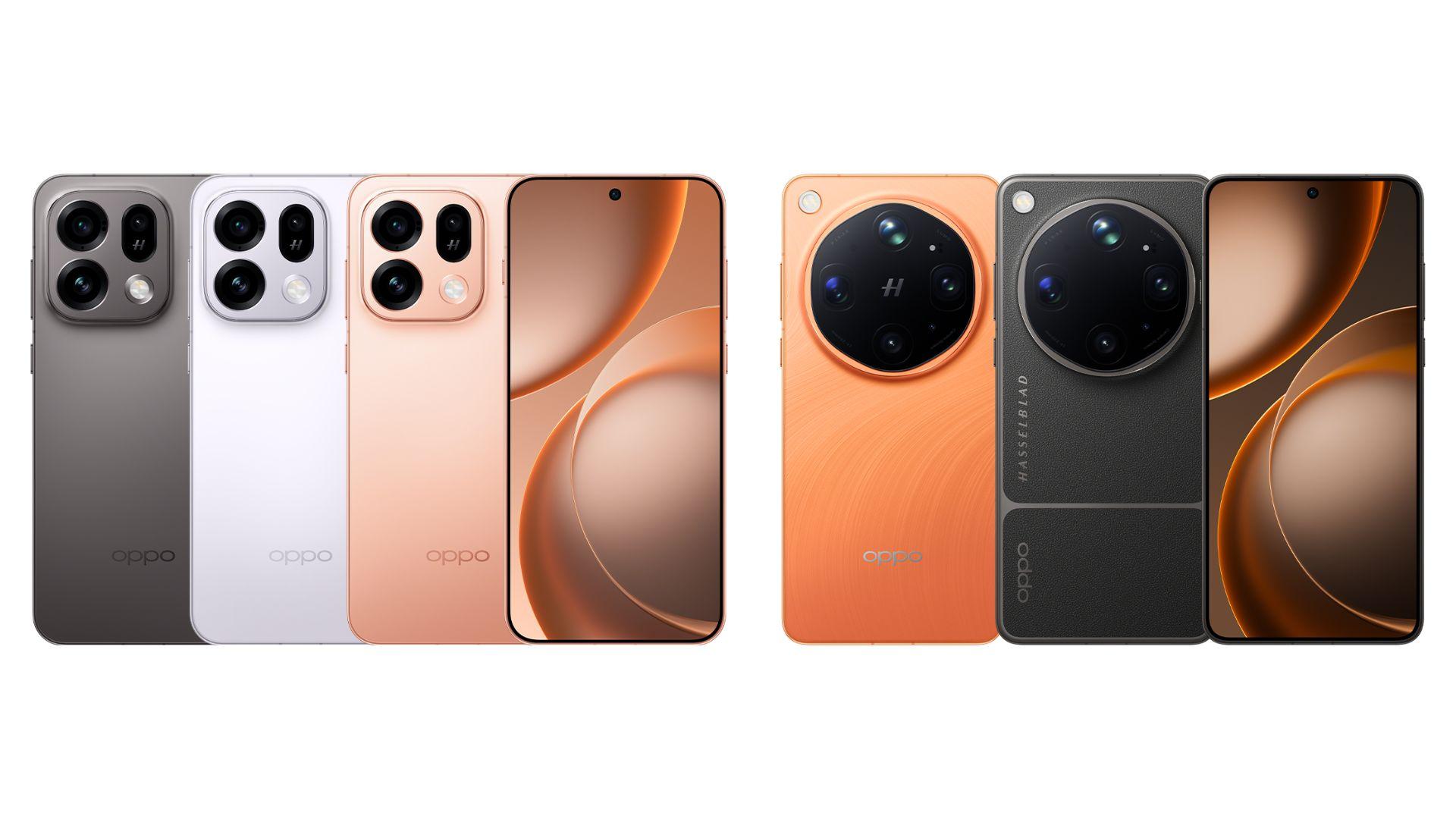
OnePlus is set to launch the Nord 6 smartphone today, April 7. Ahead of the launch, the company has confirmed several specifications including the chip powering the smartphone, camera details and more. The OnePlus Nord 6 will be powered by the Qualcomm Snapdragon 8s Gen 4 chip and pack a 9,000mAh battery. The company said that the smartphone will come with a 50MP main camera with a Sony sensor, ‘Dual-axis’ Optical Image Stabilisation (OIS) and a 32MP front camera. The smartphone will come in three colourways– holographic Quick Silver, Fresh Mint and low-Reflection Pitch Black.


OnePlus Nord 6 launch details


  • Date: April 7

  • Time: 7:00 PM IST

  • How to watch: The launch will be livestreamed on OnePlus India’s YouTube channel


Alternatively, readers may also watch the event through the livestream embedded at the end of this article.


OnePlus Nord 6: What we know so far


According to the company, the upcoming device will have the same 165Hz 1.5K AMOLED “Sunburst HDR” display as the OnePlus 15. It will support 1800 nits HBM and can go up to 3600 nits peak brightness. It will also include Aqua Touch 2.0 technology to ensure accurate touch response even with wet or sweaty fingers. 


The OnePlus Nord 6 will feature a 50MP Sony main camera with dual-axis OIS, along with a 32MP front camera. The phone will also support 4K video recording at 60fps. The phone will also include AI editing tools like AI Portrait Glow, AI Eraser, AI Unblur, and AI Perfect Shot. These will help fix issues like poor lighting, unwanted people in the background, and blurry subjects, making photos easier to share.


OnePlus has previously confirmed that the Nord 6 will be powered by the Qualcomm Snapdragon 8s Gen 4 chip paired with up to 12GB RAM and 256GB internal storage. As per the company, it will arrive with support for 165 FPS gameplay on Battlegrounds Mobile India (BGMI). The smartphone will come with a “Touch Reflex” chip and a six-axis console controller gyro.


For Wi-Fi connectivity, the OnePlus Nord 6 will feature a G2 Wi-Fi chip. The smartphone will pack a 9,000mAh battery, which will support 80W  wired charging and 27W reverse charging. The company claims to offer up to 2.5 days of battery life. Additionally, the OnePlus Nord 6 will run on OxygenOS and will offer six years of software patches. 


The smartphone will come with IP66, IP68, IP69, and IP69K ratings for protection against dust and water, along with MIL-STD-810H durability standards. The front will get a Crystal Guard Glass which is said to offer better protection against drops and scratches, similar to Gorilla Glass Victus+.


The company said that the OnePlus Nord 6 will come with AI tools similar to the OnePlus 15, centred around OnePlus Mind Space. It will let users save on-screen content quickly and use Google Gemini for personalised suggestions. The phone will also include features like real-time translation, AI Ghostwriter, and AI Scan. 


OnePlus Nord 6: Specifications


  • Display: 165Hz 1.5K AMOLED “Sunburst HDR”, 1800 nits HBM, 3600 nits peak brightness

  • Processor: Qualcomm Snapdragon 8s Gen 4

  • RAM: Up to 12GB RAM 

  • Storage: Up to 256GB storage

  • Battery: 9000mAh

  • Chragig: 80W wired and 27W reverse charging

  • Rear camera: 50MP Sony main sensor with dual-axis OIS

  • Front camera: 32MP

  • Gaming: Supports up to 165 FPS on BGMI with Touch Reflex chip and six-axis gyro

  • Connectivity: G2 Wi-Fi chip

  • Software: OxygenOS with up to six years of software patches

  • Protection: IP66, IP68, IP69, IP69K ratings and MIL-STD-810H certification

  • Glass Protection: Crystal Guard Glass 

  • Colours: Quick Silver, Fresh Mint, Pitch Black

  • Camera AI Tools: AI Portrait Glow, AI Eraser, AI Unblur, AI Perfect Shot


  OnePlus Nord 6 launch: Livestream 


Source link

Apple's foldable iPhone faces engineering snags, potential delays: Report

Apple's foldable iPhone faces engineering snags, potential delays: Report


The Apple logo seen during the preview of the redesigned and reimagined Apple Fifth Avenue store in New York, US | File Photo: Reuters


Apple has been encountering setbacks in the engineering test phase of its first foldable iPhone, which could lead to delays in its mass production and product shipment schedule, Nikkei Asia reported on Monday, citing sources.

 
Engineering development issues could delay the first shipments of the foldable iPhones by months in a worst-case scenario, according to the Nikkei report. 
“It’s true that more issues than expected have emerged during the early test production phase, and additional time will be needed to resolve them and make necessary adjustments,” the report said, quoting one source familiar with the matter. 
Reuters could not verify the report. Apple did not immediately respond to Reuters’ request for a comment outside regular business hours in the United States. 
Nikkei had reported in January that Apple would focus on delivering its first foldable iPhone and two non-folding models with upgraded cameras and larger displays for a flagship launch in the second half of 2026. 


(Only the headline and picture of this report may have been reworked by the Business Standard staff; the rest of the content is auto-generated from a syndicated feed.)


First Published: Apr 07 2026 | 9:17 AM IST


Source link

OpenAI, Anthropic, Google join hands to combat AI model copying in China

OpenAI, Anthropic, Google join hands to combat AI model copying in China


By Shirin Ghaffary and Maggie Eastland


Rivals OpenAI, Anthropic PBC, and Alphabet Inc.’s Google have begun working together to try to clamp down on Chinese competitors extracting results from cutting-edge US artificial intelligence models to gain an edge in the global AI race.  


The firms are sharing information through the Frontier Model Forum, an industry nonprofit that the three tech companies founded with Microsoft Corp. in 2023, to detect so-called adversarial distillation attempts that violate their terms of service, according to people familiar with the matter. 


The rare collaboration underscores the severity of a concern raised by US AI companies that some users, especially in China, are creating imitation versions of their products that could undercut them on price and siphon away customers while posing a national security risk. US officials have estimated that unauthorized distillation costs Silicon Valley labs billions of dollars in annual profit, according to a person familiar with the findings who described them on condition of anonymity.


OpenAI confirmed it’s part of the information sharing effort on adversarial distillation through the Frontier Model Forum and pointed to a recent memo it sent to Congress on the practice, where it accused Chinese firm DeepSeek of trying to “free-ride on the capabilities developed by OpenAI and other US frontier labs.” Google, Anthropic, and the Frontier Model Forum declined to comment. 


Distillation is a technique where an older “teacher” AI model is used to train a newer, “student,” model that replicates the capabilities of the earlier system — often at a much lower cost than producing an original model from scratch. Some forms of distillation are widely accepted and even encouraged by AI labs, such as when companies create smaller, more efficient versions of their own models, or allow outside developers to use distillation to build non-competitive technologies.


Yet distillation has been controversial when used by third parties — particularly in adversary nations like China or Russia — to replicate proprietary work without authorization. Leading US AI labs have warned that foreign adversaries could use the technique to develop AI models stripped of safety guardrails, such as limits that would prevent users from creating a deadly pathogen.


Most models made by Chinese labs are open weight, meaning that parts of the underlying AI system are publicly available for users to freely download and run on their own platforms, and therefore cheaper to use. That poses an economic challenge for US AI companies that have kept their models proprietary, betting that customers will pay for access to their products and help offset the hundreds of billions of dollars they’ve spent on data centers and other infrastructure. 


Distillation first drew significant scrutiny in January 2025 in the weeks after DeepSeek’s surprise release of the R1 reasoning model that took the AI world by storm. Soon after, Microsoft and OpenAI investigated whether the Chinese startup had improperly exfiltrated large amounts of data from the US firm’s models to create R1, Bloomberg previously reported.


In February, OpenAI warned US lawmakers that DeepSeek had continued to use increasingly sophisticated tactics to extract results from US models, despite heightened efforts to prevent misuse of its products. OpenAI claimed in its memo to the House Select Committee on China that DeepSeek was relying on distillation to develop a new version of its breakthrough chatbot.


Information-sharing by US AI companies about adversarial distillation echoes a standard practice in the cybersecurity industry, where firms regularly swap data on attacks and adversaries’ tactics as a way to strengthen network defenses. By working together, the AI firms are similarly seeking to more effectively detect the practice, identify who’s responsible and try to prevent unauthorized users from succeeding.


Trump administration officials have signaled their openness to fostering information sharing among AI companies to rein in adversarial distillation. The AI Action Plan unveiled by President Donald Trump last year called for the creation of an information sharing and analysis center, in part for this purpose.


For now, information sharing on distillation remains limited due to AI companies’ uncertainty about what can be shared under existing antitrust guidance to counter the competitive threat from China, according to people familiar with the matter. The firms would benefit from greater clarity from the US government, the people said.


Distillation has ranked as a top concern among American AI developers since DeepSeek rattled global markets in early 2025 with its R1 release. Highly capable open-source models continue to proliferate in China, and many in the industry are watching closely for a major upgrade to DeepSeek’s model.


Last year, Anthropic blocked Chinese-controlled companies from using its Claude chatbot model, and in February it identified three Chinese AI labs — DeepSeek, Moonshot, and MiniMax — as illicitly extracting the model’s capability via distillation. This year, Anthropic said the threat “extends beyond any single company or region” and poses a national security risk, since distilled models often lack safety guardrails designed to prevent bad actors from using AI tools for malicious activities.


Google has published a blog saying it identified an increase in model extraction attempts. The three US AI labs have not yet provided evidence showing how much of China’s model innovation is reliant on distillation, but they note that the prevalence of attacks can be measured based on volumes of large-scale data requests.


Source link

D2C startups tap AI to improve delivery completion rates by 11%: Velocity

D2C startups tap AI to improve delivery completion rates by 11%: Velocity


Direct-to-consumer (D2C) startups are increasingly turning to artificial intelligence (AI)-led interventions to strengthen last-mile delivery in Tier-II and smaller cities. 


These companies, which leverage tools like AI voice calls, automated order and address verification and cash on delivery (COD)-to-prepaid conversion, have seen an 11 percent improvement in delivery completion rates, according to Velocity Shipping data. 


Abhiroop Medhekar, co-founder and chief executive officer of Velocity, said, “For digital-first brands, logistics inefficiencies are where profitability is increasingly lost. While demand from Tier-II and Tier-III markets has grown significantly, fulfilment reliability remains inconsistent due to higher last-mile costs, limited network density, and operational complexity. What our data consistently shows is that proactive, early AI-driven intervention across order and address verification, risk scoring, and delivery workflows significantly improves delivery outcomes.”


Even though non-metro markets are emerging as key growth markets for the country’s e-commerce ecosystem, persistent last-mile delivery challenges lead to reverse logistics, adding to company costs. For context, failed deliveries and RTOs (return-to-origin) account for around 25-30 per cent of revenue losses during peak festive periods.


According to a Bain & Co. report, three in five new online shoppers since 2020 are from smaller cities, while nearly 60 percent of new sellers since 2021 are based outside Tier-I markets. These markets account for more than 67 per cent of total shipments, but only about 60 per cent are successfully delivered. The number is far lower than the metro fulfilment rate of 73 per cent.


“This gap is largely due to structural challenges such as inconsistent address formats, limited courier coverage, larger delivery areas, and a high share of COD orders, which increases the risk of cancellations and failed deliveries,” the company’s data found. 


India’s e-commerce market is projected to grow from $70-80 billion in 2024 to $180-200 billion by 2030, and D2C channels are expected to grow nearly three times faster than traditional marketplaces. 


Source link

Nasa families don't go to the moon, but they too are on the mission

Nasa families don't go to the moon, but they too are on the mission


By Katrina Miller


When the astronaut Reid Wiseman learned that he would be commanding Nasa’s Artemis II mission around the moon, his immediate reaction was not excitement.


“It was pretty heavy,” Wiseman said on Nasa’s Curious Universe podcast. In part, that is because he is the sole parent of two daughters.


“It was not like you just won the lottery and you’re running out and jumping for joy,” he said. “It was not that feeling at all.”


Venturing into space has always been dangerous. But the risk of Artemis II is even higher. The test flight is the first time humans have gone to the moon in more than half a century, and the mission is using a vehicle that had never before carried astronauts to space.


The toll of such risk is felt not only by the astronauts, but also by their loved ones — long before liftoff occurs.


“The launch is a capstone stress event,” said James Picano, a psychologist at Nasa’s Johnson Space Center in Houston who works to support the families of Artemis II. But “there’s an incredible amount of stress on a family before the launch even happens.”


For them, he added, “the mission begins at assignment.”


Nasa selected the Artemis II crew in 2023, nearly three years before the mission launched on Wednesday.


Astronaut training is rigorous and time-consuming, even for more routine trips to the International Space Station. The strain of long stretches of time away from spouses and children is amplified by intense schedules and the ambiguity of ever-shifting timelines.


Dr Catherine Hansen, who is married to Jeremy Hansen, Artemis II mission specialist of the Canadian Space Agency, described the stress of juggling various briefings and contingency planning before the moon launch.


“It is all-consuming for our whole family,” she wrote in a Facebook post. (The Hansens have two daughters and a son.) Planning was made even more difficult by needing to prepare for the worst-case scenario, she added, “conversations that no family of a moon-bound astronaut ever wants to have, but absolutely must.”


When Nasa first began sending astronauts to space in the 1960s, little formal support was available to wives and children.


Tracy L Scott, a sociologist at Emory University who researches the lives of astronaut families, described the space agency at the time as “much more like a startup” — small, informal and casual.


“Everybody knew each other,” said Dr Scott, whose father, Commander David Scott, flew in the agency’s Gemini and Apollo programs.


In the tightknit communities around Nasa’s astronaut training facility in Houston, the families forged their own bonds of support.


Astronauts of previous missions would visit the homes of crew members in space to walk them through what was happening. Some of the women, drawn together by the shared experience of raising children while married to absentee husbands in dangerous careers, formed the Astronaut Wives Club (the subject of a book and TV series).


Families were thrust into the public eye, as reporters set up shop on their lawns and even inside homes. Nasa provided no media training, though many of the wives live in the spotlight.


According to Dr Scott, more formal psychological, medical and financial resources for astronaut families began to appear after the 1967 Apollo 1 disaster, in which three crew lost their lives. “But this was being developed kind of by the seat of the pants at the time,” she said.


As Nasa grew, the culture shifted to less personal and more bureaucratic, and astronaut families fell out of public view. The Astronaut Wives Club morphed into an organization known as the Astronaut Spouses Group, which interfaces with Nasa’s Astronaut Family Support Office and its Behavioral Health and Performance Operations group.


“Family needs and family support have come into full relief,” Dr Picano said, adding that the resources were essential for the success of missions, allowing the onboard crew to fully concentrate on tasks in space.


Dr Picano has worked with Anna Morgenthaler, a Nasa psychologist, to offer counseling, routine check-ins and other services for the families of astronauts headed toward the International Space Station.


But the group has had to rethink support strategies for the Artemis program, which plans to establish a sustained presence on the moon and send astronauts to Mars. Deep space exploration will come with new challenges for families. One big issue will be communication.


On the International Space Station, astronauts can stay in touch with people on Earth via email, phone and video calls. Artemis crews, on the other hand, will have less opportunity to connect with their loved ones. Communications with astronauts on the moon face a brief time delay. The families of the Artemis II crew members were trained on what to expect and on how to navigate around these delays.


“You can imagine some of the complex emotions you might feel as a family member,” Dr Morgenthaler said. “You’re excited, you’re proud of them, but also there’s some anxiety and some fear about potential risks.”


Two weeks before the launch, the astronauts entered quarantine in Houston with their families. The crew traveled separately from their loved ones to John F Kennedy Space Center in Florida five days before liftoff.


“This endgame time is probably the most precious time you can have,” Wiseman said in an interview in January from quarantine in Houston before a postponed launch attempt. “You get a moment to think about what’s truly valuable in your life.”


On Wednesday afternoon, the astronauts, wearing bright orange spacesuits, lined up across from their loved ones to share final goodbyes. Victor Glover, the Artemis II pilot, blew kisses to his wife and four daughters. Mission specialist Christina Koch curled her fingers in the shape of a heart toward her husband.


Then the crew loaded into a van that drove them to the launchpad, got strapped to their seats in a spacecraft atop Nasa’s giant rocket and blasted off toward space.


The astronauts did not get a chance to speak with their families until the third and fourth days of the mission. In a video call with NBC News, Wiseman described speaking with his daughters as “surreal,” as he and the rest of the crew sped toward the moon.


“For a moment, I was reunited with my little family,” he said. “It was the greatest moment of my entire life.”


Source link

Tech Wrap April 6: Samsung Messages, WhatsApp noise cancellation, iOS 26.5

Tech Wrap April 6: Samsung Messages, WhatsApp noise cancellation, iOS 26.5


Samsung is set to phase out its native Messages app in the US by July 2026 and is encouraging users to switch to Google Messages. The company confirmed the decision through an “End of Service Announcement,” noting that the app will stop functioning after the deadline. This move reflects a shift in Samsung’s messaging strategy, as it steps away from its own platform and moves closer to Google’s ecosystem for a more unified Android experience. Google Messages is being positioned as the default option, with Samsung also assisting users during the transition.


WhatsApp is reportedly working to improve call quality by introducing a noise cancellation feature for voice and video calls. As per a report by WABetaInfo, the feature is currently available to a small group of Android beta users and is expected to roll out more widely over time, with the aim of cutting down background noise during calls. The report added that this feature could be particularly helpful for users who often take calls in noisy environments, as it filters ambient sounds while keeping the speaker’s voice clear.


Apple has released the first public beta of iOS 26.5, allowing iPhone users enrolled in the iOS 26 beta programme to try out new features. According to 9To5Mac, the update brings the “Suggested Places” feature to Apple Maps, introduces end-to-end encryption for RCS, and enables support for pushing Live Activities to third-party accessories. The iOS 26.5 public beta 1 is now available for compatible iPhone models.


Realme is preparing to launch its new wireless earbuds, the Realme Buds T500 Pro, on April 16. Ahead of the launch, the company has disclosed key details, including support for Hi-Res Audio and the LHDC 5.0 Bluetooth codec for lossless audio. The company stated that this feature is designed to deliver improved sound quality with greater detail and reduced latency, especially for users who stream high-quality content. The Realme Buds T500 Pro will be offered in three colour options: Lemon Cola, Orange Mint and Chocolate.


Anthropic has widened access to a key Claude feature that links the AI to Microsoft apps. As per the company’s latest post on X (formerly Twitter), the Microsoft 365 connector is now available across all Claude plans, including the free tier. The company said users can connect Outlook, OneDrive and SharePoint to bring emails, documents and files directly into conversations. Previously limited to Team and Enterprise plans, the feature now allows users to access and analyse their data without manually uploading files.


If you are planning to buy a Mac Studio or Mac mini, you may need to wait up to five months for delivery. Shipments of certain variants of the M4 Max Mac Studio, M3 Ultra Mac Studio, and Mac mini models powered by M4-series chips have been delayed by several months, likely due to the ongoing global memory shortage.


OnePlus is gearing up to introduce the OnePlus Nord 6 in India on April 7, as the successor to the OnePlus Nord 5. Ahead of the launch, the company has revealed that the device will be powered by the Qualcomm Snapdragon 8s Gen 4 processor and feature a 9,000mAh battery. The smartphone will also come with IP66, IP68, IP69 and IP69K ratings for dust and water resistance. OnePlus has confirmed that the device will be available as an Amazon Specials product, with sales on Amazon starting April 9.


The iPhone Air, launched alongside the iPhone 17 series in September last year, is currently available at a discount of up to Rs 29,000, including bank offers. On Amazon India, the 256GB variant can be bought at an effective price of Rs 90,990, compared to its original launch price of Rs 119,900. Buyers can also choose no-cost EMI options along with additional bank cashback offers.


Source link

YouTube
Instagram
WhatsApp