India agrees to historic international AI collaboration pact at UK summit


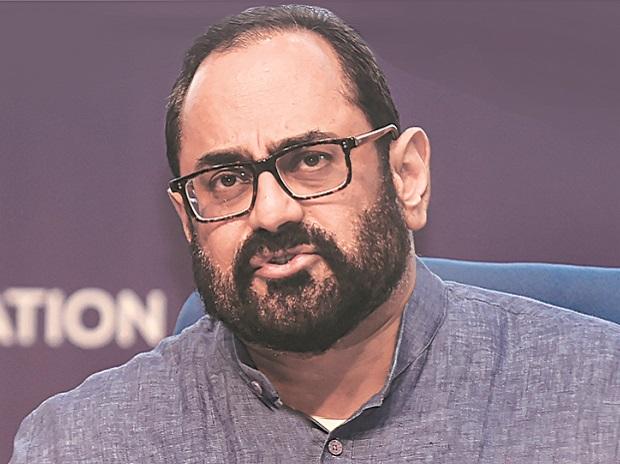
Union Minister Rajeev Chandrasekhar the Minister of State for Electronics and Information Technology for India has today signed a world-first agreement at the historic British landmark, Bletchley Park. The agreement establishes a shared understanding of the opportunities and risks posed by frontier Artificial Intelligence (AI) and the need for governments to work together to meet the most significant challenges.


A report from the British High Commission outlines that India, along with 27 countries from across the globe including Africa, the Middle East, and Asia, as well as the EU have agreed to the urgency of understanding and, as an international community, “collectively manage potential risks through a new joint global effort to ensure AI is developed and deployed in a safe, responsible way for the benefit of the global community”.


Some of the countries who are publicly endorsing the Declaration include India, Brazil, France, Ireland, Japan, Kenya, the Kingdom of Saudi Arabia, Nigeria and the United Arab Emirates.


The declaration comes after 2 days of talk between world leaders and prominent figures in the AI industry during an AI safety summit in the UK.


The countries in attendance agreed that substantial risks may arise from the intentional misuse or unintended issues of control of frontier AI. A particular sentiment focused on the concerns surrounding cybersecurity, biotechnology and disinformation risks. The declaration sets out an agreement that there is “potential for serious, even catastrophic, harm, either deliberate or unintentional, stemming from the most significant capabilities of these AI models.”


Further talks were held today, with leading frontier AI companies and experts from academia and civil society, notably Elon Musk and Sam Altman (creator of Microsoft backed, OpenAI).


These discussions will build upon the understanding of frontier AI risks and improve the safety of its commercial use.


The UK last week announced the establishment of the world’s first AI Safety Institute and complementing existing international efforts including at the G7, OECD, Council of Europe, United Nations and the Global Partnership on AI.


Minister Chandrasekhar on X said, “The future of tech should be driven by international collaborations rather than just a few countries!”


UK Prime Minister Sunak intends that “this will ensure the best available scientific research can be used to create an evidence base for managing the risks whilst unlocking the benefits of the technology.”


Sunak believes that the agreement is a “landmark achievement” and one that sees “the world’s greatest AI powers agree on the urgency behind understanding the risks of AI – helping ensure the long-term future of our children and grandchildren.”


The Republic of Korea has agreed to co-host a mini-virtual summit on AI in the next 6 months. France will then host the next in-person Summit a year from now, the British High Commission statement read.


A Republic of Korea statement read, “Minister Lee is delighted that Korea will be the co-hosts of the mini virtual summit. Korea is a world leader in technologies like AI and recognises the importance of multilateral cooperation to ensure AI technologies are designed, used and governed in safe ways.”


His Majesty King Charles III (of the UK) also joined virtually and pointed to AI being one of the “greatest technological leaps in the history of human endeavour.

(Only the headline and picture of this report may have been reworked by the Business Standard staff; the rest of the content is auto-generated from a syndicated feed.)


Source link

AI should be guided by principles of safety, trust for users: MoS IT


Minister of State for Electronics and IT Rajeev Chandrasekhar has said Artificial Intelligence should be guided by principles of safety and trust for users, and accountability for platforms, an official statement said on Thursday.


The minister, who is representing India at AI Safety Summit 2023 in the UK, has extended invitations to all nations for the upcoming GPAI and India AI summits scheduled for December 2023.


The minister said India, in its capacity as the chair of the Global Partnership on Artificial Intelligence (GPAI), has taken a leadership stand on AI.


“We have maintained that AI should be guided by principles of safety & trust for users, and accountability for platforms,” Chandrasekhar said at the summit.


He participated in “Ministerial round table: Creating actions and next steps for future collaboration” where he discussed the importance of building a shared understanding of the risks of Frontier AI and future collaboration.


The minister participated in a session on “Sharing global opportunities for AI,” where he highlighted the potential of AI and technology to enhance public services.


“The vision of PM Narendra Modi is clear we must use AI to transform people’s lives and ensure safety, trust and accountability to mitigate user harm. There is a growing consensus among all like-minded countries who share the principle of using AI for the greater good, progress, and the prosperity of citizens worldwide, Chandrasekhar said.


On November 1, all nations who participated in the summit agreed to the The Bletchley Declaration.


The document underscores the importance of aligning AI systems with human intentions and encourages a more in-depth exploration of the full potential of AI.


The minister engaged in bilateral meetings with counterparts from the UK, Australia, the Netherlands, and Ireland.


In discussions with Viscount Camrose, Minister of State for AI and Intellectual Property, UK, they delved into the potential risks associated with user harm stemming from AI and pledged to collaborate for tangible progress in this sector in the coming months, the statement said.

(Only the headline and picture of this report may have been reworked by the Business Standard staff; the rest of the content is auto-generated from a syndicated feed.)


Source link

AI should be guided by principles of safety, trust for users: MoS IT


Minister of State for Electronics and IT Rajeev Chandrasekhar has said Artificial Intelligence should be guided by principles of safety and trust for users, and accountability for platforms, an official statement said on Thursday.


The minister, who is representing India at AI Safety Summit 2023 in the UK, has extended invitations to all nations for the upcoming GPAI and India AI summits scheduled for December 2023.


The minister said India, in its capacity as the chair of the Global Partnership on Artificial Intelligence (GPAI), has taken a leadership stand on AI.


“We have maintained that AI should be guided by principles of safety & trust for users, and accountability for platforms,” Chandrasekhar said at the summit.


He participated in “Ministerial round table: Creating actions and next steps for future collaboration” where he discussed the importance of building a shared understanding of the risks of Frontier AI and future collaboration.


The minister participated in a session on “Sharing global opportunities for AI,” where he highlighted the potential of AI and technology to enhance public services.


“The vision of PM Narendra Modi is clear we must use AI to transform people’s lives and ensure safety, trust and accountability to mitigate user harm. There is a growing consensus among all like-minded countries who share the principle of using AI for the greater good, progress, and the prosperity of citizens worldwide, Chandrasekhar said.


On November 1, all nations who participated in the summit agreed to the The Bletchley Declaration.


The document underscores the importance of aligning AI systems with human intentions and encourages a more in-depth exploration of the full potential of AI.


The minister engaged in bilateral meetings with counterparts from the UK, Australia, the Netherlands, and Ireland.


In discussions with Viscount Camrose, Minister of State for AI and Intellectual Property, UK, they delved into the potential risks associated with user harm stemming from AI and pledged to collaborate for tangible progress in this sector in the coming months, the statement said.

(Only the headline and picture of this report may have been reworked by the Business Standard staff; the rest of the content is auto-generated from a syndicated feed.)


Source link

AI should be guided by principles of safety, trust for users: MoS IT

AI should be guided by principles of safety, trust for users: MoS IT


Minister of State for Electronics and IT Rajeev Chandrasekhar has said Artificial Intelligence should be guided by principles of safety and trust for users, and accountability for platforms, an official statement said on Thursday.


The minister, who is representing India at AI Safety Summit 2023 in the UK, has extended invitations to all nations for the upcoming GPAI and India AI summits scheduled for December 2023.


The minister said India, in its capacity as the chair of the Global Partnership on Artificial Intelligence (GPAI), has taken a leadership stand on AI.


“We have maintained that AI should be guided by principles of safety & trust for users, and accountability for platforms,” Chandrasekhar said at the summit.


He participated in “Ministerial round table: Creating actions and next steps for future collaboration” where he discussed the importance of building a shared understanding of the risks of Frontier AI and future collaboration.


The minister participated in a session on “Sharing global opportunities for AI,” where he highlighted the potential of AI and technology to enhance public services.


“The vision of PM Narendra Modi is clear we must use AI to transform people’s lives and ensure safety, trust and accountability to mitigate user harm. There is a growing consensus among all like-minded countries who share the principle of using AI for the greater good, progress, and the prosperity of citizens worldwide, Chandrasekhar said.


On November 1, all nations who participated in the summit agreed to the The Bletchley Declaration.


The document underscores the importance of aligning AI systems with human intentions and encourages a more in-depth exploration of the full potential of AI.


The minister engaged in bilateral meetings with counterparts from the UK, Australia, the Netherlands, and Ireland.


In discussions with Viscount Camrose, Minister of State for AI and Intellectual Property, UK, they delved into the potential risks associated with user harm stemming from AI and pledged to collaborate for tangible progress in this sector in the coming months, the statement said.

(Only the headline and picture of this report may have been reworked by the Business Standard staff; the rest of the content is auto-generated from a syndicated feed.)


Source link

Indian firms cannot prevent almost half of cyber attacks, says Report


cybersecurity, hack, cyber, breach

Eight in 10 respondents (81 per cent) said their organisations use a third-party programme for SaaS apps and services | Photo: Bloomberg


Indian organisations are incapable of preventing almost half of cyber attacks as 64 per cent of cybersecurity teams are too busy fighting critical incidents to take a proactive stance, claims a report.


As many as 78 per cent of Indian respondents believe their organisations could better defend against cyber attacks with more resources dedicated to preventive cybersecurity, but seven in 10 (71 per cent) organisations say their IT teams are more concerned with uptime than patching and remediation, the report by Columbia-based cybersecurity company Tenable said.


The disparity results in a lack of coordination between the two teams, a challenge acknowledged by 43 per cent of Indian organisations, the report based on an online study of 825 IT and cybersecurity professionals, of which 69 were Indians, conducted in 2023 stated.


Eight in 10 respondents (81 per cent) said their organisations use a third-party programme for SaaS apps and services. However, only over half (54 per cent) have visibility into these third-party environments making proactive security measures elusive.


“In today’s threat landscape, by the time organisations react to cyberattacks, the battle is half lost, said Tenable India Country Manager Kartik Shahani.


The study sheds light on the inherent issues within Indian organisations’ own structure and operations. This misalignment in goals between IT and security teams results in a palpable lack of synchronisation, making it challenging for these vital components of an organisation to work cohesively toward a shared goal, he added.

(Only the headline and picture of this report may have been reworked by the Business Standard staff; the rest of the content is auto-generated from a syndicated feed.)

First Published: Nov 2 2023 | 6:14 PM IST


Source link

Indian firms cannot prevent almost half of cyber attacks, says Report


cybersecurity, hack, cyber, breach

Eight in 10 respondents (81 per cent) said their organisations use a third-party programme for SaaS apps and services | Photo: Bloomberg


Indian organisations are incapable of preventing almost half of cyber attacks as 64 per cent of cybersecurity teams are too busy fighting critical incidents to take a proactive stance, claims a report.


As many as 78 per cent of Indian respondents believe their organisations could better defend against cyber attacks with more resources dedicated to preventive cybersecurity, but seven in 10 (71 per cent) organisations say their IT teams are more concerned with uptime than patching and remediation, the report by Columbia-based cybersecurity company Tenable said.


The disparity results in a lack of coordination between the two teams, a challenge acknowledged by 43 per cent of Indian organisations, the report based on an online study of 825 IT and cybersecurity professionals, of which 69 were Indians, conducted in 2023 stated.


Eight in 10 respondents (81 per cent) said their organisations use a third-party programme for SaaS apps and services. However, only over half (54 per cent) have visibility into these third-party environments making proactive security measures elusive.


“In today’s threat landscape, by the time organisations react to cyberattacks, the battle is half lost, said Tenable India Country Manager Kartik Shahani.


The study sheds light on the inherent issues within Indian organisations’ own structure and operations. This misalignment in goals between IT and security teams results in a palpable lack of synchronisation, making it challenging for these vital components of an organisation to work cohesively toward a shared goal, he added.

(Only the headline and picture of this report may have been reworked by the Business Standard staff; the rest of the content is auto-generated from a syndicated feed.)

First Published: Nov 2 2023 | 6:14 PM IST


Source link

YouTube
Instagram
WhatsApp




