What is India Mobile Congress? Everything you need to know about IMC event


Asia’s largest technology forum, the India Mobile Congress (IMC) 2023, has kickstarted today, on October 27, 2023, in New Delhi.


The three-day event was inaugurated by Indian Prime Minister Narendra Modi, and the technology event will be held between October 27 to October 29, 2023, at Bharat Mandapam in Pragati Maidan in New Delhi.


The focal point of the event will be innovation, knowledge exchange, and networking, and to make it an essential event for those engaged in the telecom and technology sectors.


According to the PIB release, the event is a collaborative endeavour between the Department of Telecommunications and the Cellular Operators Association of India. The seventh IMC event is expected to attract over 1,00,000 attendees. Along with common people, more than 1,300 delegates and 400 speakers from 31 nations will join, and turn it into a worldwide tech spectacle.


Indian Mobile Congress 2023 event: All you need to know


The seventh edition of Indian Mobile Congress 2023 was inaugurated by PM Modi today at 9:45 am.


The Indian Prime Minister will also award 100 ‘5G Use Case Labs’ to educational institutions throughout the country, which are developed under the ‘100 5G Labs initiative.’


The three-day event is jointly organised by the Cellular Operators Association of India (COAI) and the Department of Telecommunications (DoT). The IMC 2023 aims to highlight India’s advancements in telecommunications and technology.


The initiative will encourage innovation in different socio-economic sectors such as health, power, agriculture, education, transportation, etc. The event will also give India a push into the forefront of 5G technology use.


It will also play a key role in building a 6G-ready academic and start-up ecosystem in the nation. The initiative is a step towards the development of indigenous telecom technology, i.e., critical for national security.


What to expect from the IMC 2023 event?


The event will highlight the advancements in technologies such as 5G, 6G and Artificial Intelligence (AI) and discuss issues related to the semiconductor industry, green technology, cybersecurity, etc.


A significant inclusion in the IMC event is the ‘Aspire’ program, which will foster connections between startups, and investors, and develop businesses which aim to catalyse fresh entrepreneurial initiatives and collaborations. 


In July 2023, Union IT Minister Ashwini Vaishnav emphasised positioning India as a technology superpower and said that the Aspire program is perfectly timed. 


The event will also focus on expanding tech domains such as sat-com, broadcast, manufacturing, and semiconductors in collaboration with various associations such as ISpA, IESA, Elcina and others.


Source link

What is India Mobile Congress? Everything you need to know about IMC event


Asia’s largest technology forum, the India Mobile Congress (IMC) 2023, has kickstarted today, on October 27, 2023, in New Delhi.


The three-day event was inaugurated by Indian Prime Minister Narendra Modi, and the technology event will be held between October 27 to October 29, 2023, at Bharat Mandapam in Pragati Maidan in New Delhi.


The focal point of the event will be innovation, knowledge exchange, and networking, and to make it an essential event for those engaged in the telecom and technology sectors.


According to the PIB release, the event is a collaborative endeavour between the Department of Telecommunications and the Cellular Operators Association of India. The seventh IMC event is expected to attract over 1,00,000 attendees. Along with common people, more than 1,300 delegates and 400 speakers from 31 nations will join, and turn it into a worldwide tech spectacle.


Indian Mobile Congress 2023 event: All you need to know


The seventh edition of Indian Mobile Congress 2023 was inaugurated by PM Modi today at 9:45 am.


The Indian Prime Minister will also award 100 ‘5G Use Case Labs’ to educational institutions throughout the country, which are developed under the ‘100 5G Labs initiative.’


The three-day event is jointly organised by the Cellular Operators Association of India (COAI) and the Department of Telecommunications (DoT). The IMC 2023 aims to highlight India’s advancements in telecommunications and technology.


The initiative will encourage innovation in different socio-economic sectors such as health, power, agriculture, education, transportation, etc. The event will also give India a push into the forefront of 5G technology use.


It will also play a key role in building a 6G-ready academic and start-up ecosystem in the nation. The initiative is a step towards the development of indigenous telecom technology, i.e., critical for national security.


What to expect from the IMC 2023 event?


The event will highlight the advancements in technologies such as 5G, 6G and Artificial Intelligence (AI) and discuss issues related to the semiconductor industry, green technology, cybersecurity, etc.


A significant inclusion in the IMC event is the ‘Aspire’ program, which will foster connections between startups, and investors, and develop businesses which aim to catalyse fresh entrepreneurial initiatives and collaborations. 


In July 2023, Union IT Minister Ashwini Vaishnav emphasised positioning India as a technology superpower and said that the Aspire program is perfectly timed. 


The event will also focus on expanding tech domains such as sat-com, broadcast, manufacturing, and semiconductors in collaboration with various associations such as ISpA, IESA, Elcina and others.


Source link

Pixel 8 Pro review: Mainstream smartphone with Google software, AI galore


Software remains a pivotal characteristic of Google’s Pixel smartphones, and this influence extends to the core user experience. From enhancing voice call quality to summarising web pages and editing photos and videos, artificial intelligence (AI) is seamlessly integrated into nearly every facet of the Pixel 8 series smartphones. But to what end? Let us find out in this review of the Pixel 8 Pro:


Design


At first glance, the Pixel 8 Pro closely resembles its predecessor. However, those with a keen eye for detail will discern several notable differences, including a flat display, a unified camera block housing all three rear sensors, and the addition of a temperature sensor positioned just below the LED flash on the horizontal camera bar. Setting aside comparisons with its forerunner, the Pixel 8 Pro exudes a premium aura, boasting a polished aluminium frame, a matte glass covering fortified with Gorilla Glass Victus 2, and the highest level of ingress protection available for smartphones, IP68.


Display and Audio


The Pixel 8 Pro features a 6.7-inch OLED display of a variable refresh rate spanning from 1Hz to 120Hz. This flat panel display incorporates a contoured perimeter on its glass surface, enhancing both handling and usability with gesture navigation. By default, the display operates at a lower resolution, providing a satisfactory out-of-the-box viewing experience. However, adjusting the display to its maximum resolution and enabling adaptive colours in the settings transforms it into a top-tier display, on par with the finest offerings in the smartphone market.


The display exhibits exceptional brightness and vibrancy, ensuring readability in bright outdoor settings and delivering an enhanced experience when streaming high dynamic range (HDR) content. It is worth noting that not all streaming services support HDR playback. Nevertheless, the display offers responsive performance and is optimised for a seamless user experience in both applications and the interface.


In terms of audio, the Pixel 8 Pro boasts stereo speakers that deliver loud and clear sound. Despite the absence of audio virtualisation technologies such as Dolby Atmos, the speakers produce a wide and clear soundstage, primarily attributable to the “Adaptive Sound” feature, which utilises AI to enhance sound quality based on the surrounding acoustics. Another noteworthy AI-driven feature concerning audio is “Clear Calling,” which enhances the call quality by reducing noise for both callers, functioning not only with standard calls but also with third-party applications like WhatsApp.


Camera


Imaging has consistently been a defining aspect of Pixel smartphones, and the Pixel 8 Pro remains faithful to this legacy. Google has updated the camera sensors to remain technologically competitive, but it is the software and AI features that truly drive the imaging experience on the Pixel 8 Pro.


Starting with the sensor details, the Pixel 8 Pro incorporates a 50-megapixel autofocus primary sensor with optical image stabilisation (OIS), a 48MP autofocus ultra-wide-angle sensor with a 125.5-degree field of view (FoV), and a 48MP 5x telephoto sensor with OIS. On the front, there is a 10.5MP sensor with autofocus.


The primary sensor stands out as the star of the show, consistently delivering impressive performance in various lighting conditions. It excels in producing detailed images with natural colours and a broad dynamic range. The sensor also creates a natural shallow depth-of-field effect, which adds depth to standard frames by making the subject stand out from the background.


The ultra-wide-angle camera performs admirably but thrives in well-lit conditions. Unlike its predecessor, the Pixel 8 Pro’s ultra-wide-angle sensor offers a wider FoV, making it suitable for capturing cityscapes, landscapes, and close-up shots due to its autofocus capability.


The telephoto lens allows for 5x optical zoom and up to 30x digital zoom. Zoomed shots at the 5x optical limit exhibit good quality, but limitations become apparent when pushing beyond this threshold, particularly in low-light scenarios.


The front camera performs well and boasts a wide FoV, making it ideal for group photos. However, it excels in optimal lighting conditions, unlike the rear cameras.


In addition to upgrading the sensors and enhancing imaging performance, Google has introduced “Pro Controls” for photos, a feature long-requested by Pixel users. This feature provides manual control over various camera settings, including ISO, focus, shutter speed, white balance, shadow, and brightness. However, the implementation appears to be a work in progress, as it lacks the option to manually select from the available camera sensors via the Pro Control interface.


Regarding video capabilities, the Pixel 8 Pro can record video in up to 4K resolution at 60 frames per second using all available sensors. While it permits sensor switching during recording, the transition is not seamless, resulting in a minor but noticeable judder. Stabilisation, however, has significantly improved compared to the previous generation models.


As for additional features, cinematic pan, cinematic blur, and astrophotography timelapse options have been introduced for videos. Night Sight for videos and Video Boost are expected to be included later this year. A detailed evaluation of these features will be provided when they become available.


Software


Google has made substantial advancements this year by integrating generative AI into its operating system, a pivotal achievement. As mentioned earlier, AI plays a central role in virtually every aspect of the Pixel 8 series smartphones.


In the realm of imaging, Google has introduced two new AI-powered editing tools in the Photos app: Best Take and Magic Editor. Best Take employs an on-device algorithm to create a composite image from a series of photos, ensuring that everyone in the frame appears at their best. On the other hand, Magic Editor allows users to customise photos by repositioning and resizing subjects in the frame or enhancing the background with a simple tap.


For videos, the Audio Magic Eraser tool has been introduced, which identifies sounds within videos, such as background conversations, music, or wind, and separates them into distinct layers that users can control. This tool enables the reduction of distracting noises, granting users the ability to achieve their desired audio quality. Similar to the AI tools for photos, the Audio Magic Eraser feature is accessible within the Photos app, currently supporting videos with durations under two minutes, and the video must be uploaded to Google Photos.


Other notable AI features available on the Pixel 8 Pro encompass:


  • Google Assistant’s ability to summarise, read aloud, and translate web pages.

  • AI-generated wallpapers based on specific themes and keyword combinations.


To complete the package, Google has pledged to provide updates, including security updates, feature enhancements, and operating system updates, for the Pixel 8 series for a period of seven years.


Performance


Powered by the Tensor G3 chip, the Pixel 8 Pro offers commendable performance in routine use, particularly with Google apps and AI features. It performs capably, yet it can experience performance degradation after prolonged use. Moreover, the device tends to heat up significantly at times, necessitating a cooling period before returning to full functionality. The issue of overheating does not appear to be tied to specific usage patterns; the phone may warm up even when not in active use. Under heavy workloads, the phone operates smoothly as long as temperature levels remain in check. These occurrences suggest that the phone possesses substantial capability, but random thermal fluctuations can impact performance.


Battery


The Pixel 8 Pro offers a respectable battery life but consistency is its Achilles’ heel. Under optimal conditions, with temperature levels within acceptable limits, the phone comfortably endures a day of mixed usage. In terms of screen-on time, the battery lasts for about six hours in typical scenarios. However, the battery life is vulnerable to thermal fluctuations and resource-intensive tasks, such as recording 4K videos at 60 frames per second. Hence, it is advisable to keep a charger on hand to counter abrupt battery drain resulting from unpredictable thermal issues.


Speaking of charging, it is important to note that the Pixel 8 Pro does not include a charger in the package. While it supports fast wired and wireless charging, the charging process takes slightly over an hour to reach full capacity. However, if the phone experiences thermal issues during charging, the charging duration can extend beyond two hours.


Verdict


The Pixel 8 Pro stands out primarily due to Google’s software and AI features, which position it as a notable contender. Priced at Rs 106,999, it resides on the upper end of the price spectrum. As such, it serves as an attractive option for those who see value in Google’s software and AI features. Conversely, it functions as a mainstream smartphone with variable performance, which may or may not improve with subsequent software updates.


Source link

JioSpaceFiber: Jio previews satellite-based internet connectivity at IMC 23


Reliance Industries’ telecom wing Reliance Jio Infocomm previewed its satellite-based broadband services, JioSpaceFiber, at the India Mobile Congress, which kicked off on October 27. With the service, Jio aims to provide high-speed broadband services to previously inaccessible geographies within India. Jio said the service will be available across the length and breadth of the country at highly affordable prices.


“Jio have enabled millions of homes and businesses in India to experience broadband internet for the first time. With JioSpaceFiber, we expand our reach to cover the millions yet to be connected,” said Akash Ambani, Chairman Reliance Jio Infocomm Limited. “JioSpaceFiber will allow everyone, everywhere, to fully participate in the new digital society with gigabit access to online government, education, health, and entertainment services.”


Jio said it is partnering with SES to access the world’s latest in medium earth orbit (MEO) satellite technology, the only MEO constellation capable of delivering truly unique Gigabit, fiber-like services from space.


“Together with Jio, we are honoured to support the Government of India’s Digital India initiative with a unique solution that aims at delivering multiple gigabits per second of throughput to any location in India,” said John-Paul Hemingway, Chief Strategy Officer at SES. “Our first fiber-like services from space are already deployed today in parts of India, and we cannot wait to see how this will lead to digital transformation even in the most rural parts of the country.”  


“With Jio having access to a combination of SES’s O3b and new O3b mPOWER satellites, it is the only company that offers game-changing technology, providing scalable and affordable broadband across all of India with a level of guaranteed reliability and service flexibility that is a first in the industry,” said Jio in a press statement.


Jio said the service has already been available in four remotest locations in India – Gir Gujarat, Korba Chattisgarh, Nabrangpur Odissa, and ONGC-Jorhat Assam.


Source link

Haier C11 OLED TV with Dolby Vision IQ launched in India: Know price, specs


Haier C11 OLED TV, Haier C11 OLED TV features, Haier C11 OLED TV Price, Haier C11 OLED details, Haier C11 OLED TV specs, Haier OLED TV, OLED TV in India, Haier TV, Smart TV, Haier Smart TV

Haier C11 OLED TV with Dolby Vision IQ Technology


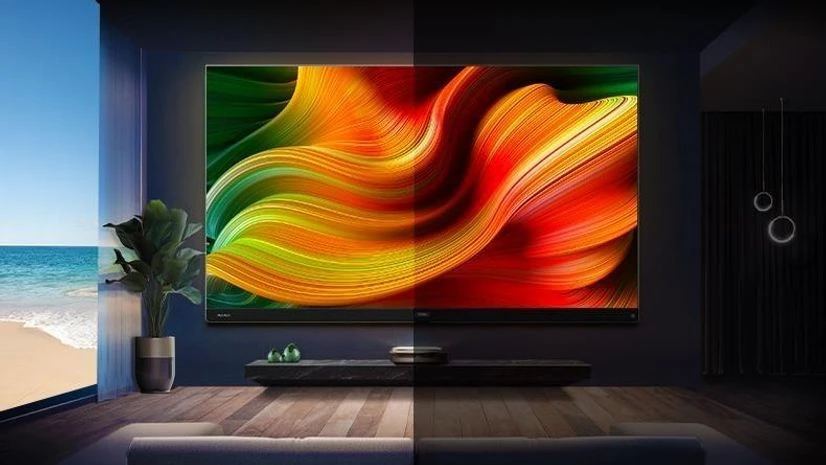
Chinese home appliances brand Haier on October 26 launched in India the Haier C11 OLED TV with Dolby Vision IQ and Motion Compensation technology. The OLED TV is offered in 65-inch and 55- inch display options, both with built-in 50W Harman Kardon-tuned speakers and metal stands, at Rs 169,999 onwards. The TV is  available for purchase on Haier e-commerce store and select retail outlets.


Haier C11 OLED TV: Specifications and features


The Haier C11 OLED TV sports an OLED display panel of 4K resolution and up to 120Hz refresh rate. The display is HDR10-certified and supports Dolby Vision IQ technology, which optimises supported content based on ambient lightning conditions. The Haier C11 OLED TV is based on Google TV platform, with support for voice commands and smart content recommendations. It boasts Motion Compensation technology (MEMC), which interpolates a frame in a video for a smoother transition.


Along with a variable refresh rate of up to 120Hz, the TV supports auto low latency mode (ALLM) through HDMI 2.1 interface for enhanced gaming experience. The OLED TV has a built-in 50-watt sound bar audio system, co-created with Harman Kardon for immersive audio experience. The speakers also support Dolby Atmos for a surround sound effect. Connectivity is covered by dual-band Wi-Fi, Bluetooth 5.1, USB 2.0, and HDMI 2.1.

First Published: Oct 26 2023 | 4:37 PM IST


Source link

Haier C11 OLED TV with Dolby Vision IQ launched in India: Know price, specs


Haier C11 OLED TV, Haier C11 OLED TV features, Haier C11 OLED TV Price, Haier C11 OLED details, Haier C11 OLED TV specs, Haier OLED TV, OLED TV in India, Haier TV, Smart TV, Haier Smart TV

Haier C11 OLED TV with Dolby Vision IQ Technology


Chinese home appliances brand Haier on October 26 launched in India the Haier C11 OLED TV with Dolby Vision IQ and Motion Compensation technology. The OLED TV is offered in 65-inch and 55- inch display options, both with built-in 50W Harman Kardon-tuned speakers and metal stands, at Rs 169,999 onwards. The TV is  available for purchase on Haier e-commerce store and select retail outlets.


Haier C11 OLED TV: Specifications and features


The Haier C11 OLED TV sports an OLED display panel of 4K resolution and up to 120Hz refresh rate. The display is HDR10-certified and supports Dolby Vision IQ technology, which optimises supported content based on ambient lightning conditions. The Haier C11 OLED TV is based on Google TV platform, with support for voice commands and smart content recommendations. It boasts Motion Compensation technology (MEMC), which interpolates a frame in a video for a smoother transition.


Along with a variable refresh rate of up to 120Hz, the TV supports auto low latency mode (ALLM) through HDMI 2.1 interface for enhanced gaming experience. The OLED TV has a built-in 50-watt sound bar audio system, co-created with Harman Kardon for immersive audio experience. The speakers also support Dolby Atmos for a surround sound effect. Connectivity is covered by dual-band Wi-Fi, Bluetooth 5.1, USB 2.0, and HDMI 2.1.

First Published: Oct 26 2023 | 4:37 PM IST


Source link

YouTube
Instagram
WhatsApp




