Made by Google event to kick off at 7:30 pm: Where to watch, what to expect

Made by Google event to kick off at 7:30 pm: Where to watch, what to expect


Google is set to kick off its annual Made by Google event on October 4. The technology giant is hosting an in-person event in New York, US where it is expected to announce the Pixel 8 series smartphones and Pixel Watch 2. Alongside, the company is expected to announce a new colour variant of the Pixel Buds Pro and share the release date of Android 14. Below are the details:


Made by Google: When and where to watch


The Pixel devices launch event is set to kick off at 10 AM Eastern Time (ET), which is 7:30 PM Indian Standard Time (IST). It essentially means the event will start at 7:30 PM in India for the audience watching it online on YouTube and social media platforms. For convenience, a YouTube video has been embedded towards the end of the article.


Made by Google: What to expect


Pixel 8 and Pixel 8 Pro:


In the smartphone line, Google would debut the Pixel 8 and Pixel 8 Pro. Starting with Pixel 8, it would sport a 6.17-inch OLED display of 120Hz refresh rate. Powered by a Tensor G3 chip, which is likely made in collaboration with Samsung, the Pixel 8 would be offered in 8GB RAM and 128GB storage configuration.


On the camera front, the Pixel 8 would sport a 50-megapixel main camera sensor paired with a 12MP ultra-wide-angle sensor. The ultra-wide-camera would feature autofocus, which would enable it to double up as a macro sensor for close-up shots. On the front, the Pixel 8 would sport a 10.5MP camera sensor in a center-aligned display punch-hole. Like with previous Pixel smartphones, a strong software suite from Google would power the imaging system in the Pixel 8. It would feature tools such as Magic Editor, Best Take, and Audio Eraser. The Pixel 8 would be based on Android 14, which is expected to rollout for other compatible devices soon.


Coming to the Pixel 8 Pro, it would sport a 6.8-inch OLED display of 120Hz refresh rate. Unlike the two-side curved display on the predecessor, however, the Pixel 8 Pro would feature a flat display. It would be powered by the same Tensor G3 chip, but paired with 12GB RAM.


On the camera front, the Pixel 8 Pro would get a 48MP telephoto lens (up to 5x optical zoom) in addition to a 50-megapixel main camera sensor and a 12MP ultra-wide-angle sensor. Like the vanilla model, the ultra-wide-camera on the Pro model would feature autofocus that would enable it to double up as a macro sensor for close-up shots. On the front, the Pixel 8 Pro would sport a 10.5MP camera sensor in a center-aligned display punch-hole. On the imaging-related software side, it would get the manual controls for both videos and photos. This would be on top of other features such as Magic Editor, Best Take, and Audio Eraser. The Pixel 8 Pro would be based on Android 14.


Pixel Watch 2:


It would be similar to the first-generation Pixel Watch, but with a new processor and software features. Google is expected to use the Qualcomm Snapdragon W5 series chip, which is expected to bring performance and power efficiency. The watch is expected to boot WearOS 4 with support for ultrawide-band chip for  precise location tracking capabilities. As for the health and fitness features, the Watch 2 is expected to get the Fitbit suite that it debuted with the Watch.


Pixel 8 series and Pixel Watch 2: India launch details


The Pixel 8 and Pixel 8 Pro are arriving in India on October 5, together with the Pixel Watch 2.


Made by Google: Livestream


Source link

Artificial general intelligence will come within 10 yrs: SoftBank CEO Son

Artificial general intelligence will come within 10 yrs: SoftBank CEO Son


Masayoshi Son,SoftBank Group CEO


SoftBank CEO Masayoshi Son said he believes artificial general intelligence (AGI), artificial intelligence that surpasses human intelligence in almost all areas, will be realised within 10 years.


Speaking at the SoftBank World corporate conference, Son said he believes AGI will be ten times more intelligent than the sum total of all human intelligence. He noted the rapid progress in generative AI that he said has already exceeded human intelligence in certain areas.


“It is wrong to say that AI cannot be smarter than humans as it is created by humans,” he said. “AI is now self learning, self training, and self inferencing, just like human beings.” Son has spoken of the potential of AGI – typically using the term “singularity” – to transform business and society for some years, but this is the first time he has given a timeline for its development.


He also introduced the idea of “Artificial Super Intelligence” at the conference which he claimed would be realised in 20 years and would surpass human intelligence by a factor of 10,000.


Son is known for several canny bets that have turned SoftBank into a tech investment giant as well as some bets that have spectacularly flopped.


He’s also prone to making strident claims about the transformative impact of new technologies. His predictions about the mobile internet have been largely borne out while those about the Internet of Things have not.


Son called upon Japanese companies to “wake up” to the promise of AI, arguing they had increasingly fallen behind in the internet age and reiterated his belief in chip designer Arm as core to the “AI revolution”.


Arm CEO Rene Haas, speaking at the conference via video, touted the energy efficiency of Arm’s designs, saying they would become increasingly sought after to power artificial intelligence.


Son said he thinks he is the only person who believes AGI will come within a decade. Haas said he thought it would come in his lifetime.


(Reporting by Anton Bridge; Editing by Tom Hogue and Edwina Gibbs)

First Published: Oct 4 2023 | 11:05 AM IST


Source link

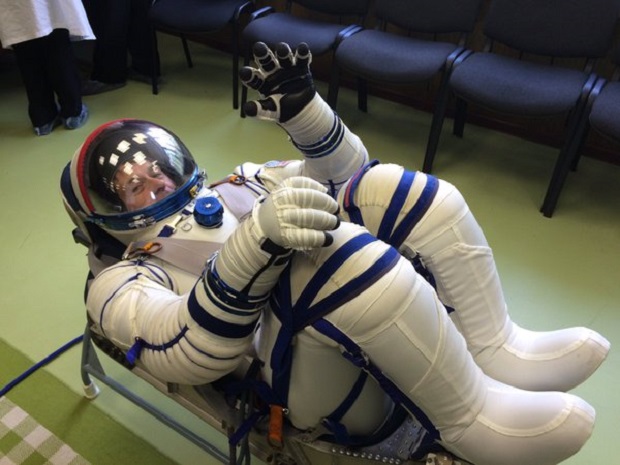
World Space Week 2023: History, importance, theme, celebration, quotes

World Space Week 2023: History, importance, theme, celebration, quotes


World Space Week is observed every year from October 4th to 10th and is one of the world’s largest space events. The celebration recognises the significant role that space science and innovation play in improving mankind’s well-being.


Various space-related exercises are led by space agencies throughout the week, planetariums, museums, corporations, educational foundations and astronomy lovers. Such exercises plan to instruct both the students and the general population, making them learn the commitments made by space exploration to our general public.


What is the history behind World Space Week?


After a resolution was passed by the UN General Assembly on December 6, 1999, the World Space Week started to be celebrated by enthusiasts around the world. The UN General Assembly announced this day to praise the commitments of space science and technology to the advancement of the human condition.


The start and end dates of World Space Week were selected to celebrate two important occasions in space exploration. One of them happened on October 4, 1957, when Sputnik 1, the first man-made Earth satellite was launched. On the other day, on October 10, 1967, a treaty was signed to guarantee the peaceful utilisation of outer space, involving the moon and other celestial bodies.


Subsequently, a large number of individuals from around the world every year take part to commemorate the week between October 4 and October 10. 


What is the importance of Space Week?


Space Week improves the understanding of individuals regarding space and offers a platform for people globally to grow their knowledge about the advantages of it. 


It also incorporates how space can be associated for sustainable economic development. Different occasions and exercises assist us with figuring out the important role played by space exploration in our lives. 


What is the theme of the World Space Week 2023?


The theme of World Space Week 2023 is ‘Space and Entrepreneurship’, which aims at expanding awareness and starting discussions around developing the commercial space segment and its impact on the advancement of space science and technology. It is celebrated every year with a particular theme declared by the World Space Week Association. 


How to celebrate World Space Week this year?


A lot of activities happen around this week when space enthusiasts around the world gather for the celebration of this important event. One could arrange a stargazing party, where the constellations and stars in the sky are observed and beauty of the night sky observed, making use of telescopes and binoculars. It’s also a great idea to gather your friends and family for a space-themed movie marathon. One could also make use of the interesting features of Google Earth and explore seven wonders of the world and historic launch sites.


World space week: Quotes 


    • “I am among those who think that science has great beauty.” – Marie Curie      


    • “The more people are exposed to science, the more we will move away from superstition.” – Rakesh Sharma      


    • “Science is a beautiful gift to humanity, we should not distort it.” – APJ Abdul Kalam      


    • “We cannot teach people anything; we can only help them discover it within themselves.” – Galileo Galilei      


    • “Equipped with his five senses, man explores the universe around him and calls the adventure Science.” – Edwin Powell Hubble.


Source link

Samsung Galaxy S23 FE goes official; Tab S9 FE, Buds FE tag along: Details

Samsung Galaxy S23 FE goes official; Tab S9 FE, Buds FE tag along: Details


Samsung Galaxy S23 FE, Galaxy S9 Tab FE, and Galaxy Buds FE

South Korean electronics maker Samsung on October 4 unveiled the Galaxy S23 FE (fan edition) smartphone, the Galaxy Tab S9 FE series tablets, and Galaxy Buds FE wireless earphones. The Galaxy S23 FE is offered in Mint, Cream, Graphite, and Purple Indigo and Tangerine colours at $599. The Galaxy Tab S9 FE tablet series encompassed a vanilla model and a Plus model, with price starting at $449. The Galaxy Buds FE are offered in Graphite and White colours at $99. All three products are expected to launch in India soon.


“At Samsung, we are committed to bringing world-class innovation to everyone through epic mobile experiences that fit their lifestyle,” said TM Roh, President and Head of Mobile eXperience Business at Samsung Electronics. “Our new FE devices are packed with crowd-pleasing premium capabilities that, on their own or as part of a connected ecosystem, let Galaxy users maximise their creativity and productivity.”


  • Display: 6.4-inch fullHD+ Dynamic AMOLED 2X (up to 120Hz refresh rate)

  • Dimensions and Weight: 76.5 X 158 X 8.2mm, 209g

  • Rear camera: 50MP (f1.8) main + 12MP ultra-wide-angle (f2.2 and FoV: 123-degree) + 8MP telephoto (f2.4, 3x optical zoom)

  • Front camera: 10MP (f2.4)

  • Processor: 4nm

  • RAM: 8GB

  • Storage: 128GB and 256GB

  • Battery: 4,500

  • Charging: 25W wired, fast wireless charging 2.0, and wireless powershare

  • Platform: Android 13

  • Protection: IP68

Also Read: Ultra-premium buzz: Indian demand for phones priced over Rs 1 lakh doubles


Samsung Galaxy Tab S9 FE: Specifications


  • Display: 10.9-inch LCD (up to 90Hz refresh rate)

  • Dimensions and weight: 165.8 x 254.3 x 6.5 mm, 523g (Wi-Fi), 524g (5G)

  • Rear camera: 8MP

  • Front camera: 12MP ultra-wide-angle

  • Processor: Octa-core

  • Configuration: 6GB RAM + 128GB storage and 8GB + 256GB storage

  • Battery: 8,000 mAh

  • Platform: Android 13

  • Connectivity: 5G, LTE, Wi-Fi6, Bluetooth v5.3

  • Sound: Dual-speaker by AKG, supports Dolby Atmos

  • Protection: IP68

  • Accessories: S Pen, S Pen Creator Edition, Book Cover Keyboard, Book Cover Keyboard Slim, Smart Book Cover, Outdoor Cover


Samsung Galaxy Tab S9 FE Plus: Specifications


  • Display: 12.4-inch LCD (up to 90Hz refresh rate)

  • Dimensions and weight: 185.4 x 285.4 x 6.5 mm, 627g (Wi-Fi), 628g (5G)

  • Rear camera: 8MP

  • Front camera: 12MP ultra-wide-angle

  • Processor: Octa-core

  • Configuration: 8GB RAM + 128GB storage and 12GB + 256GB storage

  • Battery: 10,090 mAh

  • Platform: Android 13

  • Connectivity: 5G, LTE, Wi-Fi6, Bluetooth v5.3

  • Sound: Dual-speaker by AKG, supports Dolby Atmos

  • Protection: IP68

  • Accessories: S Pen, S Pen Creator Edition, Book Cover Keyboard, Book Cover Keyboard Slim, Smart Book Cover, Outdoor Cover

Also Read: OnePlus 11R Solar Red 5G with textured vegan leather back goes official


Samsung Galaxy Buds FE: Specifications


  • Weight: Each Bud 5.6g | Case 40g

  • Speaker: 1-way

  • Mics: 3 (2 outer + 1 inner)

  • Battery: Earbuds – 60 mAh | Case – 479 mAh

  • Connectivity: Bluetooth v5.2 (auto switch)

  • Codecs: Scalable (Samsung), AAC, SBC

  • Sensors: Proximity, Hall, and Touch

  • Compatibility: Android 8.0 or higher with more than 1.5GB RAM

First Published: Oct 4 2023 | 10:55 AM IST


Source link

Why does Wikipedia need donations despite its massive popularity?

Why does Wikipedia need donations despite its massive popularity?


What Google is to search, Wikipedia is to what comes next. It has emerged as one of the most oft-browsed non-social media websites, and an unparalleled inventory of shared digital knowledge. In 2023, the website has seen an average of 4.5 billion unique global visitors per month. The online encyclopaedia marked its 22nd anniversary in January.


It now has versions in 334 languages and a total of more than 61 million articles. It consistently ranks among the world’s 10 most-visited websites. However, it alone in that select group — led usually by Google, YouTube, and Facebook — is an American 501(c)(3) non-profit organization. Wikipedia’s contributors, who make nearly 345 edits per minute on the site, are not paid.


The website does not run ads. It does send out occasional messages though — for donations. Typically, they run for about a month at different points of the calendar year, for the different geographic and cultural regions its services reach. Users have recently found the frequency of these banner messages encouraging them to donate, to be rapidly increasing.


A couple of months back, the flagship arm of the Wikimedia Foundation (WMF), reached out to its Indian users for help.


“We ask you, humbly: don’t scroll away,” the message read. “We depend on donations from exceptional readers, but fewer than 2 per cent give. If you donate just Rs.150, or whatever you can…Wikipedia could keep thriving. Thank you.”


The Bare Numbers


The message immediately triggered a chatter across Indian social media handles, with many puzzling whether one of the world’s most popular websites really needed donations to stay afloat.


Some users feared that the online encyclopaedia was on the brink of bankruptcy. That is not the case. The WMF raised upward of $165 million ($165,232,309) from over 13 million donations in FY22. It has budgeted for $175 mn in 2022-23. Its total assets stood at over $250 million in 2022.


In its annual plan for 2022-23, WMF said: “We anticipate a 17 per cent increase in our 2022−2023 budget, most of this representing inflationary and other year-on-year costs. The overall increase includes a 28 per cent increase in funding to other movement entities (individual and affiliate) including an additional $2.8 million in the grants budget and an additional $2.4 million for WikiData.”  


A spokesperson for the WMF told Business Standard that a majority of the firm’s funding comes from donations ($15 is the average) from people who read Wikipedia; most contribute through the banner messages. “We use the fundraising banners as a quick way to invite readers to support our mission during the brief campaign period,” they added.  


The knowledge aggregator dedicates the largest portion of its annual budget towards personnel, representing roughly 60 per cent of expenses across permanent staff and temporary contractors. “The increasing costs in our budget reflect the cost of living and similar expenses related to salaries, benefits, and other personnel costs,” says the spokesperson. (See Chart 1)


The WMF also classifies these expenses under four operational heads. For instance, the company allocates nearly 49 per cent of its budgetary expenses towards supporting the technical infrastructure of Wikimedia projects, including designing and launching new products to improve user experience, as well as developmental projects in machine learning and internet-based collaboration. In fact, the majority of the WMF staff work in product and technology, maintaining and updating its software and user interface.


Nearly 22 per cent goes towards strengthening performance and effectiveness, while 17.6 per cent is dedicated to supporting volunteer communities through grants, programs, training etc.


Another 11.6 per cent is dedicated to ensuring legal safeguards for Wikimedia projects “against growing external threats such as disinformation and harmful government regulation, to ensure they can continue to thrive in the future.”


Over the years, through fundraising campaigns and generous corporate endowments, Wikipedia’s assets have grown exponentially. Given its considerable net worth, many have criticised the website for the doomsday-esque tone it adopts in its call for donations. Asked about the same, the spokesperson for the Wikimedia Foundation said, “As a website that hundreds of millions of people have come to rely on, we have a duty to ensure Wikipedia remains accessible, up-to-date, and relevant for its readers.”


Tech Fortifications


For instance, a large chunk of what readers donate to the WMF is focused on tech improvements. The goal of Wikipedia, as its co-founder Jimmy Wales described it in 2004, was to create “a world in which every single person on the planet is given free access to the sum of all human knowledge.”


Twenty-three years into its life, Wikipedia is much more than a digital encyclopaedia. It has lent its DNA to the interconnected tissues of information that hold the internet together. Thus, when you “Google” something, and get highlighted answers? The answers are at least partly derived from Wikipedia’s data, which had been ingested into the knowledge banks of search engines like Google, Bing, etc. YouTube draws on Wikipedia to counter misinformation. Many companies will give you a link to their Wikipedia page, rather than an extensive statement on the “About Us” section. Journalists and researchers include sections from Wikipedia in their write-ups, for quick and simplified context-building.


The new AI chatbots have typically swallowed Wikipedia’s corpus, too. Embedded deep within their responses to queries is Wikipedia data and Wikipedia text, knowledge that has been compiled over years of painstaking work by human contributors.


Aditya Bannerjee, whose PhD research at the University of British Columbia revolves around information aggregation and biases by AI-enabled search and chatbots, believes Wikipedia is by far the most important single source in the training of AI models. “Given its collaborative information aggregation model, Wikipedia is a living archive. While this does mean that the site inadvertently incorporates biases in its essays and pages, it also makes it one of the primary sources of data for AI models,” he explains.


“But AIs are also cannibals of information. Bots like ChatGPT, which are heavily dependent on the WIKI sites for their base-level info at this point in their evolution, will soon outperform Wikipedia, as repositories of information,” Bannerjee cautions, explaining why the WMF needs to spend a massive portion of its funds for tech innovation.


Diversification Drive


This is also the root of Wikipedia’s need to expand rapidly across markets. The foundation schedules campaigns in different countries throughout the year with new campaigns beginning in parts of Latin America in 2016, and India in 2020.

“We have built a global, multilingual fundraising team to connect with our donors from all over the world, and it currently supports donations through 29 unique payment types in 28 currencies around the world,” the spokesperson from WMF said, adding that Wikipedia doesn’t expect or need every reader to donate and ask only those “who are financially able and who find Wikipedia useful to donate what they can.”


Wiki Donations 


The following have donated $500,000 or more each (not including gifts to the Wikimedia Endowment)


Total ($000s)

Donor

Years

9000

Sloan Foundation

2008–2013

2017–2019

2021-2022

5952

Stanton Foundation

2009–2012

5000

(Anonymous)

2014–2018

3100

Google

2010, 2019 2021-22

2000

Omidyar Network

2009–2010


Source: WMF


Source link

Ultra-premium buzz: Indian demand for phones priced over Rs 1 lakh doubles

Ultra-premium buzz: Indian demand for phones priced over Rs 1 lakh doubles


The demand for smartphones priced above Rs 1 lakh has doubled in the past year in India, according to a report by The Economic Times published on Wednesday. Leading this high-end market are Apple and Samsung, while recently, several Chinese brands like Oppo, OnePlus, and Tecno have also introduced phones in this price range.

Interestingly, the demand for the newly launched iPhone 15 series has doubled in India and is currently sold out.


The report, citing retailers, highlighted that the penetration of equated monthly instalment (EMI) schemes in smaller towns has contributed to higher demand for these premium devices. Consumers are increasingly opting for features such as flip and fold mechanisms.


Samsung has also experienced increased demand for its ultra-premium phones compared to last year. According to the report, its Flip 5 and Fold 5 models have garnered around 150,000 pre-bookings, which is 50 per cent higher than the 100,000 units pre-booked for its previous generation models last year. These phones have been priced up to Rs 1.84 lakh.


Data released by Counterpoint Research on Tuesday indicated that premium smartphones now account for 17 per cent of the overall market, with phones priced above Rs 1 lakh holding an 8 per cent share.


The Economic Times quoted Tarun Pathak, director at Counterpoint Technology Market Research, as stating that the market share of ultra-premium handsets is set to reach “record highs,” growing 1.4 times faster than last year. “These handsets are further driving the trend of premiumisation,” he said, “and will push the average selling price of smartphones in India to around Rs 22,000, up from Rs 20,000 last year.”


Source link

YouTube
Instagram
WhatsApp