It’s Google versus US in the biggest antitrust trial in over 2 decades

It’s Google versus US in the biggest antitrust trial in over 2 decades


Google will confront a threat to its dominant search engine beginning Tuesday when federal regulators launch an attempt to dismantle its internet empire in the biggest US antitrust trial in a quarter century.


Over the next 10 weeks, federal lawyers and state attorneys general will try to prove Google rigged the market in its favour by locking its search engine in as the default choice in a plethora of places and devices. US District Judge Amit Mehta likely won’t issue a ruling until early next year. If he decides Google broke the law, another trial will decide what steps should be taken to rein in the Mountain View, California-based company.


Top executives at Google and its corporate parent Alphabet Inc., as well as those from other powerful technology companies are expected to testify. Among them is likely to be Alphabet CEO Sundar Pichai, who succeeded Google co-founder Larry Page four years ago. Court documents also suggest that Eddy Cue, a high ranking Apple executive, might be called to the stand.


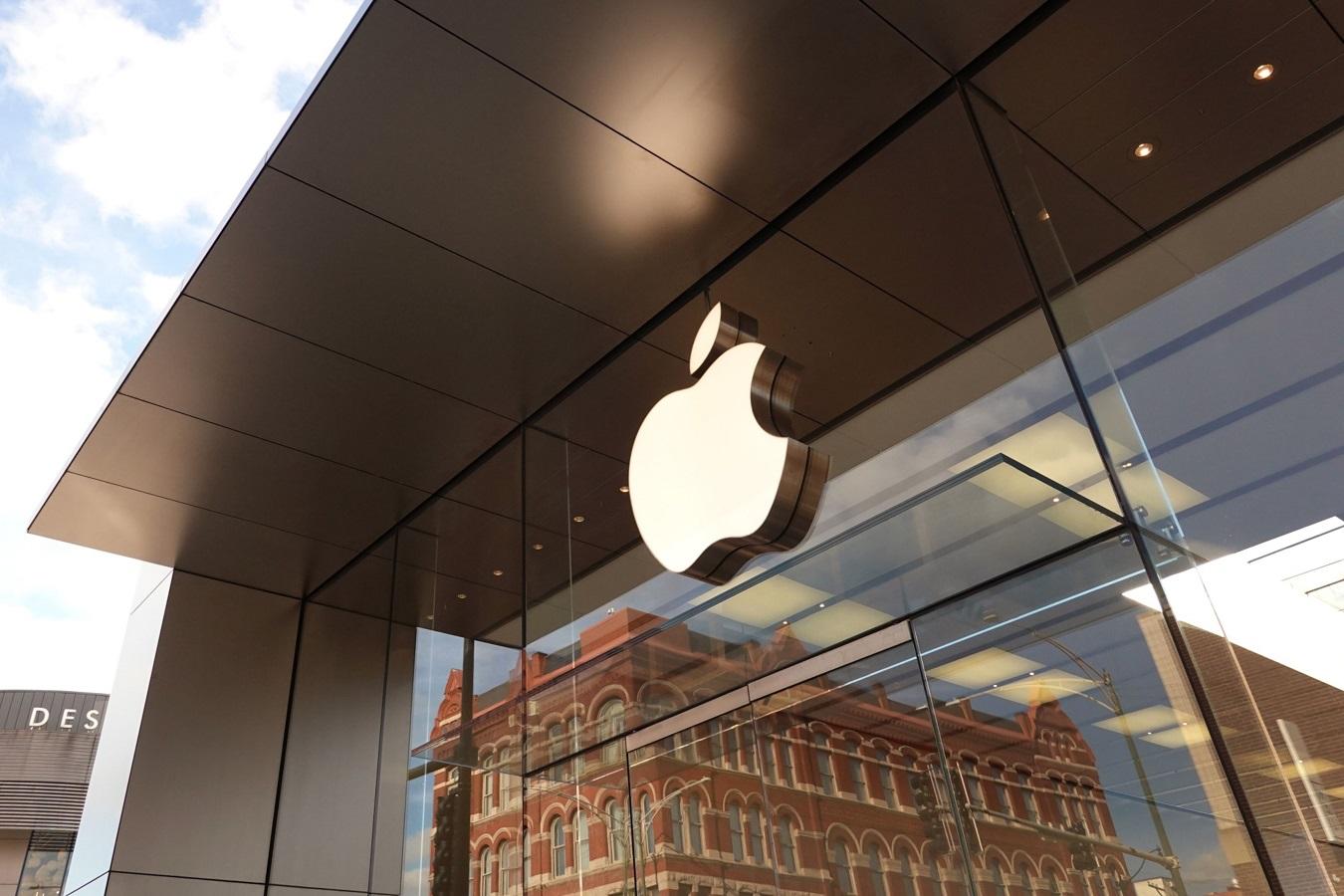
The Justice Department filed its antitrust lawsuit against Google nearly three years ago during the Trump administration, charging that the company has used its internet search dominance to gain an unfair advantage against competitors. Government lawyers allege that Google protects its franchise through a form of payola, shelling out billions of dollars annually to be the default search engine on the iPhone and on web browsers such as Apple’s Safari and Mozilla’s Firefox.


Regulators also charge that Google has illegally rigged the market in its favor by requiring its search engine to be bundled with its Android software for smartphones if the device manufacturers want full access to the Android app store.


Google counters that it faces a wide range of competition despite commanding about 90% of the internet search market. Its rivals, Google argues, range from search engines such as Microsoft’s Bing to websites like Amazon and Yelp, where consumers can post questions about what to buy or where to go.


From Google’s perspective, perpetual improvements to its search engine explain why people almost reflexively keep coming back to it, a habit that long ago made Googling synonymous with looking things up on the internet.


The trial begins just a couple weeks after the 25th anniversary of the first investment in the company a $100,000 check written by Sun Microsystems co-founder Andy Bechtolsheim that enabled Page and Sergey Brin to set up shop in a Silicon Valley garage.


Today, Google’s corporate parent, Alphabet, is worth $1.7 trillion and employs 182,000 people, with most of the money coming from $224 billion in annual ad sales flowing through a network of digital services anchored by a search engine that fields billions of queries a day.


The Justice Department’s antitrust case echoes the one it filed against Microsoft in 1998. Regulators then accused Microsoft of forcing computer makers that relied on its dominant Windows operating system to also feature Microsoft’s Internet Explorer just as the internet was starting to go mainstream. That bundling practice crushed competition from the once-popular browser Netscape.


Several members of the Justice Department’s team in the Google case including lead Justice Department litigator Kenneth Dintzer also worked on the Microsoft investigation.


Google could be hobbled if the trial ends in concessions that undercut its power. One possibility is that the company could be forced to stop paying Apple and other companies to make Google the default search engine on smartphones and computers.


Or the legal battle could cause Google to lose focus. That’s what happened to Microsoft after its antitrust showdown with the Justice Department. Distracted, the software giant struggled to adapt to the impact of internet search and smartphones. Google capitalized on that distraction to leap from its startup roots into an imposing powerhouse.

(Only the headline and picture of this report may have been reworked by the Business Standard staff; the rest of the content is auto-generated from a syndicated feed.)


Source link

Elon Musk’s Starlink may soon get a licence to start its services in India

Elon Musk’s Starlink may soon get a licence to start its services in India


Elon Musk’s Starlink may get a nod to start its service in India from the telecom ministry, The Times of India (TOI) reported on Tuesday. The satellite company has been stuck with the home ministry over security reasons for months now.


The ministry is expected to hold a meeting later this month to discuss the proposal of Starlink for a global mobile personal communication by satellite (GMPCS) services license, and it is likely to be passed, a source was quoted as saying in the report. However, some last-minute hiccups cannot be ruled out.


After the GMPCS, Starlink would need to get approvals from several government wings and the space ministry. Then, it can start working towards launching its operations in the country.


Currently, Mukesh Ambani’s Jio and Sunil Mittal-backed One Web have GMPCS licences in India. Jio is in a partnership with Luxembourg-based SES. Jeff Bezos also has a similar project titled “Kuiper,” but it is yet to come to India.


Starlink was reprimanded by the telecom ministry in 2021 when it started taking advance orders for its devices in India without having a license. Ober 5,000 subscribers had placed their pre-orders costing about $99 each.


The company was also asked to refund the money collected from Indians.


Earlier in June, Reuters reported that Starlink is lobbying India not to auction the satellite broadband spectrum and just assign licences in line with a global trend. It said the spectrum is a natural resource that should be shared by companies. An auction may impose geographical restrictions that will raise costs, it said.


On the other hand, Reliance disagrees and has called for an auction in a public submission to the Centre, saying foreign satellite service providers could offer voice and data services and compete with traditional telecom players, so there must be an auction to achieve a level playing field.


In signs of deepening rivalry, an industry source was quoted as saying that Reliance will continue nudging the government to auction satellite spectrum and not agree to the demands of foreign companies. 


Interestingly, Starlink’s view on auctions is shared by Project Kuiper and One Web.


Source link

Apple Inc’s high-stakes iPhone 15 launch explained in five charts

Apple Inc’s high-stakes iPhone 15 launch explained in five charts


By Nick Turner

Apple Inc.’s annual iPhone unveiling is always its most momentous time of the year — a chance to impress consumers with the company’s latest model and set up the holiday selling season. 


But Apple has more than usual riding on the new iPhone 15 lineup, which will be introduced Tuesday at 10 a.m. California time. The tech titan is looking to snap several straight quarters of sluggish sales — its longest slump in two decades — and get consumers excited about upgrading again with new features.


Apple is contending with an industrywide slowdown in smartphone demand and fears of a backlash against US-branded technology in China, its largest international market. And the latest iPhone will switch to the USB-C charging standard, potentially irking consumers who have drawers full of Lightning accessories.


Apple also just renewed a contract to get modem chips from Qualcomm Inc., a sign that an effort to build its own components is taking longer than expected.


But the company has several things going in its favor, including an iPhone with enticing new capabilities. And demand for the product has held up better than that of its Android peers. Apple also has successfully shifted more consumers to higher-end models, helping it charge heftier prices. 


1. Apple’s Flagship Product


The iPhone is Apple’s biggest source of revenue, generating about half its sales. Add in the Apple Watch and AirPods, which also will get updated at the event, and you’re close to 60%. 


2. A Sales Slump


The entire smartphone industry has been in a funk, and Apple hasn’t been immune. Slow sales of the iPhone dragged down its overall revenue, which is poised to fall this year for the first time since 2019.

Sales should begin to rebound in the fiscal first quarter of 2024, which runs through December.

Chart


3. More Upscale iPhones


Apple has increasingly steered customers toward its higher-end phones by packing them with exclusive features and more powerful chips. That trend will continue this year, and Apple’s expected to raise prices in at least some markets. 

Chart


4. Outperforming Peers


Apple has weathered the smartphone slowdown better than most manufacturers. Though its phone shipments slipped 2% last quarter, according to IDC, that was better better than the 15% decline suffered by Samsung Electronics Co. The performance has helped Apple pick up some market share.

Chart


5. China Concerns


A key question is whether Chinese consumers will embrace the iPhone 15 the way they did with past models. The market has been a bright spot for Apple recently, but government bans have stoked fears that sentiment could turn against the company. A new smartphone from Huawei Technologies Co. with a fast processor may also shift demand away from the iPhone.

Apple has seen this scenario before. It suffered a weak stretch in China in fiscal 2019 after a nationalist spirit swept the country. But demand ultimately bounced back. Investors will be watching holiday sales closely to see if Apple can weather the challenge this time around.

Chart


Source link

Qualcomm to supply Apple Inc with 5G chips until 2026 under new deal

Qualcomm to supply Apple Inc with 5G chips until 2026 under new deal


Qualcomm on Monday said it had signed a new deal with Apple to supply 5G chips to the iPhone maker until at least 2026.


Qualcomm is the leading designer of what are known as modem chips that connect phones to mobile data networks. The San Diego, California-based firm previously signed a supply deal with Apple in 2019, after the two companies settled a protracted legal battle.


That chip supply agreement ends this year, meaning that the iPhones that Apple is expected to announce Tuesday would be the last phone debut under that agreement.


Under the deal announced Monday, Qualcomm said it will supply Apple with chips for phones that will come out each year until 2026. Qualcomm did not disclose the value of the deal, saying only that the terms are “similar” to its previous agreement.


Qualcomm also said that a patent licensing deal it signed with Apple in 2019 remains in place. That deal expires in 2025, but the companies have an option to extend it for two years.


Apple is working on its own modem technology and spent $1 billion to buy Intel’s modem unit in 2019. Apple has not said how quickly it plans to ramp up the use of its own chips.


Qualcomm on Tuesday said that its financial projections will assume that only a fifth of Apple’s iPhones will use its chips by 2026.

However, Qualcomm made a similar projection about its business with Apple in 2021 that turned out to be overly conservative, with iPhone 14 models released last year all using Qualcomm modems.

First Published: Sep 11 2023 | 6:34 PM IST


Source link

Sony launches Bravia XR Master Series A95L OLED TV in India: Price, specs

Sony launches Bravia XR Master Series A95L OLED TV in India: Price, specs


According to Sony, the A95L series is capable of upscaling video quality close to 4K irrespective of the original content quality and source


Japanese electronics maker Sony on September 11 launched in India its Bravia XR Master Series A95L OLED TV. Offered in 55-inch and 65-inch display sizes, the TV boasts Sony’s Cognitive Processor XR, 4K upscaling, auto HDR, ambient optimisation, and variable refresh rate (VRR). The 55-inch variant is priced at Rs 339,990 and the 65-inch variant is priced at Rs 419,990. Both variants will be available on Sony Centers and major e-commerce portals from September 11.


The Bravia XR Master Series A95L OLED features Cognitive Processor XR, which Sony said understands how the human eye focuses and cross analyses images to provide depth and contrasts to picture for better viewing experience. The Cognitive Processor XR also detects screen temperature and controls light accordingly.


According to Sony, the A95L series is capable of upscaling video quality close to 4K irrespective of the original content quality and source. The Processor XR recreates textures and details to minimise blur and interpolates frames between the original frames to improve smoothness in fast moving sequences. Sony said the TV has a self-illuminating OLED panel tuned for colour consistency across all viewing angles.


As for the game-focused features, the Bravia XR Master Series A95L OLED features a ‘Game Menu’ with an option to enable and disable VRR (motion blur). It also offers screen size customisation options. The TV supports HDMI 2.1, which enables 4K 120fps content input and auto low latency mode.


The Bravia XR Master Series A95L OLED features Sony’s Acoustic Surface Audio, which turns the display into an audio source. The Bravia XR Master Series A95L OLED supports Sony XR Surround, which creates surround sound effects by using TV speakers to give a 3D audio experience. The A95L series is also compatible with Dolby Atmos. The TV offers ambient optimisation technology, which optimises sound and picture brightness according to the room conditions – according to Sony.


Powered by Google TV platform, the Bravia XR Master Series A95L OLED supports Apple AirPlay 2 and has Google Assistant built-in for voice search.

First Published: Sep 11 2023 | 4:03 PM IST


Source link

HMD Global launches Nokia G42 5G budget smartphone in India: Price, specs

HMD Global launches Nokia G42 5G budget smartphone in India: Price, specs


Finnish electronics maker HMD Global on September 11 launched in India the Nokia G42 5G smartphone. Priced at Rs 12,599, the smartphone will be available for purchase online on e-commerce platform Amazon from September 15 at 12 pm. The smartphone will be available in So Purple and So Grey colours. Below are the specifications:


Nokia G42 5G: Specifications


Powered by the Qualcomm Snapdragon 480 Plus 5G chipset, the Nokia G42 is offered in 6GB RAM and 128GB storage configuration. It has a 6.56-inch HD display of 90Hz refresh rate. The display has Corning Gorilla Glass 3 protection for resistance against smudges and scratches. The phone boots Android 13, and it would get two years of operating system upgrades.


As for the cameras, the smartphone has a triple-camera set-up on the rear encompassing a 50-megapixel primary sensor paired with 2MP depth sensor and another 2MP macro lens. On the front, the phone has an 8MP camera sensor.


Powered by a 5,000mAh battery, the smartphone comes with a 20W fast wired charger. HMD Global said the phone would last for up to three days on a single charge. Besides, the company said that the phone’s back cover is composed of 65 per cent recycled plastic.


In the same price range, HMD Global also has the Nokia G21. At Rs 12,499, the smartphone boasts a 6.5-inch HD display of 90Hz refresh rate. It is powered by an octa-core Unisoc T606 processor. It comes in 4GB and 6GB RAM variants. The Nokia G21 is based on the Android 11 operating system. It is powered by a 5,050mAh battery. It sports a 50MP primary camera.

First Published: Sep 11 2023 | 2:24 PM IST


Source link

YouTube
Instagram
WhatsApp




