HonorTech will relaunch the Honor brand of smartphones in the country in September with plans to initially invest Rs 1,000 crore in the business, a senior company official said.
For the relaunch, HonorTech is going to work under a licensing deal with a Chinese smart devices company Honor, in India.
HonorTech CEO Madhav Sheth told PTI that the company will aim to garner 4-5 per cent market share in terms of volume by end of next year, which will translate to a revenue of Rs 10,000 crore for the company.
“The government is looking at the idea that business and authority in the company should be owned and managed by Indians.
“HonorTech is a completely Indian entity. We are going to work under a licensing deal with Honor where they will license us and we will do everything from sales to manufacturing in India. No royalty will go to Honor,” Sheth said.
Honor brand was launched and owned by Chinese telecom major Huawei which sold it to another Chinese firm Shenzhen Zhixin New Information Technology in November 2020.
Sheth recently quit Realme where he was steering their international business including India.
He has formed his own joint venture, HonorTech, with PSAV Global owned by entrepreneur C P Khandelwal.
“Honor’s 70 per cent manufacturing is completely automatic and 40 per cent of their machinery is completely made by them. We need to match similar standards with them in India. Under the deal, Honor will help us with product know-how, entire supply chain management, technology transfers, software transfers at a defined cost,” Sheth said.
He said that the company will initially get some of the Honor products to test the Indian market and plans to start manufacturing them locally by end of this year.
“We will launch Honor smartphones from next month onwards. We are in talks with electronics manufacturing services who are eligible for PLI (production-linked incentive) for manufacturing. We are targeting to start shipping “Made in India” products from November or December,” Sheth said.
The company plans to raise Rs 1,000 crore in debt funding that will be invested by next year.
“We are looking at revenue of Rs 10,000 crore by end of next year which translates into 4-5 per cent volume market share,” Sheth said.
(Only the headline and picture of this report may have been reworked by the Business Standard staff; the rest of the content is auto-generated from a syndicated feed.)
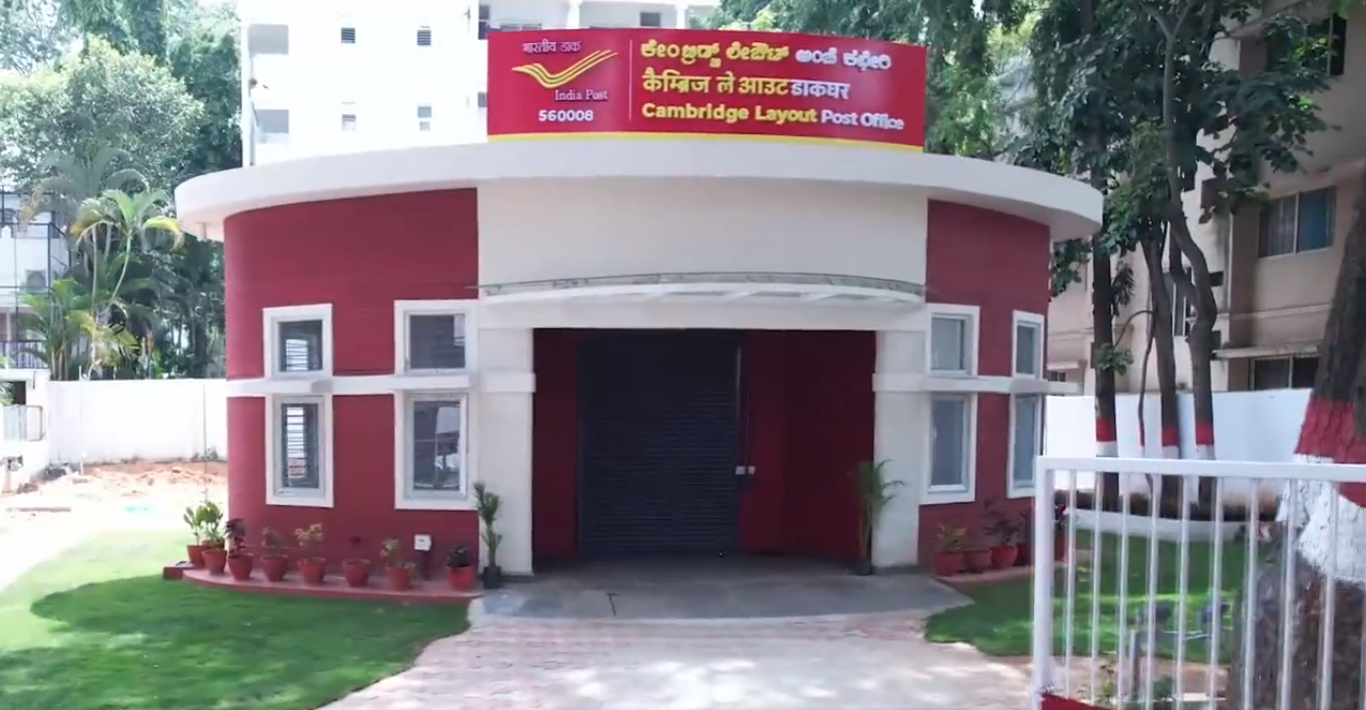
In a step towards revolutionising construction and bolstering affordable housing initiatives, Larsen & Toubro (L&T) has completed India’s first public building utilising cutting-edge 3D printing. The post office in Bengaluru was inaugurated by Communication Minister Ashwini Vaishnaw on Friday.
The spirit of Aatmanirbhar Bharat!
????????India’s first 3D printed Post Office.
This comes two years after the inaugural 3D-printed house was unveiled at the Indian Institute of Technology (IIT) Madras. This new venture showcases the potential of this innovative approach in shaping the future of construction.
3D printing technology
3D printing technology, also known as Additive Manufacturing (AM), involves the computer-controlled layering of materials to create intricate three-dimensional structures. While 3D printing has evolved significantly since its inception in the 1980s, its utilisation in various industries, including construction, has expanded rapidly.
3D printing in construction
3D printing in construction signifies a paradigm shift from conventional methods. Unlike the traditional brick-and-mortar approach, 3D printing employs a robotic arm that creates layers using a specialised concrete mixture. This mixture incorporates adhesives for rapid drying and enhanced functionality. An operator controls the system, feeding design data and regulating the speed at which the robotic arm extrudes the concrete mixture.
This technology facilitates the step-by-step creation of structures encompassing a diverse array of applications:
Metal, concrete, or polymer bridges
On-site construction of entire buildings using concrete or clay
Referred to as ‘construction 3D printers,’ these systems can fabricate components or construct entire edifices.
L&T’s 3D-printed post office
The focal point of this endeavour is an expansive post office spanning 1,100 square feet. The construction process involves 3D-printing technology and is projected to cost approximately Rs 23 lakh, spanning 45 days. While this innovative approach accelerates construction by 30-40 per cent, the cost remains consistent with conventional projects.
MV Satish, Senior Executive Vice-President (Buildings) at Larsen & Toubro, told MoneyControl about the benefits of the 3D-printing system in April. Satish stated that the technology offered design freedom, customisation, and entirely digital control over the building process. It can seamlessly incorporate the placement of doors, windows, electrical outlets, and more, resulting in walls that are not only robust but six times stronger than those constructed using traditional materials.
Moreover, the technology allows for precise printing material, which minimises wastage. 3D printing can also accomplish the construction of buildings in a much shorter time frame. Apis Cor’s team made headlines when they 3D printed a house in Stupino, Russia, within 24 hours. This house was made using its mobile 3D printer. The concrete mixture used in construction can reportedly last for 175 years.
Efficiency and sustainability
The advantages of 3D printing in construction extend beyond just its strength. The technology can enable walls to regulate temperature, reducing energy consumption for heating or cooling.
Additionally, L&T’s chosen 3D-concrete printer employed 30 per cent fly ash as raw material, which aligns with the construction giant’s sustainability goals.
Moreover, the printer produces minimal noise compared to traditional construction methods, contributing to a more environmentally friendly and community-friendly approach.
Aside from this, 3D printing reduces waste during construction by using precise measurements for the material. According to the L&T release on the post office construction, the need for timber and aluminium was eliminated, and instead, supplementary materials were used that helped optimise CO2 emissions.
The shorter duration also ensures minimal disruptions to the environment and electrical consumption.
Manual labour and automation
While the 3D-printing process automates most construction tasks, some manual intervention is required for specific tasks. For the post office, 25-30 labourers were involved in the project, which was a significant reduction compared to conventional brick-and-mortar construction projects.
Challenges
Despite its numerous advantages, the technology does come with certain limitations. The 3D printer used by L&T can operate for 20-24 hours at a stretch but can only construct 1-1.5 meters of walls daily due to the need for layers to dry before continuing construction. This factor contributes to the overall construction timeline.
A Times Now report also pointed out a lack of recognition of the construction elements used by building standards. This could potentially pose a logistical issue. Moreover, while this form of new-age construction is promising, its long-term impact remains to be seen.
Cost efficiency and future prospects
L&T acknowledged that while individual projects might not yield immediate cost savings, considering a volume of projects could significantly reduce costs by approximately 20 per cent. Furthermore, the Indian government is actively working on establishing a standardised code for 3D-concrete printing, which could further streamline and advance the adoption of this innovative approach in construction.
This project’s success may open the door for further collaborations and transformative projects that pave the way for a new era in construction across India.
The construction company already has ongoing 3D printing projects, including residential and factory buildings.
The Samsung Galaxy Z Fold 5 is an incremental upgrade over the predecessor, yet it cannot be passed off as a rudimentary device. It is because there are improvements done both at hardware and software sides to deliver evolved experience. For example, there is a new hinge mechanism for smooth fold and unfold experience. Besides, the device is a tad thinner and lighter compared to last generation model. On the software side, there are more apps optimised for foldable device experience.
Design
The Galaxy Z Fold 5 looks identical to the predecessor. It is a foldable device with a vertical hinge, which makes the device fold and unfold like a book. The hinge mechanism has been improved to make the device fold flat with no visible gap between the two vertical halves in folded state. It is important since the device is IPX8 rated, which essentially means resistance against water ingress but no such protection with regard to dust. With no visible gap between the two equal halves of the device in folded state, there is limited opening for the dirt, dust, and other particles to accumulate on the main bendable display.
Important to note, however, the new hinge does not iron out the vertical crease visible on the bendable display. It still is as prominent, but does not hamper the experience.
Besides the improved folding and unfolding mechanism and minimising the gap between the two equal halves of the device in folded state, the new hinge mechanism makes the device thinner than the predecessor. The Galaxy Z Fold 5 is also lighter than the previous generation model. However, it is not the most compact foldable device and on the thicker and heavier side of the spectrum as a smartphone. Nevertheless, the Galaxy Z Fold 5 is appropriately sized for a device with two displays, including a big bendable one, with weight evenly distributed for a good in-hand feel.
Experience
Software is another area that sets apart the Galaxy Z Fold 5 experience from other devices, including flip-style foldables. Based on OneUI 5.1.1 (Android 13), the device has a familiar smartphone-like interface on the cover display and tablet-like interface with taskbar on the bendable display. Samsung has improved the taskbar by doubling the number of recent apps visible on it – from two in the predecessor to up to four.
Besides, it has optimised commonly used third-party apps for the large display. These apps include, but not limited to, Instagram, Twitter, Threads, Google Chrome, Microsoft PowerPoint, Microsoft Outlook, Microsoft Word, etc. On top, Samsung has introduced two-handed drag and drop feature for easy content flow between apps and screens. These are on top of the productivity and multitasking focused features that the company enabled in previous generations such as app continuity, multi window, floating window, and side bar.
Performance
Complementing the experience is top-notch performance. Powered by Qualcomm Snapdragon 8 Gen 2 for Galaxy system-on-chip, paired with 12GB RAM, the Galaxy Z Fold 5 feels snappy to use with no lag or slowdown visible even when the device is used to the max of its potential. Multitasking is a breeze and novel features such as drag-and-drop and multi window work smoothly. Rounding off the package is a modest screen-on time of about five-six hours on heavy usage.
Imaging
In the overall package, imaging is probably the only area where the improvements are subdued. This is primarily because the upgrades are mostly in software and algorithms. Nevertheless, the device has a triple-camera set-up on the back with each sensor capable of independent working. Star of the show is the 50-megapixel primary sensor with optical image stabilisation. It impresses with fine details, natural colours, and good dynamic range. Besides, the sensor is capable of capturing natural shallow depth-of-field. The ultra-wide-sensor is good with wide field-of-view. However, there is no colour symmetry between the main sensor and the ultra-wide-angle sensor. The telephoto lens enables close-up portraits and zoomed shots, both of which add up to the versatile imaging experience.
There are two more cameras on the device, one on the cover screen for selfies, video calls, and phone unlock mechanism, and the other on the bendable screen covered under the display. The camera on the cover screen is good, but the same cannot be said for the one inside on the bendable screen since it is covered with display for a distraction free screen viewing experience. The pixels on top of the camera turn off automatically when the camera is in use, but that does not improve the image quality.
Samsung Galaxy Z Fold 5: Specifications
Main display (bendable): 7.6-inch QXGA+ Dynamic AMOLED 2X, Infinity Flex Display (2176 x 1812, 21.6:18), adaptive refresh rate (1-120Hz)
Under display camera: 4MP (F1.8, Pixel size: 2.0μm, FOV: 80-dgeree)
Processor: Qualcomm Snapdragon 8 Gen 2
RAM: 12GB
Storage: 256GB, 512GB, and 1TB
Battery: 4,400 mAh
Protection: IPX8 and Gorilla Glass Victus 2
OS: OneUI 5.1.1, based on Android 13
Verdict
The Samsung Galaxy Z Fold 5 has a multi-faceted personality rolled into a form factor that is not much different from a smartphone. It is a productivity powerhouse that lets you do things not otherwise possible from conventional bar-shaped smartphones. From this optics, the Galaxy Z Fold 5 is a modestly priced device starting at Rs 154,999. As a smartphone, however, it is on the expensive side of the price spectrum. That said, you need to be sure what you want out of the device. If smartphone is all you need, may be the Galaxy Z Flip 5 makes a better option in foldables and Galaxy S23 Ultra in regular bar-shaped form factor. But if you need a device that is both a smartphone and a mini portable computer, the Galaxy Z Fold 5 is a no brainer.
Chinese smartphone brand Honor will relaunch in India through a licensing deal with a local company and is aiming to start domestic manufacturing by early next year, its country head told Reuters.
Honor had stopped selling its smartphones in India and reportedly retreated last year amid limited marketing budget and less prudent portfolio management.
“India was never a focus market for the Huawei Technologies-owned Honor until 2020 – when it was forced to spin-off the brand and reassess strategy,” said Neil Shah, vice president at Counterpoint Research.
Honor’s comeback is underpinned by a licensing deal with a newly formed Gurugram-based firm Honor Tech for an undisclosed “agreed-upon cost” tied to the transfer of technology and hardware.
It will launch three variants of Honor phones in India, with the mid-ranged Number series expected by September.
The company, wholly owned by local shareholders, will make, sell and service Honor-branded smartphones in India.
“All the phones will be eventually manufactured in India,” CEO Madhav Sheth said, without disclosing further details.
“The biggest challenge with the (Indian) government in the past was how can a (Chinese) brand be accountable in India?,” said Sheth, a former executive at rival Realme who was credited for its India expansion.
Of late, Chinese businesses have struggled in India with the government banning several apps and stepping up scrutiny on investments to stave off takeover moves from its neighbour.
Honor will compete with the likes of Samsung Electronics – the top seller in India with a near 20 per cent market share – followed by Vivo, Xiaomi, Realme, and others, per Counterpoint Research.
Honor Tech aims to capture a 5 per cent share of India’s smartphone market by sales volumes in 2024, with a revenue of at least Rs 10,000 crore ($1.20 billion), Sheth said.
(Only the headline and picture of this report may have been reworked by the Business Standard staff; the rest of the content is auto-generated from a syndicated feed.)
Meta’s microblogging platform Threads may launch its web version this week, a report by The Wall Street Journal said on Sunday. Rolled out as an app only platform about a month and a half ago, Threads is touted as a rival to Elon Musk’s Twitter that is available both as an app and web client.
Earlier this month, Mark Zuckerberg, chief executive officer (CEO) and co-founder of Threads’ parent Meta Platforms, had posted that the users can expect a web version in the next few weeks.
“A good week for Threads. The community here is on the trajectory I expect to build a vibrant long-term app. Lots of work ahead but excited about the team’s pace of shipping. Search and web coming in the next few weeks,” Zuckerberg said in a post on Threads.
Later, replying to a comment by a user asking for the web version of Threads, Adam Mosseri, head of Instagram, wrote, “We’re working on it! We’ve been using an early version internally for a week or two. Still needs some work before we can open it up to everyone through…”.
Citing sources, the WSJ report, however, added that the launch plans aren’t final and could change.
Threads, which was launched in early July, has swiftly attracted the attention of celebrities and brands worldwide. The number of users on the platform breached the 100 million mark in just a week after its launch. It supports posting 500-character text updates, photos, and videos.
Since its launch, the app that works with Instagram ID and password has added a number of features like the “follows” tab and a translate button. It also added the ability to verify a link with your Mastodon profile.
Advertisers have repeatedly said that they hope Threads will include more features like chronological feeds and the ability to search for hashtags, which will allow them to create better ad campaigns.
The Telangana government and UNESCO will be collaborating to implement the UNESCO Recommendation on the Ethics of Artificial Intelligence (AI) after a Letter of Intent was signed here on Sunday.
The collaboration focuses on promoting the ethical development and use of AI awareness raising, capacity building, and contributions to UNESCO’s Global Observatory on AI Ethics, a release said.
The partnership signifies a shared commitment to an AI-powered future that prioritises societal good and equitable development, it said.
“A significant collaboration between the Information Technology, Electronics and Communications (ITE&C) Department of the Government of Telangana and the United Nations Educational, Scientific and Cultural Organisation (UNESCO), is set to shape the landscape of the ethical development of and use of Artificial Intelligence (AI),” it said.
The Letter of Intent marks the beginning of a strategic partnership aimed at promoting the implementation of UNESCO’s Recommendation on the Ethics of Artificial Intelligence, it said.
The signing ceremony took place in the presence of Vakati Karuna, Secretary of Education Department of Telangana government, Mariagrazia Squicciarini, Director and Chief of Executive Office, Social and Human Sciences at UNESCO; and Rama Devi Lanka, Director of Emerging Technologies, Telangana government.
According to the release, the collaboration gains further significance with the ITE&C Department’s role in shaping the technological landscape of Telangana, ensuring that advancements are aligned with ethical values.
With a shared commitment to fostering beneficial development and application of AI technologies and successful mitigation of the inherent risks, the Telangana government and UNESCO are embarking on a transformative collaboration that aims to harness the power of AI technologies for societal good, the release added.
(Only the headline and picture of this report may have been reworked by the Business Standard staff; the rest of the content is auto-generated from a syndicated feed.)